Tag: Computer Network Exploitation 143 documents
Search documents matching “Computer Network Exploitation” →Free-text subjects the curators added. Unlike the other axes these are not necessarily from the documents' own vocabulary, so they are the loosest thing to browse by (and the most forgiving).
Graphs
By document date (11 years)
By Banner
By Classification
Refine (combine with another filter, via search)
Sort: Title
Documents
-
Happenings at NSA/CSS Hawaii SIDtoday [pdf]
The Hawaii Signals Intelligence Directorate (formerly known as the Kunia Regional Security Operations Center) has new leadership: Col. Mark Westergren as director and Sally Holcomb as deputy director.
The Intercept ↗ (2018-03-01) -
HAPPY TRIGGER/LOVELY HORSE/Zool/TWO FACE – Open Source for Cyber Defence/Progress [pdf]
A TOP SECRET STRAP1 COMINT GCWiki page cataloguing GCHQ's open source intelligence gathering for cyber defence, listing approved and pending data sources fed into internal databases HAPPY TRIGGER, LOVELY HORSE, ZooL and TWO FACE, covering malware tracking, vulnerability intelligence, infrastructure mapping and domain monitoring.
Programs: HAPPYTRIGGER · LOVELYHORSE · TWOFACE · ZOOL · XKEYSCORE · POSITIVEPONY · NETPLATE · HIDDENSPOTLIGHT · SNORT · FOXTRAIL · REFRIEDCHICKEN · GEOFUSION · GLOBALSURGE · SHORTFALL · JTRIG · BIRDSEED · BIRDSTRIKE · MARBLEPOLLSPeople: Stewart, Joe -
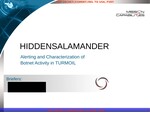
HIDDENSALAMANDER - Alerting and Characterization of Botnet Activity in TURMOIL [pdf]
This NSA briefing describes HIDDENSALAMANDER, a TURMOIL component that detects, tracks, and characterizes botnet command-and-control traffic on passive collection sensors worldwide, generating enriched metadata about bot herders, infected machines, attack commands, and malware families while providing low-latency defensive alerts when botnet activity involves high-value targets or protected networks. The system extends beyond traditional signature matching by decrypting Zeus RC4-encrypted traffic, extracting payload details like target IPs and DDoS commands, tracking C2 servers across multiple sessions, and categorizing botnet lifecycle stages (configuration, infection, reconnaissance, C&C communication, attack, exfiltration) to support both offensive attribution and defensive response.
Programs: HIDDENSALAMANDER · TURMOIL · CLOUDSHIELD · NETEZZA · TUTELAGE · GMPLACE · RONIN · CYBERCLOUD · MARINA · GHOSTMACHINE · QBOT · ASDF · MARIPOSA · XKEYSCORE · GOGADGET · TURQI · TRAFFICTHIEF · FALLOUT · POUNDSAND · BLUESMOKE · AEG · TURNABOUT · QUANTUMBOT -
HIMR Data Mining Research Problem Book [pdf]
This document is a research roadmap created by GCHQ for the Heilbronn Institute for Mathematical Research (HIMR). Its purpose is to guide long-term mathematical and data-mining research that could improve signals intelligence (SIGINT) capabilities. It outlines key research problems, datasets, and collaboration plans between intelligence agencies and academic researchers. The main goal is to develop new algorithms and mathematical tools to analyze extremely large communications datasets produced by modern surveillance systems.
Programs: CLOUD · DISTILLERY · DISCOVER · PRESTON · LECKWITH · TERRAIN · BROADOAK · NGE · FIVEALIVE · CHARTBREAKER · FIRSTCONTACT · GEOFUSION · RADONSHARPEN-B · PRIMETIME · HIDDENOTTER · BAKERSDOZEN · CLASP · SALTYOTTER · BIRCH · SOLIDINK · FLUIDINK · MAMBA · GRINNINGROACH · PIRATECAREBEAR · AUTOASSOC · CROUCHINGSQUIRREL · HRMAP · KACHINA · SQUEAL · QUESTA · METEORSHOWER · SUNSTORM · GOLDMINE · HAGERAWEL · WOODY · BUZZ · SILVERLIBRARY · SILVERLINING · VALHALLA · MOUNTMCKINLEY · SEPANG · BLACKHOLE · SALAMANCA · HAGELAWEL · LUCKYSTRIKE · SPIKYROCK · MYOFIBRIL · INJUNCTION · PSYCHICSALMON · RAGINGBULLFROG · ROBOTICFISH · TIMIDTOAD · AURA · CARBONCOPY · CASK · CHORDAL · CRAN · INSTINCT · MADFORGE · SWAMP · VOLSUNGA · WHITERAVEN · MVR · PPF · JTRIG · MAPREDUCE · MAILORDERPeople: Tukey, John -
I hunt sys admins [pdf]
These internal documents outline the NSA’s strategy for identifying and targeting foreign system administrators to gain "keys to the kingdom" access to global network infrastructure. By correlating disparate datasets—such as passive telnet/SSH metadata and personal social media/webmail logins—the agency identifies personal accounts to facilitate QUANTUM-based hacking operations and network "pwnage."
-
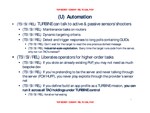
Industrial-Scale Exploitation [pdf]
This top-secret NSA document details the operational philosophy behind the TURBINE system's transition to "industrial-scale exploitation." By integrating with both active and passive sensors, TURBINE automates the delivery of malware and the maintenance of network implants, specifically targeting routers and server-side code execution.
-
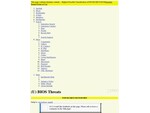
Intellipedia – BIOS Threats [pdf]
This from an internal wiki for the U.S. intelligence community, titled “BIOS Threats” details the use of malicious BIOS implants as a means of achieving persistent system compromise for cyber espionage and attack purposes. It discusses the history, technical challenges, detection limitations, and global development of BIOS-based malware by both state and non-state actors, including U.S. and Chinese cyber units.
-
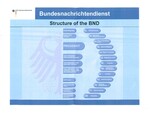
Internal NSA presentation on the BND's organization [pdf]
These six organizational charts and briefing slides detail the structure of Germany's BND foreign intelligence service, specifically its SIGINT Directorate (Abteilung Technische Aufklärung) and new Cyber Intelligence division (T4), along with a cooperation model showing intelligence sharing between BND, domestic intelligence service BfV, and the Federal Office for Information Security (BSI).
-
Internet Anonymity 2011 [pdf]
A TOP SECRET NSA presentation from 2011 providing a comprehensive survey of Internet Anonymity Technologies (IAT) — covering HTTP proxies, VPN anonymity providers, multi-hop networks including Tor and JAP, anonymous remailers and circumvention tools — alongside NSA's capabilities and limitations against each, including XKEYSCORE fingerprints for VPN identification, the PARTNERSNIPPET Tor deanonymisation team, GOLDENFORTIN Netflow data, and a candid assessment that Tor offers "no passive exploitation."
Programs: FOXTRAIL · NKB · NACIRONIN · PONTENTPOTABLES · RONIN · XKEYSCORE · PARTNERSNIPPET · GOLDENFORTIN · SNAPEPeople: Heap, Austin -
Interview with a SID "Hacker" -- Part 1: How Does TAO Do Its Work? SIDtoday [pdf]
A SIDToday interview from July 2012 with a counterterrorism subject-matter expert in TAO's Requirements and Targeting organisation, explaining how TAO plans and executes computer network exploitation operations.
“The Digital Arms Race: NSA Preps America for Future Battle” - Der Spiegel ↗ (2015-01-17) · “Arbeiten mit geheimen Snowden-Dokumenten” - Der Spiegel ↗ (2015-07-03) · Appelbaum, Jacob · Gibson, Aaron · Guarnieri, Claudio · Müller-Maguhn, Andy · Poitras, Laura · Rosenbach, Marcel · Ryge, Leif · Schmundt, Hilmar · Sontheimer, Michael · Eckert, Svea · Stark, Holger -
Interview with a SID "Hacker" -- Part 2: Hacker Culture and Worker Retention SIDtoday [pdf]
A SIDtoday internal NSA newsletter interview with a redacted TAO employee discussing hacker culture within the agency's offensive cyber unit, worker retention challenges, and the team's role in operations including the raid that killed Osama bin Laden.
Programs: SCQAWKPeople: bin Laden, Osama -
Intro to the VPN Exploitation Process [pdf]
NSA introduction to the VPN exploitation process from September 2010, presented by the OTP VPN Exploitation Team, covering the full workflow from initial collection through to sustained decryption of IPSec, PPTP, SSL and SSH traffic, with named exploitation successes including airlines, diplomatic missions, banks and intelligence services across Iran, Jordan, Russia, Turkey, Pakistan, Afghanistan, Somalia, Indonesia and Mexico.
Programs: BLEAKINQUIRY · TOYGRIPPE · XKEYSCORE · MAILORDER · CORALREEF · VULCANDEATHGRIP · SCISSORS · TURTLEPOWER · PINWALE · FOURSCORE · CADENCE · UTT · VULCANMINDMELD · CAPRIOS · AGILITY · NKB · FOLLOWTHEMONEY -
Introduction to WLAN / 802.11 Active CNE Operations [pdf]
This NSA powerpoint introduces computer network exploitation (CNE) criteria and assesment as well as active CNE operations. It also introduces the FOXACID program, which is a program to deliver content based exploits to web browsers.
-
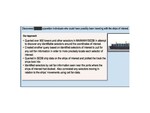
Intrusion Analysis – GCHQ [pdf]
An internal GCHQ write-up defines the Intrusion Analysis team’s remit inside the Joint Electronic Attack Cell: all‑source analysis of emerging and active electronic attacks, stewardship of electronic attack signatures, and SIGINT‑driven targeting under EITT oversight. It details sources, reporting channels, legal authorities, and auditing controls that govern how signatures are deployed and how selectors are managed.
-
iPhone target analysis and exploitation with unique device identifiers [pdf]
A GCHQ technical paper from November 2010 describing iPhone target analysis and exploitation using the QUANTUM system — covering UDID-based target tracking and correlation across MUTANT BROTH and AUTOASSOC, a Safari PDF exploit delivering WARRIORPRIDE implants to target iPhones via QUANTUM redirection, and a confirmed successful exploitation of a jailbroken target phone yielding address book, SMS, call logs, notes, WiFi logs, browser history and images.
Programs: QUANTUM · DEBITCARD · AUTOASSOC · HARDASSOC · MUTANTBROTH · BROKER · HANDEX · WARRIORPRIDE · ABSOLINEEPILSON · BROADOAK · SOLARSHOCK · BLACKHOLE · SHORTSHEET · XKEYSCORE · MARINA · LOOKINGGLASS · OVERLIT · SLIDE · SEP · PRESTON · WHIPSAW · CROWNPRINCE · CORINTH · MVR · SOCIALANTHROPOID -
IR.21 – A Technology Warning Mechanism [pdf]
This 2010 TOP SECRET NSA briefing defines the IR.21 roaming document as a critical tool for "horizon scanning" and "forecasting" global telecommunications shifts. The document outlines how the NSA uses these technical files to proactively identify emerging 3G and 4G technologies, pinpointing vulnerabilities for exploitation before new systems are even fully deployed.
-
Iran – Current Topics, Interaction with GCHQ [pdf]
This NOFORN top secret April 2013 NSA document, shows how Iran significantly improved its offensive cyber capabilities by learning from cyberattacks against it, such as the April 2012 attack on its own oil industry, subsequently launching its own destructive attacks against Saudi Aramco and U.S. financial institutions.
-
Is there "fifth party" collection? [pdf]
This NSA internal Q&A forum discussion reveals "fifth party collection"—where the NSA passively intercepts data from one intelligence service (South Korea) that has compromised another service's (North Korea) computer network exploitation operations, creating a three-layer chain where NSA exploits Actor One's access to Actor Two's CNE activities against shared targets. The thread provides concrete examples including NSA leveraging South Korean implants on North Korean officials' computers (who themselves were conducting CNE operations) and stealing zero-day exploits from unidentified foreign intelligence services by passively monitoring their successful attacks.
-
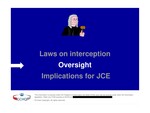
Laws on interception - Oversight - Implications for JCE (JCE UK Legalities Context) [pdf]
This GCHQ training presentation on UK surveillance laws, oversight mechanisms, and implications for Joint Collaborative Environment operations explicitly acknowledges that the UK has "a light oversight regime compared with US," detailing how RIPA, ISA, commissioners, and the Investigatory Powers Tribunal function to provide legal authorization while noting the Tribunal has "always found in our favour."
Programs: JTRIG -
Location Cookies [pdf]
These slides contain excerpts from an April 2013 National Security Agency presentation detailing signal surveillance techniques and successes. They reveal that the NSA and its British counterpart, Government Communications Headquarters (GCHQ), use a Google-specific tracking cookie to pinpoint targets for hacking.