Article
Spies Hacked Computers Thanks to Sweeping Secret Warrants, Aggressively Stretching U.K. Law
Documents published with this article 8
-
Intrusion Analysis – GCHQ [pdf]
An internal GCHQ write-up defines the Intrusion Analysis team’s remit inside the Joint Electronic Attack Cell: all‑source analysis of emerging and active electronic attacks, stewardship of electronic attack signatures, and SIGINT‑driven targeting under EITT oversight. It details sources, reporting channels, legal authorities, and auditing controls that govern how signatures are deployed and how selectors are managed.
-
Malware Analysis & Reverse Engineering – ACNO Skill Levels [pdf]
A GCHQ competency profile defines the “Malware Analysis & Reverse Engineering” skill (ACNO Skill 12), detailing required knowledge, hands-on abilities, and a graded proficiency ladder from novice to community-recognized expert. It codifies tradecraft spanning exploitation, static/dynamic analysis, anti-analysis countermeasures, and tooling (including IDA Pro), aligning outcomes from detection through mitigation advice.
Marking: SECRET -
Operational Legalities – GCHQ Powerpoint Presentation [pdf]
GCHQ’s “Operational Legalities” deck is an internal compliance playbook that translates the UK’s surveillance laws into day‑to‑day SIGINT procedure—drilling staff on authorisation, necessity, and proportionality, and walking through warrants, targeting justifications, database queries, dissemination, and oversight. Half slides and half speaker notes, it shows how analysts are trained to document, audit, and defend operations under ISA, RIPA, HRA, and WTA while navigating edge cases like location, nationality, second‑party constraints, and “indirect targeting.”
-
GCHQ Application for Renewal of Warrant GPW/1160 [pdf]
GCHQ’s 2008 application to renew warrant GPW/1160 seeks blanket cover under ISA section 5 to reverse engineer and modify commercial software—explicitly breaching copyright and licensing—to enable CNE, vulnerability research, and even police forensics. It catalogues concrete ops against web forums, routers, and antivirus, and asserts a novel legal theory blessed by the Intelligence Services Commissioner to immunize intellectual‑property interference.
-
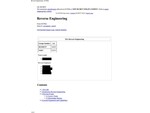
Reverse Engineering – GCHQ Wiki [pdf]
GCHQ’s internal GCWiki page sketches the TEA Reverse Engineering unit inside the TECA Product Centre: a lab team built to dissect hardware and embedded crypto devices, defeat smartcard‑class microprocessors, and turn black boxes into SIGINT‑ready emulators. It doubles as a training hub and liaison node, with kit lists, tours, and SRE exchanges—most real work pushed behind higher‑compartment CAWiki pages.
Marking: UK SECRETPrograms: RUSSETT -
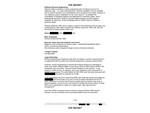
Software Reverse Engineering – GCHQ [pdf]
GCHQ’s Network Defence unit runs software reverse engineering across both malicious and commercial code to map vulnerabilities, validate security claims, and feed CESG’s advice on electronic attack. Malicious code is fair game, but commercial RE hinges on GCHQ’s ISA s5 SRE warrant (GPW/1160), with local authorisers and audits—after a documented lapse in 2008 was retro‑authorised.
Marking: TOP SECRET -
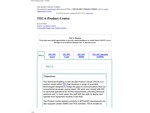
TECA Product Centre — Wiki [pdf]
The TECA Product Centre is a GCHQ unit, within the Technical Enabling Covert Access group (TEA), whose mission is to develop and exploit specialist technologies and physical access methods to gain intelligence or SIGINT access where conventional methods fail. It works closely with SIS (MI6) on technical operations and deployment, offering bespoke managed services rather than direct products.
-
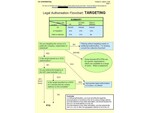
TSI — Legal Authorisation Flowcharts: Targeting & Collection [pdf]
This document contains internal GCHQ flowcharts outlining the mandatory legal authorization required for both Targeting specific entities and Collection (interception) of communications content, based primarily on the target's location, nationality, and whether the activity involves UK or "Second Party" countries, primarily referencing the Regulation of Investigatory Powers Act (RIPA).
Marking: UK CONFIDENTIAL