Reported Documents (810 total)
Documents published alongside news reporting on the Snowden disclosures.
Sort: Title
Documents
-
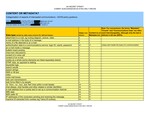
Content-Metadata Matrix [pdf]
GCHQ's internal taxonomy sorts intercepted data into "content" or "metadata" to determine what can be searched without individual warrants—email subject lines, full URLs, and buddy lists fall on opposite sides of the line, enabling analysts to mine massive troves of IP addresses, phone numbers, location data, and browsing history with just a few keystrokes and a brief justification.
-
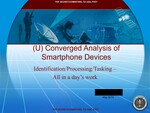
Converged Analysis of Smartphone Devices [pdf]
This 2010 document outlines NSA methods for identifying, processing, and exploiting data from smartphones by targeting both telephony and digital network intelligence (DNI). It details how analysts use tools like XKEYSCORE and metadata extraction to collect geolocation, app data, call logs, unique identifiers, and user activity from popular mobile apps and services (e.g., Google Maps, Facebook, Flickr), emphasizing the intelligence potential of smartphones as rich surveillance targets.
People: Kuruc, Paula -
Cooperation between the NSA and BND [pdf]
Comprehensive internal summary of the history and current state of cooperation between the NSA and BND
Programs: RT-RGPeople: Schindler, Gerhard -
Counterterrorism Analytic Working Group Meets in Madrid SIDtoday [pdf]
This SIDtoday document details the 11th SIGINT Seniors Counterterrorism (SISECT) Analytic Working Group meeting in Madrid, which focused on enhancing counterterrorism collaboration through topics like terrorist use of the Internet, metadata sharing, and language capabilities. Key outcomes included initiatives for SIGINT exploitation of the Internet, improving language processing and translation via SIGDASYS, and fostering deeper cooperation between nations on counterterrorism efforts.
-
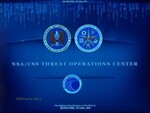
Cover slide NSA/CSS Threat Operations Center, February 2013 [pdf]
Cover slide of a February 2013 NSA/CSS Threat Operations Center (NTOC) briefing prepared for release to Japan. Only this title slide is public, captured from an NDR news video; the substance of the brief has never been published.
-
CQV Fields Nov 2010 NSA [pdf]
An NSA field definition guide for the ECHELON system's CQV database, cataloging how intercepted communications are tagged, routed, and indexed—from file types and appid fingerprints to Forward Instruction Tables, country codes derived from trigraphs, and dictionary-based keyword tokens that steer selected traffic to a requesting system and/or analysts.
-
CRISSCROSS/PROTON Point Paper [pdf]
Originating as a CIA/DEA joint venture in the 1990s, CRISSCROSS/PROTON is a centralized repository used by five U.S. agencies (CIA, DEA, NSA, DIA, FBI) for massive link analysis and contact chaining. The document details how the NSA provides billions of telephony records to the system to assist in capturing High Value Individuals (HVIs) but recommends transitioning to an NSA-led architecture using the GLOBALREACH federated query service.
-
Crypt Discovery Joint Collaboration Activity 20 January 2011 [pdf]
A TOP SECRET NSA/GCHQ joint collaboration activity plan from January 2011 describing a research programme to understand and mitigate the threat that rising encryption adoption poses to target discovery and development — measuring encryption prevalence across SIGINT collection, assessing the impact on metadata-based targeting tradecraft, and developing new techniques for identifying targets behind encrypted traffic using a joint cloud environment fed by MUTANT BROTH, BEARDED PIGGY, KARMA POLICE, MEMORY HOLE, MARBLED GECKO, SOCIAL ANIMAL and ASDF metadata.
Marking: TOP SECRETPrograms: TICKETWINDOW · MUTANTBROTH · BEARDEDPIGGY · KARMAPOLICE · MEMORYHOLE · MARBLEDGECKO · SOCIALANIMAL · XKEYSCORE · ASDF“Prying Eyes: Inside the NSA's War on Internet Security” - Der Spiegel ↗ (2014-12-28) · “Profiled: From Radio to Porn, British Spies Track Web Users' Online Identities” - The Intercept ↗ (2015-09-25) · Appelbaum, Jacob · Gibson, Aaron · Grothoff, Christian · Müller-Maguhn, Andy · Poitras, Laura · Sontheimer, Michael · Stöcker, Christian · Gallagher, Ryan -
Crypt Ops Data Store User Guide [pdf]
A SECRET GCHQ user guide for the Crypt Ops Data Store — the internal task management system used by GCHQ's cryptanalytic operations division to receive, triage, assign and track decryption and cryptanalytic requests — notable for its category list which maps task types to operational programmes including BULLRUN, BEARDED PIGGY and VPN exploitation.
Marking: SECRET -
Cryptographic Modernization (CryptoMod) Classification Guide 3-9 [pdf]
A partial NSA/CSS classification guide for the Cryptographic Modernisation (CryptoMod) programme — establishing classification levels for information about NSA's transition of US cryptographic products to modern algorithms, Positive Access Control parameters, software signing, and the association of specific algorithms with critical year and life-of-use assessments.
-
CRYPTOLOGIC SERVICES GROUPS (CSGs) [pdf]
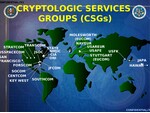
Worldwide locations of the Cryptologic Services Groups (CSGs). The visual is a world map annotated with the locations of CSGs embedded in or supporting major U.S. combatant commands and agencies. These groups act as NSA’s cryptologic arms inside military commands. Cryptologic operations are co-located with military command authority and signals intelligence is structurally tied to every major U.S. warfighting domain.
-
Cryptologic shore support [pdf]
The document describes the Maritime Cryptologic Integration Centres (MCICs), which provide global SIGINT support to naval, air, and land units. Three MCICs operate within U.S. Fleet Information Operation Centres, while the fourth, uniquely joint U.K.–U.S. (RN/USN), is at RAF Digby in Lincolnshire, responsible for 24/7 cryptologic support to U.K. and allied missions across the North Atlantic, Barents, Baltic, and Black Seas, as well as North and Sub-Saharan Africa.
Marking: CONFIDENTIAL -
CSEC Cyber Threat Capabilities [pdf]
This document details CSEC’s full-spectrum cyber operations architecture, integrating SIGINT and IT Security to conduct both defensive and offensive activities under the guise of “information superiority.” While early sections emphasize detection, anomaly analysis, and collaboration with Five Eyes partners, later portions reveal active measures including network infiltration (implant deployment), command-and-control tracking, traffic manipulation and redirection, DNS interference, and potential disruption or deception operations—illustrating CSEC’s capacity not only to defend Canadian networks but also to surveil, exploit, and influence foreign and domestic digital infrastructure.
Programs: EONBLUE · CYBERDMZ · SEEDSPHERE · PHOTONICPRISM · SPECIALSOURCE · SUPERDRAKE · DARKSPACE · QUANTUM · MANDATE · STREAMING SENTRY · SSO · TKB · COVENANT -
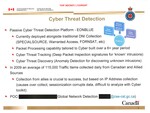
CSEC Cyber Threat Detection [pdf]
This document details the Communications Security Establishment’s (CSEC) cyber threat detection and intelligence infrastructure, including systems like EONBLUE, CROSSBOW, CRUCIBLE, and LODESTONE, which enable passive monitoring, anomaly detection, and botnet identification through metadata and deep packet inspection. It outlines how CSEC integrates SIGINT, cryptanalysis, and network forensics to detect and mitigate cyber intrusions using both SIGINT and domestic sensors, while collaborating with Five Eyes partners to enhance Canada’s cyber defense and situational awareness. The presentation is duplicated from page 7 onwards - one of the duplicated slide has internal CSE comments.
Programs: EONBLUE · SPECIALSOURCE · WARRANTEDACCESS · COVENANT · SEEDSPHERE · DIESELRATTLE · SIENNABLUE · DOWNGRADE · CROSSBOW · CRUCIBLE · LODESTONE -
CSEC ITS/N2E Cyber Threat Discovery [pdf]
A CSEC IT Security presentation to the DISCOCON 2010 conference, given with speakers' notes, on how the agency's cyber threat discovery team hunts for intrusions in the traffic it collects from Government of Canada networks. It describes the PonyExpress email processing system, which the notes record as handling 400,000 emails a day, the 8Ball attachment scanner and the Stripsearch binary analyser, and reports experiments in reducing the volume of metadata analysts see — including a machine learning model that discards 85% of email before deep scanning.
Marking: TOP SECRETPrograms: PONYEXPRESS · 8BALL · STRIPSEARCH · POPQUIZ · SLIPSTREAM · FINDMASK · SAWUNEH · TROPPUSNU · N2E · DISCOCON -
CSEC SIGINT Cyber Discovery: Summary of the current effort [pdf]
This document provides a overview of the Communications Security Establishment Canada (CSEC) cyber operations, detailing its SIGINT, CNE (Computer Network Exploitation), and cyber counterintelligence programs, including tools like WARRIORPRIDE, REPLICANTFARM, and EONBLUE for threat detection, anomaly discovery, and metadata production. It outlines operational procedures, analytic methodologies, and collaborative frameworks with domestic and Five Eyes partners for sharing intelligence, tipping/cueing, and integrating cyber and traditional counterintelligence efforts.
Programs: REPLICANTFARM · SLIPSTREAM · WARRIORPRIDE · DAREDEVIL · CHORDFLIER · NAMEDROPPER · WORMWOOD · OBELIX · SHEPHERD · CARBON · REGBACKUP · DOGHOUSE · WALKER · ALOOFNESS · BLAZINGANGEL · TINYWEB · QUIVERINGSQUAB · WINDO · DIESELRATTLE · WIDOWKEY · CIVETCAT · WINBEE · SSLINST · PULLEDPORK · EONBLUE · SNIFFLE · QUANTUM · XKEYSCORE · HALTERHITCH · FASTFLUX · DEADSEA · NSPACES · PPF · SSO · TKB“The Digital Arms Race: NSA Preps America for Future Battle” - Der Spiegel ↗ (2015-01-17) · “Communication Security Establishment's cyberwarfare toolbox revealed” - CBC News ↗ (2015-03-23) · “Documents Reveal Canada’s Secret Hacking Tactics” - The Intercept ↗ (2015-03-23) · Appelbaum, Jacob · Gibson, Aaron · Guarnieri, Claudio · Müller-Maguhn, Andy · Poitras, Laura · Rosenbach, Marcel · Ryge, Leif · Schmundt, Hilmar · Sontheimer, Michael · Seglins, Dave · Hildebrandt, Amber · Pereira, Michael · Greenwald, Glenn · Gallagher, Ryan -
CSEC Surveillance of Travellers Through Airport Wi-Fi Tracking [pdf]
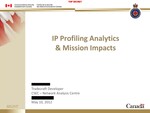
The leaked 2012 top secret CSEC presentation details a trial program that used airport Wi-Fi metadata to identify and track travellers’ devices across Canada and internationally, developing advanced “IP profiling” techniques to map movements through hotels, airports, and public hotspots. The program, conducted with NSA support, aimed to build powerful analytic tools for surveillance and real-time alerts within the Five Eyes intelligence network.
Marking: TOP SECRET -
Culture Shock: NSA from the Perspective of Summer Interns SIDtoday [pdf]
Two interns in the 2007 NSA Intelligence Analysis Summer Program share their initial culture shock and misconceptions about the agency, from unrealistic expectations about high-tech tools to the reality of strict regulations and a supportive, collaborative environment.
-
Current Efforts - Google [pdf]
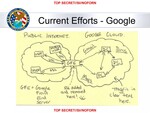
The famous NSA slide from the MUSCULAR program showing where Google's encryption is stripped away — a hand-drawn diagram of Google's cloud architecture annotated with "SSL Added and removed here!" beside a smiley face, marking the exact point where NSA and GCHQ intercepted Google user data flowing unencrypted between Google's data centers.
-
Cyber Defence Operations Legal Policy [pdf]
GCHQ's internal wiki laying out the legal plumbing for its Cyber Defence Operations (formerly NDIST)—detailing warrant types (RIPA, ISA, CNE), data retention schedules, targeting rules for UK/Five Eyes infrastructure, XKEYSCORE query protocols, and the bureaucratic hoops analysts must jump through to search attacker IPs, fingerprint UK networks, and share malware intelligence without tripping over location/nationality safeguards or commercial sensitivities.
Programs: JTRIG · SPAY · GORDIANKNOT · CHORDAL · DISCOVER · EVENTS · CASPORT · XKEYSCORE · CONTENT CLOUD · SQUEAL · MIRAGE · MUTANTBROTH · ANXIOUS · HALTERHITCH · BROADOAK · DONKEYKONG · ZOOL · PALANTIR · OVERLINK · RT · GATEKEEPER · IRONHAND · HARUSPEX · B3M · LOOKINGGLASS · GOLDENEYE · BLAZINGSADDLES · MOONRAKER · TRITON