Publication year: 2014 283 documents
Search documents matching “2014” →When a publisher first published each document. If a document is published multiple times, only the oldest one is used here.
Graphs
By document date (12 years)
By published date (6 years)
Sort: Title
Documents
-
Guidelines for the classification of NSA SIGINT details (1945-1967) [pdf]
This document is an NSA classification guide that defines how and why historical SIGINT material from 1945–1967 remains classified, in many cases for 75 years. It systematically explains which intelligence activities, targets, partnerships, and technical methods must stay protected because they still reveal sensitive sources, methods, and diplomatic equities.
-
HOMING PIGEON [pdf]
Slides on a query-focused dataset that would correlate GSM handsets seen on two or more aircraft flights with their subscribers.
“US and Britain refine their ability to tap into airline passenger’s mobile phones while they are in the air” - Le Monde ↗ (2016-12-07) · “American and British Spy Agencies Targeted In-Flight Mobile Phone Use” - The Intercept ↗ (2016-12-07) · “No Place to Hide” - Metropolitan Books ↗ (2014-05-13) · Follorou, Jacques · Greenwald, Glenn -
HR DIETMAR B - Director SIGINT Analysis and Production German Federal Intelligence Service, 30 April - 1 May 2013 [pdf]
This draft agenda outlines scheduled meetings and presentations for a collaboration event between the German Federal Intelligence Service (BND) and the NSA, held from April 30 to May 1, 2013. The agenda details various discussions on SIGINT analysis, data acquisition, and counterterrorism efforts, showcasing the active engagement between the two intelligence communities.
Programs: SSOPeople: Alexander, Keith B. -
Huawei - Social Network Analysis [pdf]
This document describes Social Network Analysis targeting top leadership at Huawei. By tracking the email selectors of CEO Ren Zhengfei and Chairwoman Sun Yafang, the agency mapped their professional and personal connections.
“NSA: Imperiale Visionen” - Der Spiegel ↗ (2014-03-23) · Rosenbach, Marcel · Stark, Holger · Zand, Bernhard -
I hunt sys admins [pdf]
These internal documents outline the NSA’s strategy for identifying and targeting foreign system administrators to gain "keys to the kingdom" access to global network infrastructure. By correlating disparate datasets—such as passive telnet/SSH metadata and personal social media/webmail logins—the agency identifies personal accounts to facilitate QUANTUM-based hacking operations and network "pwnage."
-
ICREACH Black Budget Extracts [pdf]
This document provides fiscal and strategic justifications for the continued expansion of ICREACH, detailing its role as a primary vehicle for disseminating both telephony and Digital Network Intelligence (DNI) metadata across the Intelligence Community. It outlines the platform's transition to the NSA/CSS cloud architecture, a move intended to enhance data enrichment services and ensure the system remains responsive to the evolving requirements of the National Intelligence Priorities Framework (NIPF).
Programs: ICREACH -
ICREACH Wholesale Sharing (2007) [pdf]
This document serves as an official submission by the SID Technical Director detailing the leadership and collaborative efforts required to transition ICREACH from a conceptual framework into the Intelligence Community's first wholesale metadata-sharing platform. This document emphasizes the role of the SID team in securing critical legal and policy approvals through the NSA's Office of the General Counsel and coordinating with Five Eyes partners to ensure international participation in the system.
Programs: ICREACH -
ICREACH: Sharing SIGINT Comms Metadata with the Intel Community SIDtoday [pdf]
This document serves as an internal announcement marking the 2007 operational launch of ICREACH, a massive signals intelligence (SIGINT) metadata-sharing platform designed to provide real-time access to raw communication records for authorized analysts across the U.S. Intelligence Community. By consolidating telephony, cellular, and satellite data into a "one-stop shop" similar to the NSA’s internal GLOBALREACH tool, the program aimed to fulfill post-9/11 mandates for increased inter-agency collaboration and enhanced target development.
-
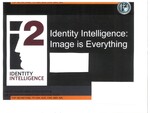
Identity Intelligence: Image Is Everything [pdf]
This document is a highly classified NSA/CSS briefing detailing Identity Intelligence (i2), a comprehensive methodology for exploiting unique fragments of information to track, identify, and exploit targets of interest. It outlines an expansive architecture for data collection that spans Biometric/Biologic, Biographic, and Contextual/Behavioral domains, essentially mapping every conceivable data point of an individual's physical existence and digital/social footprint.
-
India: Support to Terrorist Attacks in Mumbai [pdf]
A top secret NSA intelligence report on GCHQ's surveillance of Lashkar-e-Taiba technology chief Zarrar Shah before and during the November 2008 Mumbai attacks, documenting how analysis of his internet browsing and viewing habits revealed reconnaissance activity and operational planning against Mumbai targets including the Taj Hotel.
People: Shah, Zarrar“In 2008 Mumbai Attacks, Piles of Spy Data, but an Uncompleted Puzzle” - The New York Times ↗ (2014-12-21) · “In 2008 Mumbai Attacks, Piles of Spy Data, But an Uncompleted Puzzle” - ProPublica ↗ (2014-12-21) · “In 2008 Mumbai Attacks, Piles of Spy Data, but an Uncompleted Puzzle” - PBS ↗ (2014-12-21) · Glanz, James · Rotella, Sebastian · Sanger, David E. · Jennings, Tom · Peevey, Anna Belle · Nieling, Michael -
Industrial-Scale Exploitation [pdf]
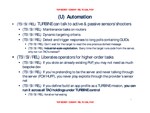
This top-secret NSA document details the operational philosophy behind the TURBINE system's transition to "industrial-scale exploitation." By integrating with both active and passive sensors, TURBINE automates the delivery of malware and the maintenance of network implants, specifically targeting routers and server-side code execution.
-
Internal NSA presentation on the BND's organization [pdf]
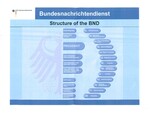
These six organizational charts and briefing slides detail the structure of Germany's BND foreign intelligence service, specifically its SIGINT Directorate (Abteilung Technische Aufklärung) and new Cyber Intelligence division (T4), along with a cooperation model showing intelligence sharing between BND, domestic intelligence service BfV, and the Federal Office for Information Security (BSI).
-
Internet Anonymity 2011 [pdf]
A TOP SECRET NSA presentation from 2011 providing a comprehensive survey of Internet Anonymity Technologies (IAT) — covering HTTP proxies, VPN anonymity providers, multi-hop networks including Tor and JAP, anonymous remailers and circumvention tools — alongside NSA's capabilities and limitations against each, including XKEYSCORE fingerprints for VPN identification, the PARTNERSNIPPET Tor deanonymisation team, GOLDENFORTIN Netflow data, and a candid assessment that Tor offers "no passive exploitation."
Programs: FOXTRAIL · NKB · NACIRONIN · PONTENTPOTABLES · RONIN · XKEYSCORE · PARTNERSNIPPET · GOLDENFORTIN · SNAPEPeople: Heap, Austin -
Intro to the VPN Exploitation Process [pdf]
NSA introduction to the VPN exploitation process from September 2010, presented by the OTP VPN Exploitation Team, covering the full workflow from initial collection through to sustained decryption of IPSec, PPTP, SSL and SSH traffic, with named exploitation successes including airlines, diplomatic missions, banks and intelligence services across Iran, Jordan, Russia, Turkey, Pakistan, Afghanistan, Somalia, Indonesia and Mexico.
Programs: BLEAKINQUIRY · TOYGRIPPE · XKEYSCORE · MAILORDER · CORALREEF · VULCANDEATHGRIP · SCISSORS · TURTLEPOWER · PINWALE · FOURSCORE · CADENCE · UTT · VULCANMINDMELD · CAPRIOS · AGILITY · NKB · FOLLOWTHEMONEY -
IR.21 – A Technology Warning Mechanism [pdf]
This 2010 TOP SECRET NSA briefing defines the IR.21 roaming document as a critical tool for "horizon scanning" and "forecasting" global telecommunications shifts. The document outlines how the NSA uses these technical files to proactively identify emerging 3G and 4G technologies, pinpointing vulnerabilities for exploitation before new systems are even fully deployed.
-
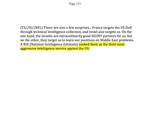
Israel targets US [pdf]
2 p.An NSA assessment noting that France targets the US Department of Defense and that Israel, while an extraordinarily good SIGINT partner, also targets the United States — ranked by a National Intelligence Estimate as the third most aggressive intelligence service against the US — and that the exchange has tilted heavily toward Israeli needs.
-
Israel-US 1999 Agreement [pdf]
This July 1999 top secret agreement between the U.S. Defense Intelligence Agency and Israel's Directorate of Military Intelligence establishes comprehensive intelligence-sharing arrangements covering Middle Eastern threats, terrorism, weapons of mass destruction, and foreign materiel exploitation, superseding previous agreements dating back to 1968 and including specific provisions for conferences, written requests, face-to-face analyst meetings, and security protocols.
-
-
JORDAN-BELGIUM [pdf]
2008 GCHQ report documenting the interception of a Jordan–Belgium satellite telecommunications link, through which British intelligence monitored call traffic and identified tasked surveillance targets including the Turkish foreign ministry, Palestinian Authority figures and Israeli MK Ahmad Tibi, along with other hits on Kurdish leadership, diplomats, and Jordanian government offices such as the Royal Protocol Office. The published copies redact different entries. Der Spiegel's and The Intercept's show the Turkish and Kurdish ones, Le Monde's (version 8BBAC) the Palestinian and Jordanian ones.
People: Tibi, Ahmad“Turkey Is 'Partner and Target' for the NSA” - Der Spiegel ↗ (2014-08-31) · “How the NSA Helped Turkey Kill Kurdish Rebels” - The Intercept ↗ (2014-08-31) · “L’Autorité palestinienne et la Jordanie espionnées par les services américains et britanniques” - Le Monde ↗ (2016-12-07) · Poitras, Laura · Rosenbach, Marcel · Sontheimer, Michael · Stark, Holger · Follorou, Jacques -
JPEL TARGETS [pdf]
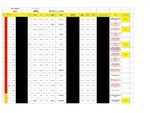
This anonymized Joint Prioritized Effects List (JPEL) roster reveals that NATO/ISAF maintained a large, systematically managed list of prioritized targets in Afghanistan—including mid‑ and low‑level insurgents, alleged drug traffickers, and local figures—used to authorize lethal and capture operations. The table shows priorities, regions, lead agencies, update requirements, and associated bounties, illustrating how targeting became bureaucratized and normalized across the campaign.