Publication year: 2014 283 documents
Search documents matching “2014” →When a publisher first published each document. If a document is published multiple times, only the oldest one is used here.
Graphs
By document date (12 years)
By published date (6 years)
Sort: Title
Documents
-
MTI Access Project - Weekly Status w/e 28 November 08 [pdf]
The document details the MTI Access Project’s status in November 2008, including a significant payment to GERONTIC, updates on organizational changes, and discussions about future access opportunities and cost reductions. This aligns with broader revelations about GERONTIC’s role in supporting GCHQ's surveillance operations, facilitating access to telecom infrastructure and shaping surveillance strategies.
“Vodafone – der lange Arm des britischen Geheimdienstes?” - WDR ↗ (2014-11-20) · “Spy cable revealed: how telecoms firm worked with GCHQ” - Channel 4 ↗ (2014-11-20) · “Der lange Arm des Geheimdienstes?” - NDR ↗ (2014-11-21) · “Snowden-Leaks: How Vodafone-Subsidiary Cable & Wireless Aided GCHQ’s Spying Efforts” - Süddeutsche Zeitung ↗ (2014-11-25) · Restle, Georg · White, Geoff · Strozyk, Jan · Moltke, Henrik · Poitras, Laura · Obermaier, Frederik -
MTI Access Project - Weekly Status w/e 6 February 09 [pdf]
This is a UK TOP SECRET STRAP1 COMINT GCHQ GCWiki page — a weekly status update for the MTI Access Project, week ending 6 February 2009.
Programs: GERONTIC“Vodafone – der lange Arm des britischen Geheimdienstes?” - WDR ↗ (2014-11-20) · “Spy cable revealed: how telecoms firm worked with GCHQ” - Channel 4 ↗ (2014-11-20) · “Der lange Arm des Geheimdienstes?” - NDR ↗ (2014-11-21) · “Snowden-Leaks: How Vodafone-Subsidiary Cable & Wireless Aided GCHQ’s Spying Efforts” - Süddeutsche Zeitung ↗ (2014-11-25) · Restle, Georg · White, Geoff · Strozyk, Jan · Moltke, Henrik · Poitras, Laura · Obermaier, Frederik -
MYSTIC [pdf]
These excerpts provide foundational details on the MYSTIC program, including its inception in 2009 and its structural organization. It defines MYSTIC as a program managed by the Special Source Operations (SSO) division, focusing on "embedded collection systems" within foreign wireless and mobile networks. The document confirms a deceptive operational model: the equipment is overtly installed to provide "commercial services" for telecommunications companies, while its secret purpose is to provide SIGINT (Signals Intelligence) to U.S. agencies.
-
N.S.A. Memo Expands Access to FISA Information [pdf]
In 2006, the National Security Agency sought to expand access to Foreign Intelligence Surveillance Act information — previously limited to its headquarters in Fort Meade, Md. — to its code-breakers in Georgia, Texas and Hawaii. Part of the deliberations focused on a problem that raised the possibility that the agency had violated rules the surveillance court established for handling the information.
-
N.S.A. Timeline of Surveillance Law Developments [pdf]
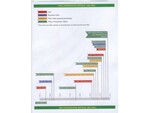
This chart, apparently from an internal N.S.A. presentation, lists milestones in surveillance rules over nearly four decades. The July 2002 “Raw Take” sharing order, whose existence has not previously been disclosed, is just one of three rulings by the Foreign Intelligence Surveillance Court to make the list. The other two were 2004 and 2006 rulings allowing bulk collection of data about emails and phone calls.
-
NAC BUDE Partnership - SATELLITE TELEPORT KNOWLEDGE (GCHQ) [pdf]
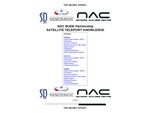
A top secret GCHQ Network Analysis Centre document from GCHQ Bude detailing comprehensive intelligence profiles of three German satellite teleport operators — Stellar, Ce-Tel, and IABG — including their network infrastructure, router configurations, IP ranges, employee identities, satellite customers, and login credentials, compiled to identify access chokepoints for SIGINT collection against German IP transit infrastructure.
People: Steffen, Christian · Sommer, Christoph · Fares, Ali · Grave, Richard · Steffen, Simona · Skaletz, Oliver -
National Security Agency: Overview Briefing [pdf]
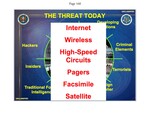
A slide from an unclassified NSA overview briefing, “The threat today”, which lists hackers, criminal elements, insiders and terrorists alongside technologies — the Internet, wireless, high-speed circuits, pagers, facsimile and satellite — as the threats the agency faces.
Marking: UNCLASSIFIED -
NCRs with Foreign Relations Missions Become 'SUSLAs' SIDtoday [pdf]
New titles have been created for four NSA/CSS Representatives (NCRs) to major Third Party partners. Special US Liaisons Advisors (SUSLA) to Italy and Germany were first named, now followed by Special US Liaison Advisors to Turkey (SUSLAT), Thailand (SUSLAB), Japan (SUSLAJ) and Korea (SUSLAK).
People: Schwemin, Sharon“Turkey Is 'Partner and Target' for the NSA” - Der Spiegel ↗ (2014-08-31) · “How the NSA Helped Turkey Kill Kurdish Rebels” - The Intercept ↗ (2014-08-31) · The Intercept ↗ (2019-05-29) · Poitras, Laura · Rosenbach, Marcel · Sontheimer, Michael · Stark, Holger -
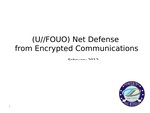
Net Defense from Encrypted Communications [pdf]
A NSA Technology Directorate briefing from February 2012 describing BLUESNORT — a capability that repurposes GALLANTWAVE's SSL/TLS decryption pipeline for network defence, re-injecting decrypted traffic into TURMOIL Stage 1 Prime where BLUESNORT detects malware and other malicious activity — representing description of NSA using its own bulk decryption infrastructure for cyber defence as well as intelligence collection.
-
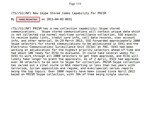
New Skype Stored Comms Capability For PRISM [pdf]
An SSO item on PRISM's new Skype stored-communications capability — buddy lists, credit card details, call data records and account information — with roughly 2,000 Skype selectors sent for FBI adjudication on 29 March 2013 and over 2,800 reports issued from PRISM Skype collection since April 2011.
-
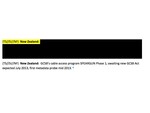
New Zealand SPEARGUN Phase 1 [pdf]
This document snippet provides a concise technical timeline for Project SPEARGUN, the New Zealand Government Communications Security Bureau's (GCSB) mass surveillance initiative. It confirms that the physical tapping of undersea cables (Phase 1) was completed and that the program was strategically synchronized with domestic political and legal developments. Specifically, the document reveals that the deployment of "metadata probes" (real-time automated data extraction) was contingent upon the passage of the GCSB Act in July 2013. This snippet is a critical piece of evidence showing that the legislative changes in New Zealand were tied by the NSA to GCSB's first metadata probe, planned for mid-2013 once the new GCSB Act was passed.
Programs: SPEARGUN -
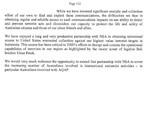
NSA and DSD relationship [pdf]
An extract from a February 2011 letter in which the acting deputy director of Australia's Defence Signals Directorate asks the NSA to extend their partnership to Australians involved in extremist activity, citing minimised access to US warranted collection against targets in Indonesia and the arrest of Bali bomber Umar Patek.
People: Patek, Umar -
NSA BOUNDLESSINFORMANT Chart on Netherlands [pdf]
The Netherlands BOUNDLESSINFORMANT chart covering Dec 10, 2012 to Jan 8, 2013 shows that Dutch intelligence collected and shared about 1.8 million cellphone metadata records with the NSA, primarily through CERF CALL systems. According to the Dutch government, the records were collected by the Dutch National SIGINT Organisation (NSO) for counterterrorism and military operations abroad, with Dutch phone numbers filtered out before sharing, and were not interception of calls in the Netherlands.
-
NSA Communications Hub in Europe Is Modernized SIDtoday [pdf]
This internal NSA report details the completion of "GODLIKELESION," a massive infrastructure modernization project at the European Technical Center (ETC) in Wiesbaden, Germany, which serves as the agency's primary communications and data-flow hub for Europe, Africa, and the Middle East. The project remediated critical failures in power and cooling systems while expanding capacity for 27 third-party partner data flows without interrupting mission operations.
Programs: GODLIKELESION -
NSA director's affidavit on foreign surveillance [pdf]
The affidavit was submitted in support of the 2010 certification concerning foreign governments, factions and other entities. In it, Alexander states that pursuant to the certification, NSA seeks to acquire foreign intelligence information concerning foreign powers. The list of foreign powers is in Exhibit F.
People: Alexander, Keith B. -
NSA document on targeting Five Eyes countries and territories [pdf]
This document states that the National Security Agency is prohibited from conducting foreign surveillance on the "Five Eyes" countries, which include U.S. allies Australia, Canada, New Zealand and the United Kingdom, or their territories.
-
NSA Espionage During the UN Climate Change Conference (COP15) in Copenhagen [pdf]
The leaked NSA document reveals that during the 2009 Copenhagen Climate Summit (COP15), the agency and its intelligence partners collected signals intelligence on other countries’ climate negotiation strategies, including advance details of China’s coordination with India and Denmark’s confidential “rescue plan,” to provide U.S. policymakers with a strategic advantage. It underscores how espionage was integrated into diplomatic efforts to influence the outcome of global climate talks.
People: Sarkozy, Nicolas -
NSA First-Ever Collect of High-Interest 4G Cellular Signal [pdf]
The memorandum documents a technical milestone achieved in January 2010: the first successful interception of Time Division-Long Term Evolution (TD-LTE) 4G communications. This collection was conducted at the RAINFALL site (the unclassified cover term for the Joint Defence Facility Pine Gap in Australia) and marked the transition of intelligence priority from 2G/3G systems to all-Internet Protocol (IP) 4G networks.
Programs: RAINFALL -
NSA Intelligence Relationship with Canada's Communications Security Establishment Canada (CSEC) [pdf]
This document describes the close, long-standing SIGINT partnership between the NSA and Canada’s CSEC, emphasizing cooperative efforts in global intelligence collection, cyber operations, information assurance, and critical infrastructure defense. It highlights mutual contributions, including CSEC’s unique geographic access, covert sites, cryptographic capabilities, and R&D collaboration, supporting U.S. and North American security objectives.
“Communication Security Establishment's cyberwarfare toolbox revealed” - CBC News ↗ (2015-03-23) · “Documents Reveal Canada’s Secret Hacking Tactics” - The Intercept ↗ (2015-03-23) · “No Place to Hide” - Metropolitan Books ↗ (2014-05-13) · Seglins, Dave · Hildebrandt, Amber · Pereira, Michael · Greenwald, Glenn · Gallagher, Ryan -