Classification: TOP SECRET 536 documents
Search documents matching “TOP SECRET” →Each document's classification level, as component values. If a document contains multiple classifications, the highest is used here.
Graphs
By document date (14 years)
By Banner
Refine (combine with another filter, via search)
Sort: Title
Documents
-
CNE EndPoint Project Load [pdf]
The CNE EndPoint Project Load document lists multiple GCHQ exploitation projects, with “PFENNING ALPHA” targeting Flag Telecom’s network. It notes automated pulls of router monitoring webpages, collection of performance statistics, and ongoing efforts to gain further access points within Reliance’s infrastructure, while other projects and targets remain redacted.
Programs: PFENNING ALPHA · BURRITO ALPHA · GLADDY IOTA · HEADRESS IOTA · HEADRESS KAPPA · HEADRESS NU · HEADRESS OMICRON · GLADDY CHI · EREPO · RELIANCE · GTE“Vodafone – der lange Arm des britischen Geheimdienstes?” - WDR ↗ (2014-11-20) · “Spy cable revealed: how telecoms firm worked with GCHQ” - Channel 4 ↗ (2014-11-20) · “Der lange Arm des Geheimdienstes?” - NDR ↗ (2014-11-21) · “Snowden-Leaks: How Vodafone-Subsidiary Cable & Wireless Aided GCHQ’s Spying Efforts” - Süddeutsche Zeitung ↗ (2014-11-25) · Restle, Georg · White, Geoff · Strozyk, Jan · Moltke, Henrik · Poitras, Laura · Obermaier, Frederik -
CNE Presence in CT10 Status Report [pdf]
A TOP SECRET NSA status report from April 2008 describing how a counterterrorism analysis team began importing data from the agency's hacking operations into their tracking system — specifically logs from FOXACID, an NSA tool that infects targets' computers mainly through their web browsers — enabling real-time alerts when new targets were successfully hacked, with plans to expand into tracking four named surveillance implants (VALIDATOR, UNITEDRAKE, OLYMPUS and STRAITBIZARRE) as they phone home to NSA servers for instructions and stolen data.
-
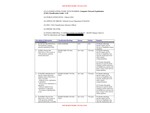
CNO Core Secrets Security Structure [pdf]
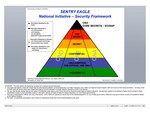
A 3-slide NSA presentation outlining the classification architecture of Sentry Eagle, a national cyber operations initiative, showing how its most sensitive components — covering network hacking, encryption sabotage, and covert industry relationships — are locked behind ECI and SAP designations accessible only to a tiny circle of government officials.
Programs: SENTRYEAGLE · SENTRYHAWK · SENTRYFALCON · SENTRYOSPREY · SENTRYRAVEN · SENTRYCONDOR · SENTRYOWL -
CNO Core Secrets Slide Slices [pdf]
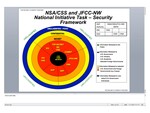
This document outlines the Security Framework for a joint national initiative between the NSA/CSS and JFCC-NW, detailing the highly compartmented structure used to protect cyber and intelligence secrets. It utilizes a concentric security framework diagram to visualize the layers of sensitivity, placing the most critical technical capabilities at the absolute center of the intelligence community's protection.
Programs: SENTRY-EAGLE · SENTRYHAWK · SENTRYFALCON · SENTRYOSPREY · SENTRYRAVEN · SENTRYCONDOR · SENTRYOWL -
CNO Legal Authorities [pdf]
An NSA Office of General Counsel briefing on the legal authorities for computer network operations and the NTOC floor: constitutional and EO 12333 limits, NSCID 6 definitions, Wiretap Act exceptions, NSD 42, service-provider information-assurance rules (DoD 5240.1-R), and oversight and compliance.
-
Collection Accesses 30 Nov - 06 Dec 2009 [pdf]
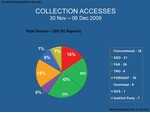
This National Security Agency chart shows the varied sources of 103 “accesses” to communications or computers collected in a single week in 2009 at the N.S.A.’s big station in San Antonio, Texas.
Programs: SSO -
COMET NEWS (March 2010) [pdf]
This document is a March 2010 edition of the COMET NEWS newsletter, a high-level GCHQ publication designed to inform targeting teams about the latest capabilities and successful operations within the "Overhead" satellite constellation. It specifically highlights a coordinated GCHQ and US overhead (OH) effort to intercept high-priority military and leadership communications from Argentina, utilizing specialized US satellite assets and geolocation techniques to map digital microwave emitters.
Programs: COMET“Britain Used Spy Team to Shape Latin American Public Opinion on Falklands” - The Intercept ↗ (2015-04-02) · “#EspiadosPorLosIngleses: los nuevos documentos de Snowden revelan un plan de espionaje de Gran Bretaña en Argentina por Malvinas” - Todo Noticias ↗ (2015-04-02) · Fishman, Andrew · Greenwald, Glenn -
Communications Capability Development Programme [pdf]
The Communications Capability Development (CCD) Programme (formerly the Intercept Modernisation Programme, IMP) was a Home Office–led effort to maintain the U.K.’s lawful interception and communications data capabilities amid changing technologies, emphasizing that law enforcement faced a “significant decline” without new measures. GCHQ supported CCD with technical expertise and interim services like MILKWHITE Enrichment, while stressing that CCD was politically contentious, technically complex, and required legislation to mandate data retention by U.K. network operators.
-
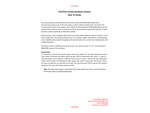
Communications System - How To Guide [pdf]
A TOP SECRET and sensitive compartmented information (SCI) how-to document for the NSA’s XKEYSCORE “Comms” backbone, laying out ports, peer/allow rules, bandwidth pools, and proxy classifications that stitch clusters to central control—a scalable architecture for moving surveillance data with security markings baked in. It also walks through firewall exceptions, HTTPS port-sharing, and a MAILORDER file pipeline, exposing the nuts‑and‑bolts of how collection flows across sites, proxies, and viewers.
-
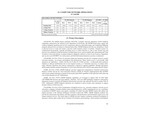
Computer Network Exploitation (CNE) Classification Guide / 2-59 [pdf]
A NSA/TAO classification guide establishing the precise classification level for 41 categories of information about computer network exploitation operations — covering remote and physical subversion methods, CNE tools and techniques, supply chain operations, hardware implants, off-net field operations, zero-day vulnerabilities, and cryptographic material acquired through CNE.
“Core Secrets: NSA Saboteurs in China and Germany” - The Intercept ↗ (2014-10-10) · “The Digital Arms Race: NSA Preps America for Future Battle” - Der Spiegel ↗ (2015-01-17) · Maass, Peter · Poitras, Laura · Appelbaum, Jacob · Gibson, Aaron · Guarnieri, Claudio · Müller-Maguhn, Andy · Rosenbach, Marcel · Ryge, Leif · Schmundt, Hilmar · Sontheimer, Michael -
COMPUTER NETWORK OPERATIONS - GENIE [pdf]
A TOP SECRET Congressional Budget Justification entry for the NSA/CSS GENIE project — the Tailored Access Operations programme underpinning all endpoint Computer Network Operations — requesting $651.7 million and 1,870 military and civilian positions for FY2013, with plans to maintain 85,000-96,000 implant points-of-presence worldwide and 9,000-10,000 active accesses, including $25.1 million for covert purchase of software vulnerabilities and a $3.4 million supply chain implant operation targeting al-Qaeda.
-
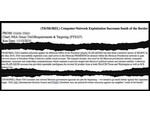
Computer-Network Exploitation Successes South of the Border [pdf]
Pena Nieto's predecessor as president, Felipe Calderon, was also targeted. This image shows an excerpt from an NSA document classified as "top secret," from November 2010. The National Security Agency (NSA) has a division for particularly difficult cases. Called "Tailored Access Operations," or TAO for short, this department devises special methods for special targets. In May 2010, the division reported mission accomplished. A report classified as "top secret" said: "TAO successfully exploited a key mail server in the Mexican Presidencia domain within the Mexican Presidential network to gain first-ever access to President Felipe Calderon's public email account." According to the NSA, this email domain was also used by cabinet members, and contained "diplomatic, economic and leadership communications which continue to provide insight into Mexico's political system and internal stability."
Programs: FLATLIQUID -
Content Acquisition Optimization PowerPoint Slides [pdf]
An NSA presentation on content acquisition optimisation — describing how incidental bulk collection from Yahoo Webmessenger, email address books, buddy lists and webmail inboxes was generating massive unintended collection volumes.
-
Content Extraction Enhancements For Target Analytics: SMS Text Messages: A Goldmine to Exploit (9 June 2011) [pdf]
The document describes the NSA’s Dishfire program, which collects hundreds of millions of global SMS messages daily, and the PREFER system, which extracts detailed metadata—including contacts, geolocation, travel, and financial information—from these messages for analytic purposes. It highlights the scale, operational processes, and types of data exploited to support intelligence and target analysis.
-
Converged Analysis of Smartphone Devices [pdf]
This 2010 document outlines NSA methods for identifying, processing, and exploiting data from smartphones by targeting both telephony and digital network intelligence (DNI). It details how analysts use tools like XKEYSCORE and metadata extraction to collect geolocation, app data, call logs, unique identifiers, and user activity from popular mobile apps and services (e.g., Google Maps, Facebook, Flickr), emphasizing the intelligence potential of smartphones as rich surveillance targets.
People: Kuruc, Paula -
Cooperation between the NSA and BND [pdf]
Comprehensive internal summary of the history and current state of cooperation between the NSA and BND
Programs: RT-RGPeople: Schindler, Gerhard -
Counterterrorism Analytic Working Group Meets in Madrid SIDtoday [pdf]
This SIDtoday document details the 11th SIGINT Seniors Counterterrorism (SISECT) Analytic Working Group meeting in Madrid, which focused on enhancing counterterrorism collaboration through topics like terrorist use of the Internet, metadata sharing, and language capabilities. Key outcomes included initiatives for SIGINT exploitation of the Internet, improving language processing and translation via SIGDASYS, and fostering deeper cooperation between nations on counterterrorism efforts.
-
CRISSCROSS/PROTON Point Paper [pdf]
Originating as a CIA/DEA joint venture in the 1990s, CRISSCROSS/PROTON is a centralized repository used by five U.S. agencies (CIA, DEA, NSA, DIA, FBI) for massive link analysis and contact chaining. The document details how the NSA provides billions of telephony records to the system to assist in capturing High Value Individuals (HVIs) but recommends transitioning to an NSA-led architecture using the GLOBALREACH federated query service.
-
Crypt Discovery Joint Collaboration Activity 20 January 2011 [pdf]
A TOP SECRET NSA/GCHQ joint collaboration activity plan from January 2011 describing a research programme to understand and mitigate the threat that rising encryption adoption poses to target discovery and development — measuring encryption prevalence across SIGINT collection, assessing the impact on metadata-based targeting tradecraft, and developing new techniques for identifying targets behind encrypted traffic using a joint cloud environment fed by MUTANT BROTH, BEARDED PIGGY, KARMA POLICE, MEMORY HOLE, MARBLED GECKO, SOCIAL ANIMAL and ASDF metadata.
Marking: TOP SECRETPrograms: TICKETWINDOW · MUTANTBROTH · BEARDEDPIGGY · KARMAPOLICE · MEMORYHOLE · MARBLEDGECKO · SOCIALANIMAL · XKEYSCORE · ASDF“Prying Eyes: Inside the NSA's War on Internet Security” - Der Spiegel ↗ (2014-12-28) · “Profiled: From Radio to Porn, British Spies Track Web Users' Online Identities” - The Intercept ↗ (2015-09-25) · Appelbaum, Jacob · Gibson, Aaron · Grothoff, Christian · Müller-Maguhn, Andy · Poitras, Laura · Sontheimer, Michael · Stöcker, Christian · Gallagher, Ryan -
Cryptographic Modernization (CryptoMod) Classification Guide 3-9 [pdf]
A partial NSA/CSS classification guide for the Cryptographic Modernisation (CryptoMod) programme — establishing classification levels for information about NSA's transition of US cryptographic products to modern algorithms, Positive Access Control parameters, software signing, and the association of specific algorithms with critical year and life-of-use assessments.