CNE Presence in CT10 Status Report
Open PDFDocument date: -
Pages: 4
Genre: report
Banner: TOP SECRET//COMINT//NOFORN//20291123
Classification: TOP SECRET COMINT
Dissemination: NOFORN
A TOP SECRET NSA status report from April 2008 describing how a counterterrorism analysis team began importing data from the agency's hacking operations into their tracking system — specifically logs from FOXACID, an NSA tool that infects targets' computers mainly through their web browsers — enabling real-time alerts when new targets were successfully hacked, with plans to expand into tracking four named surveillance implants (VALIDATOR, UNITEDRAKE, OLYMPUS and STRAITBIZARRE) as they phone home to NSA servers for instructions and stolen data.
My notes
TOP SECRET//COMINT//NOFORN//20291123
CNE Presence in CT10 Status Report
Authors:
[REDACTED], SNIP Intern
[REDACTED], 1LT
(U//FOUO) Executive Summary
(S//SI//REL USA, FVEY) This paper discusses the work completed as of 1 April 2008 on the inclusion of CNE data into the CT10 Pilot Project. CT10 engaged two fronts in this effort. First, was the acquisition and alerting of active SIGINT into CT10. Second, was the design of an extension to the current CT10 data model to support further analytic development of CNE data. As a result of this work, CT10 now supports alerting of the establishment of new TAO points of presence on the Internet with respect to certain exploitation methodologies. Additionally, this paved the road with internal and external partners for the continued development of the CT10 CNE data model extension.
(S//SI//REL USA, FVEY) Specific conclusions and recommendations are contained at the close of this paper. However, three key points underpin a majority of the information in this paper:
- (U//FOUO) Priority support to CT10 data acquisition efforts.
- (U//FOUO) Further building a DNI/CNE analytic and development team.
- (S//SI//REL USA, FVEY) Development of a strategic vision for use of CNE data in CT10.
(U//FOUO) TAO Data Flow Acquisition
(S//SI//REL USA, FVEY) The first step in processing CNE data is to identify and acquire CNE data flows in order to route this information into CT10. This work presents its own unique challenges,, as described in the next section.
(U) Current State
Derived From: NSA/CSSM 1-52
Dated: 20070108
Declassify On: 20291123
TOP SECRET//COMINT//NOFORN//20291123SECRET//COMINT//REL TO USA,
FVEY//20291123
TOP SECRET//COMINT//NOFORN//20291123
(S//SI//REL USA, FVEY) CT10 is ingesting a single flow of CNE data, specifically FOXACID log files. This was identified as a top priority by CT10 customers GHOSTWolf, therefore it was chosen to be the first CNE data flow to pursue. After mapping the flow of FOXACID data throughout NSA, CT10 established a flow of this data from Protocol Exploitation starting in the middle of February 2008.
(S//SI//REL USA, FVEY) Because the CNE data model extension had not been implemented at this time, the only way to process FOXACID logs was to fit the information into the current CT10 data model. This was possible primarily because of the natural flexibility in the current model. It was easy to define a new "event type" within the CT10 ingestion system, and populate events with all selectors pulled from the each FOXACID event. Another benefit of the current model design was that it became easy to define a new selector type for an implant ID and easily integrate it into the system. This allows implant IDs to be added to watch lists and as target selectors, so that CT10 users can track any events that are associated with a defined set of implants. Therefore, if CT10 acquired a data flow containing implant callback information, it would be easy to add this into the current data model, giving analysts additional capability to follow implants deployed through FOXACID..
(S//SI//REL USA, FVEY) As a result of this work, the CT10 system is now alerting on FOXACID exploitation activity through a suite of alerting technologies. This includes geo-locational tipping in GeoT, and alerting through Agent Logic (IRC and e-mails) and the iSpace dashboard.
(S//SI//REL USA, FVEY) One conclusion reached from developing the FOXACID ingestion code is that the current CT10 data model can support more CNE data than previously believed. As new CNE flows are introduced into the system, it may be possible to easily add them to the current data model if the extension is still not implemented.
(U//FOUO) Near and Long Term Goals for TAO Data Flow Acquisition
(S//SI//REL USA, FVEY) The near term goal regarding CNE data flow into CT10 is to identify additional CNE data flows that build off of the FOXACID data. Based on the requirements of GHOSTWolf, the immediate next step would be to acquire implant callback data flows. This would allow analysts to track when their implants are calling back to listening posts for tasking and exfiltration. The implants in question are VALIDATOR, OLYUMPUS, UNITEDRAKE, and STRAITBIZZARE.
TOP SECRET//COMINT//NOFORN//20291123
TOP SECRET//COMINT//NOFORN//20291123
(S//SI//REL USA, FVEY) After establishing this data flow, the next step would be to ingest collected data from the implants. This includes any exfiltrated files, and implant plug-in results. With each new data flow, CT10 analysts will have a more complete picture of CNE activity related to their targets. However, these types of data do not naturally fit into the current data model, which is why the proposed extension is so important.
(S//SI//REL USA, FVEY) Additionally, there are other CNE datasets not created by TAO that would be useful to CT analysts. GOLLUM, a partner implant, is one such data set that GHOSTWolf has indicated that would be useful to ingest into CT10. RADIUS logs (ISP dial up customer records) are also an excellent source of information, and create a natural link between DNR and DNI datasets.
(U) Challenges / Way Ahead
(S//SI//REL USA, FVEY) There are a number of challenges for securing further CNE data from TAO. First, given the complexity of TAO data flow, locating the ultimate data owner is challenging. Though everyone in TAO CT10 has interacted with on data flow issues has been extremely helpful, no new CNE flows have been established. This is largely due to the fact that CT10 is not imbedded within the requirements generation process in TAO. Additional transparency on TAO data flow requirements will greatly ease this issue.
(S//SI//REL USA, FVEY) One other issue that would greatly help other systems in using TAO data, is a universal marking and classification of CNE data. In the case of FOXACID, there are no native classification markings on the files, and compartmented targets as well as FISA data have to be stripped out by TAO before data is sent on to external customers such as CT10. As CT10 becomes PL3 accredited, it becomes critical that CT10 ingests full FOXACID records. Unfortunately, the lack of a unique marking and classification for each file creates additional challenges that complicate the oversight, classification and policy surrounding CNE data. Furthermore, additional discussions with TAO have indicated that this may be an issue for other data flows as well. The addition of classification markings to TAO data feeds would greatly assist all consumers of TAO data with maintaining the proper security procedures.
(U//FOUO) TAO engineers have worked towards creating an RDF database system that would house all of their information, and make it available to external customers. As this capability is developed, CT10 could benefit greatly from becoming a consumer of this data. This system would address a number of issues, including the marking and classification challenge addressed in the previous paragraph.
TOP SECRET//COMINT//NOFORN//20291123
TOP SECRET//COMINT//NOFORN//20291123
(S//SI//REL USA, FVEY) In summary, the way ahead is to address these existing challenges in order to effectively push more TAO data flows out to analysts in near real time. CT10 should also remained synched with TAO's effort to develop and deploy the RDF database. Finally, CT10 needs to implement the data model extension and move any currently ingested TAO data into the new model.
TOP SECRET//COMINT//NOFORN//20291123
Published in the Same Report
(10 of 34 documents)
-
Expanding Endpoint Operations SIDtoday [pdf]
Tailored Access Operations, NSA's elite hackers, are expanding their endpoint operations -- hacking directly into computers to steal information -- and are establishing the new endpoint operations remote operations center, scheduled to come online in the summer of 2005, that "is capable of managing and conducting endpoint operations on a scale that will dramatically expand collection." The physical office space of this new center will allow TAO to "grow from the current average of 20-25 of these operations per day to over 100 per day," and will allow TAO to increase the number of "active implants," or actively monitored pieces of malware, from 100-150 to thousands.
“How the NSA Plans to Infect ‘Millions’ of Computers with Malware” - The Intercept ↗ (2014-03-12) · The Intercept ↗ (2017-04-24) · “The Digital Arms Race: NSA Preps America for Future Battle” - Der Spiegel ↗ (2015-01-17) · Gallagher, Ryan · Greenwald, Glenn · Appelbaum, Jacob · Gibson, Aaron · Guarnieri, Claudio · Müller-Maguhn, Andy · Poitras, Laura · Rosenbach, Marcel · Ryge, Leif · Schmundt, Hilmar · Sontheimer, Michael -
The ROC: NSA's Epicenter for Computer Network Operations SIDtoday [pdf]
The Remote Operations Center (ROC) conducts computer network operations against U.S. adversaries and foreign governments. Its motto is: "Your data is our data, your equipment is our equipment, anytime, any place, by any legal means."
The Intercept ↗ (2019-05-29) · “The Digital Arms Race: NSA Preps America for Future Battle” - Der Spiegel ↗ (2015-01-17) · Appelbaum, Jacob · Gibson, Aaron · Guarnieri, Claudio · Müller-Maguhn, Andy · Poitras, Laura · Rosenbach, Marcel · Ryge, Leif · Schmundt, Hilmar · Sontheimer, Michael -
CSEC SIGINT Cyber Discovery: Summary of the current effort [pdf]
This document provides a overview of the Communications Security Establishment Canada (CSEC) cyber operations, detailing its SIGINT, CNE (Computer Network Exploitation), and cyber counterintelligence programs, including tools like WARRIORPRIDE, REPLICANTFARM, and EONBLUE for threat detection, anomaly discovery, and metadata production. It outlines operational procedures, analytic methodologies, and collaborative frameworks with domestic and Five Eyes partners for sharing intelligence, tipping/cueing, and integrating cyber and traditional counterintelligence efforts.
Programs: REPLICANTFARM · SLIPSTREAM · WARRIORPRIDE · DAREDEVIL · CHORDFLIER · NAMEDROPPER · WORMWOOD · OBELIX · SHEPHERD · CARBON · REGBACKUP · DOGHOUSE · WALKER · ALOOFNESS · BLAZINGANGEL · TINYWEB · QUIVERINGSQUAB · WINDO · DIESELRATTLE · WIDOWKEY · CIVETCAT · WINBEE · SSLINST · PULLEDPORK · EONBLUE · SNIFFLE · QUANTUM · XKEYSCORE · HALTERHITCH · FASTFLUX · DEADSEA · NSPACES · PPF · SSO · TKB“The Digital Arms Race: NSA Preps America for Future Battle” - Der Spiegel ↗ (2015-01-17) · “Communication Security Establishment's cyberwarfare toolbox revealed” - CBC News ↗ (2015-03-23) · “Documents Reveal Canada’s Secret Hacking Tactics” - The Intercept ↗ (2015-03-23) · Appelbaum, Jacob · Gibson, Aaron · Guarnieri, Claudio · Müller-Maguhn, Andy · Poitras, Laura · Rosenbach, Marcel · Ryge, Leif · Schmundt, Hilmar · Sontheimer, Michael · Seglins, Dave · Hildebrandt, Amber · Pereira, Michael · Greenwald, Glenn · Gallagher, Ryan -
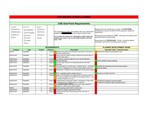
CNE End Point Requirements [pdf]
This NSA/GCHQ document outlines comprehensive requirements for an endpoint surveillance systems that enables analysts to systematically identify intelligence collection needs and discover appropriate tools for data extraction from compromised computers. The framework covers capabilities for remote data collection, cross-platform intelligence integration, query functions, tasking procedures, and visualization tools across implanted networks.
Programs: STARGATE · LOOKING GLASS · QUANTUM · GOLDENEYE · XKEYSCORE · MARINA · JTRIG · BROADOAK · UTT · GLOBALREACH · GLOBALSURGE · THUGGEE · EREPO · DANCINGBEAR · HAUSTORIUM · SHAREOWN · MUTANTBROTH · MOONRAKER · CARBONROD · RUFFLE · ROCKOPERA · QUINCEY · ECLIPSE · MUGSHOT · HIGHNOTE · UDAQ2 · EKB · TURBINE · ACNO · FLAMECARPET · FUMECUPBOARD · JACKPOT · SLIPSTREAM · B13B · PSC · QUINCY · DAREDEVIL · ROADBED -
QUANTUMTHEORY (2010 SIGINT Development Conference) [pdf]
This 2010 NSA presentation reveals QUANTUMTHEORY, a suite of "man-on-the-side" network attack technologies that enable real-time injection and manipulation of TCP/IP connections through passive surveillance infrastructure. The system encompasses multiple specialized attack techniques including HTML redirection, DNS hijacking, botnet takeover, and database injection, deployed at Five Eyes surveillance sites worldwide.
Programs: QUANTUMTHEORY · TRAFFICTHIEF · TURMOIL · TURBINE · QUANTUM · NINJANIC · ISLANDTRANSPORT · SURPLUSHANGER · DAREDEVIL · STRAIGHTBIZARRE · QUANTUMINSERT · QUANTUMSKY · QUANTUMBOT · QUANTUMBISCUIT · QUANTUMDNS · QUANTUMBOT2 · QUANTUMCOPPER · QUANTUMMUSH · HUFFMUSH · QUANTUMSPIM · QUANTUMSQUEEL · QUANTUMSQUIRREL · INCENSOR · SMOKEYSINK · SARATOGA · QUANTUMDEFENSE · TURBULENCE“How the NSA Plans to Infect ‘Millions’ of Computers with Malware” - The Intercept ↗ (2014-03-12) · “The Digital Arms Race: NSA Preps America for Future Battle” - Der Spiegel ↗ (2015-01-17) · Gallagher, Ryan · Greenwald, Glenn · Appelbaum, Jacob · Gibson, Aaron · Guarnieri, Claudio · Müller-Maguhn, Andy · Poitras, Laura · Rosenbach, Marcel · Ryge, Leif · Schmundt, Hilmar · Sontheimer, Michael -
-
TURBULENCE - APEX - Active/passive Exfiltration [pdf]
This 2009 NSA presentation details APEX (Active/Passive Exfiltration), a TURBULENCE program component that combines passive collection infrastructure with active TAO implants to exfiltrate VPN and VoIP traffic from deep within target networks back to NSA collection systems. The system uses the FASHIONCLEFT protocol to tunnel captured packets through compromised routers and network devices, enabling decryption of VPN tunnels and collection of voice communications that would otherwise be invisible to passive surveillance.
Programs: TURBULENCE · TURMOIL · HAMMERSTEIN · HAMMERCHANT · FASHIONCLEFT · TUTELAGE · TURBINE · TRAFFICTHIEF · XKEYSCORE · ANALYTICS · PRESSUREWAVE · TOYGRIPPE · POISONNUT · FLAXENPRECEPT · FOGYNULL · FUNNELAPS · SHELLGREY · METROTUBE · VINYLSEAT · OLYMPUS · UNITEDRAKE · FIGBUILD · SURPASSPIN · ROOTKNOT · OPTICPINCH · SEAGULFARO · TREBLECLEF · CONVEY · PINWALE · SWEEPFORWARD · QUANTUM · KEYCARD · ASDF · TUBE · PUZZLECUBE · WEALTHYCLUSTER2 · COALSHOVEL · HAMMERMILL · ISLANDTRANSPORT · FASCIA · TURBINIE · APEX · PPF · AEG · FIP · SSO · PICARESQUE · PSP · IVE · PSC · CHIMNEYPOOL · CORESSC · FLASHHANDLE · IBRIDGE · CORALREEF · VAO · NUCLEON · PIQBLADE“The Digital Arms Race: NSA Preps America for Future Battle” - Der Spiegel ↗ (2015-01-17) · “How the NSA Plans to Infect ‘Millions’ of Computers with Malware” - The Intercept ↗ (2014-03-12) · “How the NSA Plans to Infect ‘Millions’ of Computers with Malware” - The Intercept ↗ (2014-03-12) · Appelbaum, Jacob · Gibson, Aaron · Guarnieri, Claudio · Müller-Maguhn, Andy · Poitras, Laura · Rosenbach, Marcel · Ryge, Leif · Schmundt, Hilmar · Sontheimer, Michael · Gallagher, Ryan · Greenwald, Glenn -
Analytic Challenges from Active-Passive Integration [pdf]
This NSA presentation examines metadata attribution challenges arising when active TAO implants exfiltrate traffic through passive TURMOIL collection infrastructure, creating conflicts where intercepted data carries dual classification markings, case notations, and legal authorities from both collection systems. The briefing highlights how existing databases and analytic tools were not designed to handle traffic with two simultaneous sets of metadata parameters, requiring enterprise-wide solutions to consistently attribute and track actively-shaped intelligence collection.
Programs: BRAVENICKEL · HAMMERMILL · APEX · MARINA · TURMOIL · PRESSUREWAVE · METROTUBE · TOYGRIPPE · HAMMERSTEIN · HAMMERSTONE · METAWAVE · TURBULENCE · SSO -
The FASHIONCLEFT Protocol [pdf]
This October 2008 NSA technical specification details FASHIONCLEFT, the encryption and exfiltration protocol used by TAO implants to securely tunnel captured network packets from compromised devices back to the NSA's Common Data Receptor using layered RSA and RC6 encryption with authentication. The document addresses technical integration challenges of implementing FASHIONCLEFT packet reception within TURMOIL's passive collection infrastructure, particularly cache buffering requirements and metadata handling for exfiltrated traffic.
Programs: FASHIONCLEFT · FOGYNULL · FUNNELAPS · SHELLGREY · TURMOIL · SURPASSPIN · PUZZLECUBE · FLASHHANDLE · HAMMERCHANT · AEG · PPF · ISLANDTRANSPORT -
Moving Data Through Disconnected Networks - Delay-Tolerant Networking and the IC [pdf]
This June 2012 NSA Laboratory for Telecommunications Sciences presentation details Delay-Tolerant Networking (DTN) applications for surveillance operations, including covert communications in denied areas, data exfiltration from isolated networks, unwitting data mules, and integration with TAO's CHIMNEYPOOL implant framework. The document reveals R4 development of FUZZYLINT, an ultra-lightweight DTN implementation designed to enable multi-hop exfiltration from implants without requiring direct physical access.
People: Vahdat, Amin · Becker, David · Juang, Philo · Oki, Hidekazu · Wang, Yong · Martonosi, Margaret · Peh, Li-Shiuan · Rubenstein, Daniel · Grossglauser, Matthias · Tse, David N. C. · Fall, Kevin · Shah, Rahul C. · Roy, Sumit · Jain, Sushant · Brunette, Waylon · Lindgren, Anders · Doria, Avri · Schelen, Olov · Small, Tara · Haas, Zygmunt J. · Zhao, Wenrui · Ammar, Mostafa · Zegura, Ellen · Ginzboorg, Philip · Kärkkäinen, Teemu · Nagata, Akira · Lenders, Vincent · Legendre, Franck · May, Martin · Karlsson, Gunnar · Du, Bowei · Demmer, Michael · Brewer, Eric · Ott, Jörg · Pitkänen, Mikko Juhani · Han, Bo · Hui, Pan



Related Documents
-
FASHIONCLEFT - Interface Control Document (15 June 2009) [pdf]
This 2009 NSA Interface Control Document provides comprehensive technical specifications for FASHIONCLEFT, the protocol that acts as a covert shipping system enabling TAO malware implants to send stolen network data back to NSA collection servers with minimal computer processing requirements—using multiple encryption layers (RSA-1024 and RC6-128) to disguise the traffic as it travels across the internet while allowing NSA's Common Data Receptor to reassemble and authenticate the original intercepted packets. The document details how implants make modified copies of captured network traffic (changing destination addresses to point toward NSA instead of legitimate recipients), apply various levels of encryption or scrambling ("munging") depending on how powerful the infected computer is, attach metadata instructions explaining how to reconstruct the original packets, and use pattern-matching algorithms to ensure NSA systems can identify which stolen packets belong to which collection operation.
Programs: FASHIONCLEFT · FLAXENPRECEPT · SHELLGREY · SURPASSPIN · SEAGULLFARO · ROOTKNOT · FIGBUILD · OPTICPINCH · VINYLSEAT · OLYMPUS · UNITEDRAKE · HOGTECH · SWEEPFORWARD · CONVEY · PINWALE · TREBLECLEF · FOGYNULL · FUNNELAPS · FLASHHANDLE -
Computer Network Exploitation (CNE) Classification Guide / 2-59 [pdf]
A NSA/TAO classification guide establishing the precise classification level for 41 categories of information about computer network exploitation operations — covering remote and physical subversion methods, CNE tools and techniques, supply chain operations, hardware implants, off-net field operations, zero-day vulnerabilities, and cryptographic material acquired through CNE.
“Core Secrets: NSA Saboteurs in China and Germany” - The Intercept ↗ (2014-10-10) · “The Digital Arms Race: NSA Preps America for Future Battle” - Der Spiegel ↗ (2015-01-17) · Maass, Peter · Poitras, Laura · Appelbaum, Jacob · Gibson, Aaron · Guarnieri, Claudio · Müller-Maguhn, Andy · Rosenbach, Marcel · Ryge, Leif · Schmundt, Hilmar · Sontheimer, Michael -
TURBULENCE - APEX - Active/passive Exfiltration [pdf]
This 2009 NSA presentation details APEX (Active/Passive Exfiltration), a TURBULENCE program component that combines passive collection infrastructure with active TAO implants to exfiltrate VPN and VoIP traffic from deep within target networks back to NSA collection systems. The system uses the FASHIONCLEFT protocol to tunnel captured packets through compromised routers and network devices, enabling decryption of VPN tunnels and collection of voice communications that would otherwise be invisible to passive surveillance.
Programs: TURBULENCE · TURMOIL · HAMMERSTEIN · HAMMERCHANT · FASHIONCLEFT · TUTELAGE · TURBINE · TRAFFICTHIEF · XKEYSCORE · ANALYTICS · PRESSUREWAVE · TOYGRIPPE · POISONNUT · FLAXENPRECEPT · FOGYNULL · FUNNELAPS · SHELLGREY · METROTUBE · VINYLSEAT · OLYMPUS · UNITEDRAKE · FIGBUILD · SURPASSPIN · ROOTKNOT · OPTICPINCH · SEAGULFARO · TREBLECLEF · CONVEY · PINWALE · SWEEPFORWARD · QUANTUM · KEYCARD · ASDF · TUBE · PUZZLECUBE · WEALTHYCLUSTER2 · COALSHOVEL · HAMMERMILL · ISLANDTRANSPORT · FASCIA · TURBINIE · APEX · PPF · AEG · FIP · SSO · PICARESQUE · PSP · IVE · PSC · CHIMNEYPOOL · CORESSC · FLASHHANDLE · IBRIDGE · CORALREEF · VAO · NUCLEON · PIQBLADE“The Digital Arms Race: NSA Preps America for Future Battle” - Der Spiegel ↗ (2015-01-17) · “How the NSA Plans to Infect ‘Millions’ of Computers with Malware” - The Intercept ↗ (2014-03-12) · “How the NSA Plans to Infect ‘Millions’ of Computers with Malware” - The Intercept ↗ (2014-03-12) · Appelbaum, Jacob · Gibson, Aaron · Guarnieri, Claudio · Müller-Maguhn, Andy · Poitras, Laura · Rosenbach, Marcel · Ryge, Leif · Schmundt, Hilmar · Sontheimer, Michael · Gallagher, Ryan · Greenwald, Glenn -
Moving Data Through Disconnected Networks - Delay-Tolerant Networking and the IC [pdf]
This June 2012 NSA Laboratory for Telecommunications Sciences presentation details Delay-Tolerant Networking (DTN) applications for surveillance operations, including covert communications in denied areas, data exfiltration from isolated networks, unwitting data mules, and integration with TAO's CHIMNEYPOOL implant framework. The document reveals R4 development of FUZZYLINT, an ultra-lightweight DTN implementation designed to enable multi-hop exfiltration from implants without requiring direct physical access.
People: Vahdat, Amin · Becker, David · Juang, Philo · Oki, Hidekazu · Wang, Yong · Martonosi, Margaret · Peh, Li-Shiuan · Rubenstein, Daniel · Grossglauser, Matthias · Tse, David N. C. · Fall, Kevin · Shah, Rahul C. · Roy, Sumit · Jain, Sushant · Brunette, Waylon · Lindgren, Anders · Doria, Avri · Schelen, Olov · Small, Tara · Haas, Zygmunt J. · Zhao, Wenrui · Ammar, Mostafa · Zegura, Ellen · Ginzboorg, Philip · Kärkkäinen, Teemu · Nagata, Akira · Lenders, Vincent · Legendre, Franck · May, Martin · Karlsson, Gunnar · Du, Bowei · Demmer, Michael · Brewer, Eric · Ott, Jörg · Pitkänen, Mikko Juhani · Han, Bo · Hui, Pan -
CNE Analysis in XKEYSCORE [pdf]
This document is an NSA training presentation from October 2009 demonstrating how XKEYSCORE integrates with Computer Network Exploitation (CNE) operations, allowing analysts to search and analyze data extracted from compromised computers including keystrokes, browser history, registry files, documents, emails, and directory structures collected through implants like UNITEDRAKE and OLYMPUS.
Programs: XKEYSCORE · OLYMPUS · UNITEDRAKE · PINWALE · TUNINGFORK · TURBOCHASER · MARINA · JOLLYROGER · TREASUREMAP · TURBINE · PRESSUREWAVE · MAD · TUCKER · EXPANDINGPULLY · UNIX · SEARCHLIGHT · KEYLOGGER · PILBEAM · FOXACID · WAYTIDE · SHADOWQUEST · SEAGULLFARO · DARKHELMET · LUTEUSICARUS · FOGGYBOTTOM · GREENCHAOS · RADIUS · NKB · VALIDATOR