Classification: COMINT 287 documents
Search documents matching “COMINT” →Each document's classification level, as component values. If a document contains multiple classifications, the highest is used here.
Graphs
By document date (13 years)
By Banner
Refine (combine with another filter, via search)
Sort: Title
Documents
-
CASCADE - Joint Cyber Sensor Architecture [pdf]
This presentation outlines the Communications Security Establishment’s (CSE) plans to unify and expand its cyber sensor networks (ITS and SIGINT) to create a comprehensive, multi-layered national cyber defense system, enabling threat detection, intelligence collection, and defensive operations across Canadian and foreign networks. It emphasizes standardizing sensor deployments, integrating analytic capabilities, and preparing for “Effects” operations to mitigate cyber threats by 2015. The presentation is duplicated from page 33 onwards - three slides of the duplicated slides have internal CSE comments.
Programs: CASCADE · PHOTONICPRISM · EONBLUE · INDUCTION · THIRDEYE · CRUCIBLE · CHOKEPOINT · SUNWHEEL · CASSIOPEIA · SCNET · JAZZFLUTE · GAZEBO · SEEDSPHERE · TEXPRO · SSO -
Case Studies of Integrated Cyber Operation Techniques [pdf]
Programs: AURORAVNC · TUTELAGE · QUANTUM · TURBINE · BOXINGRUMBLE · CLOUDSHIELD · PANDORASMAYHAM · TURMOIL · QUANTUMTHEORY · QUANTUMDNS · TAOSHOOTER · DEFIANTWARRIOR · QUANTUMINSERT · QUANTUMBOT · QUANTUMBISCUIT · QUANTUMHAND · QUANTUMPHANTOM · QUANTUMSKY · QUANTUMCOPPER · QUANTUMSMACKDOWN · QUANTUMSANDMAN · FOXACID“The Digital Arms Race: NSA Preps America for Future Battle” - Der Spiegel ↗ (2015-01-17) · “How the NSA Plans to Infect ‘Millions’ of Computers with Malware” - The Intercept ↗ (2014-03-12) · Appelbaum, Jacob · Gibson, Aaron · Guarnieri, Claudio · Müller-Maguhn, Andy · Poitras, Laura · Rosenbach, Marcel · Ryge, Leif · Schmundt, Hilmar · Sontheimer, Michael · Gallagher, Ryan · Greenwald, Glenn -
Center for Content Extraction - Content Extraction Analytics, SIGDEV End-to-End Demo [pdf]
This document is a technical showcase demonstrating the capabilities of an NSA content‑extraction program, using political leaders and diplomatic figures (such as Angela Merkel) as illustrative examples. It presents how automated language technology can extract, organize, and scale intelligence data from intercepted material.
Programs: MARINA · CYBERTRANS · PAINTBALL · SYNAPSE · NYMROD · THUNDERCLOUD · JOURNEYMAN · GOLDENRETRIEVER · SOCIOPATH · LEXHOUND · HERESYITCH · HLT · TKB · EKS -
Center for Content Extraction - Nymrod Mission [pdf]
This top-secret NSA document outlines the mission and capabilities of NYMROD, a system developed by the Center for Content Extraction (CCE). It explains how NYMROD addresses analytic challenges such as linguistic variation in entity names, especially for person names, and the resolution of entity coreference problems using contextual evidence. The document discusses the multilingual content extraction services provided by NYMROD, which support various NSA enterprise applications and enhance analytic functions like selection, translation, analysis, investigative research, retrieval, and storage.
People: Ban, Ki-moon -
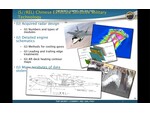
Chinese Exfiltrate Sensitive Military Technology [pdf]
This TOP SECRET NSA SIGINT development briefing describes large-scale Chinese cyber espionage that exfiltrated sensitive U.S. military technologies and inflicted extensive operational, financial, and strategic damage on Department of Defense systems. The document emphasizes both the scale of losses and the role of SIGINT in detecting, understanding, and mitigating adversary malware.
Programs: BYZANTINEHADES -
CISCO bug [pdf]
An engineering change proposal dated 11 April 2013 to update the software on every Cisco ONS optical switch at the corporate access sites — APPLE1, CLEVERDEVICE, HOMEMAKER, DOGHUT, QUARTERPOUNDER, QUEENSLAND, SCALLION, SPORTCOAT, SUBSTRATUM, TITANPOINTE, BIRCHWOOD, MAYTAG, EAGLE and EDEN — after a bug that makes the multiplexers intermittently drop out, with the mission impact recorded as unknown.
Programs: CLEVERDEVICE · HOMEMAKER · DOGHUT · APPLE1 · QUARTERPOUNDER · QUEENSLAND · SCALLION · SPORTCOAT · SUBSTRATUM · TITANPOINTE · BIRCHWOOD · MAYTAG · EAGLE · EDEN · BLARNEY · FAIRVIEW · OAKSTAR · STORMBREW -
CLASSIFICATION GUIDE FOR CRYPTANALYSIS, 2-12 [pdf]
An NSA/CSS classification guide for cryptanalysis establishing the precise classification level for each type of information about NSA's capabilities to exploit commercial and indigenous encryption systems — from the unclassified acknowledgement that NSA exploits cryptographic devices, through to the Top Secret protection of cryptographic modifications made to commercial products to render them exploitable and industry relationships used to obtain cryptographic details.
“Revealed: how US and UK spy agencies defeat internet privacy and security” - The Guardian ↗ (2013-09-05) · “Prying Eyes: Inside the NSA's War on Internet Security” - Der Spiegel ↗ (2014-12-28) · Ball, James · Borger, Julian · Greenwald, Glenn · Appelbaum, Jacob · Gibson, Aaron · Grothoff, Christian · Müller-Maguhn, Andy · Poitras, Laura · Sontheimer, Michael · Stöcker, Christian -
CLASSIFICATION GUIDE FOR ECI PAWLEYS (PAW) [pdf]
This 2006 NSA classification guide outlines the protocols for ECI PAWLEYS (PAW). PAWLEYS is an Exceptionally Compartmented Information (ECI) category designed to protect clandestine operations—both physical (HUMINT) and digital (CNE)—specifically aimed at acquiring foreign cryptographic information and material. The document confirms that the NSA actively seeks to circumvent encryption through clandestine HUMINT and computer network access aimed at cryptographic information and material, rather than relying solely on traditional codebreaking.
Programs: PAWLEYS -
Close Access SIGADS [pdf]
A 10 September 2010 NSA reference list of Close Access SIGADs revealing the codenames, locations and collection methods used to bug the embassies and UN missions of 38 targets — including US allies France, Italy, Greece, Japan, India, Mexico, South Korea and the EU — through implants, computer-screen capture, hard-drive imaging and electromagnetic emanation collection, most conducted against diplomatic facilities in Washington DC and New York.
Programs: KATEEL · POCOMOKE · MERCED · BANISTER · PERDIDO · MAGOTHY · BLACKFOOT · WABASH · NAVARRO · POWELL · KLONDIKE · NASHUA · OSAGE · OSWAYO · BRUNEAU · HEMLOCK · MULBERRY · ALAMITO · FLEMING · DOBIE · SULPHUR · REQUETTE · YUKON · WESTPORT · NAVAJO · PANTHER · LIFESAVER · HIGHLANDS · VAGRANT · MINERALIZ · DROPMIRE · PBX · MAGNETIC · OCEAN · GENIE · BLACKHEART · CRYPTOENABLED · CUSTOMS · DEWSWEEPER · RADON · MINERALIZE · COOP · STARRUBY · TRASHINT“No Place to Hide” - Metropolitan Books ↗ (2014-05-13) · “Espionnage de la NSA : la diplomatie française était sur écoute aux Etats-Unis” - Le Monde ↗ (2013-10-22) · “Da qui ci spiano gli americani” - L'Espresso ↗ (2013-12-05) · Greenwald, Glenn · Follorou, Jacques · Maurizi, Stefania -
CNE End Point Requirements [pdf]
This NSA/GCHQ document outlines comprehensive requirements for an endpoint surveillance systems that enables analysts to systematically identify intelligence collection needs and discover appropriate tools for data extraction from compromised computers. The framework covers capabilities for remote data collection, cross-platform intelligence integration, query functions, tasking procedures, and visualization tools across implanted networks.
Programs: STARGATE · LOOKING GLASS · QUANTUM · GOLDENEYE · XKEYSCORE · MARINA · JTRIG · BROADOAK · UTT · GLOBALREACH · GLOBALSURGE · THUGGEE · EREPO · DANCINGBEAR · HAUSTORIUM · SHAREOWN · MUTANTBROTH · MOONRAKER · CARBONROD · RUFFLE · ROCKOPERA · QUINCEY · ECLIPSE · MUGSHOT · HIGHNOTE · UDAQ2 · EKB · TURBINE · ACNO · FLAMECARPET · FUMECUPBOARD · JACKPOT · SLIPSTREAM · B13B · PSC · QUINCY · DAREDEVIL · ROADBED -
CNE Presence in CT10 Status Report [pdf]
A TOP SECRET NSA status report from April 2008 describing how a counterterrorism analysis team began importing data from the agency's hacking operations into their tracking system — specifically logs from FOXACID, an NSA tool that infects targets' computers mainly through their web browsers — enabling real-time alerts when new targets were successfully hacked, with plans to expand into tracking four named surveillance implants (VALIDATOR, UNITEDRAKE, OLYMPUS and STRAITBIZARRE) as they phone home to NSA servers for instructions and stolen data.
-
CNO Core Secrets Security Structure [pdf]
A 3-slide NSA presentation outlining the classification architecture of Sentry Eagle, a national cyber operations initiative, showing how its most sensitive components — covering network hacking, encryption sabotage, and covert industry relationships — are locked behind ECI and SAP designations accessible only to a tiny circle of government officials.
Programs: SENTRYEAGLE · SENTRYHAWK · SENTRYFALCON · SENTRYOSPREY · SENTRYRAVEN · SENTRYCONDOR · SENTRYOWL -
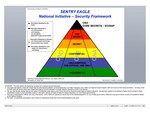
CNO Core Secrets Slide Slices [pdf]
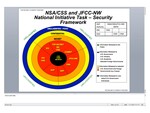
This document outlines the Security Framework for a joint national initiative between the NSA/CSS and JFCC-NW, detailing the highly compartmented structure used to protect cyber and intelligence secrets. It utilizes a concentric security framework diagram to visualize the layers of sensitivity, placing the most critical technical capabilities at the absolute center of the intelligence community's protection.
Programs: SENTRY-EAGLE · SENTRYHAWK · SENTRYFALCON · SENTRYOSPREY · SENTRYRAVEN · SENTRYCONDOR · SENTRYOWL -
CNO Legal Authorities [pdf]
An NSA Office of General Counsel briefing on the legal authorities for computer network operations and the NTOC floor: constitutional and EO 12333 limits, NSCID 6 definitions, Wiretap Act exceptions, NSD 42, service-provider information-assurance rules (DoD 5240.1-R), and oversight and compliance.
-
Collection Accesses 30 Nov - 06 Dec 2009 [pdf]
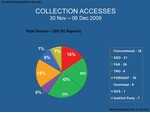
This National Security Agency chart shows the varied sources of 103 “accesses” to communications or computers collected in a single week in 2009 at the N.S.A.’s big station in San Antonio, Texas.
Programs: SSO -
Communications Capability Development Programme [pdf]
The Communications Capability Development (CCD) Programme (formerly the Intercept Modernisation Programme, IMP) was a Home Office–led effort to maintain the U.K.’s lawful interception and communications data capabilities amid changing technologies, emphasizing that law enforcement faced a “significant decline” without new measures. GCHQ supported CCD with technical expertise and interim services like MILKWHITE Enrichment, while stressing that CCD was politically contentious, technically complex, and required legislation to mandate data retention by U.K. network operators.
-
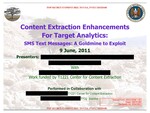
Content Extraction Enhancements For Target Analytics: SMS Text Messages: A Goldmine to Exploit (9 June 2011) [pdf]
The document describes the NSA’s Dishfire program, which collects hundreds of millions of global SMS messages daily, and the PREFER system, which extracts detailed metadata—including contacts, geolocation, travel, and financial information—from these messages for analytic purposes. It highlights the scale, operational processes, and types of data exploited to support intelligence and target analysis.
-
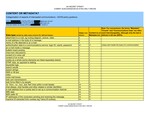
Content-Metadata Matrix [pdf]
GCHQ's internal taxonomy sorts intercepted data into "content" or "metadata" to determine what can be searched without individual warrants—email subject lines, full URLs, and buddy lists fall on opposite sides of the line, enabling analysts to mine massive troves of IP addresses, phone numbers, location data, and browsing history with just a few keystrokes and a brief justification.
-
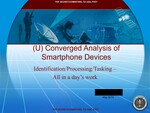
Converged Analysis of Smartphone Devices [pdf]
This 2010 document outlines NSA methods for identifying, processing, and exploiting data from smartphones by targeting both telephony and digital network intelligence (DNI). It details how analysts use tools like XKEYSCORE and metadata extraction to collect geolocation, app data, call logs, unique identifiers, and user activity from popular mobile apps and services (e.g., Google Maps, Facebook, Flickr), emphasizing the intelligence potential of smartphones as rich surveillance targets.
People: Kuruc, Paula -
CRISSCROSS/PROTON Point Paper [pdf]
Originating as a CIA/DEA joint venture in the 1990s, CRISSCROSS/PROTON is a centralized repository used by five U.S. agencies (CIA, DEA, NSA, DIA, FBI) for massive link analysis and contact chaining. The document details how the NSA provides billions of telephony records to the system to assist in capturing High Value Individuals (HVIs) but recommends transitioning to an NSA-led architecture using the GLOBALREACH federated query service.