Tag: cryptography 27 documents
Search documents matching “cryptography” →Free-text subjects the curators added. Unlike the other axes these are not necessarily from the documents' own vocabulary, so they are the loosest thing to browse by (and the most forgiving).
Graphs
By Banner
By Classification
Refine (combine with another filter, via search)
Sort: Title
Documents
-
Apple A4/A5 Application Processors Analysis [pdf]
This document appears in a collection of presentations from a secret CIA-sponsored conference called the "Jamboree," where security researchers shared methods for exploiting vulnerabilities in consumer electronics. The presentation focused on analyzing Apple's A4 and A5 processors, which were used in iPhones and iPads, as part of broader intelligence agency efforts to extract encryption keys and find security weaknesses in Apple devices.
“The CIA Campaign to Steal Apple's Secrets” - The Intercept ↗ (2015-03-10) · Scahill, Jeremy · Begley, Josh -
Black Budget: Cryptanalysis & Exploitation Services – Analysis of Target Systems [pdf]
This document is a budget justification for the NSA's Cryptanalysis & Exploitation Services project, which develops capabilities to defeat commercial encryption systems, exploit emerging communications technologies, and conduct vulnerability analysis against both foreign and domestic security products.
“The CIA Campaign to Steal Apple's Secrets” - The Intercept ↗ (2015-03-10) · Scahill, Jeremy · Begley, Josh -
CLASSIFICATION GUIDE FOR CRYPTANALYSIS, 2-12 [pdf]
An NSA/CSS classification guide for cryptanalysis establishing the precise classification level for each type of information about NSA's capabilities to exploit commercial and indigenous encryption systems — from the unclassified acknowledgement that NSA exploits cryptographic devices, through to the Top Secret protection of cryptographic modifications made to commercial products to render them exploitable and industry relationships used to obtain cryptographic details.
“Revealed: how US and UK spy agencies defeat internet privacy and security” - The Guardian ↗ (2013-09-05) · “Prying Eyes: Inside the NSA's War on Internet Security” - Der Spiegel ↗ (2014-12-28) · Ball, James · Borger, Julian · Greenwald, Glenn · Appelbaum, Jacob · Gibson, Aaron · Grothoff, Christian · Müller-Maguhn, Andy · Poitras, Laura · Sontheimer, Michael · Stöcker, Christian -
CLASSIFICATION GUIDE FOR ECI PAWLEYS (PAW) [pdf]
This 2006 NSA classification guide outlines the protocols for ECI PAWLEYS (PAW). PAWLEYS is an Exceptionally Compartmented Information (ECI) category designed to protect clandestine operations—both physical (HUMINT) and digital (CNE)—specifically aimed at acquiring foreign cryptographic information and material. The document confirms that the NSA actively seeks to circumvent encryption through clandestine HUMINT and computer network access aimed at cryptographic information and material, rather than relying solely on traditional codebreaking.
Programs: PAWLEYS -
Classification guide for NSA/CSS Quantum Computing Research (10-25) [pdf]
The NSA/CSS Quantum Computing Research Classification Guide (10-25) outlines how information related to the NSA’s quantum computing research should be classified, distinguishing between unclassified academic work and classified cryptanalytic programs. It defines classification levels for research activities, breakthroughs, algorithms, collaborations, and materials, with the goal of protecting U.S. cryptographic systems while advancing the agency’s offensive capabilities in quantum cryptanalysis.
-
Did You Know? The NSA Libraries Have Info You Need SIDtoday [pdf]
NSA staff is advised to check out the agency’s libraries and their resources, in part because “there is a wealth of knowledge that is not, and never will be, available in electronic format.”
The Intercept ↗ (2018-08-15) -
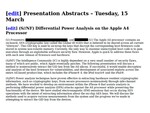
Differential Power Analysis on the Apple A4 Processor [pdf]
1 p.This presentation abstract details a non-invasive method to extract the global AES cryptographic key (GID) from Apple's A4 processor using Differential Power Analysis (DPA). Success would enable the Intelligence Community to decrypt the boot firmware on devices like the iPhone 4 and iPad, providing a persistent means to find vulnerabilities and develop exploits independent of patchable software flaws.
“The CIA Campaign to Steal Apple's Secrets” - The Intercept ↗ (2015-03-10) · Scahill, Jeremy · Begley, Josh -
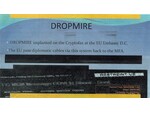
DROPMIRE on the Cryptofax at the EU Embassy D.C. [pdf]
This document reveals that the NSA secretly targeted EU diplomatic communications through a program called DROPMIRE, which involved placing surveillance implants on encrypted fax machines at the EU Embassy in Washington, D.C. This operation was part of a broader effort to spy on 38 foreign embassies and missions—including allies such as France, Italy, and Greece—to gain inside knowledge of policy debates and diplomatic positions.
Programs: DROPMIRE -
EP-3E Collision: Cryptologic Damage Assessment and Incident Review [pdf]
A joint US Navy and NSA report from July 2001, prepared three months after a US spy plane was forced to land in China, assessing how far surveillance sources and methods were compromised and reviewing the emergency destruction that failed to prevent it. Damage to tactical SIGINT against the PRC is rated medium and overall SIGINT damage low, with the greatest loss the LUNCHBOX PROFORMA processor and MARTES signals analysis tools; COMSEC damage is rated low because keying material was superseded within 15 hours.
Programs: LUNCHBOX · MARTES · NICKELBACK · SENSOR PACER · PROFORMA · HULTEC · STRUM · TEXTA · RASIN · CRITIC · KLIEGLIGHT · XBIT · BLACKMAGIC · NOIWON · ZIRCON · MIDB · EOB-LITE · NIMROD · ARIEL · COBRA BALL · COMBAT SENT · RIVET JOINT · SEABOOT · SETTEE · KAMPUS · DRUID · RORIPA · MARKHAM · FOREJUDGE · SAM HEARTBURN · NOVELETTE · RSBN · BEGGAR HAWK · BEGGAR SHADOW · CAPSULE JACK · DISTANT WIND · DISTANT SENT · CHILING · RIBBED · UNACCENTED · SLIPSTICK · SIERRA ONEPeople: Meals, Charlie -
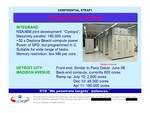
Excerpt from Hpc Overview 1011 [pdf]
This document outlines the development of a highly advanced, massively parallel computing system, referred to as "Cyclops", a joint project between NSA and IBM. It is designed to perform complex tasks related to signals intelligence and code-breaking, with significant computing power, ramping up to 180,000 cores, and is referenced as a critical tool in penetrating target defenses.
-
Guidelines for the classification of NSA SIGINT details (1945-1967) [pdf]
This document is an NSA classification guide that defines how and why historical SIGINT material from 1945–1967 remains classified, in many cases for 75 years. It systematically explains which intelligence activities, targets, partnerships, and technical methods must stay protected because they still reveal sensitive sources, methods, and diplomatic equities.
-
HIMR Data Mining Research Problem Book [pdf]
This document is a research roadmap created by GCHQ for the Heilbronn Institute for Mathematical Research (HIMR). Its purpose is to guide long-term mathematical and data-mining research that could improve signals intelligence (SIGINT) capabilities. It outlines key research problems, datasets, and collaboration plans between intelligence agencies and academic researchers. The main goal is to develop new algorithms and mathematical tools to analyze extremely large communications datasets produced by modern surveillance systems.
Programs: CLOUD · DISTILLERY · DISCOVER · PRESTON · LECKWITH · TERRAIN · BROADOAK · NGE · FIVEALIVE · CHARTBREAKER · FIRSTCONTACT · GEOFUSION · RADONSHARPEN-B · PRIMETIME · HIDDENOTTER · BAKERSDOZEN · CLASP · SALTYOTTER · BIRCH · SOLIDINK · FLUIDINK · MAMBA · GRINNINGROACH · PIRATECAREBEAR · AUTOASSOC · CROUCHINGSQUIRREL · HRMAP · KACHINA · SQUEAL · QUESTA · METEORSHOWER · SUNSTORM · GOLDMINE · HAGERAWEL · WOODY · BUZZ · SILVERLIBRARY · SILVERLINING · VALHALLA · MOUNTMCKINLEY · SEPANG · BLACKHOLE · SALAMANCA · HAGELAWEL · LUCKYSTRIKE · SPIKYROCK · MYOFIBRIL · INJUNCTION · PSYCHICSALMON · RAGINGBULLFROG · ROBOTICFISH · TIMIDTOAD · AURA · CARBONCOPY · CASK · CHORDAL · CRAN · INSTINCT · MADFORGE · SWAMP · VOLSUNGA · WHITERAVEN · MVR · PPF · JTRIG · MAPREDUCE · MAILORDERPeople: Tukey, John -
Mathematician: An Insider's View SIDtoday [pdf]
A mathematician describes work in the field of “diagnosis,” doing cryptanalysis on new types of encryption. Projects include working as part of a close-knit team looking for weaknesses in new cryptosystems, using a variety of tools to find patterns in ciphertext, and programming new tools that don’t yet exist.
The Intercept ↗ (2016-05-16) -
National Intelligence Estimate 2009 Global Cyber Threat – Supply Chain Excerpts [pdf]
These Supply Chain Excerpts from the 2009 National Intelligence Estimate, assesses that the U.S. faces a growing cyber threat from state actors, particularly Russia and China, who have the capability and strategic intent to exploit or disrupt U.S. and allied information systems. It emphasizes vulnerabilities from supply chains, insider threats, and technology trends that favor offensive operations, while noting the difficulty of detecting and fully defending against these sophisticated cyber threats.
-
New NSA Foreign Affairs Corporate Board Kicks Off SIDtoday [pdf]
A new quarterly leadership meeting will address partnerships with other countries. The NSA hopes to have more countries report on and analyze signals intelligence, rather than merely collecting it. The lack of policy on spying on computer network operations may hamper relationships with some partners. Additionally, the various directorates rely on different metrics to assess their successes, which may be a topic at a future meeting.
Marking: SECRETThe Intercept ↗ (2018-03-01) -
NSA at NATO HQ: Supporting U.S. Policy in a Unique Forum SIDtoday [pdf]
There are four NSA liaison officers assigned to the NATO HQ in Brussels. One is embedded directly within NATO and maintains responsibility for the flow of NSA-collected data to NATO and its partners; one provides relevant information to U.S. officials about subjects under discussion within NATO, and the other two work on securing communications among and between NATO members.
The Intercept ↗ (2017-09-13) -
NSA CSEC Partnership [pdf]
This NSA paper outlines the long-standing intelligence partnership between the U.S. and Canada’s Communications Security Establishment Canada (CSEC), dating back to WWII. It highlights mutual SIGINT cooperation, shared technological resources, and the role of CSEC in cryptography, cyber defense, and intelligence sharing, particularly in high-priority global and transnational targets.
-
NSA Intelligence Relationship with Canada's Communications Security Establishment Canada (CSEC) [pdf]
This document describes the close, long-standing SIGINT partnership between the NSA and Canada’s CSEC, emphasizing cooperative efforts in global intelligence collection, cyber operations, information assurance, and critical infrastructure defense. It highlights mutual contributions, including CSEC’s unique geographic access, covert sites, cryptographic capabilities, and R&D collaboration, supporting U.S. and North American security objectives.
“Communication Security Establishment's cyberwarfare toolbox revealed” - CBC News ↗ (2015-03-23) · “Documents Reveal Canada’s Secret Hacking Tactics” - The Intercept ↗ (2015-03-23) · “No Place to Hide” - Metropolitan Books ↗ (2014-05-13) · Seglins, Dave · Hildebrandt, Amber · Pereira, Michael · Greenwald, Glenn · Gallagher, Ryan -
PROJECT BULLRUN Classification Guide [pdf]
This BULLRUN classification guide outlines the NSA’s highly secretive methods for undermining and exploiting encryption technologies through a combination of cryptanalysis, industry collaboration, covert implants, and network exploitation. It specifies strict classification protocols for capabilities against protocols like TLS/SSL, VPNs, VoIP, and webmail, emphasizing secrecy around sources, methods, and industry partnerships that make commercial encryption systems deliberately vulnerable.
Programs: BULLRUN · APERIODIC · AMBULANT · AUNTIE · PAINTEDEAGLE · PAWLEYS · PITCHFORD · PENDLETON · PICARESQUE · PIEDMONT“Revealed: how US and UK spy agencies defeat internet privacy and security” - The Guardian ↗ (2013-09-05) · “N.S.A. Able to Foil Basic Safeguards of Privacy on Web” - The New York Times ↗ (2013-09-05) · “Revealed: The NSA's Secret Campaign to Crack, Undermine Internet Security” - ProPublica ↗ (2013-09-05) · Ball, James · Borger, Julian · Greenwald, Glenn · Perlroth, Nicole · Larson, Jeff · Shane, Scott -
Research & Technology – Penetrating Hard Targets [pdf]
The NSA’s “Penetrating Hard Targets” program aims at developing a cryptologically useful quantum computer capable of breaking strong encryption systems, including those protecting global financial and government communications. Conducted under the U.S. intelligence “black budget,” the program focuses on quantum physics research, engineering studies, and experimental milestones such as achieving dynamical decoupling and quantum control on semiconductor qubits, which are foundational for scaling to larger systems. A related initiative, “Owning the Net,” explores quantum communication technologies to develop new Quantum Key Distribution (QKD) attacks and assess the security of emerging encryption methods.