Journalist: Scahill, Jeremy 16 documents
Search documents matching “Scahill, Jeremy” →Journalists bylined on the stories that published these documents. Contributors credited without a byline are searchable but not listed here.
Graphs
By Banner
By Classification
Refine (combine with another filter, via search)
Sort: Title
Documents
-
Apple A4/A5 Application Processors Analysis [pdf]
This document appears in a collection of presentations from a secret CIA-sponsored conference called the "Jamboree," where security researchers shared methods for exploiting vulnerabilities in consumer electronics. The presentation focused on analyzing Apple's A4 and A5 processors, which were used in iPhones and iPads, as part of broader intelligence agency efforts to extract encryption keys and find security weaknesses in Apple devices.
“The CIA Campaign to Steal Apple's Secrets” - The Intercept ↗ (2015-03-10) · Scahill, Jeremy · Begley, Josh -
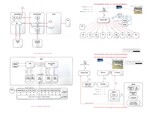
Architecture of U.S. Drone Operations [pdf]
“Germany is the Tell-Tale Heart of America's Drone War” - The Intercept ↗ (2015-04-17) · “Ramstein Air-Base: US-Drohneneinsätze aus Deutschland gesteuert” - Der Spiegel ↗ (2015-04-17) · Scahill, Jeremy · Bartsch, Matthias · Baumgärtner, Maik · Blome, Nikolaus · Darnstädt, Thomas · Gebauer, Matthias · Gude, Hubert · Rosenbach, Marcel · Schindler, Jörg · Schmid, Fidelius · Stark, Holger · Weinzierl, Alfred -
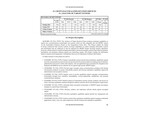
Black Budget: Cryptanalysis & Exploitation Services – Analysis of Target Systems [pdf]
This document is a budget justification for the NSA's Cryptanalysis & Exploitation Services project, which develops capabilities to defeat commercial encryption systems, exploit emerging communications technologies, and conduct vulnerability analysis against both foreign and domestic security products.
“The CIA Campaign to Steal Apple's Secrets” - The Intercept ↗ (2015-03-10) · Scahill, Jeremy · Begley, Josh -
DAPINO GAMMA Gemalto Yuaawaa Wiki [pdf]
This document details the identification of Yuaawaa, a secure file-sharing service sold and used by Gemalto employees, and assesses several of these employees as potential future intelligence targets. Key individuals are noted based on their roles, locations, and observed activities, such as sending PGP-encrypted files.
-
Differential Power Analysis on the Apple A4 Processor [pdf]
1 p.This presentation abstract details a non-invasive method to extract the global AES cryptographic key (GID) from Apple's A4 processor using Differential Power Analysis (DPA). Success would enable the Intelligence Community to decrypt the boot firmware on devices like the iPhone 4 and iPad, providing a persistent means to find vulnerabilities and develop exploits independent of patchable software flaws.
“The CIA Campaign to Steal Apple's Secrets” - The Intercept ↗ (2015-03-10) · Scahill, Jeremy · Begley, Josh -
GCHQ - PCS Harvesting [pdf]
A TOP SECRET STRAP1 report details how GCHQ industrialized the theft of GSM subscriber authentication keys (Ki) by automating trawls of bulk “C2C” content to extract IMSI/Ki pairs from emails and FTP transfers between SIM personalisation centers and mobile operators. It shows the program scaling key harvesting across networks and countries, complementing computer network exploitation against core mobile infrastructure to suppress billing and lift authentication secrets.
-
James Clapper's Classified Blog [pdf]
This document reveals that James Clapper, as Director of National Intelligence, maintained a classified blog called “Intercept” where he publicly responded to a citizen letter supporting expanded domestic surveillance after the Boston Marathon bombings. While Clapper endorsed the premise of sacrificing some civil liberties for security, internal commenters cautioned against eroding constitutional rights, emphasizing that increased surveillance does not guarantee safety.
-
Leaky phone apps [pdf]
These GCHQ slides describe the "WARRIOR PRIDE" mobile intrusion capability being ported to iPhone and Android, with plugins for power management, remote microphone, high‑precision geolocation, kernel stealth, and self‑protection. It claims the ability to retrieve almost any content from infected phones (SMS/MMS, email, call records, photos, calendar, etc.). Part of GCHQ's project "Mobile Applications Project".
Programs: Mobile Applications Project · WARRIORPRIDE · DREAMYSMURF · NOSEYSMURF · TRACKERSMURF · PORUS · PARANOIDSMURF -
Metadata-Driven Drone Strikes SIDtoday [pdf]
These documents describe the NSA and CIA’s use of geolocation technology, particularly via UAV-mounted systems like GILGAMESH and VICTORYDANCE, to track mobile devices for targeted drone strikes, including operations that killed U.S. citizen Anwar Nasser Aulaqi. These programs rely heavily on signals intelligence rather than human confirmation, raising concerns about reliability, civilian casualties, and the accuracy of targeting. See also: SIDtoday/documents/2005/2005-01-18_SIDToday_-_New_Tactical_Collection_System_Joins_the_War_on_Terroris
-
Rocoto: Implanting the iPhone [pdf]
A top secret abstract from the CIA's 2010 Trusted Computing Base Jamboree conference, describing a Johns Hopkins University Applied Physics Laboratory presentation on efforts to create intelligence community exploitation tools for the iPhone 3G, including analysis of its firmware security architecture and leveraging community jailbreak methods for signals intelligence purposes.
“The CIA Campaign to Steal Apple's Secrets” - The Intercept ↗ (2015-03-10) · Scahill, Jeremy · Begley, Josh -
Secure key extraction by physical de-processing of Apple's A4 processor [pdf]
An abstract from the CIA Trusted Computing Base Jamboree describing a physical chip decapping and de-processing attack on Apple's A4 processor to extract the embedded Global ID cryptographic key, which if successful would enable decryption of boot firmware across all A4-based Apple devices including the iPhone 4, iPod Touch and iPad.
“The CIA Campaign to Steal Apple's Secrets” - The Intercept ↗ (2015-03-10) · Scahill, Jeremy · Begley, Josh -
SHENANIGANS operator SIDtoday [pdf]
A March 2013 TOP SECRET SIDToday article written by an operator of SHENANIGANS — an airborne NSA collection system carried on CIA drones — describing the VICTORYDANCE mission that mapped the Wi-Fi signature of nearly every major town in Yemen to geolocate the wireless devices of Al Qaeda in the Arabian Peninsula, including detail on the tool's operation and confirmation that NSA Washington, NSA Georgia, the Special Collection Service and the Utah Regional Operations Center provided SIGINT support to the 30 September 2011 strike that killed Anwar al-Awlaki.
Programs: SHENANIGANS -
Strawhorse: Attacking the MacOS and iOS Software Development Kit [pdf]
Abstract from the 2012 CIA Trusted Computing Base Jamboree, presented by Sandia National Laboratories, describing successful modification of Apple's Xcode 4.1 SDK to create a covert injection vector capable of embedding backdoors, exfiltrating developer private keys, forcing data transmission to intelligence listening posts, disabling ASLR in kernel extensions, and installing a keylogger via a modified OS X updater.
People: Thompson, Ken“The CIA Campaign to Steal Apple's Secrets” - The Intercept ↗ (2015-03-10) · Scahill, Jeremy · Begley, Josh -
TCB Jamboree 2012 [pdf]
1 p.A TOP SECRET//SI//NOFORN entry from NSA's internal WikiInfo-NF wiki describing the CIA Trusted Computing Base Jamboree — an annual conference hosted by CIA's Emerging Technologies Branch within the Information Operations Center, bringing together CIA analysts and contractors conducting research for the TCB programme, with NSA invited to participate through its own counterpart TCB programme.
“The CIA Campaign to Steal Apple's Secrets” - The Intercept ↗ (2015-03-10) · Scahill, Jeremy · Begley, Josh -
TCB Jamboree 2012 Invitation [pdf]
The invitation to the CIA Information Operations Center's seventh annual Trusted Computing Base Jamboree, held at the Lockheed Martin Dulles Executive Plaza in Herndon, Virginia, February 7-9 2012 — an informal conference organised by the Engineering Development Group's Emerging Technologies Branch for developers working to circumvent or exploit new security capabilities, with a focus on applying Security Portfolio research results to Trusted Platform Module threats and opportunities and exploiting new attack vectors.
“The CIA Campaign to Steal Apple's Secrets” - The Intercept ↗ (2015-03-10) · Scahill, Jeremy · Begley, Josh -
TPM Vulnerabilities to Power Analysis and An Exposed Exploit to Bitlocker [pdf]
A secret abstract from the Trusted Computing Base Jamboree describing research by Sandia National Laboratories into power analysis attacks against Trusted Platform Modules from five manufacturers — extracting RSA private keys non-invasively via wired power analysis and electromagnetic emissions, including a novel unpublished single-trace attack against a Chinese Remainder Theorem RSA implementation — and a case study demonstrating how the extracted TPM key enables circumvention of Microsoft BitLocker's root-of-trust system by modifying BIOS digest values without software-level detection.
“The CIA Campaign to Steal Apple's Secrets” - The Intercept ↗ (2015-03-10) · Scahill, Jeremy · Begley, Josh