Differential Power Analysis on the Apple A4 Processor
Open PDFDocument date: -
Pages: 1
Genre: wiki
Classification: SECRET
Dissemination: NOFORN
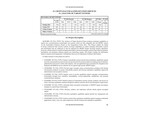
This presentation abstract details a non-invasive method to extract the global AES cryptographic key (GID) from Apple's A4 processor using Differential Power Analysis (DPA). Success would enable the Intelligence Community to decrypt the boot firmware on devices like the iPhone 4 and iPad, providing a persistent means to find vulnerabilities and develop exploits independent of patchable software flaws.
My notes
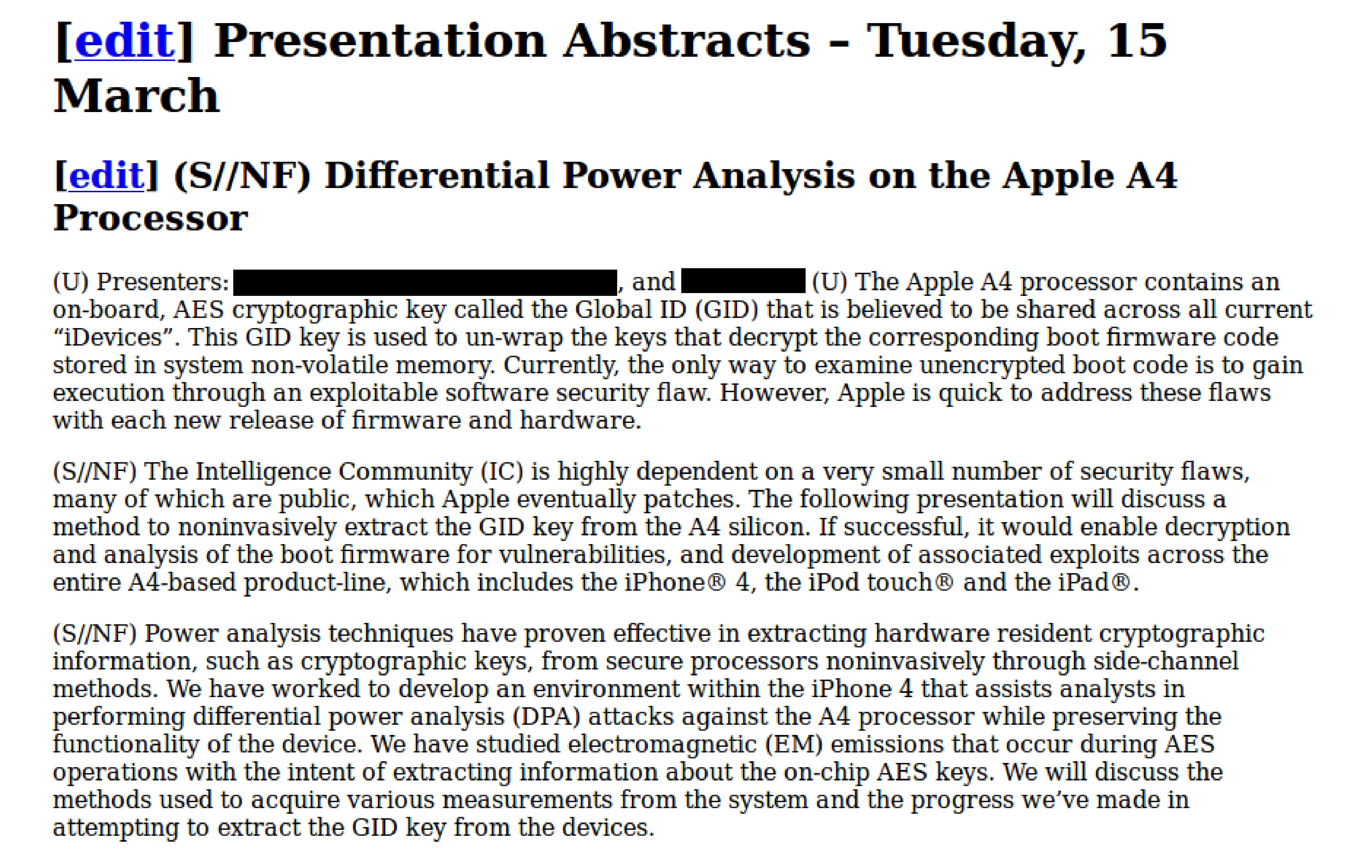
[edit] Presentation Abstracts - Tuesday, 15 March
[edit] (S//NF) Differential Power Analysis on the Apple A4 Processor
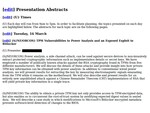
(U) Presenters: [REDACTED] and [REDACTED] (U) The Apple A4 processor contains an on-board, AES cryptographic key called the Global ID (GID) that is believed to be shared across all current "iDevices". This GID key is used to un-wrap the keys that decrypt the corresponding boot firmware code stored in system non-volatile memory. Currently, the only way to examine unencrypted boot code is to gain execution through an exploitable software security flaw. However, Apple is quick to address these flaws with each new release of firmware and hardware.
(S//NF) The Intelligence Community (IC) is highly dependent on a very small number of security flaws, many of which are public, which Apple eventually patches. The following presentation will discuss a method to noninvasively extract the GID key from the A4 silicon. If successful, it would enable decryption and analysis of the boot firmware for vulnerabilities, and development of associated exploits across the entire A4-based product-line, which includes the iPhone® 4, the iPod touch® and the iPad®.
(S//NF) Power analysis techniques have proven effective in extracting hardware resident cryptographic information, such as cryptographic keys, from secure processors noninvasively through side-channel methods. We have worked to develop an environment within the iPhone 4 that assists analysts in performing differential power analysis (DPA) attacks against the A4 processor while preserving the functionality of the device. We have studied electromagnetic (EM) emissions that occur during AES operations with the intent of extracting information about the on-chip AES keys. We will discuss the methods used to acquire various measurements from the system and the progress we've made in attempting to extract the GID key from the devices.
Published in the Same Report
(9 documents)
-
Leaky phone apps [pdf]
These GCHQ slides describe the "WARRIOR PRIDE" mobile intrusion capability being ported to iPhone and Android, with plugins for power management, remote microphone, high‑precision geolocation, kernel stealth, and self‑protection. It claims the ability to retrieve almost any content from infected phones (SMS/MMS, email, call records, photos, calendar, etc.). Part of GCHQ's project "Mobile Applications Project".
Programs: Mobile Applications Project · WARRIORPRIDE · DREAMYSMURF · NOSEYSMURF · TRACKERSMURF · PORUS · PARANOIDSMURF -
Apple A4/A5 Application Processors Analysis [pdf]
This document appears in a collection of presentations from a secret CIA-sponsored conference called the "Jamboree," where security researchers shared methods for exploiting vulnerabilities in consumer electronics. The presentation focused on analyzing Apple's A4 and A5 processors, which were used in iPhones and iPads, as part of broader intelligence agency efforts to extract encryption keys and find security weaknesses in Apple devices.
“The CIA Campaign to Steal Apple's Secrets” - The Intercept ↗ (2015-03-10) · Scahill, Jeremy · Begley, Josh -
Black Budget: Cryptanalysis & Exploitation Services – Analysis of Target Systems [pdf]
This document is a budget justification for the NSA's Cryptanalysis & Exploitation Services project, which develops capabilities to defeat commercial encryption systems, exploit emerging communications technologies, and conduct vulnerability analysis against both foreign and domestic security products.
“The CIA Campaign to Steal Apple's Secrets” - The Intercept ↗ (2015-03-10) · Scahill, Jeremy · Begley, Josh -
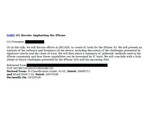
Rocoto: Implanting the iPhone [pdf]
A top secret abstract from the CIA's 2010 Trusted Computing Base Jamboree conference, describing a Johns Hopkins University Applied Physics Laboratory presentation on efforts to create intelligence community exploitation tools for the iPhone 3G, including analysis of its firmware security architecture and leveraging community jailbreak methods for signals intelligence purposes.
“The CIA Campaign to Steal Apple's Secrets” - The Intercept ↗ (2015-03-10) · Scahill, Jeremy · Begley, Josh -
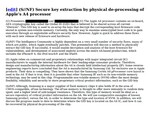
Secure key extraction by physical de-processing of Apple's A4 processor [pdf]
An abstract from the CIA Trusted Computing Base Jamboree describing a physical chip decapping and de-processing attack on Apple's A4 processor to extract the embedded Global ID cryptographic key, which if successful would enable decryption of boot firmware across all A4-based Apple devices including the iPhone 4, iPod Touch and iPad.
“The CIA Campaign to Steal Apple's Secrets” - The Intercept ↗ (2015-03-10) · Scahill, Jeremy · Begley, Josh -
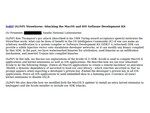
Strawhorse: Attacking the MacOS and iOS Software Development Kit [pdf]
Abstract from the 2012 CIA Trusted Computing Base Jamboree, presented by Sandia National Laboratories, describing successful modification of Apple's Xcode 4.1 SDK to create a covert injection vector capable of embedding backdoors, exfiltrating developer private keys, forcing data transmission to intelligence listening posts, disabling ASLR in kernel extensions, and installing a keylogger via a modified OS X updater.
People: Thompson, Ken“The CIA Campaign to Steal Apple's Secrets” - The Intercept ↗ (2015-03-10) · Scahill, Jeremy · Begley, Josh -
TCB Jamboree 2012 [pdf]
1 p.A TOP SECRET//SI//NOFORN entry from NSA's internal WikiInfo-NF wiki describing the CIA Trusted Computing Base Jamboree — an annual conference hosted by CIA's Emerging Technologies Branch within the Information Operations Center, bringing together CIA analysts and contractors conducting research for the TCB programme, with NSA invited to participate through its own counterpart TCB programme.
“The CIA Campaign to Steal Apple's Secrets” - The Intercept ↗ (2015-03-10) · Scahill, Jeremy · Begley, Josh -
TCB Jamboree 2012 Invitation [pdf]
The invitation to the CIA Information Operations Center's seventh annual Trusted Computing Base Jamboree, held at the Lockheed Martin Dulles Executive Plaza in Herndon, Virginia, February 7-9 2012 — an informal conference organised by the Engineering Development Group's Emerging Technologies Branch for developers working to circumvent or exploit new security capabilities, with a focus on applying Security Portfolio research results to Trusted Platform Module threats and opportunities and exploiting new attack vectors.
“The CIA Campaign to Steal Apple's Secrets” - The Intercept ↗ (2015-03-10) · Scahill, Jeremy · Begley, Josh -
TPM Vulnerabilities to Power Analysis and An Exposed Exploit to Bitlocker [pdf]
A secret abstract from the Trusted Computing Base Jamboree describing research by Sandia National Laboratories into power analysis attacks against Trusted Platform Modules from five manufacturers — extracting RSA private keys non-invasively via wired power analysis and electromagnetic emissions, including a novel unpublished single-trace attack against a Chinese Remainder Theorem RSA implementation — and a case study demonstrating how the extracted TPM key enables circumvention of Microsoft BitLocker's root-of-trust system by modifying BIOS digest values without software-level detection.
“The CIA Campaign to Steal Apple's Secrets” - The Intercept ↗ (2015-03-10) · Scahill, Jeremy · Begley, Josh
Related Documents
-
Secure key extraction by physical de-processing of Apple's A4 processor [pdf]
An abstract from the CIA Trusted Computing Base Jamboree describing a physical chip decapping and de-processing attack on Apple's A4 processor to extract the embedded Global ID cryptographic key, which if successful would enable decryption of boot firmware across all A4-based Apple devices including the iPhone 4, iPod Touch and iPad.
“The CIA Campaign to Steal Apple's Secrets” - The Intercept ↗ (2015-03-10) · Scahill, Jeremy · Begley, Josh -
Apple A4/A5 Application Processors Analysis [pdf]
This document appears in a collection of presentations from a secret CIA-sponsored conference called the "Jamboree," where security researchers shared methods for exploiting vulnerabilities in consumer electronics. The presentation focused on analyzing Apple's A4 and A5 processors, which were used in iPhones and iPads, as part of broader intelligence agency efforts to extract encryption keys and find security weaknesses in Apple devices.
“The CIA Campaign to Steal Apple's Secrets” - The Intercept ↗ (2015-03-10) · Scahill, Jeremy · Begley, Josh -
TPM Vulnerabilities to Power Analysis and An Exposed Exploit to Bitlocker [pdf]
A secret abstract from the Trusted Computing Base Jamboree describing research by Sandia National Laboratories into power analysis attacks against Trusted Platform Modules from five manufacturers — extracting RSA private keys non-invasively via wired power analysis and electromagnetic emissions, including a novel unpublished single-trace attack against a Chinese Remainder Theorem RSA implementation — and a case study demonstrating how the extracted TPM key enables circumvention of Microsoft BitLocker's root-of-trust system by modifying BIOS digest values without software-level detection.
“The CIA Campaign to Steal Apple's Secrets” - The Intercept ↗ (2015-03-10) · Scahill, Jeremy · Begley, Josh -
TCB Jamboree 2011 Abstracts [pdf]
This document discusses a 2011 CIA-hosted conference 2011 TCB Jamboree, focusing on research into emerging security technologies, their vulnerabilities, and methods for exploiting or circumventing trusted computing architectures. The event featured presentations—many redacted—on hardware and software security topics, including processor analysis, driver‑signing forensics, and other advanced techniques relevant to intelligence operations.
-
Black Budget: Cryptanalysis & Exploitation Services – Analysis of Target Systems [pdf]
This document is a budget justification for the NSA's Cryptanalysis & Exploitation Services project, which develops capabilities to defeat commercial encryption systems, exploit emerging communications technologies, and conduct vulnerability analysis against both foreign and domestic security products.
“The CIA Campaign to Steal Apple's Secrets” - The Intercept ↗ (2015-03-10) · Scahill, Jeremy · Begley, Josh