Publisher: The Washington Post 40 documents
Search documents matching “The Washington Post” →Who published each document. Mostly a news outlet, but sometimes a book. A partner outlet that reported the story without publishing the documents keeps its byline and its article, but is not a publisher here.
Graphs
By Banner
By Classification
Refine (combine with another filter, via search)
Sort: Title
Documents
-
2013 Black Budget - SSO Project Description [pdf]
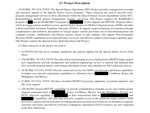
This excerpt from the 2013 Congressional Budget Justification for the National Intelligence Program details the administrative and logistical backbone of the Special Source Operations (SSO). The document outlines how the SSO manages high-priority access programs, specifically MYSTIC, RAMPART-I, and RAMPART-X. It confirms that MYSTIC utilizes "partner-enabled" accesses to intercept communications from both cellular (GSM) and traditional landline (PSTN) networks. The budget highlights a strategic push to exploit Next-Generation Wireless (NGW) technologies and identifies the Caribbean, Mexico, Kenya, and the Philippines as primary regions for sustained, comprehensive metadata and content collection.
“NSA surveillance program reaches ‘into the past’ to retrieve, replay phone calls” - The Washington Post ↗ (2014-03-18) · “The NSA Is Recording Every Cell Phone Call in the Bahamas” - The Intercept ↗ (2014-05-19) · Gellman, Barton · Soltani, Ashkan · Devereaux, Ryan · Greenwald, Glenn · Poitras, Laura -
Bulk collection of webmail address books and emerging protocols [pdf]
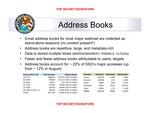
TOP SECRET NSA document details the large-scale collection of email address books and contact lists from major webmail and social media providers, emphasizing their metadata value despite low attribution rates to known targets. It also highlights ongoing efforts to identify and analyze emerging communication protocols, such as those used by Hotmail Messenger.
-
Classification guide for NSA/CSS Quantum Computing Research (10-25) [pdf]
The NSA/CSS Quantum Computing Research Classification Guide (10-25) outlines how information related to the NSA’s quantum computing research should be classified, distinguishing between unclassified academic work and classified cryptanalytic programs. It defines classification levels for research activities, breakthroughs, algorithms, collaborations, and materials, with the goal of protecting U.S. cryptographic systems while advancing the agency’s offensive capabilities in quantum cryptanalysis.
-
Content Acquisition Optimization PowerPoint Slides [pdf]
An NSA presentation on content acquisition optimisation — describing how incidental bulk collection from Yahoo Webmessenger, email address books, buddy lists and webmail inboxes was generating massive unintended collection volumes.
-
Current Efforts - Google [pdf]
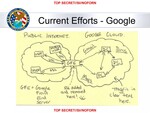
The famous NSA slide from the MUSCULAR program showing where Google's encryption is stripped away — a hand-drawn diagram of Google's cloud architecture annotated with "SSL Added and removed here!" beside a smiley face, marking the exact point where NSA and GCHQ intercepted Google user data flowing unencrypted between Google's data centers.
-
DNI, attorney general certify surveillance targets 'reasonably believed' to be outside U.S. [pdf]
In this document, the director of national intelligence and the attorney general certify that there are procedures in place to ensure that surveillance conducted under Section 702 of the FISA Amendments Act will be limited to targeting people "reasonably believed to be located outside the United States." They state that the foreign intelligence to be collected "concerns foreign powers" as defined by statute. The list of foreign powers is in Exhibit F.
-
Email from GCHQ to NSA about targeting realms in MONKEY PUZZLE [pdf]
Email from GCHQ's MONKEY PUZZLE development team to NSA clarifying that the system only supports deploying targeting for four specific selector realms: emailAddr, google, msnpassport, and yahoo, while still accepting other realms into the system pool.
Marking: SECRET -
FAA Certification Renewals with Caveats [pdf]
This NSA document shows that after the FISA Court found NSA’s upstream internet collection unconstitutional and illegal, the agency’s response was less about reform and more about finding technical and procedural workarounds to keep surveillance running as usual. While the court ordered changes within 30 days, NSA officials planned to sequester and filter “higher-risk” data to appease the judge—not halt collection—revealing a mindset focused on preserving operations rather than addressing legal violations.
-
FASCIA: The NSA's huge trove of location records [pdf]
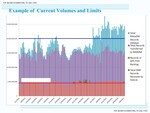
FASCIA is the National Security Agency's enormous database containing trillions of metadata records, many with device locations, that are collected from a variety of sources. This document shows the volume and types of device-location data collected by the agency.
“NSA tracking cellphone locations worldwide, Snowden documents show” - The Washington Post ↗ (2013-12-04) · “No Place to Hide” - Metropolitan Books ↗ (2014-05-13) · Gellman, Barton · Soltani, Ashkan · Greenwald, Glenn -
FISA Amendments Act of 2008 Section 702 summary document [pdf]
This document summarizes the way the law works and describes the three types of certifications used to permit the surveillance, as well as targeting and minimization procedures. The three certification are for foreign governments, counterterrorism and WMD/proliferation.
-
FISA judge's order authorizing surveillance of foreign governments and organizations [pdf]
With this order dated Aug. 19, 2010, John D. Bates, then-Chief Judge of the Foreign Intelligence Surveillance Court, approved an annual certification permitting the National Security Agency to conduct surveillance about 193 foreign governments, foreign factions, foreign-based political organizations and foreign entities such as the World Bank. Each year, a new certification must be approved by the court to permit such surveillance under Section 702 of the FISA Amendments Act.
Marking: SECRETPeople: Bates, John D. -
FY 2013 Congressional Budget Justification, Volume I, National Intelligence Program Summary, February 2012 [pdf]
This document outlines the $52.6 billion “black budget,” detailing the structure, priorities, successes, and shortcomings of the 16 U.S. intelligence agencies. It reveals unprecedented insight into funding allocations, operations, and intelligence gaps—including the CIA’s dominant role, expanding cyber operations, and persistent challenges in areas such as North Korea and counterterrorism—while emphasizing the tension between secrecy and public accountability.
-
How the NSA Pinpoints a Mobile Device [pdf]
This document is an internal National Security Agency classification guide outlining the agency's abilities to intercept cellular communications.
Programs: ARCVIEW -
How the NSA verifies a target's location [pdf]
This is an excerpt from a transcript of National Security Agency training videos that describe how to verify the location of a targeted device. It explains how the NSA monitors different types of mobile signaling information known as HLR and VLR registrations in order to locate individuals. It also makes clear that the agency is able to use location tracking to ascertain whether a target is in the United States.
-
How to tell if a target is 'foreign' [pdf]
The document describes a human intelligence (HUMINT) report indicating that a specific intelligence target, identified by a Foreign Source ID, is located outside the U.S., including details such as email, telephone number, and mobile network type, with checks confirming no U.S. roaming over a 60-day period. It illustrates the use of HUMINT to corroborate foreign location data for surveillance purposes.
-
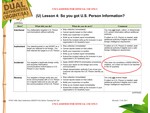
Lesson 4: So you got U.S. Person Information? [pdf]
This slide is used in a training course for NSA intelligence collectors and analysts. It tells the trainees what to do if they collect communications "to, from or about" a U.S. citizen, green card holder or company. The slide's revision date is nearly one month after the Foreign Intelligence Surveillance Court ruled on Oct. 3, 2011 that the NSA's handling of some "U.S. Persons" data was unlawful. The highlighted portion of the slide is notable because it shows that "incidentally" acquired U.S. communications, which may account for the highest volume of American content collected, are not purged from NSA databases. Analysts do not need to report "incidental" collection to the NSA Inspector General because it is not deemed a violation of rules. They may use the data routinely in "minimized" form, with identities masked, and with supervisory permission they may unmask the identities of U.S. persons in reports if the "customer set" requires them.
-
List of foreign governments and organizations authorized for surveillance [pdf]
This exhibit lists the 193 foreign governments as well as foreign factions, political organizations and other entities that were part of a 2010 certification approved by the Foreign Intelligence Surveillance Court. These are the entities about which the NSA may conduct surveillance, for the purpose of gathering foreign intelligence. Each year a new certification must be approved by the court to permit such surveillance under Section 702 of the FISA Amendments Act.
-
Location Cookies [pdf]
These slides contain excerpts from an April 2013 National Security Agency presentation detailing signal surveillance techniques and successes. They reveal that the NSA and its British counterpart, Government Communications Headquarters (GCHQ), use a Google-specific tracking cookie to pinpoint targets for hacking.
-
NSA director's affidavit on foreign surveillance [pdf]
The affidavit was submitted in support of the 2010 certification concerning foreign governments, factions and other entities. In it, Alexander states that pursuant to the certification, NSA seeks to acquire foreign intelligence information concerning foreign powers. The list of foreign powers is in Exhibit F.
People: Alexander, Keith B. -
NSA document on targeting Five Eyes countries and territories [pdf]
This document states that the National Security Agency is prohibited from conducting foreign surveillance on the "Five Eyes" countries, which include U.S. allies Australia, Canada, New Zealand and the United Kingdom, or their territories.