FAA Certification Renewals with Caveats
Open PDFDocument date: 2011-10-12
Pages: 1
Genre: newsletter
Classification: TOP SECRET SI
Dissemination: NOFORN
This NSA document shows that after the FISA Court found NSA’s upstream internet collection unconstitutional and illegal, the agency’s response was less about reform and more about finding technical and procedural workarounds to keep surveillance running as usual. While the court ordered changes within 30 days, NSA officials planned to sequester and filter “higher-risk” data to appease the judge—not halt collection—revealing a mindset focused on preserving operations rather than addressing legal violations.
My notes
SPECIAL SOURCE OPERATIONS
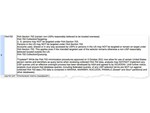
(TS//SI//NF) FAA Certification Renewals With Caveats
By [REDACTED] on 2011-10-12 0850
(TS//SI//NF) The FISA Court signed the 2011 FAA Certifications on 3 Oct 2011 – these
are valid until 2 Oct 2012, permitting SSO FAA-authorized accesses to continue
operations. However, in the 80-page opinion, the judge ordered certain “upstream” or
“passive” FAA DNI collection to cease after 30 days, unless NSA implements solutions
to correct all deficiencies identified in the opinion document. PRISM operations are not
affected by these caveats. All PRISM providers, except Yahoo and Google, were
successfully transitioned to the new Certifications. We expect Yahoo and Google to
complete transitioning by Friday 6 Oct. Regarding the non-PRISM FAA collection
programs, the Court cited targeting and minimization procedures related to collection of
Multiple Communications Transactions as “deficient on statutory and constitutional
grounds.” SSO, Technology Directorate, OGC, and other organizations are coordinating a
response, which includes planning to implement a conservative solution in which the
higher-risk collection will be sequestered. It is possible that this higher risk collection
contains much of the non-duplicative FAA collection resulting in FAA reporting from
upstream accesses. This solution is designed to comply with the judge’s order; however,
the judge will have to determine if it does. If the solution is installed, SSO will then work
with OPIs and OGC to modify the solution over time such that the filtering process will
be optimized to permit more valid collection to be processed and forwarded to OPIs.
Finally, in parallel with these efforts, the OGC is contemplating filing an appeal to the
ruling.
Published in the Same Report
(2 documents)
-
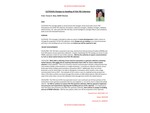
Targeting Rationale (TAR) [pdf]
An NSA document describing how analysts should explain their targeting decisions under the FISA Amendments Act.
-
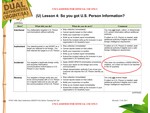
Lesson 4: So you got U.S. Person Information? [pdf]
This slide is used in a training course for NSA intelligence collectors and analysts. It tells the trainees what to do if they collect communications "to, from or about" a U.S. citizen, green card holder or company. The slide's revision date is nearly one month after the Foreign Intelligence Surveillance Court ruled on Oct. 3, 2011 that the NSA's handling of some "U.S. Persons" data was unlawful. The highlighted portion of the slide is notable because it shows that "incidentally" acquired U.S. communications, which may account for the highest volume of American content collected, are not purged from NSA databases. Analysts do not need to report "incidental" collection to the NSA Inspector General because it is not deemed a violation of rules. They may use the data routinely in "minimized" form, with identities masked, and with supervisory permission they may unmask the identities of U.S. persons in reports if the "customer set" requires them.
Related Documents
-
FAA702 Glossary - Section 702 of the Fisa Amendments Act (FAA) [pdf]
This document outlines NSA rules under Section 702 of the FISA Amendments Act, which prohibit directly targeting U.S. persons or individuals inside the U.S., but quietly note a 2011 rule change allowing analysts to use U.S. person identifiers to query data already collected under 702—pending internal oversight. This effectively establishes a “backdoor search” capability enabling warrantless searches of Americans’ communications stored in NSA databases. Section 702 also gives the NSA authority to target without warrant the communications of foreign targets.
-
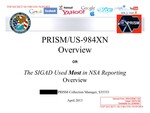
PRISM/US-984XN Overview [pdf]
A 2013 NSA training presentation revealing that major U.S. tech companies — including Google, Facebook, Apple, Microsoft, and Skype — secretly gave the NSA direct access to their servers, allowing the agency to collect users' emails, chats, photos, and files in real time, with the FBI acting as intermediary.
Programs: PRISM · FAIRVIEW · STORMBREW · BLARNEY · OAKSTAR · UTT · PRINTAURA · PINWALE · NUCLEON · TRAFFICTHIEF · SCISSORS · MARINA · MAINWAY · FALLOUT · CONVEYANCE · REPRISMFISA · SSO“U.S., British intelligence mining data from nine U.S. Internet companies in broad secret program” - The Washington Post ↗ (2013-06-06) · “NSA Prism program taps in to user data of Apple, Google and others” - The Guardian ↗ (2013-06-07) · “L'ampleur de l'espionnage mondial par la NSA” - Le Monde ↗ (2013-10-21) · “NSA files decoded: Edward Snowden's surveillance revelations explained” - The Guardian ↗ (2013-11-01) · “No Place to Hide” - Metropolitan Books ↗ (2014-05-13) · “Dark Mirror: Edward Snowden and the American Surveillance State” - Penguin Press ↗ (2020-05-19) · Gellman, Barton · Poitras, Laura · Greenwald, Glenn · MacAskill, Ewen · Untersinger, Martin · Dance, Gabriel -
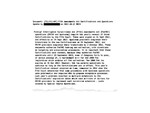
FISA Amendments Act Certifications and Operations [pdf]
This document exposes how, after the FISA Court found flaws in NSA’s upstream surveillance in 2011, the agency pushed through new certifications on schedule the following year and quietly used taxpayer money to cover millions in compliance costs for PRISM companies like Google and Yahoo. Rather than scaling back unconstitutional collection, the NSA treated the ruling as a logistical hurdle to manage with corporate partners, underscoring its deep financial and operational entanglement with major tech firms. Check also the document "FAA Certification Renewals with Caveats"
Programs: PRISM -
FAA702 comms memo [pdf]
This document details NSA's response to concerns raised by the FISA Court over the collection of non-targeted data in FAA-702 upstream collection. To mitigate the risk of continued acquisition, NSA is implementing temporary measures, including cautionary banners and updated processes, to prevent misuse of data that may not be directly related to tasked selectors.
People: Shea, Teresa H. -
NSA inspector general report on email and internet data collection under Stellar Wind, 24 March 2009 [Working Draft] [pdf]
This 2009 NSA Inspector General draft report details the origins and legal framework of the President’s Surveillance Program (PSP), launched after 9/11 to bypass FISA limits and authorize bulk interception of internet and telephony content and metadata, including communications with one end inside the U.S. It reveals how NSA, with White House backing, expanded surveillance authority to cover “collection gaps” that existing law didn’t allow, effectively legalizing large-scale warrantless spying under a secret presidential directive.
People: Bush, George W. · Hayden, Michael · Tenet, George · Gonzales, Alberto R. · Addington, David S. · Graham, Robert · Deitz, Robert L. · Shelby, Richard · Pelosi, Nancy · Cheney, Dick · Libby, I. Lewis · Lamberth, Royce · Inouye, Daniel · Levin, Daniel · Stevens, Theodore · Kollar-Kotelly, Colleen · Rockefeller, Jay · Alexander, Keith B. · Potenza, Vito