Publication year: 2013 124 documents
Search documents matching “2013” →When a publisher first published each document. If a document is published multiple times, only the oldest one is used here.
Graphs
By document date (11 years)
By published date (6 years)
Sort: Title
Documents
-
DGSE and ANSSI Delegation to NSA (April 2013), cyberattacks [pdf]
This Top Secret NSA visit précis details the April 12, 2013 meeting between senior French cyber officials Bernard Barbier (DGSE) and Patrick Pailloux (ANSSI) and NSA leadership to discuss and seek U.S. assistance in attributing May 2012 cyberattacks on the French Presidential network. The document outlines the visit agenda, background tensions over French media accusations of U.S. involvement, and NSA’s plan to emphasize cyber defense cooperation while carefully navigating potential diplomatic sensitivities.
-
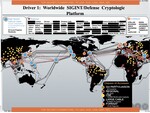
Driver 1: Worldwide SIGINT/Defense Cryptologic Platform [pdf]
A 2012 NSA management presentation slide revealing the agency's global surveillance architecture across five categories of access — covert cable taps, regional collection sites, computer network exploitation implants, foreign satellite collection, and third-party liaison relationships — including a list of cities hosting clandestine collection operations and confirmation of over 50,000 worldwide malware implants.
Programs: STELLAR · SOUNDER · SNICK · MOONPENNY · LADYLOVE · INDRA · IRONSAND · JACKKNIFE · CARBOY · TIMBERLINE“NSA infected 50,000 computer networks with malicious software” - NRC ↗ (2013-11-23) · “No Place to Hide” - Metropolitan Books ↗ (2014-05-13) · Boon, Floor · Derix, Steven · Modderkolk, Huib · Greenwald, Glenn -
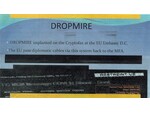
DROPMIRE on the Cryptofax at the EU Embassy D.C. [pdf]
This document reveals that the NSA secretly targeted EU diplomatic communications through a program called DROPMIRE, which involved placing surveillance implants on encrypted fax machines at the EU Embassy in Washington, D.C. This operation was part of a broader effort to spy on 38 foreign embassies and missions—including allies such as France, Italy, and Greece—to gain inside knowledge of policy debates and diplomatic positions.
Programs: DROPMIRE -
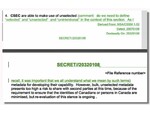
DSD’s Risky Metadata Sharing: Australian Citizens’ Privacy Jeopardized in 5-Eyes Surveillance [pdf]
The document reveals that in 2008, Australia’s Defence Signals Directorate (DSD) was willing to share bulk, unselected, unminimised metadata about ordinary citizens with its 5-Eyes partners, including sensitive medical, legal, and religious information.
Marking: SECRET -
Email from GCHQ to NSA about targeting realms in MONKEY PUZZLE [pdf]
Email from GCHQ's MONKEY PUZZLE development team to NSA clarifying that the system only supports deploying targeting for four specific selector realms: emailAddr, google, msnpassport, and yahoo, while still accepting other realms into the system pool.
Marking: SECRET -
FAA Certification Renewals with Caveats [pdf]
This NSA document shows that after the FISA Court found NSA’s upstream internet collection unconstitutional and illegal, the agency’s response was less about reform and more about finding technical and procedural workarounds to keep surveillance running as usual. While the court ordered changes within 30 days, NSA officials planned to sequester and filter “higher-risk” data to appease the judge—not halt collection—revealing a mindset focused on preserving operations rather than addressing legal violations.
-
FAA702 Glossary - Section 702 of the Fisa Amendments Act (FAA) [pdf]
This document outlines NSA rules under Section 702 of the FISA Amendments Act, which prohibit directly targeting U.S. persons or individuals inside the U.S., but quietly note a 2011 rule change allowing analysts to use U.S. person identifiers to query data already collected under 702—pending internal oversight. This effectively establishes a “backdoor search” capability enabling warrantless searches of Americans’ communications stored in NSA databases. Section 702 also gives the NSA authority to target without warrant the communications of foreign targets.
-
FASCIA: The NSA's huge trove of location records [pdf]
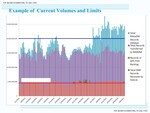
FASCIA is the National Security Agency's enormous database containing trillions of metadata records, many with device locations, that are collected from a variety of sources. This document shows the volume and types of device-location data collected by the agency.
“NSA tracking cellphone locations worldwide, Snowden documents show” - The Washington Post ↗ (2013-12-04) · “No Place to Hide” - Metropolitan Books ↗ (2014-05-13) · Gellman, Barton · Soltani, Ashkan · Greenwald, Glenn -
FINAL Agenda SWEDUSA [pdf]
Detailed list of points and participants in the summit meeting between the top brass of the FRA and the NSA in April 2013.
Programs: TURTLEPOWER · TURMOIL · XKEYSCORE · WINTERLIGHT · QUANTUM · PARTNERMALL · VIVIAN · NAPA-3 · GCE · SSO -
First-Ever Formal SIGINT Development (SIGDEV) Training Is Provided to SIGINT Seniors Europe (SSEUR) Partners [pdf]
This internal NSA report details the first formal training course on "SIGINT Development" (SIGDEV) offered to the "SIGINT Seniors Europe" (SSEUR) coalition, a group comprising the Five Eyes nations and nine European third-party partners. The document highlights the strategic goal of standardizing analytic tradecraft among these allies to improve collaboration on priority missions like counter-terrorism and the war in Afghanistan.
“New NSA Revelations: Inside Snowden's Germany File” - Der Spiegel ↗ (2014-06-18) · “Read the Snowden Documents From the NSA” - SVT Nyheter ↗ (2013-12-11) · Becker, Sven · Gude, Hubert · Horchert, Judith · Müller-Maguhn, Andy · Poitras, Laura · Reißmann, Ole · Rosenbach, Marcel · Schindler, Jörg · Schmid, Fidelius · Sontheimer, Michael · Stark, Holger · Björklund, Axel -
FISA Amendments Act Certifications and Operations [pdf]
This document exposes how, after the FISA Court found flaws in NSA’s upstream surveillance in 2011, the agency pushed through new certifications on schedule the following year and quietly used taxpayer money to cover millions in compliance costs for PRISM companies like Google and Yahoo. Rather than scaling back unconstitutional collection, the NSA treated the ruling as a logistical hurdle to manage with corporate partners, underscoring its deep financial and operational entanglement with major tech firms. Check also the document "FAA Certification Renewals with Caveats"
Programs: PRISM -
Fisa court warrant authorising NSA surveillance procedures [pdf]
One-paragraph order, signed by a Fisa court judge, declares procedures submitted by the attorney general on behalf of the NSA are consistent with US law and fourth amendment
Marking: SECRET -
FY 2013 Congressional Budget Justification, Volume I, National Intelligence Program Summary, February 2012 [pdf]
This document outlines the $52.6 billion “black budget,” detailing the structure, priorities, successes, and shortcomings of the 16 U.S. intelligence agencies. It reveals unprecedented insight into funding allocations, operations, and intelligence gaps—including the CIA’s dominant role, expanding cyber operations, and persistent challenges in areas such as North Korea and counterterrorism—while emphasizing the tension between secrecy and public accountability.
-
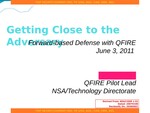
Getting Close to the Adversary – Forward-based Defense with QFIRE (June 3, 2011) [pdf]
This document describes the QFIRE project which is designed to give the NSA a global, low-latency platform for “forward-based defense”, enabling real-time detection and manipulation of Internet traffic close to its source. By co-locating passive sensors (TURMOIL), decision logic (TURBINE), and injection capabilities, QFIRE can rapidly reset connections, redirect targets for exploitation, inject malicious payloads, and even seize control of botnets. It operates as part of the broader QUANTUMTHEORY architecture, leveraging both cooperative and non-cooperative infrastructure worldwide to enable CNE/CND/CNA effects with minimal delay.
Programs: QFIRE · QUANTUMTHEORY · TURBULENCE · TURMOIL · TURBINE · TUTELAGE · QUANTUM · QUANTUMSKY · QUANTUMINSERT · QUANTUMBOT · QUANTUMCOPPER · STRAIGHTBIZARRE · BLINDDATE · TUMULT · ISLANDTRANSPORT · SURPLUSHANGAR · MIDDLEMAN · SCSnet · WEALTHYCLUSTER · SSO -
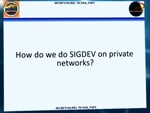
How do we do SIGDEV or private networks? [pdf]
Top Secret SIGINT Development (SIGDEV) briefing explains how analysts conduct reconnaissance on private networks, noting that many targets rely on them and that 30–40% of traffic surveyed in BLACKPEARL has at least one private endpoint. It demonstrates the ROYALNET tool and its analytics for identifying network features, NetStrings, and links likely to carry a target’s traffic, with named targets and feature sets including Google’s infrastructure, the SWIFT banking network, the French Ministry of Foreign Affairs, Brazil’s Petrobras, and Huawei.
People: Higgins, Jean -
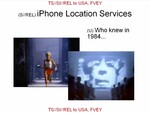
How the NSA Accesses Smartphone Data [pdf]
This document reveals how the NSA and its Five Eyes partners developed sophisticated methods to exploit iPhone location services and BlackBerry communications, framing smartphone users as “zombies” willingly sharing data. It includes examples of intercepted geolocation data and decrypted BlackBerry emails, illustrating targeted surveillance capabilities against both consumer and government communications.
-
How the NSA Pinpoints a Mobile Device [pdf]
This document is an internal National Security Agency classification guide outlining the agency's abilities to intercept cellular communications.
Programs: ARCVIEW -
How the NSA verifies a target's location [pdf]
This is an excerpt from a transcript of National Security Agency training videos that describe how to verify the location of a targeted device. It explains how the NSA monitors different types of mobile signaling information known as HLR and VLR registrations in order to locate individuals. It also makes clear that the agency is able to use location tracking to ascertain whether a target is in the United States.
-
How to tell if a target is 'foreign' [pdf]
The document describes a human intelligence (HUMINT) report indicating that a specific intelligence target, identified by a Foreign Source ID, is located outside the U.S., including details such as email, telephone number, and mobile network type, with checks confirming no U.S. roaming over a 60-day period. It illustrates the use of HUMINT to corroborate foreign location data for surveillance purposes.
-
Innov8 Experiment Profile Template [pdf]
A TOP SECRET STRAP1 joint NSA/GCHQ experiment profile documenting a 2010-2011 Joint Capability Experiment to test hardware-accelerated bulk decryption of common internet encryption technologies at scale, integrating TURMOIL's passive collection with NSA's LONGHAUL key recovery service via the ISLANDTRANSPORT messaging system, as part of the broader BULLRUN assault on internet encryption.
“Prying Eyes: Inside the NSA's War on Internet Security” - Der Spiegel ↗ (2014-12-28) · “Revealed: how US and UK spy agencies defeat internet privacy and security” - The Guardian ↗ (2013-09-05) · Appelbaum, Jacob · Gibson, Aaron · Grothoff, Christian · Müller-Maguhn, Andy · Poitras, Laura · Sontheimer, Michael · Stöcker, Christian · Ball, James · Borger, Julian · Greenwald, Glenn