DSD’s Risky Metadata Sharing: Australian Citizens’ Privacy Jeopardized in 5-Eyes Surveillance
Open PDFDocument date: -
Pages: 4
Genre: report
Banner: SECRET//20320108
Classification: SECRET
Dissemination: -
The document reveals that in 2008, Australia’s Defence Signals Directorate (DSD) was willing to share bulk, unselected, unminimised metadata about ordinary citizens with its 5-Eyes partners, including sensitive medical, legal, and religious information.
My notes
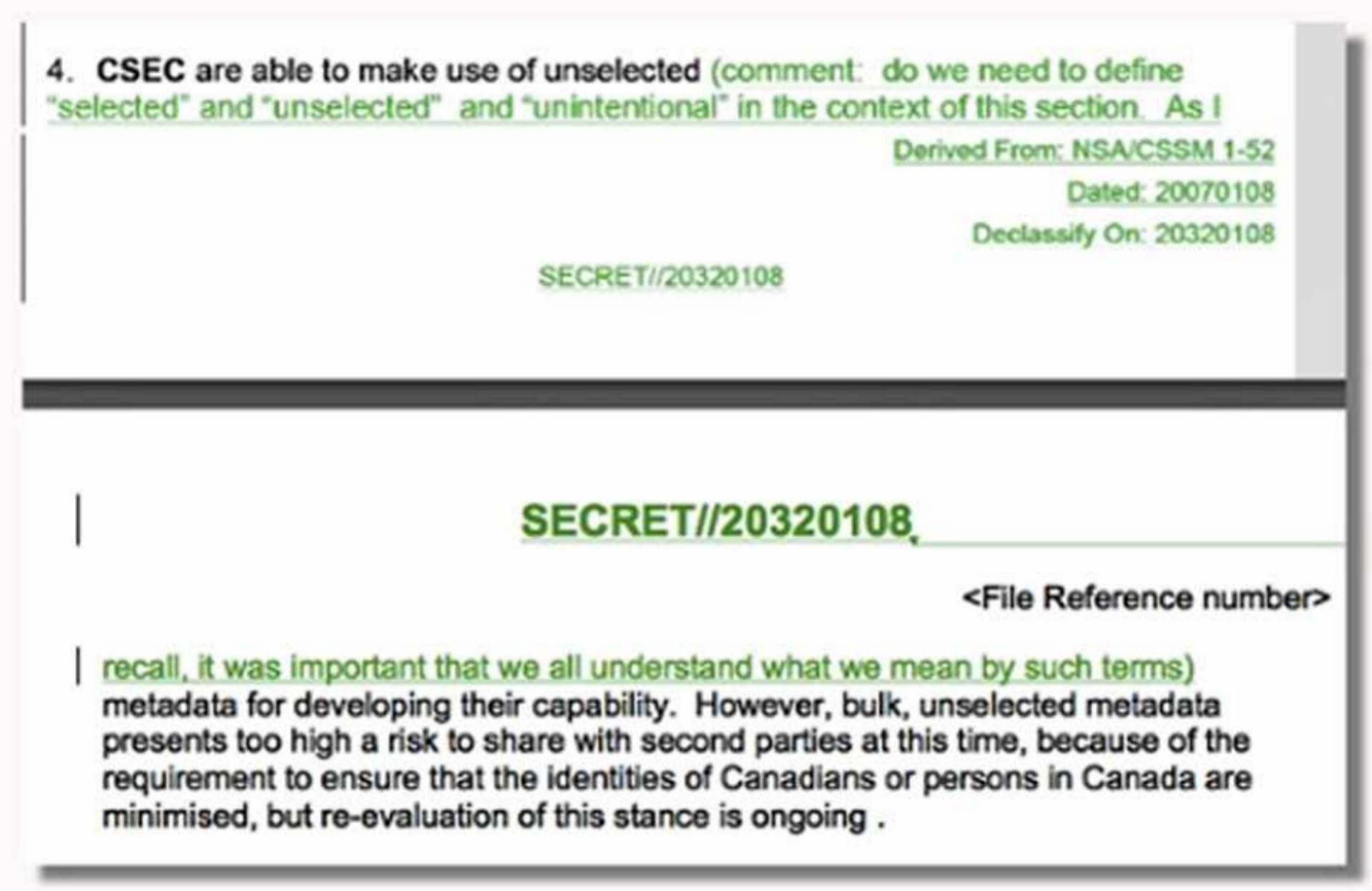
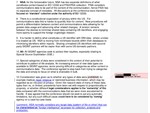
- CSEC are able to make use of unselected (comment: do we need to define
"selected" and "unselected" and "unintentional" in the context of this section. As I
Derived From: NSA/CSSM 1-52
Dated: 20070108
Declassify On: 20320108
SECRET//20320108
SECRET//20320108
<File Reference number>
recall, it was important that we all understand what we mean by such terms)
metadata for developing their capability. However, bulk, unselected metadata
presents too high a risk to share with second parties at this time, because of the
requirement to ensure that the identities of Canadians or persons in Canada are
minimised, but re-evaluation of this stance is ongoing .
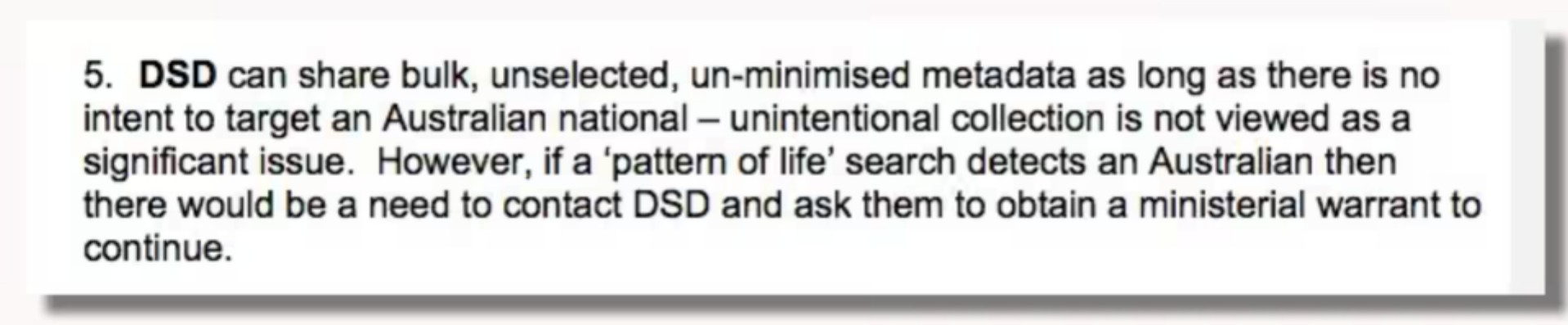
- DSD can share bulk, unselected, un-minimised metadata as long as there is no
intent to target an Australian national – unintentional collection is not viewed as a
significant issue. However, if a 'pattern of life' search detects an Australian then
there would be a need to contact DSD and ask them to obtain a ministerial warrant to
continue.
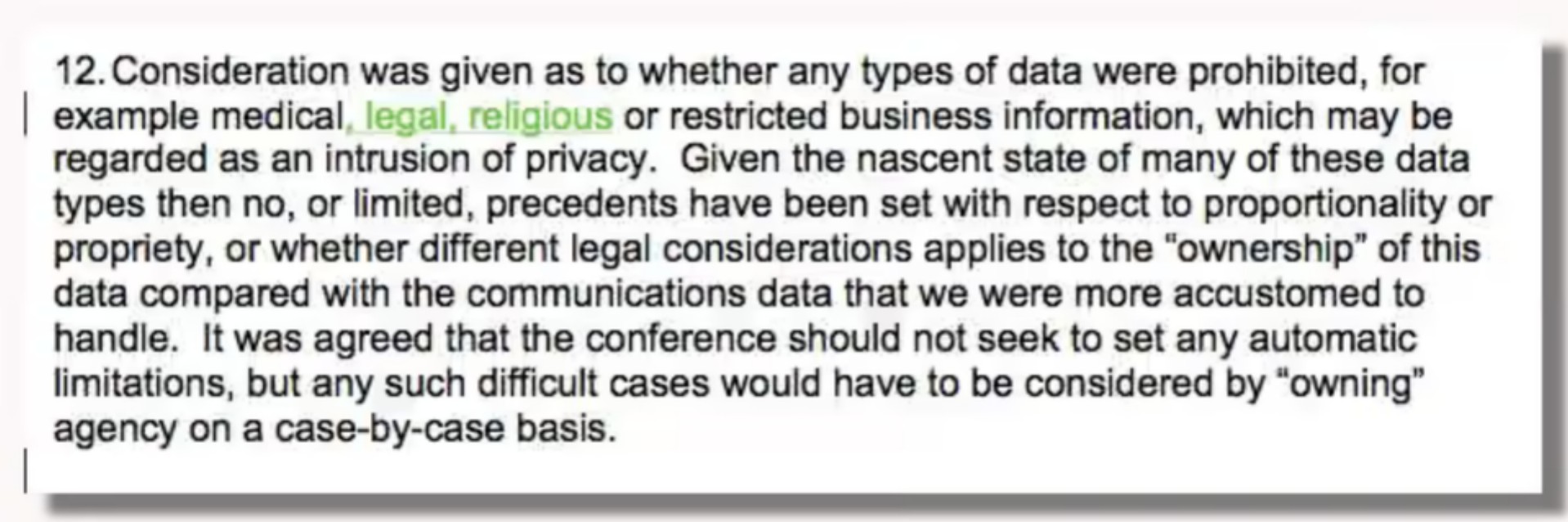
- Consideration was given as to whether any types of data were prohibited, for
example medical, legal, religious or restricted business information, which may be
regarded as an intrusion of privacy. Given the nascent state of many of these data
types then no, or limited, precedents have been set with respect to proportionality or
propriety, or whether different legal considerations applies to the "ownership" of this
data compared with the communications data that we were more accustomed to
handle. It was agreed that the conference should not seek to set any automatic
limitations, but any such difficult cases would have to be considered by "owning"
agency on a case-by-case basis.
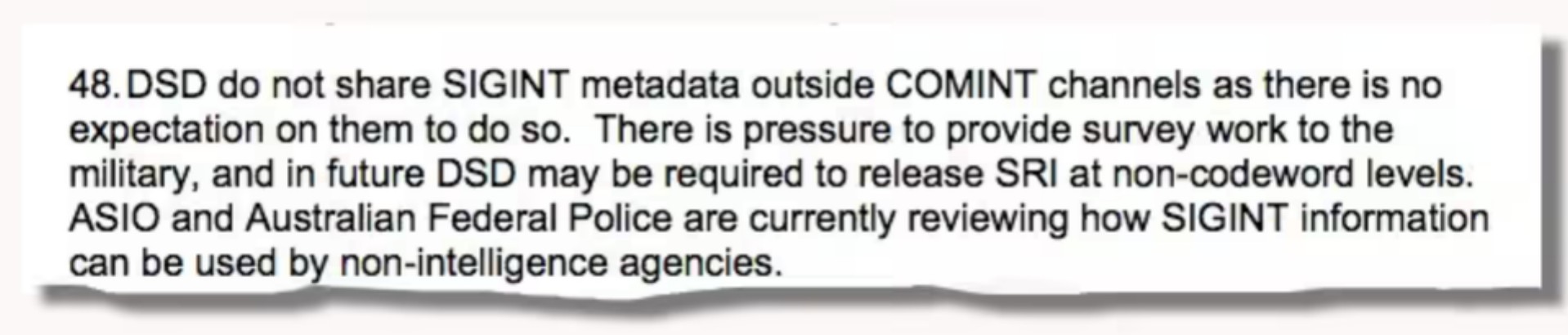
- DSD do not share SIGINT metadata outside COMINT channels as there is no
expectation on them to do so. There is pressure to provide survey work to the
military, and in future DSD may be required to release SRI at non-codeword levels.
ASIO and Australian Federal Police are currently reviewing how SIGINT information
can be used by non-intelligence agencies.
Related Documents
-
3G: impact and update - SDF Nov 09 [pdf]
This 2009 top-secret presentation from Australia’s Defence Signals Directorate (DSD) detailing 3G mobile network rollouts in Southeast Asia and identifying Indonesian President Susilo Bambang Yudhoyono, his wife, and senior officials as surveillance targets. It includes handset information, call data records, intercepted call attempts, and outlines plans for continued interception of Indonesian leadership communications.
-
Metadata Policy Conference (2008) [pdf]
This document summarizes the high-level discussions from a 2008 conference focused on the legal, policy, and technical challenges of sharing communications metadata between the NSA, its domestic partners, and the Second Party (Five Eyes) SIGINT agencies. It highlights a strategic shift toward bulk data usage and "pattern of life" analysis, while navigating the complex legal distinctions between metadata and "content" under Executive Order 12333 and FISA.
-
CSEC Surveillance of Travellers Through Airport Wi-Fi Tracking [pdf]
The leaked 2012 top secret CSEC presentation details a trial program that used airport Wi-Fi metadata to identify and track travellers’ devices across Canada and internationally, developing advanced “IP profiling” techniques to map movements through hotels, airports, and public hotspots. The program, conducted with NSA support, aimed to build powerful analytic tools for surveillance and real-time alerts within the Five Eyes intelligence network.
Marking: TOP SECRET -
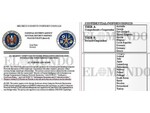
Sharing Computer Network Operations Cryptologic Information with Foreign Partners [pdf]
The document is a secret NSA/CSS policy outlining guidelines for sharing Computer Network Operations (CNO) cryptologic information with foreign partners, including rules for cooperation in CNE and CND within existing intelligence relationships. The “Purpose and Scope” section on the first page appears to be unpublished elsewhere, while the Tier A and Tier B country lists match those publicly revealed in sources like Glenn Greenwald’s No Place to Hide.
“El CNI facilitó el espionaje masivo de EEUU a España” - El Mundo ↗ (2013-10-30) · “No Place to Hide” - Metropolitan Books ↗ (2014-05-13) · Greenwald, Glenn · Aranda, Germán -
CSEC SIGINT Cyber Discovery: Summary of the current effort [pdf]
This document provides a overview of the Communications Security Establishment Canada (CSEC) cyber operations, detailing its SIGINT, CNE (Computer Network Exploitation), and cyber counterintelligence programs, including tools like WARRIORPRIDE, REPLICANTFARM, and EONBLUE for threat detection, anomaly discovery, and metadata production. It outlines operational procedures, analytic methodologies, and collaborative frameworks with domestic and Five Eyes partners for sharing intelligence, tipping/cueing, and integrating cyber and traditional counterintelligence efforts.
Programs: REPLICANTFARM · SLIPSTREAM · WARRIORPRIDE · DAREDEVIL · CHORDFLIER · NAMEDROPPER · WORMWOOD · OBELIX · SHEPHERD · CARBON · REGBACKUP · DOGHOUSE · WALKER · ALOOFNESS · BLAZINGANGEL · TINYWEB · QUIVERINGSQUAB · WINDO · DIESELRATTLE · WIDOWKEY · CIVETCAT · WINBEE · SSLINST · PULLEDPORK · EONBLUE · SNIFFLE · QUANTUM · XKEYSCORE · HALTERHITCH · FASTFLUX · DEADSEA · NSPACES · PPF · SSO · TKB“The Digital Arms Race: NSA Preps America for Future Battle” - Der Spiegel ↗ (2015-01-17) · “Communication Security Establishment's cyberwarfare toolbox revealed” - CBC News ↗ (2015-03-23) · “Documents Reveal Canada’s Secret Hacking Tactics” - The Intercept ↗ (2015-03-23) · Appelbaum, Jacob · Gibson, Aaron · Guarnieri, Claudio · Müller-Maguhn, Andy · Poitras, Laura · Rosenbach, Marcel · Ryge, Leif · Schmundt, Hilmar · Sontheimer, Michael · Seglins, Dave · Hildebrandt, Amber · Pereira, Michael · Greenwald, Glenn · Gallagher, Ryan