Genre: report 153 documents
Search documents matching “report” →What kind of document it is: slides, report, wiki, manual, guide, newsletter.
Graphs
By document date (10 years)
By Banner
By Classification
Refine (combine with another filter, via search)
Sort: Title
Documents
-
ICREACH Wholesale Sharing (2007) [pdf]
This document serves as an official submission by the SID Technical Director detailing the leadership and collaborative efforts required to transition ICREACH from a conceptual framework into the Intelligence Community's first wholesale metadata-sharing platform. This document emphasizes the role of the SID team in securing critical legal and policy approvals through the NSA's Office of the General Counsel and coordinating with Five Eyes partners to ensure international participation in the system.
Programs: ICREACH -
India: Support to Terrorist Attacks in Mumbai [pdf]
A top secret NSA intelligence report on GCHQ's surveillance of Lashkar-e-Taiba technology chief Zarrar Shah before and during the November 2008 Mumbai attacks, documenting how analysis of his internet browsing and viewing habits revealed reconnaissance activity and operational planning against Mumbai targets including the Taj Hotel.
People: Shah, Zarrar“In 2008 Mumbai Attacks, Piles of Spy Data, but an Uncompleted Puzzle” - The New York Times ↗ (2014-12-21) · “In 2008 Mumbai Attacks, Piles of Spy Data, But an Uncompleted Puzzle” - ProPublica ↗ (2014-12-21) · “In 2008 Mumbai Attacks, Piles of Spy Data, but an Uncompleted Puzzle” - PBS ↗ (2014-12-21) · Glanz, James · Rotella, Sebastian · Sanger, David E. · Jennings, Tom · Peevey, Anna Belle · Nieling, Michael -
Innov8 Voice Analytics Experiment Profile [pdf]
This document outlines Phase 1 of a Voice Analytics experiment conducted by GCHQ in partnership with the NSA, testing the ingestion and processing of voice data through the DISTILLERY platform on GHOSTMACHINE hardware. The experiments evaluate independent, parallel, and linked analytics (SAD, GID, LID), as well as dynamic resource management, to ensure accurate, scalable, and compliant voice processing in a Joint Collaboration Environment.
Marking: TOP SECRET -
Intrusion Analysis – GCHQ [pdf]
An internal GCHQ write-up defines the Intrusion Analysis team’s remit inside the Joint Electronic Attack Cell: all‑source analysis of emerging and active electronic attacks, stewardship of electronic attack signatures, and SIGINT‑driven targeting under EITT oversight. It details sources, reporting channels, legal authorities, and auditing controls that govern how signatures are deployed and how selectors are managed.
-
Iran – Current Topics, Interaction with GCHQ [pdf]
This NOFORN top secret April 2013 NSA document, shows how Iran significantly improved its offensive cyber capabilities by learning from cyberattacks against it, such as the April 2012 attack on its own oil industry, subsequently launching its own destructive attacks against Saudi Aramco and U.S. financial institutions.
-
Israel targets US [pdf]
2 p.An NSA assessment noting that France targets the US Department of Defense and that Israel, while an extraordinarily good SIGINT partner, also targets the United States — ranked by a National Intelligence Estimate as the third most aggressive intelligence service against the US — and that the exchange has tilted heavily toward Israeli needs.
-
-
Japan official NSA visit, cyber briefing [pdf]
This document outlines cooperation between the NSA and Japan’s Directorate for SIGINT (DFS) to develop Japan’s capabilities for providing signals intelligence (SIGINT) support to cyber defense operations, particularly against Chinese cyber activities. It details meetings, training, and data-sharing efforts from 2012–2013 aimed at enhancing Japan’s cyber intelligence capacity under U.S. guidance.
“Japan Made Secret Deals With the NSA That Expanded Global Surveillance” - The Intercept ↗ (2017-04-24) · “アメリカに監視される日本 ~スノーデン“未公開ファイル”の衝撃” - NHK ↗ (2017-04-24) · Gallagher, Ryan · Ikegami, Akira -
Japan official NSA visit, HF briefing [pdf]
The document describes ongoing NSA efforts to renew high-frequency direction-finding (HFDF) collaboration with Japan’s Directorate for SIGINT (DFS) after Japan withdrew from the CROSSHAIR network in 2009. By 2012–2013, both sides were manually exchanging HFDF data, and the NSA sought to advance toward automated data sharing via its BORESIGHT system while reassuring Japan that it would not replace or override its existing technology.
“Japan Made Secret Deals With the NSA That Expanded Global Surveillance” - The Intercept ↗ (2017-04-24) · “アメリカに監視される日本 ~スノーデン“未公開ファイル”の衝撃” - NHK ↗ (2017-04-24) · Gallagher, Ryan · Ikegami, Akira -
JORDAN-BELGIUM [pdf]
2008 GCHQ report documenting the interception of a Jordan–Belgium satellite telecommunications link, through which British intelligence monitored call traffic and identified tasked surveillance targets including the Turkish foreign ministry, Palestinian Authority figures and Israeli MK Ahmad Tibi, along with other hits on Kurdish leadership, diplomats, and Jordanian government offices such as the Royal Protocol Office. The published copies redact different entries. Der Spiegel's and The Intercept's show the Turkish and Kurdish ones, Le Monde's (version 8BBAC) the Palestinian and Jordanian ones.
People: Tibi, Ahmad“Turkey Is 'Partner and Target' for the NSA” - Der Spiegel ↗ (2014-08-31) · “How the NSA Helped Turkey Kill Kurdish Rebels” - The Intercept ↗ (2014-08-31) · “L’Autorité palestinienne et la Jordanie espionnées par les services américains et britanniques” - Le Monde ↗ (2016-12-07) · Poitras, Laura · Rosenbach, Marcel · Sontheimer, Michael · Stark, Holger · Follorou, Jacques -
Kaspersky User-Agent Strings [pdf]
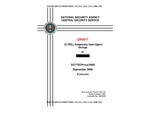
This September 2008 NSA technical report reveals that the agency discovered Kaspersky antivirus software's user-agent strings contain encoded serial numbers and can function as unique machine identifiers, allowing tracking of individual computers running the Russian security software across intercepted network traffic collected through the YACHTSHOP surveillance program.
-
Legal issues UK regarding Sweden and Quantum [pdf]
An internal NSA document from April 2013 that describes the status of the relationship with a number of partners. It takes up a three-party agreement regarding the hacker programme Quantum, between the Swedish FRA, American NSA and British GCHQ, initiated by NSA chief Keith Alexander. The document shows that the project has so far resulted in a “proof of concept” – i.e., the system works, but it has not yet generated any substantial intelligence results. It also shows that the GCHQ are doubtful about continuing in the project because of restrictions in British legislation, but that the NSA’s intention all along has been to carry out the project with the Swedish FRA rather than GCHQ.
Programs: QUANTUM -
Lobban NSA Visit Précis [pdf]
This document is a formal briefing for a April 2013 visit by GCHQ Director Sir Iain Lobban to the NSA. The visit aimed to reinforce the Five Eyes partnership by discussing sensitive topics including supervised access to FAA Section 702 data ("Triage 2.0"), coordinated cyber and SIGINT strategies for Syria and Iran, and the implementation of the Global Collaboration Environment (GCE).
-
Malware Analysis & Reverse Engineering – ACNO Skill Levels [pdf]
A GCHQ competency profile defines the “Malware Analysis & Reverse Engineering” skill (ACNO Skill 12), detailing required knowledge, hands-on abilities, and a graded proficiency ladder from novice to community-recognized expert. It codifies tradecraft spanning exploitation, static/dynamic analysis, anti-analysis countermeasures, and tooling (including IDA Pro), aligning outcomes from detection through mitigation advice.
Marking: SECRET -
Menwith satellite classification guide [pdf]
This document outlines Missions 7500 (MERCURY/MC) and 7600 (ORION/RIO) — advanced geosynchronous satellite systems operated from Menwith Hill Station (MHS) UK and Pine Gap (Australia) that provide near-continuous SIGINT coverage across Eurasia and Africa. These systems collect and geolocate a wide range of military, political, and technical communications, supporting NSA intelligence operations while maintaining strict cover protocols for facility and personnel identities.
-
Metadata Sharing Memorandum (2005) [pdf]
This 2005 NSA memorandum outlines plans to expand and formalize intelligence community–wide sharing of SIGINT-derived metadata beyond NSA, centering on the CRISSCROSS/PROTON program while balancing legal, operational, and source-protection concerns. It proposes a federated query model to increase access without further duplicating sensitive data outside NSA.
-
MHS/GCHQ Projects - Turkey Energy Company Development (GCHQ) [pdf]
This GCHQ project, classified TOP SECRET STRAP1 COMINT, details a focused effort to gain intelligence access to key Turkish energy organizations, including the Ministry of Energy and Natural Resources (MENR) and major state and private corporations. The goal was to understand their communications traffic, improve collection access, and assess the balance of power within the MENR.
Programs: ROADBEDPeople: Güler, Hilmi“Turkey Is 'Partner and Target' for the NSA” - Der Spiegel ↗ (2014-08-31) · “How the NSA Helped Turkey Kill Kurdish Rebels” - The Intercept ↗ (2014-08-31) · Poitras, Laura · Rosenbach, Marcel · Sontheimer, Michael · Stark, Holger -
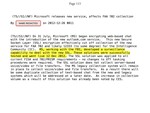
Microsoft releases new service, affects FAA 702 collection [pdf]
An SSO item on Microsoft's new outlook.com service encrypting web chat from 31 July 2012 and cutting off FAA 702 collection, and on the surveillance solution Microsoft built with the FBI, which went live on 12 December 2012 and needed no change to UTT tasking.
-
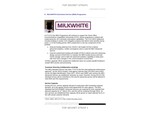
MILKWHITE Enrichment Service (MES) Programme [pdf]
This March 2011 GCHQ document details the MILKWHITE program, which is enhancing domestic interception and data analysis capabilities. It outlines expanded funding for advanced analytics, bulk data storage, and service scaling to meet growing demand from multiple law enforcement and intelligence agencies, including SOCA, HMRC, MI5, and SIS, thereby broadening access to large volumes of internet-derived metadata for operational use.
-
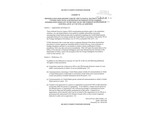
Minimization Procedures Used By The National Security Agency In Connection With Acquisitions Of Foreign Intelligence, Information Pursuant To Section 702 Of The Foreign Intelligence Court Surveillance Act Of 1978 [pdf]
The NSA’s Section 702 minimization rules expose how the agency can collect, keep, and use Americans’ communications without warrants, despite claiming to target only foreigners. While the document sets out procedures for handling U.S. data, it includes broad loopholes—like keeping “inadvertently” collected domestic messages for years, sharing unfiltered data with the FBI, CIA, and even foreign governments, and giving NSA analysts wide discretion over who gets surveilled—all under secret FISA Court approval.
People: Holder, Eric H. Jr.