Japan official NSA visit, HF briefing
Open PDFDocument date: 2013-01-02
Pages: 2
Genre: report
Banner: SECRET//COMINT//NOFORN
Classification: SECRET COMINT
Dissemination: NOFORN
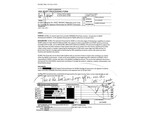
The document describes ongoing NSA efforts to renew high-frequency direction-finding (HFDF) collaboration with Japan’s Directorate for SIGINT (DFS) after Japan withdrew from the CROSSHAIR network in 2009. By 2012–2013, both sides were manually exchanging HFDF data, and the NSA sought to advance toward automated data sharing via its BORESIGHT system while reassuring Japan that it would not replace or override its existing technology.
My notes
SECRET//COMINT//NOFORN
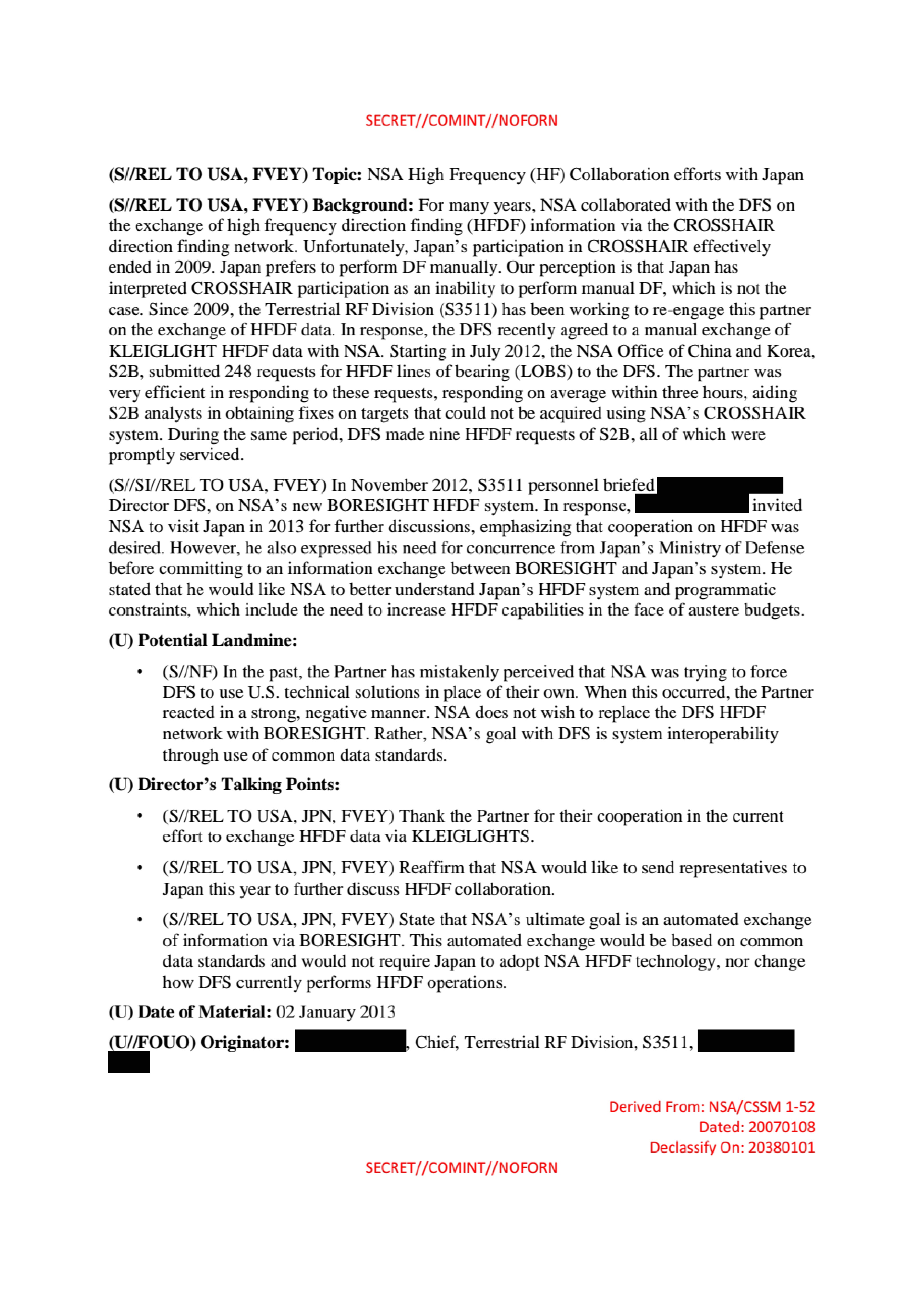
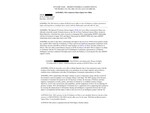
(S//REL TO USA, FVEY) Topic: NSA High Frequency (HF) Collaboration efforts with Japan
(S//REL TO USA, FVEY) Background: For many years, NSA collaborated with the DFS on the exchange of high frequency direction finding (HFDF) information via the CROSSHAIR direction finding network. Unfortunately, Japan's participation in CROSSHAIR effectively ended in 2009. Japan prefers to perform DF manually. Our perception is that Japan has interpreted CROSSHAIR participation as an inability to perform manual DF, which is not the case. Since 2009, the Terrestrial RF Division (S3511) has been working to re-engage this partner on the exchange of HFDF data. In response, the DFS recently agreed to a manual exchange of KLEIGLIGHT HFDF data with NSA. Starting in July 2012, the NSA Office of China and Korea, S2B, submitted 248 requests for HFDF lines of bearing (LOBS) to the DFS. The partner was very efficient in responding to these requests, responding on average within three hours, aiding S2B analysts in obtaining fixes on targets that could not be acquired using NSA's CROSSHAIR system. During the same period, DFS made nine HFDF requests of S2B, all of which were promptly serviced.
(S//SI//REL TO USA, FVEY) In November 2012, S3511 personnel briefed [REDACTED] Director DFS, on NSA's new BORESIGHT HFDF system. In response, [REDACTED] invited NSA to visit Japan in 2013 for further discussions, emphasizing that cooperation on HFDF was desired. However, he also expressed his need for concurrence from Japan's Ministry of Defense before committing to an information exchange between BORESIGHT and Japan's system. He stated that he would like NSA to better understand Japan's HFDF system and programmatic constraints, which include the need to increase HFDF capabilities in the face of austere budgets.
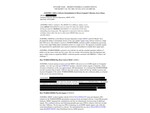
(U) Potential Landmine:
- (S//NF) In the past, the Partner has mistakenly perceived that NSA was trying to force DFS to use U.S. technical solutions in place of their own. When this occurred, the Partner reacted in a strong, negative manner. NSA does not wish to replace the DFS HFDF network with BORESIGHT. Rather, NSA's goal with DFS is system interoperability through use of common data standards.
(U) Director's Talking Points:
- (S//REL TO USA, JPN, FVEY) Thank the Partner for their cooperation in the current effort to exchange HFDF data via KLEIGLIGHTS.
- (S//REL TO USA, JPN, FVEY) Reaffirm that NSA would like to send representatives to Japan this year to further discuss HFDF collaboration.
- (S//REL TO USA, JPN, FVEY) State that NSA's ultimate goal is an automated exchange of information via BORESIGHT. This automated exchange would be based on common data standards and would not require Japan to adopt NSA HFDF technology, nor change how DFS currently performs HFDF operations.
(U) Date of Material: 02 January 2013
(U//FOUO) Originator: [REDACTED] Chief, Terrestrial RF Division, S3511, [REDACTED]
SECRET//COMINT//NOFORN
Derived From: NSA/CSSM 1-52
Dated: 20070108
Declassify On: 20380101
SECRET//COMINT//NOFORN
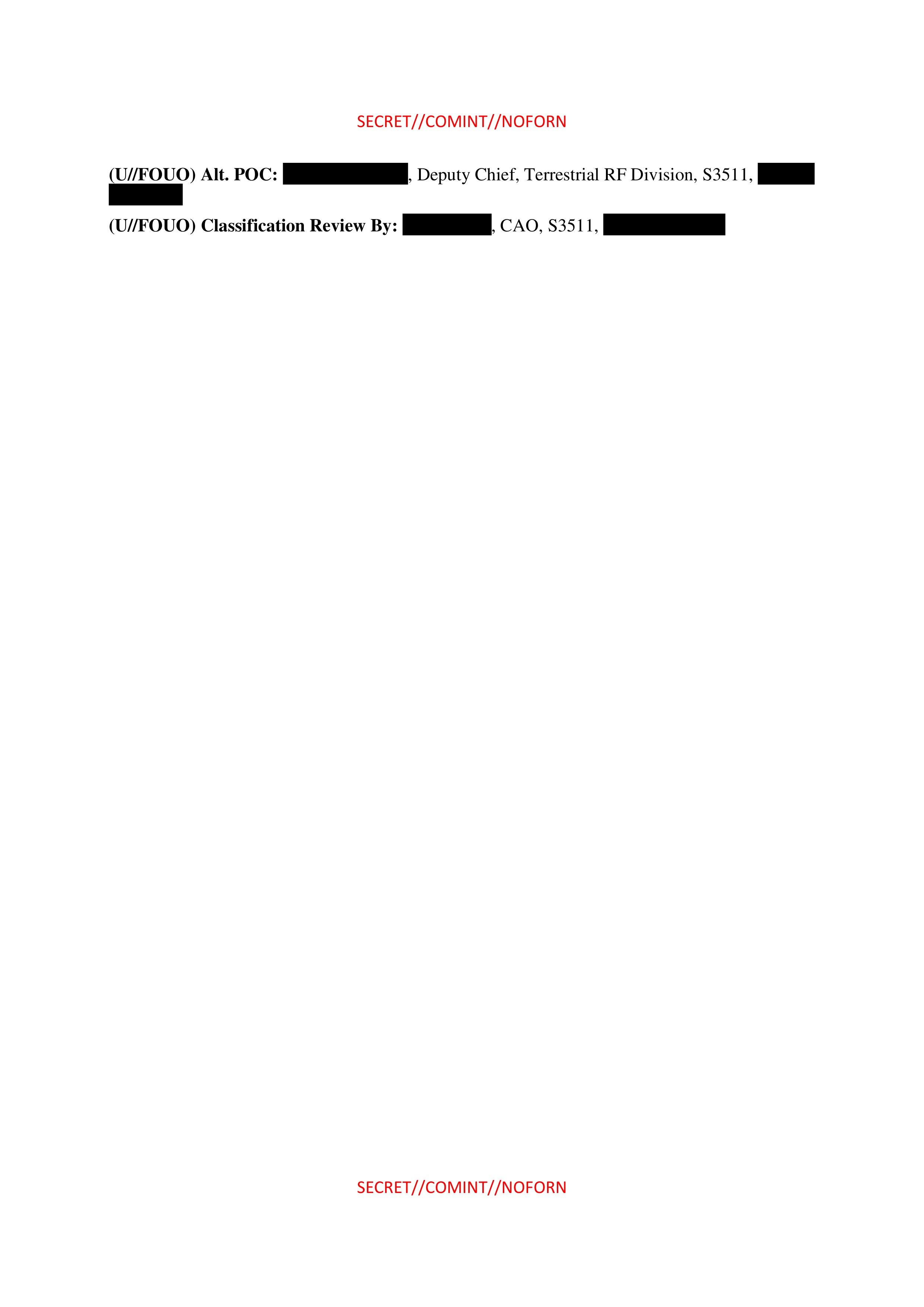
(U//FOUO) Alt. POC: [REDACTED] Deputy Chief, Terrestrial RF Division, S3511, [REDACTED]
(U//FOUO) Classification Review By: [REDACTED] CAO, S3511, [REDACTED]
SECRET//COMINT//NOFORN
Published in the Same Report
(10 of 12 documents)
-
Japan official NSA visit, cyber briefing [pdf]
This document outlines cooperation between the NSA and Japan’s Directorate for SIGINT (DFS) to develop Japan’s capabilities for providing signals intelligence (SIGINT) support to cyber defense operations, particularly against Chinese cyber activities. It details meetings, training, and data-sharing efforts from 2012–2013 aimed at enhancing Japan’s cyber intelligence capacity under U.S. guidance.
“Japan Made Secret Deals With the NSA That Expanded Global Surveillance” - The Intercept ↗ (2017-04-24) · “アメリカに監視される日本 ~スノーデン“未公開ファイル”の衝撃” - NHK ↗ (2017-04-24) · Gallagher, Ryan · Ikegami, Akira -
NSA liaison in Tokyo opens new office SIDtoday [pdf]
This SIDtoday document describes how the NSA liaison to Japan (SUSLAJ) has moved its office from downtown Tokyo to the US Embassy, aiming to strengthen coordination with the US Ambassador and other intelligence representatives. This relocation follows a long-standing SIGINT partnership between NSA and Japan, dating back to the 1950s, and reflects the growing importance of US-Japan intelligence cooperation.
People: Schieffer, Thomas“Japan Made Secret Deals With the NSA That Expanded Global Surveillance” - The Intercept ↗ (2017-04-24) · “アメリカに監視される日本 ~スノーデン“未公開ファイル”の衝撃” - NHK ↗ (2017-04-24) · Gallagher, Ryan · Ikegami, Akira -
Shift to Software Demodulation in Misawa Expands Collection, Saves Money SIDtoday [pdf]
This SIDtoday document details how the Misawa Security Operations Center (MSOC) has implemented a software demodulation system called WORDGOPHER to process low-data-rate satellite signals. This shift to software-based processing allows MSOC to increase SIGINT collection, save millions of dollars by reducing reliance on expensive hardware demodulators, and improve overall mission efficiency.
“Japan Made Secret Deals With the NSA That Expanded Global Surveillance” - The Intercept ↗ (2017-04-24) · “アメリカに監視される日本 ~スノーデン“未公開ファイル”の衝撃” - NHK ↗ (2017-04-24) · “No Place to Hide” - Metropolitan Books ↗ (2014-05-13) · Gallagher, Ryan · Ikegami, Akira · Greenwald, Glenn -
Special-Delivery SIGINT: How NSA Got Reports to US Negotiators In Time for Them To Be of Value SIDtoday [pdf]
The SIDtoday document details a covert NSA operation to deliver SIGINT to U.S. negotiators during the International Whaling Commission meeting, facilitating strategic decision-making by providing real-time intelligence on lobbying efforts. While effective in advancing U.S. objectives, the operation highlights the use of surveillance tactics in diplomatic settings, potentially compromising the integrity of international negotiations.
Programs: MAUI“Japan Made Secret Deals With the NSA That Expanded Global Surveillance” - The Intercept ↗ (2017-04-24) · “アメリカに監視される日本 ~スノーデン“未公開ファイル”の衝撃” - NHK ↗ (2017-04-24) · Gallagher, Ryan · Ikegami, Akira -
US, Japan Now Exchanging Collection from Reconnaissance Missions SIDtoday [pdf]
This SIDtoday document describes a successful effort by NSA and Japan to exchange SIGINT from airborne reconnaissance missions, enhancing bilateral intelligence cooperation in East Asia. The exchange, which covers a range of SIGINT types beyond just ELINT, allows both countries to share reconnaissance mission summaries, including intelligence on Chinese, North Korean, and Russian military activities, with extensive sanitization and coordination efforts involved to ensure security and compliance with agreed parameters.
“Japan Made Secret Deals With the NSA That Expanded Global Surveillance” - The Intercept ↗ (2017-04-24) · “アメリカに監視される日本 ~スノーデン“未公開ファイル”の衝撃” - NHK ↗ (2017-04-24) · Gallagher, Ryan · Ikegami, Akira -
Charlie Meals Opens New Engineering Support Facility in Japan SIDtoday [pdf]
The NSA opened an engineering support facility at Yokota Air Base in Japan. The $6.6 million facility, paid for almost entirely by the Japanese government, produces and repairs antennas for NSA operations across the globe.
People: Meals, Charlie“Japan Made Secret Deals With the NSA That Expanded Global Surveillance” - The Intercept ↗ (2017-04-24) · “アメリカに監視される日本 ~スノーデン“未公開ファイル”の衝撃” - NHK ↗ (2017-04-24) · The Intercept ↗ (2017-04-24) · Gallagher, Ryan · Ikegami, Akira -
CROSSHAIR — Foreign Partners Filling HF/DF Gaps for the US SIDtoday [pdf]
The U.S. closed a number of High Frequency Direction-Finding sensor sites in the 1990s. To ensure they're able to track signals in areas that had previously been covered by now-shuttered stations, the Signals Intelligence Directorate worked with Second and Third Party partners to share resources and establish a global direction-finding network.
Programs: CROSSHAIR“Japan Made Secret Deals With the NSA That Expanded Global Surveillance” - The Intercept ↗ (2017-04-24) · “アメリカに監視される日本 ~スノーデン“未公開ファイル”の衝撃” - NHK ↗ (2017-04-24) · The Intercept ↗ (2017-09-13) · Gallagher, Ryan · Ikegami, Akira -
The International Security Issues Build-Out SIDtoday [pdf]
The International Security Issues mission, which is responsible for 13 nations, is expanding beyond Washington to participate in build-outs at NSA facilities in Georgia, Hawaii, Texas, and the European Security Command.
Programs: FOLLOWTHEMONEYPeople: Hambleton, Regina“No Place to Hide” - Metropolitan Books ↗ (2014-05-13) · “Japan Made Secret Deals With the NSA That Expanded Global Surveillance” - The Intercept ↗ (2017-04-24) · “アメリカに監視される日本 ~スノーデン“未公開ファイル”の衝撃” - NHK ↗ (2017-04-24) · The Intercept ↗ (2018-08-15) · Greenwald, Glenn · Gallagher, Ryan · Ikegami, Akira -
Back in Time: The KAL-007 Shootdown SIDtoday [pdf]
The 1983 shoot-down of a Korean airliner and the United States' use of intercept tapes to prove the Soviets was behind it led to a crisis in the intelligence relationship with Japan.
“Japan Made Secret Deals With the NSA That Expanded Global Surveillance” - The Intercept ↗ (2017-04-24) · “アメリカに監視される日本 ~スノーデン“未公開ファイル”の衝撃” - NHK ↗ (2017-04-24) · The Intercept ↗ (2019-05-29) · Gallagher, Ryan · Ikegami, Akira -
Japan provided with XKEYSCORE [pdf]
This document outlines a request for approval to provide training to the Japanese Directorate for SIGINT (DFS) on using advanced SIGINT systems, including XKEYSCORE, to enhance Japan's cyber network defense capabilities. This training, scheduled for April 2013, aligns with U.S. strategic goals to bolster the cyber defense abilities of allied nations, highlighting ongoing NSA collaboration with Japan on surveillance and cybersecurity.
“Japan Made Secret Deals With the NSA That Expanded Global Surveillance” - The Intercept ↗ (2017-04-24) · “アメリカに監視される日本 ~スノーデン“未公開ファイル”の衝撃” - NHK ↗ (2017-04-24) · Gallagher, Ryan · Ikegami, Akira
See all 13 documents published with “アメリカに監視される日本 ~スノーデン“未公開ファイル”の衝撃” →
Related Documents
-
Japan official NSA visit, cyber briefing [pdf]
This document outlines cooperation between the NSA and Japan’s Directorate for SIGINT (DFS) to develop Japan’s capabilities for providing signals intelligence (SIGINT) support to cyber defense operations, particularly against Chinese cyber activities. It details meetings, training, and data-sharing efforts from 2012–2013 aimed at enhancing Japan’s cyber intelligence capacity under U.S. guidance.
“Japan Made Secret Deals With the NSA That Expanded Global Surveillance” - The Intercept ↗ (2017-04-24) · “アメリカに監視される日本 ~スノーデン“未公開ファイル”の衝撃” - NHK ↗ (2017-04-24) · Gallagher, Ryan · Ikegami, Akira -
CROSSHAIR — Foreign Partners Filling HF/DF Gaps for the US SIDtoday [pdf]
The U.S. closed a number of High Frequency Direction-Finding sensor sites in the 1990s. To ensure they're able to track signals in areas that had previously been covered by now-shuttered stations, the Signals Intelligence Directorate worked with Second and Third Party partners to share resources and establish a global direction-finding network.
Programs: CROSSHAIR“Japan Made Secret Deals With the NSA That Expanded Global Surveillance” - The Intercept ↗ (2017-04-24) · “アメリカに監視される日本 ~スノーデン“未公開ファイル”の衝撃” - NHK ↗ (2017-04-24) · The Intercept ↗ (2017-09-13) · Gallagher, Ryan · Ikegami, Akira -
Japan provided with XKEYSCORE [pdf]
This document outlines a request for approval to provide training to the Japanese Directorate for SIGINT (DFS) on using advanced SIGINT systems, including XKEYSCORE, to enhance Japan's cyber network defense capabilities. This training, scheduled for April 2013, aligns with U.S. strategic goals to bolster the cyber defense abilities of allied nations, highlighting ongoing NSA collaboration with Japan on surveillance and cybersecurity.
“Japan Made Secret Deals With the NSA That Expanded Global Surveillance” - The Intercept ↗ (2017-04-24) · “アメリカに監視される日本 ~スノーデン“未公開ファイル”の衝撃” - NHK ↗ (2017-04-24) · Gallagher, Ryan · Ikegami, Akira -
Cyber Paper Japan NSA DFS [pdf]
This January 2013 NSA memo from SUSLAJ (Special U.S. Liaison Activity Japan) details Japan’s effort to rapidly launch a SIGINT-enabled cyber defense initiative and a new 100-person “Cybercom” by April 2013. It describes tensions between reformist elements like CIRO (Cabinet Intelligence and Research Office) and more conservative ones like the DFS (Directorate for SIGINT) and MOD Internal Bureau, with struggles in policy, information sharing, and workforce training. The memo shows Japan seeking NSA’s technical help — including at the MALLARD FORNSAT site — while rushing to deliver malware signatures and sign new information-sharing agreements. The NSA viewed Japan as responsive but too focused on short-term results rather than long-term cyber workforce development.
Programs: MALLARD“The Untold Story of Japan's Secret Spy Agency” - The Intercept ↗ (2018-05-19) · “日本の諜報 スクープ 最高機密ファイル” - NHK ↗ (2018-05-19) · Gallagher, Ryan -
US, Japan Now Exchanging Collection from Reconnaissance Missions SIDtoday [pdf]
This SIDtoday document describes a successful effort by NSA and Japan to exchange SIGINT from airborne reconnaissance missions, enhancing bilateral intelligence cooperation in East Asia. The exchange, which covers a range of SIGINT types beyond just ELINT, allows both countries to share reconnaissance mission summaries, including intelligence on Chinese, North Korean, and Russian military activities, with extensive sanitization and coordination efforts involved to ensure security and compliance with agreed parameters.
“Japan Made Secret Deals With the NSA That Expanded Global Surveillance” - The Intercept ↗ (2017-04-24) · “アメリカに監視される日本 ~スノーデン“未公開ファイル”の衝撃” - NHK ↗ (2017-04-24) · Gallagher, Ryan · Ikegami, Akira