Reported Documents (810 total)
Documents published alongside news reporting on the Snowden disclosures.
Sort: Title
Documents
-
Kaspersky User-Agent Strings [pdf]
This September 2008 NSA technical report reveals that the agency discovered Kaspersky antivirus software's user-agent strings contain encoded serial numbers and can function as unique machine identifiers, allowing tracking of individual computers running the Russian security software across intercepted network traffic collected through the YACHTSHOP surveillance program.
-
-
Kurdistan Regional Government [pdf]
A GCHQ page on the Kurds and the Kurdistan Regional Government, covering the Kurdish population, the KRG's constitutional status, Article 140 and the disputed areas, and the effect of regionalism on Iraq.
Marking: UK SECRET“Turkey Is 'Partner and Target' for the NSA” - Der Spiegel ↗ (2014-08-31) · “How the NSA Helped Turkey Kill Kurdish Rebels” - The Intercept ↗ (2014-08-31) · Poitras, Laura · Rosenbach, Marcel · Sontheimer, Michael · Stark, Holger -
Laws on interception - Oversight - Implications for JCE (JCE UK Legalities Context) [pdf]
This GCHQ training presentation on UK surveillance laws, oversight mechanisms, and implications for Joint Collaborative Environment operations explicitly acknowledges that the UK has "a light oversight regime compared with US," detailing how RIPA, ISA, commissioners, and the Investigatory Powers Tribunal function to provide legal authorization while noting the Tribunal has "always found in our favour."
Programs: JTRIG -
Leaky phone apps [pdf]
These GCHQ slides describe the "WARRIOR PRIDE" mobile intrusion capability being ported to iPhone and Android, with plugins for power management, remote microphone, high‑precision geolocation, kernel stealth, and self‑protection. It claims the ability to retrieve almost any content from infected phones (SMS/MMS, email, call records, photos, calendar, etc.). Part of GCHQ's project "Mobile Applications Project".
Programs: Mobile Applications Project · WARRIORPRIDE · DREAMYSMURF · NOSEYSMURF · TRACKERSMURF · PORUS · PARANOIDSMURF -
Learning to Love English SIDtoday [pdf]
In this SIDtoday article Chief Warrant Officer John Berry reflects on his journey to appreciating the nuances of the English language, from early advice by a mentor in journalism to his experiences as a technical writer.
People: Berry, John F. -
Legal issues UK regarding Sweden and Quantum [pdf]
An internal NSA document from April 2013 that describes the status of the relationship with a number of partners. It takes up a three-party agreement regarding the hacker programme Quantum, between the Swedish FRA, American NSA and British GCHQ, initiated by NSA chief Keith Alexander. The document shows that the project has so far resulted in a “proof of concept” – i.e., the system works, but it has not yet generated any substantial intelligence results. It also shows that the GCHQ are doubtful about continuing in the project because of restrictions in British legislation, but that the NSA’s intention all along has been to carry out the project with the Swedish FRA rather than GCHQ.
Programs: QUANTUM -
Legalities - GCHQ Databases eg Pilbeam, Salamanca, UDAQ etc [pdf]
This October 2007 GCHQ document outlines the legal authorization requirements for querying surveillance databases, revealing that GCHQ analysts can search their own databases (like PILBEAM, SALAMANCA, UDAQ) for metadata on anyone regardless of nationality without additional authorization, while NSA databases (like MARINA, MAINWAY, DISHFIRE) prohibit searches for Americans and other Five Eyes citizens but permit searches for UK persons.
-
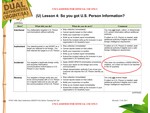
Lesson 4: So you got U.S. Person Information? [pdf]
This slide is used in a training course for NSA intelligence collectors and analysts. It tells the trainees what to do if they collect communications "to, from or about" a U.S. citizen, green card holder or company. The slide's revision date is nearly one month after the Foreign Intelligence Surveillance Court ruled on Oct. 3, 2011 that the NSA's handling of some "U.S. Persons" data was unlawful. The highlighted portion of the slide is notable because it shows that "incidentally" acquired U.S. communications, which may account for the highest volume of American content collected, are not purged from NSA databases. Analysts do not need to report "incidental" collection to the NSA Inspector General because it is not deemed a violation of rules. They may use the data routinely in "minimized" form, with identities masked, and with supervisory permission they may unmask the identities of U.S. persons in reports if the "customer set" requires them.
-
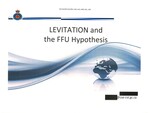
LEVITATION and the FFU Hypothesis [pdf]
This document describes LEVITATION, a top-secret Canadian Communications Security Establishment (CSE) project that monitors millions of daily file uploads and downloads from free file-sharing sites to identify potential extremist activity. It details the program’s data collection methods, analytical workflow, use of partner databases, and examples of successful discoveries related to terrorist materials and hostage videos.
-
Linguistic Resource Sharing in Asia-Pacific Region Takes Step Forward SIDtoday [pdf]
This document highlights a significant development in linguistic resource sharing within the Asia-Pacific region, where NSA Hawaii initiated the first successful voice cut exchange among SIGINT Seniors Pacific (SSPAC) members in June 2007. The use of the CRUSHED ICE data-sharing network to facilitate this exchange marks a key step in enhancing collaborative counterterrorism efforts by expanding the linguistic resources available for terrorist communications analysis.
Programs: CRUSHEDICE -
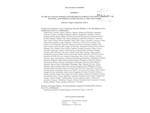
List of foreign governments and organizations authorized for surveillance [pdf]
This exhibit lists the 193 foreign governments as well as foreign factions, political organizations and other entities that were part of a 2010 certification approved by the Foreign Intelligence Surveillance Court. These are the entities about which the NSA may conduct surveillance, for the purpose of gathering foreign intelligence. Each year a new certification must be approved by the court to permit such surveillance under Section 702 of the FISA Amendments Act.
-
List of SIGADs in Germany [pdf]
This document provides a comprehensive log of about 155 SIGINT Activity Designators (SIGADs), cataloging NSA surveillance sites and operations situated across Germany from the post-WWII era through the 2000s. It details specific locations, associated military units, and operational timelines, revealing the extensive historical and ongoing footprint of American intelligence gathering on German soil.
-
Lobban NSA Visit Précis [pdf]
This document is a formal briefing for a April 2013 visit by GCHQ Director Sir Iain Lobban to the NSA. The visit aimed to reinforce the Five Eyes partnership by discussing sensitive topics including supervised access to FAA Section 702 data ("Triage 2.0"), coordinated cyber and SIGINT strategies for Syria and Iran, and the implementation of the Global Collaboration Environment (GCE).
-
Location Cookies [pdf]
These slides contain excerpts from an April 2013 National Security Agency presentation detailing signal surveillance techniques and successes. They reveal that the NSA and its British counterpart, Government Communications Headquarters (GCHQ), use a Google-specific tracking cookie to pinpoint targets for hacking.
-
Locations of NSA personnel assigned to U.S. bases in Germany [pdf]
This document outlines locations in Germany where NSA personnel are stationed, with some information being classified due to the potential involvement in SIGINT activities or historical roles as A5 sites. It highlights various U.S. military and NSA bases and facilities, including well-known locations like Augsburg, Bad Aibling, and Berlin, while redacting sensitive information about specific activities and sites.
-
Longest Shifts: Working Overtime in Pursuit of SIGINT (part 2: conclusion) SIDtoday [pdf]
To mark Labor Day, SIDtoday shared stories from NSA personnel about their longest shifts. The accounts highlighted the dedication, stress, and sacrifice involved in supporting critical SIGINT operations, from intense 48-hour shifts during military operations to working long hours in extreme conditions like snowstorms or following major events like 9/11.
People: Blum, H. Steven -
LONGHAUL [pdf]
An NSA WikiInfo page for LONGHAUL — the centralised end-to-end attack orchestration and key recovery service that sits at the heart of NSA's capability to break encrypted internet traffic, receiving cryptanalytic data from field collection systems, coordinating attacks against VPN and SSL/TLS encryption through child projects POISONNUT and SCARLETFEVER, and returning recovered keys to deployed CA Servers at collection sites worldwide.
Programs: LONGHAUL · MAILORDER · CASPORT · GECC · VIVIDDREAM · TURMOIL · WEALTHYCLUSTER · TUTELAGE · EINSTEIN · ISLANDTRANSPORT · HADOOP · NINJACOVE · JST · CST · VMM · VDG · ORDC · SCB · ISLANDHIDEAWAY · TURBULENCE · POISONNUT · SCARLETFEVER · HEROICSAND · PLATINUMRING · GALLANTWAVE · JEDIMINDTRICK · CHAOTICSTORMTROOPER · CORALREEF · SCUBADIVER2 · TERRACOTTA · HBASE · SCALA · MAPREDUCE · COALCAR · STOCKCAR · BEACHHEAD · MIDRIFT · WOLVERINESTAKE · NSP · PURGE · SURGE · C2DP · DOORS · HUDSON -
LOVELY HORSE – GCHQ Wiki Overview [pdf]
This February 2012 GCWiki page describes LOVELY HORSE, a GCHQ initiative to collect, index, and distribute open-source intelligence from cybersecurity blogs and Twitter accounts to analysts on classified networks, utilizing JTRIG's BIRDSTRIKE architecture to scrape content from approximately 60 sources including security researchers, hacktivist groups like Anonymous and LulzSec, and cybersecurity companies, with legal approval from MP-LEG (Mission Policy-Legal).
Programs: LOVELYHORSE · HAPPYTRIGGER · BIRDSEED · JTRIG · BIRDSTRIKE · MERAPEAK · LEXHOUND · JEDI · DISCOVER -
M7600 & M8300 SIGINT guide [pdf]
3 p.This document describes the Mission 7600 and Mission 8300 satellite systems, which are geostationary SIGINT platforms operated by the U.S., U.K., and Australia to collect, process, and forward COMINT, ELINT, FISINT, MASINT, and PROFORMA signals primarily from the Eurasian landmass and Africa. It details orbital characteristics, collection capabilities, geolocation functions, and operational benefits, emphasizing real-time data dissemination to NSA and the integration of multi-mission, cross-site operations for high-priority intelligence targets.