Tag: implants 63 documents
Search documents matching “implants” →Free-text subjects the curators added. Unlike the other axes these are not necessarily from the documents' own vocabulary, so they are the loosest thing to browse by (and the most forgiving).
Graphs
By Banner
By Classification
Refine (combine with another filter, via search)
Sort: Title
Documents
-
Access: Vision 2013 [pdf]
This July 2010 GCHQ strategic document outlines the agency's vision for 2013 to create "the world's biggest SIGINT engine" with access to 800 10-gigabit connections (up from existing capacity), expanding overseas operations to 60% while reducing UK-based to 40%, and developing new capabilities including computer network exploitation (CNE), exfiltration, beaconry, geolocation, and collection of "Internet Pocket Litter" like cookies and browsing data. The strategy emphasizes "scale and pace," "balance," and "agility" while claiming to operate within legal frameworks of "necessity, proportionality and authorisation," and highlights partnerships with second and third parties to access "intractable and hard targets."
Marking: SECRET -
Analytic Challenges from Active-Passive Integration [pdf]
This NSA presentation examines metadata attribution challenges arising when active TAO implants exfiltrate traffic through passive TURMOIL collection infrastructure, creating conflicts where intercepted data carries dual classification markings, case notations, and legal authorities from both collection systems. The briefing highlights how existing databases and analytic tools were not designed to handle traffic with two simultaneous sets of metadata parameters, requiring enterprise-wide solutions to consistently attribute and track actively-shaped intelligence collection.
Programs: BRAVENICKEL · HAMMERMILL · APEX · MARINA · TURMOIL · PRESSUREWAVE · METROTUBE · TOYGRIPPE · HAMMERSTEIN · HAMMERSTONE · METAWAVE · TURBULENCE · SSO -
Analytic Challenges from Active-Passive Integration [pdf]
This NSA briefing addresses the technical and administrative friction caused by "shaping" operations. Shaping occurs when an active malware implant, typically situated on network infrastructure like a router, copies specific data streams and redirects them past a passive surveillance sensor such as TURMOIL. While this ensures the capture of data that might otherwise be missed, it creates a "double metadata" conflict where a single piece of intelligence carries two competing sets of identifiers: one from the active Tailored Access Operations (TAO) implant and another from the passive collection site. The document tasks analysts with finding a way to reconcile these source notations to ensure the data remains searchable and legally compliant within legacy databases.
Programs: BRAVENICKEL · HAMMERMILL · APEX · TURMOIL · HAMMERSTONE · PRESSUREWAVE · METROTUBE · TOYGRIPPE · TURBULENCE · METAWAVE · MARINA · SSO · CONVEYANCE · NUCLEON · FASCIA · HAMMERCHANT -
AZTECTOMB32 DMW Install and ESH Package [pdf]
This document is a top-secret NSA internal project log detailing restrictions on installing new implants on machines running Kaspersky 2010+ due to the software’s cloud functionality, which prevents safe deployment of NSA malware. It records the suspension and eventual closure of a project (AZTECTOMB32/DEMENTIAWHEEL) that would have targeted such systems.
-
Behavioural Analysis: The Big Picture (Palantir could be used as part of a CNE) [pdf]
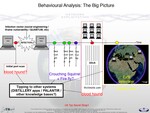
This diagram from GCHQ outlines the lifecycle of a CNE and identifies where Palantir fits into the intelligence workflow. The slide, titled "Behavioural Analysis: The Big Picture," illustrates a timeline of network exploitation from the initial infection of a target host to the eventual exfiltration of data. Crucially, it positions Palantir as a key "knowledge base" used for "Tipping to other systems." This indicates that Palantir’s software was used to aggregate data from successful hacks, allowing analysts to visualize connections and pivot (or "tip") that information toward further surveillance or offensive operations.
-
CASCADE - Joint Cyber Sensor Architecture [pdf]
This presentation outlines the Communications Security Establishment’s (CSE) plans to unify and expand its cyber sensor networks (ITS and SIGINT) to create a comprehensive, multi-layered national cyber defense system, enabling threat detection, intelligence collection, and defensive operations across Canadian and foreign networks. It emphasizes standardizing sensor deployments, integrating analytic capabilities, and preparing for “Effects” operations to mitigate cyber threats by 2015. The presentation is duplicated from page 33 onwards - three slides of the duplicated slides have internal CSE comments.
Programs: CASCADE · PHOTONICPRISM · EONBLUE · INDUCTION · THIRDEYE · CRUCIBLE · CHOKEPOINT · SUNWHEEL · CASSIOPEIA · SCNET · JAZZFLUTE · GAZEBO · SEEDSPHERE · TEXPRO · SSO -
Close Access SIGADS [pdf]
A 10 September 2010 NSA reference list of Close Access SIGADs revealing the codenames, locations and collection methods used to bug the embassies and UN missions of 38 targets — including US allies France, Italy, Greece, Japan, India, Mexico, South Korea and the EU — through implants, computer-screen capture, hard-drive imaging and electromagnetic emanation collection, most conducted against diplomatic facilities in Washington DC and New York.
Programs: KATEEL · POCOMOKE · MERCED · BANISTER · PERDIDO · MAGOTHY · BLACKFOOT · WABASH · NAVARRO · POWELL · KLONDIKE · NASHUA · OSAGE · OSWAYO · BRUNEAU · HEMLOCK · MULBERRY · ALAMITO · FLEMING · DOBIE · SULPHUR · REQUETTE · YUKON · WESTPORT · NAVAJO · PANTHER · LIFESAVER · HIGHLANDS · VAGRANT · MINERALIZ · DROPMIRE · PBX · MAGNETIC · OCEAN · GENIE · BLACKHEART · CRYPTOENABLED · CUSTOMS · DEWSWEEPER · RADON · MINERALIZE · COOP · STARRUBY · TRASHINT“No Place to Hide” - Metropolitan Books ↗ (2014-05-13) · “Espionnage de la NSA : la diplomatie française était sur écoute aux Etats-Unis” - Le Monde ↗ (2013-10-22) · “Da qui ci spiano gli americani” - L'Espresso ↗ (2013-12-05) · Greenwald, Glenn · Follorou, Jacques · Maurizi, Stefania -
CNE Analysis in XKEYSCORE [pdf]
This document is an NSA training presentation from October 2009 demonstrating how XKEYSCORE integrates with Computer Network Exploitation (CNE) operations, allowing analysts to search and analyze data extracted from compromised computers including keystrokes, browser history, registry files, documents, emails, and directory structures collected through implants like UNITEDRAKE and OLYMPUS.
Programs: XKEYSCORE · OLYMPUS · UNITEDRAKE · PINWALE · TUNINGFORK · TURBOCHASER · MARINA · JOLLYROGER · TREASUREMAP · TURBINE · PRESSUREWAVE · MAD · TUCKER · EXPANDINGPULLY · UNIX · SEARCHLIGHT · KEYLOGGER · PILBEAM · FOXACID · WAYTIDE · SHADOWQUEST · SEAGULLFARO · DARKHELMET · LUTEUSICARUS · FOGGYBOTTOM · GREENCHAOS · RADIUS · NKB · VALIDATOR -
CNE End Point Requirements [pdf]
This NSA/GCHQ document outlines comprehensive requirements for an endpoint surveillance systems that enables analysts to systematically identify intelligence collection needs and discover appropriate tools for data extraction from compromised computers. The framework covers capabilities for remote data collection, cross-platform intelligence integration, query functions, tasking procedures, and visualization tools across implanted networks.
Programs: STARGATE · LOOKING GLASS · QUANTUM · GOLDENEYE · XKEYSCORE · MARINA · JTRIG · BROADOAK · UTT · GLOBALREACH · GLOBALSURGE · THUGGEE · EREPO · DANCINGBEAR · HAUSTORIUM · SHAREOWN · MUTANTBROTH · MOONRAKER · CARBONROD · RUFFLE · ROCKOPERA · QUINCEY · ECLIPSE · MUGSHOT · HIGHNOTE · UDAQ2 · EKB · TURBINE · ACNO · FLAMECARPET · FUMECUPBOARD · JACKPOT · SLIPSTREAM · B13B · PSC · QUINCY · DAREDEVIL · ROADBED -
CNE EndPoint Project Load [pdf]
The CNE EndPoint Project Load document lists multiple GCHQ exploitation projects, with “PFENNING ALPHA” targeting Flag Telecom’s network. It notes automated pulls of router monitoring webpages, collection of performance statistics, and ongoing efforts to gain further access points within Reliance’s infrastructure, while other projects and targets remain redacted.
Programs: PFENNING ALPHA · BURRITO ALPHA · GLADDY IOTA · HEADRESS IOTA · HEADRESS KAPPA · HEADRESS NU · HEADRESS OMICRON · GLADDY CHI · EREPO · RELIANCE · GTE“Vodafone – der lange Arm des britischen Geheimdienstes?” - WDR ↗ (2014-11-20) · “Spy cable revealed: how telecoms firm worked with GCHQ” - Channel 4 ↗ (2014-11-20) · “Der lange Arm des Geheimdienstes?” - NDR ↗ (2014-11-21) · “Snowden-Leaks: How Vodafone-Subsidiary Cable & Wireless Aided GCHQ’s Spying Efforts” - Süddeutsche Zeitung ↗ (2014-11-25) · Restle, Georg · White, Geoff · Strozyk, Jan · Moltke, Henrik · Poitras, Laura · Obermaier, Frederik -
CNE Presence in CT10 Status Report [pdf]
A TOP SECRET NSA status report from April 2008 describing how a counterterrorism analysis team began importing data from the agency's hacking operations into their tracking system — specifically logs from FOXACID, an NSA tool that infects targets' computers mainly through their web browsers — enabling real-time alerts when new targets were successfully hacked, with plans to expand into tracking four named surveillance implants (VALIDATOR, UNITEDRAKE, OLYMPUS and STRAITBIZARRE) as they phone home to NSA servers for instructions and stolen data.
-
Computer Network Exploitation (CNE) Classification Guide / 2-59 [pdf]
A NSA/TAO classification guide establishing the precise classification level for 41 categories of information about computer network exploitation operations — covering remote and physical subversion methods, CNE tools and techniques, supply chain operations, hardware implants, off-net field operations, zero-day vulnerabilities, and cryptographic material acquired through CNE.
“Core Secrets: NSA Saboteurs in China and Germany” - The Intercept ↗ (2014-10-10) · “The Digital Arms Race: NSA Preps America for Future Battle” - Der Spiegel ↗ (2015-01-17) · Maass, Peter · Poitras, Laura · Appelbaum, Jacob · Gibson, Aaron · Guarnieri, Claudio · Müller-Maguhn, Andy · Rosenbach, Marcel · Ryge, Leif · Schmundt, Hilmar · Sontheimer, Michael -
COMPUTER NETWORK OPERATIONS - GENIE [pdf]
A TOP SECRET Congressional Budget Justification entry for the NSA/CSS GENIE project — the Tailored Access Operations programme underpinning all endpoint Computer Network Operations — requesting $651.7 million and 1,870 military and civilian positions for FY2013, with plans to maintain 85,000-96,000 implant points-of-presence worldwide and 9,000-10,000 active accesses, including $25.1 million for covert purchase of software vulnerabilities and a $3.4 million supply chain implant operation targeting al-Qaeda.
-
CSEC Cyber Threat Capabilities [pdf]
This document details CSEC’s full-spectrum cyber operations architecture, integrating SIGINT and IT Security to conduct both defensive and offensive activities under the guise of “information superiority.” While early sections emphasize detection, anomaly analysis, and collaboration with Five Eyes partners, later portions reveal active measures including network infiltration (implant deployment), command-and-control tracking, traffic manipulation and redirection, DNS interference, and potential disruption or deception operations—illustrating CSEC’s capacity not only to defend Canadian networks but also to surveil, exploit, and influence foreign and domestic digital infrastructure.
Programs: EONBLUE · CYBERDMZ · SEEDSPHERE · PHOTONICPRISM · SPECIALSOURCE · SUPERDRAKE · DARKSPACE · QUANTUM · MANDATE · STREAMING SENTRY · SSO · TKB · COVENANT -
CSEC ITS/N2E Cyber Threat Discovery [pdf]
A CSEC IT Security presentation to the DISCOCON 2010 conference, given with speakers' notes, on how the agency's cyber threat discovery team hunts for intrusions in the traffic it collects from Government of Canada networks. It describes the PonyExpress email processing system, which the notes record as handling 400,000 emails a day, the 8Ball attachment scanner and the Stripsearch binary analyser, and reports experiments in reducing the volume of metadata analysts see — including a machine learning model that discards 85% of email before deep scanning.
Marking: TOP SECRETPrograms: PONYEXPRESS · 8BALL · STRIPSEARCH · POPQUIZ · SLIPSTREAM · FINDMASK · SAWUNEH · TROPPUSNU · N2E · DISCOCON -
CSEC SIGINT Cyber Discovery: Summary of the current effort [pdf]
This document provides a overview of the Communications Security Establishment Canada (CSEC) cyber operations, detailing its SIGINT, CNE (Computer Network Exploitation), and cyber counterintelligence programs, including tools like WARRIORPRIDE, REPLICANTFARM, and EONBLUE for threat detection, anomaly discovery, and metadata production. It outlines operational procedures, analytic methodologies, and collaborative frameworks with domestic and Five Eyes partners for sharing intelligence, tipping/cueing, and integrating cyber and traditional counterintelligence efforts.
Programs: REPLICANTFARM · SLIPSTREAM · WARRIORPRIDE · DAREDEVIL · CHORDFLIER · NAMEDROPPER · WORMWOOD · OBELIX · SHEPHERD · CARBON · REGBACKUP · DOGHOUSE · WALKER · ALOOFNESS · BLAZINGANGEL · TINYWEB · QUIVERINGSQUAB · WINDO · DIESELRATTLE · WIDOWKEY · CIVETCAT · WINBEE · SSLINST · PULLEDPORK · EONBLUE · SNIFFLE · QUANTUM · XKEYSCORE · HALTERHITCH · FASTFLUX · DEADSEA · NSPACES · PPF · SSO · TKB“The Digital Arms Race: NSA Preps America for Future Battle” - Der Spiegel ↗ (2015-01-17) · “Communication Security Establishment's cyberwarfare toolbox revealed” - CBC News ↗ (2015-03-23) · “Documents Reveal Canada’s Secret Hacking Tactics” - The Intercept ↗ (2015-03-23) · Appelbaum, Jacob · Gibson, Aaron · Guarnieri, Claudio · Müller-Maguhn, Andy · Poitras, Laura · Rosenbach, Marcel · Ryge, Leif · Schmundt, Hilmar · Sontheimer, Michael · Seglins, Dave · Hildebrandt, Amber · Pereira, Michael · Greenwald, Glenn · Gallagher, Ryan -
Dealing With a 'Tsunami' of Intercept SIDtoday [pdf]
As part of NSAs efforts to implement Human Language Technology, prototype processors located at collection sites will soon be able to query content at "line speed" based on the language, it is written in.
People: Kulman, Anita H.The Intercept ↗ (2019-05-29) · “Inside NSA, Officials Privately Criticize "Collect It All" Surveillance” - The Intercept ↗ (2015-05-28) · Maass, Peter -
Driver 1: Worldwide SIGINT/Defense Cryptologic Platform [pdf]
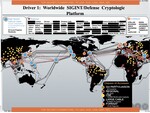
A 2012 NSA management presentation slide revealing the agency's global surveillance architecture across five categories of access — covert cable taps, regional collection sites, computer network exploitation implants, foreign satellite collection, and third-party liaison relationships — including a list of cities hosting clandestine collection operations and confirmation of over 50,000 worldwide malware implants.
Programs: STELLAR · SOUNDER · SNICK · MOONPENNY · LADYLOVE · INDRA · IRONSAND · JACKKNIFE · CARBOY · TIMBERLINE“NSA infected 50,000 computer networks with malicious software” - NRC ↗ (2013-11-23) · “No Place to Hide” - Metropolitan Books ↗ (2014-05-13) · Boon, Floor · Derix, Steven · Modderkolk, Huib · Greenwald, Glenn -
Expanding Endpoint Operations SIDtoday [pdf]
Tailored Access Operations, NSA's elite hackers, are expanding their endpoint operations -- hacking directly into computers to steal information -- and are establishing the new endpoint operations remote operations center, scheduled to come online in the summer of 2005, that "is capable of managing and conducting endpoint operations on a scale that will dramatically expand collection." The physical office space of this new center will allow TAO to "grow from the current average of 20-25 of these operations per day to over 100 per day," and will allow TAO to increase the number of "active implants," or actively monitored pieces of malware, from 100-150 to thousands.
“How the NSA Plans to Infect ‘Millions’ of Computers with Malware” - The Intercept ↗ (2014-03-12) · The Intercept ↗ (2017-04-24) · “The Digital Arms Race: NSA Preps America for Future Battle” - Der Spiegel ↗ (2015-01-17) · Gallagher, Ryan · Greenwald, Glenn · Appelbaum, Jacob · Gibson, Aaron · Guarnieri, Claudio · Müller-Maguhn, Andy · Poitras, Laura · Rosenbach, Marcel · Ryge, Leif · Schmundt, Hilmar · Sontheimer, Michael -
FASHIONCLEFT - Interface Control Document (15 June 2009) [pdf]
This 2009 NSA Interface Control Document provides comprehensive technical specifications for FASHIONCLEFT, the protocol that acts as a covert shipping system enabling TAO malware implants to send stolen network data back to NSA collection servers with minimal computer processing requirements—using multiple encryption layers (RSA-1024 and RC6-128) to disguise the traffic as it travels across the internet while allowing NSA's Common Data Receptor to reassemble and authenticate the original intercepted packets. The document details how implants make modified copies of captured network traffic (changing destination addresses to point toward NSA instead of legitimate recipients), apply various levels of encryption or scrambling ("munging") depending on how powerful the infected computer is, attach metadata instructions explaining how to reconstruct the original packets, and use pattern-matching algorithms to ensure NSA systems can identify which stolen packets belong to which collection operation.
Programs: FASHIONCLEFT · FLAXENPRECEPT · SHELLGREY · SURPASSPIN · SEAGULLFARO · ROOTKNOT · FIGBUILD · OPTICPINCH · VINYLSEAT · OLYMPUS · UNITEDRAKE · HOGTECH · SWEEPFORWARD · CONVEY · PINWALE · TREBLECLEF · FOGYNULL · FUNNELAPS · FLASHHANDLE