Publication year: 2015 217 documents
Search documents matching “2015” →When a publisher first published each document. If a document is published multiple times, only the oldest one is used here.
Graphs
By document date (9 years)
By published date (3 years)
Sort: Title
Documents
-
TECA Product Centre — Wiki [pdf]
The TECA Product Centre is a GCHQ unit, within the Technical Enabling Covert Access group (TEA), whose mission is to develop and exploit specialist technologies and physical access methods to gain intelligence or SIGINT access where conventional methods fail. It works closely with SIS (MI6) on technical operations and deployment, offering bespoke managed services rather than direct products.
-
The FASHIONCLEFT Protocol [pdf]
This October 2008 NSA technical specification details FASHIONCLEFT, the encryption and exfiltration protocol used by TAO implants to securely tunnel captured network packets from compromised devices back to the NSA's Common Data Receptor using layered RSA and RC6 encryption with authentication. The document addresses technical integration challenges of implementing FASHIONCLEFT packet reception within TURMOIL's passive collection infrastructure, particularly cache buffering requirements and metadata handling for exfiltrated traffic.
Programs: FASHIONCLEFT · FOGYNULL · FUNNELAPS · SHELLGREY · TURMOIL · SURPASSPIN · PUZZLECUBE · FLASHHANDLE · HAMMERCHANT · AEG · PPF · ISLANDTRANSPORT -
The SIGINT Philosopher Is Back -- with a New Face! SIDtoday [pdf]
The inaugural column of the second SIGINT Philosopher series, in which the new columnist uses a personal polygraph experience and the ethical tension of spying on diplomatic targets to argue — somewhat counterintuitively — that thorough, comprehensive surveillance is more ethical than partial or halfhearted monitoring of non-adversarial targets.
Programs: SCQAWK -
The SIGINT Philosopher: Cognitive Overflow? SIDtoday [pdf]
A 2011 NSA SIDtoday opinion column reflecting on whether the SIGINT Directorate's collective analytical capacity has a finite "channel capacity" — borrowing from cognitive psychology to ask whether SID's ever-expanding mission, tools, and information load risks exceeding the combined cognitive limits of its workforce.
Marking: UNCLASSIFIED -
The SIGINT Philosopher: Descartes Would Have Been a Lousy SIGINT Reporter SIDtoday [pdf]
A 2012 SIDtoday SIGINT Philosopher column using Cartesian epistemology to examine the fundamental reliability problem in SIGINT reporting — arguing that by the time raw intercepts pass through collection, translation, interpretation, and reporting, the finished intelligence product is several steps removed from ground truth and risks becoming little more than an analyst's painting of a scene described to them secondhand.
Programs: SCQAWK -
The SIGINT Philosopher: In Praise of Not Knowing SIDtoday [pdf]
A 2012 NSA SIDtoday opinion column in the "SIGINT Philosopher" series arguing that the Intelligence Community — and NSA in particular — too rarely admits the limits of its knowledge, using the misappropriation of the word "agnostic" as a springboard to critique the institutional pressure to produce intelligence reports even when genuine understanding of a target is absent.
People: Kim, Jong-un -
The SIGINT Philosopher: Lessons for Civil Servants from the American Civil War (That Don't Concern Killing Vampires) SIDtoday [pdf]
The final 2012 SIDtoday SIGINT Philosopher column using the American Civil War as a lens to examine how intelligence professionals should reconcile expert disagreement with national policy, arguing that good civil servants can find peace in the possibility that they might simply be wrong — and that committed execution of even imperfect policy can sometimes produce better outcomes than principled dissent.
Programs: SCQAWK -
The SIGINT Philosopher: The Fallacies Behind the Scenes SIDtoday [pdf]
A 2011 NSA SIDtoday opinion column in the "SIGINT Philosopher" series examining four cognitive fallacies — the Texas Sharpshooter, Gambler's, Sunk-Cost, and Appeal to Probability fallacies — and their implications for how analysts unconsciously distort intelligence assessments and decision-making.
-
The SIGINT Philosopher: Too Many Choices SIDtoday [pdf]
The inaugural 2011 NSA SIDtoday "SIGINT Philosopher" column by a Russian language analyst, using the everyday paralysis of grocery shopping to introduce the concept of "analysis paralysis" and argue that the SIGINT enterprise's greatest challenge is not a lack of access or information but the cognitive difficulty of prioritizing among an overwhelming abundance of choices.
People: Simon, Herbert -
The SIGINT Philosopher: Unlike All My Terrible Teammates, I Am a SIDtoday [pdf]
A 2012 SIDtoday SIGINT Philosopher column using the annual ACE performance review process as a springboard to examine the structural tension between individual competition and collaborative teamwork at NSA, arguing that the agency's promotion and awards system inadvertently incentivizes analysts to hoard work rather than mentor colleagues or enable others.
Programs: SCQAWK -
The SIGINT Philosopher: When Brevity Is Just the Soul of "Huh?" SIDtoday [pdf]
A 2012 SIDtoday SIGINT Philosopher column arguing that the NSA culture of brevity in writing — while generally valuable — can be taken too far, with excessively terse communications creating confusion, follow-up cycles, and ultimately more lost time than a slightly more complete message would have cost in the first place.
Marking: UNCLASSIFIEDPrograms: SCQAWK -
TINT External July 2009 [pdf]
A GCHQ TINT external document from July 2009 describing the BLACKHOLE bulk metadata repository — designed to export unselected metadata in SLR format to enable higher-order analytics — noting anticipated very high volumes expected to exceed MAILORDER transport capacity and proposing a direct connection instead.
-
TPM Vulnerabilities to Power Analysis and An Exposed Exploit to Bitlocker [pdf]
A secret abstract from the Trusted Computing Base Jamboree describing research by Sandia National Laboratories into power analysis attacks against Trusted Platform Modules from five manufacturers — extracting RSA private keys non-invasively via wired power analysis and electromagnetic emissions, including a novel unpublished single-trace attack against a Chinese Remainder Theorem RSA implementation — and a case study demonstrating how the extracted TPM key enables circumvention of Microsoft BitLocker's root-of-trust system by modifying BIOS digest values without software-level detection.
“The CIA Campaign to Steal Apple's Secrets” - The Intercept ↗ (2015-03-10) · Scahill, Jeremy · Begley, Josh -
TRAFFICTHIEF Readme [pdf]
A SECRET XKeyscore configuration manual describing TRAFFICTHIEF — NSA's corporate alerting and tipping system that receives real-time events from XKeyscore when targets are actively communicating, enriches them with geolocation data and immediately alerts analysts — covering socket and MAILORDER configuration methods for both Five Eyes and NOFORN tip streams.
-
TRANSGRESSION Overview for Pod58 [pdf]
The TRANSGRESSION overview describes an NSA capability focused on discovering, decrypting, and exploiting foreign computer network exploitation activity to support fourth-party collection, TAO cyber operations, and network defense missions across NSA and FVEY partners.
Programs: TRANSGRESSION · MAKERSMARK · BYZANTINEHADES · VOYEUR · WALKERBLACK · WALKERRED · CROWNROYAL · CROWNPRINCE · SHEPHERD · ZEBEDEE · MAVERICK CHURCH · POPROCKS · GHOSTRECON · NIGHTTRAIN · SHADOWDRAGON · RECORDER · PLAIDDIANA · INCAADAM · TWEEZERS · SNOWGLOBE · WIDOWKEY · SUPERDRAKE · XKEYSCORE · POLARSTARKEY · TUNINGFORK · SCISSORS · PINWALE · CLOUD · BYZANTINEFOOTHOLD · ADJUTANTVENTURE · RAPTORROLEX · RAPTORJOY · RAPTORSAD · BYZANTINERAPTOR -
TSI — Legal Authorisation Flowcharts: Targeting & Collection [pdf]
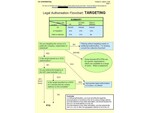
This document contains internal GCHQ flowcharts outlining the mandatory legal authorization required for both Targeting specific entities and Collection (interception) of communications content, based primarily on the target's location, nationality, and whether the activity involves UK or "Second Party" countries, primarily referencing the Regulation of Investigatory Powers Act (RIPA).
Marking: UK CONFIDENTIAL -
TUTELAGE 411 [pdf]
TUTELAGE is a SIGINT-driven cyber defense and counterintelligence platform that enables NSA to observe, intercept, redirect, block, and manipulate adversary network activity at DoD gateways, transforming intrusion response from post-incident reporting into real-time mitigation and intelligence generation.
Programs: TUTELAGE · CYBERQUEST · XKEYSCORE · GNOMEVISION · POPQUIZ · BISHOPKNIGHT · BLACKENERGY · BLINDMARKSMEN · BYZANTINEFOOTHOLD · BYZANTINEVIKING · CARBONPEPTIDE · CONFICKER · DANCING PANDA · DISCOVERY · GNOMEFISHER · MAKERSMARK · MAVERICKCHURCH · NATIVEDANCER · WEASELWAGGLE · SUBTLESNOW · WIDOWKEY · ZEUS · GHOSTMACHINE · PANDORASMAYHEM · TURBINE · QUANTUM · BYZANTINEHADES · AMULETSTELLAR · TURNABOUT -
User-agents: Why and How and How to [pdf]
A TOP SECRET NSA training presentation from 2010 teaching analysts how to use browser user-agent strings — the identifying information your web browser automatically sends to every website you visit — to track surveillance targets across the internet, link their known email activity to their anonymous web browsing, and identify opportunities for hacking their computers based on their operating system and software versions.
-
Using XKEYSCORE to Enable TAO [pdf]
A TOP SECRET training presentation from 2009, authored by a Booz Allen Hamilton contractor, teaching NSA analysts how to use XKeyscore to harvest the login credentials, router configurations, browser versions and server software details that the Tailored Access Operations hacking unit needs to break into foreign computer networks — with worked examples stealing Cisco router passwords, Iranian government webmail logins and jihadi web forum credentials directly from intercepted internet traffic.
-
UTT Configuration READ ME [pdf]
A SECRET XKeyscore configuration manual describing how to set up the Unified Targeting Tool — NSA's centralised system for pushing surveillance selectors from analysts to field site collection systems worldwide — revealing the complete data flow from analyst targeting request through MAILORDER transport to XKeyscore ingestion, including a forwarding domain table showing how intercepted data is routed to all Five Eyes partners (NSA, GCHQ, CSE, DSD, GCSB) and third parties.
Programs: UTT · TURBULENCE · XKEYSCORE · MAILORDER · SSDM · FISHWAY · SCISSORS · PINWALE · TRAFFICTHIEF