Publication year: 2014 265 documents
Search documents matching “2014” →When a publisher first published each document. If a document is published multiple times, only the oldest one is used here.
Graphs
By document date (12 years)
By published date (4 years)
Sort: Title
Documents
-
Locations of NSA personnel assigned to U.S. bases in Germany [pdf]
This document outlines locations in Germany where NSA personnel are stationed, with some information being classified due to the potential involvement in SIGINT activities or historical roles as A5 sites. It highlights various U.S. military and NSA bases and facilities, including well-known locations like Augsburg, Bad Aibling, and Berlin, while redacting sensitive information about specific activities and sites.
-
LONGHAUL [pdf]
An NSA WikiInfo page for LONGHAUL — the centralised end-to-end attack orchestration and key recovery service that sits at the heart of NSA's capability to break encrypted internet traffic, receiving cryptanalytic data from field collection systems, coordinating attacks against VPN and SSL/TLS encryption through child projects POISONNUT and SCARLETFEVER, and returning recovered keys to deployed CA Servers at collection sites worldwide.
Programs: LONGHAUL · MAILORDER · CASPORT · GECC · VIVIDDREAM · TURMOIL · WEALTHYCLUSTER · TUTELAGE · EINSTEIN · ISLANDTRANSPORT · HADOOP · NINJACOVE · JST · CST · VMM · VDG · ORDC · SCB · ISLANDHIDEAWAY · TURBULENCE · POISONNUT · SCARLETFEVER · HEROICSAND · PLATINUMRING · GALLANTWAVE · JEDIMINDTRICK · CHAOTICSTORMTROOPER · CORALREEF · SCUBADIVER2 · TERRACOTTA · HBASE · SCALA · MAPREDUCE · COALCAR · STOCKCAR · BEACHHEAD · MIDRIFT · WOLVERINESTAKE · NSP · PURGE · SURGE · C2DP · DOORS · HUDSON -
Manhunting Timeline 2010 [pdf]
The Intellipedia manhunting timeline for 2010, recording the United States urging Australia, the United Kingdom and Germany on 10 August to consider criminal charges against WikiLeaks founder Julian Assange — described as focusing the legal element of national power on Assange and the network supporting WikiLeaks.
-
Metadata Policy Conference (2008) [pdf]
This document summarizes the high-level discussions from a 2008 conference focused on the legal, policy, and technical challenges of sharing communications metadata between the NSA, its domestic partners, and the Second Party (Five Eyes) SIGINT agencies. It highlights a strategic shift toward bulk data usage and "pattern of life" analysis, while navigating the complex legal distinctions between metadata and "content" under Executive Order 12333 and FISA.
-
Metadata Sharing Memorandum (2005) [pdf]
This 2005 NSA memorandum outlines plans to expand and formalize intelligence community–wide sharing of SIGINT-derived metadata beyond NSA, centering on the CRISSCROSS/PROTON program while balancing legal, operational, and source-protection concerns. It proposes a federated query model to increase access without further duplicating sensitive data outside NSA.
-
Metadata-Driven Drone Strikes SIDtoday [pdf]
These documents describe the NSA and CIA’s use of geolocation technology, particularly via UAV-mounted systems like GILGAMESH and VICTORYDANCE, to track mobile devices for targeted drone strikes, including operations that killed U.S. citizen Anwar Nasser Aulaqi. These programs rely heavily on signals intelligence rather than human confirmation, raising concerns about reliability, civilian casualties, and the accuracy of targeting. See also: SIDtoday/documents/2005/2005-01-18_SIDToday_-_New_Tactical_Collection_System_Joins_the_War_on_Terroris
-
MHS Leverages XKS for QUANTUM Against Yahoo and Hotmail [pdf]
This document describes a technical study conducted at Menwith Hill Station (MHS) in the UK. The study used XKEYSCORE (XKS) to evaluate the feasibility of launching QUANTUMTHEORY "man-on-the-side" attacks against users of Yahoo and Hotmail. Analysts developed a specialized Map/Reduce analytic called DRAGGABLEKITTEN to perform deep packet analysis on bulk internet traffic. The study concluded that 90% of Yahoo sessions and 50% of Hotmail sessions contained the specific technical "keywords" (such as unique cookies or headers) within a single data packet required to trigger a successful automated injection of malware.
-
MHS/GCHQ Projects - Turkey Energy Company Development (GCHQ) [pdf]
This GCHQ project, classified TOP SECRET STRAP1 COMINT, details a focused effort to gain intelligence access to key Turkish energy organizations, including the Ministry of Energy and Natural Resources (MENR) and major state and private corporations. The goal was to understand their communications traffic, improve collection access, and assess the balance of power within the MENR.
Programs: ROADBEDPeople: Güler, Hilmi“Turkey Is 'Partner and Target' for the NSA” - Der Spiegel ↗ (2014-08-31) · “How the NSA Helped Turkey Kill Kurdish Rebels” - The Intercept ↗ (2014-08-31) · Poitras, Laura · Rosenbach, Marcel · Sontheimer, Michael · Stark, Holger -
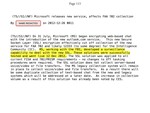
Microsoft releases new service, affects FAA 702 collection [pdf]
An SSO item on Microsoft's new outlook.com service encrypting web chat from 31 July 2012 and cutting off FAA 702 collection, and on the surveillance solution Microsoft built with the FBI, which went live on 12 December 2012 and needed no change to UTT tasking.
-
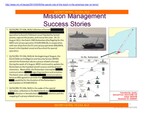
Mission Management Success Stories [pdf]
This document details a joint intelligence operation between the NSA and the Dutch Defense Intelligence and Security Service (MIVD) targeting Somali piracy. This document outlines how the NSA provided the Dutch flagship HMS Rotterdam with specialized intercept capabilities during Operation OCEAN SHIELD in 2012. This collaboration directly facilitated a successful special operation on 13 August 2012, which resulted in the rescue of a hijacked Pakistani vessel's crew and the capture of several pirates.
-
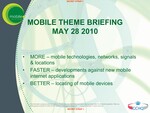
Mobile Theme Briefing (May 28, 2010) [pdf]
This 2010 GCHQ briefing document outlines the “Mobile Applications Project,” which aims to expand intelligence capabilities to exploit the growing shift from fixed to mobile internet usage. It details objectives for targeting mobile apps and roaming network traffic (GRX), enabling converged analysis of voice, text, command-and-control, and geolocation data across multiple mobile platforms such as iPhone, Symbian, Android, and Windows Mobile. See also: EFF_-_20140128-guard-leaky_phone_apps_0 (includes other slides from the same slideset)
Programs: Mobile Applications Project -
MTI Access Project - Weekly Status w/e 27 June 08 [pdf]
The document outlines the MTI Access Project’s progress, including the deployment of access equipment, risk reviews with GERONTIC, and internal testing of surveillance capabilities like DRUDGE and remote switching. This reflects broader revelations about how companies like Cable & Wireless (now Vodafone) facilitated GCHQ’s mass surveillance, including covert access to telecom networks like FLAG through systems like GERONTIC.
“Vodafone – der lange Arm des britischen Geheimdienstes?” - WDR ↗ (2014-11-20) · “Spy cable revealed: how telecoms firm worked with GCHQ” - Channel 4 ↗ (2014-11-20) · “Der lange Arm des Geheimdienstes?” - NDR ↗ (2014-11-21) · “Snowden-Leaks: How Vodafone-Subsidiary Cable & Wireless Aided GCHQ’s Spying Efforts” - Süddeutsche Zeitung ↗ (2014-11-25) · Restle, Georg · White, Geoff · Strozyk, Jan · Moltke, Henrik · Poitras, Laura · Obermaier, Frederik -
MTI Access Project - Weekly Status w/e 28 November 08 [pdf]
The document details the MTI Access Project’s status in November 2008, including a significant payment to GERONTIC, updates on organizational changes, and discussions about future access opportunities and cost reductions. This aligns with broader revelations about GERONTIC’s role in supporting GCHQ's surveillance operations, facilitating access to telecom infrastructure and shaping surveillance strategies.
“Vodafone – der lange Arm des britischen Geheimdienstes?” - WDR ↗ (2014-11-20) · “Spy cable revealed: how telecoms firm worked with GCHQ” - Channel 4 ↗ (2014-11-20) · “Der lange Arm des Geheimdienstes?” - NDR ↗ (2014-11-21) · “Snowden-Leaks: How Vodafone-Subsidiary Cable & Wireless Aided GCHQ’s Spying Efforts” - Süddeutsche Zeitung ↗ (2014-11-25) · Restle, Georg · White, Geoff · Strozyk, Jan · Moltke, Henrik · Poitras, Laura · Obermaier, Frederik -
MTI Access Project - Weekly Status w/e 6 February 09 [pdf]
This is a UK TOP SECRET STRAP1 COMINT GCHQ GCWiki page — a weekly status update for the MTI Access Project, week ending 6 February 2009.
Programs: GERONTIC“Vodafone – der lange Arm des britischen Geheimdienstes?” - WDR ↗ (2014-11-20) · “Spy cable revealed: how telecoms firm worked with GCHQ” - Channel 4 ↗ (2014-11-20) · “Der lange Arm des Geheimdienstes?” - NDR ↗ (2014-11-21) · “Snowden-Leaks: How Vodafone-Subsidiary Cable & Wireless Aided GCHQ’s Spying Efforts” - Süddeutsche Zeitung ↗ (2014-11-25) · Restle, Georg · White, Geoff · Strozyk, Jan · Moltke, Henrik · Poitras, Laura · Obermaier, Frederik -
MYSTIC [pdf]
These excerpts provide foundational details on the MYSTIC program, including its inception in 2009 and its structural organization. It defines MYSTIC as a program managed by the Special Source Operations (SSO) division, focusing on "embedded collection systems" within foreign wireless and mobile networks. The document confirms a deceptive operational model: the equipment is overtly installed to provide "commercial services" for telecommunications companies, while its secret purpose is to provide SIGINT (Signals Intelligence) to U.S. agencies.
-
N.S.A. Memo Expands Access to FISA Information [pdf]
In 2006, the National Security Agency sought to expand access to Foreign Intelligence Surveillance Act information — previously limited to its headquarters in Fort Meade, Md. — to its code-breakers in Georgia, Texas and Hawaii. Part of the deliberations focused on a problem that raised the possibility that the agency had violated rules the surveillance court established for handling the information.
-
N.S.A. Timeline of Surveillance Law Developments [pdf]
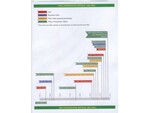
This chart, apparently from an internal N.S.A. presentation, lists milestones in surveillance rules over nearly four decades. The July 2002 “Raw Take” sharing order, whose existence has not previously been disclosed, is just one of three rulings by the Foreign Intelligence Surveillance Court to make the list. The other two were 2004 and 2006 rulings allowing bulk collection of data about emails and phone calls.
-
NAC BUDE Partnership - SATELLITE TELEPORT KNOWLEDGE (GCHQ) [pdf]
A top secret GCHQ Network Analysis Centre document from GCHQ Bude detailing comprehensive intelligence profiles of three German satellite teleport operators — Stellar, Ce-Tel, and IABG — including their network infrastructure, router configurations, IP ranges, employee identities, satellite customers, and login credentials, compiled to identify access chokepoints for SIGINT collection against German IP transit infrastructure.
People: Steffen, Christian · Sommer, Christoph · Fares, Ali · Grave, Richard · Steffen, Simona · Skaletz, Oliver -
National Security Agency: Overview Briefing [pdf]
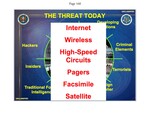
A slide from an unclassified NSA overview briefing, “The threat today”, which lists hackers, criminal elements, insiders and terrorists alongside technologies — the Internet, wireless, high-speed circuits, pagers, facsimile and satellite — as the threats the agency faces.
Marking: UNCLASSIFIED -
Net Defense from Encrypted Communications [pdf]
A NSA Technology Directorate briefing from February 2012 describing BLUESNORT — a capability that repurposes GALLANTWAVE's SSL/TLS decryption pipeline for network defence, re-injecting decrypted traffic into TURMOIL Stage 1 Prime where BLUESNORT detects malware and other malicious activity — representing description of NSA using its own bulk decryption infrastructure for cyber defence as well as intelligence collection.