Journalist: Soltani, Ashkan 22 documents
Search documents matching “Soltani, Ashkan” →Journalists bylined on the stories that published these documents. Contributors credited without a byline are searchable but not listed here.
Graphs
By Banner
By Classification
Refine (combine with another filter, via search)
Sort: Title
Documents
-
2013 Black Budget - SSO Project Description [pdf]
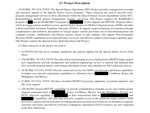
This excerpt from the 2013 Congressional Budget Justification for the National Intelligence Program details the administrative and logistical backbone of the Special Source Operations (SSO). The document outlines how the SSO manages high-priority access programs, specifically MYSTIC, RAMPART-I, and RAMPART-X. It confirms that MYSTIC utilizes "partner-enabled" accesses to intercept communications from both cellular (GSM) and traditional landline (PSTN) networks. The budget highlights a strategic push to exploit Next-Generation Wireless (NGW) technologies and identifies the Caribbean, Mexico, Kenya, and the Philippines as primary regions for sustained, comprehensive metadata and content collection.
“NSA surveillance program reaches ‘into the past’ to retrieve, replay phone calls” - The Washington Post ↗ (2014-03-18) · “The NSA Is Recording Every Cell Phone Call in the Bahamas” - The Intercept ↗ (2014-05-19) · Gellman, Barton · Soltani, Ashkan · Devereaux, Ryan · Greenwald, Glenn · Poitras, Laura -
Bulk collection of webmail address books and emerging protocols [pdf]
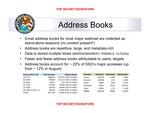
TOP SECRET NSA document details the large-scale collection of email address books and contact lists from major webmail and social media providers, emphasizing their metadata value despite low attribution rates to known targets. It also highlights ongoing efforts to identify and analyze emerging communication protocols, such as those used by Hotmail Messenger.
-
Content Acquisition Optimization PowerPoint Slides [pdf]
An NSA presentation on content acquisition optimisation — describing how incidental bulk collection from Yahoo Webmessenger, email address books, buddy lists and webmail inboxes was generating massive unintended collection volumes.
-
Current Efforts - Google [pdf]
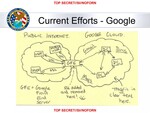
The famous NSA slide from the MUSCULAR program showing where Google's encryption is stripped away — a hand-drawn diagram of Google's cloud architecture annotated with "SSL Added and removed here!" beside a smiley face, marking the exact point where NSA and GCHQ intercepted Google user data flowing unencrypted between Google's data centers.
-
Email from GCHQ to NSA about targeting realms in MONKEY PUZZLE [pdf]
Email from GCHQ's MONKEY PUZZLE development team to NSA clarifying that the system only supports deploying targeting for four specific selector realms: emailAddr, google, msnpassport, and yahoo, while still accepting other realms into the system pool.
Marking: SECRET -
FASCIA: The NSA's huge trove of location records [pdf]
FASCIA is the National Security Agency's enormous database containing trillions of metadata records, many with device locations, that are collected from a variety of sources. This document shows the volume and types of device-location data collected by the agency.
“NSA tracking cellphone locations worldwide, Snowden documents show” - The Washington Post ↗ (2013-12-04) · “No Place to Hide” - Metropolitan Books ↗ (2014-05-13) · Gellman, Barton · Soltani, Ashkan · Greenwald, Glenn -
How the NSA Pinpoints a Mobile Device [pdf]
This document is an internal National Security Agency classification guide outlining the agency's abilities to intercept cellular communications.
Programs: ARCVIEW -
How the NSA verifies a target's location [pdf]
This is an excerpt from a transcript of National Security Agency training videos that describe how to verify the location of a targeted device. It explains how the NSA monitors different types of mobile signaling information known as HLR and VLR registrations in order to locate individuals. It also makes clear that the agency is able to use location tracking to ascertain whether a target is in the United States.
-
How to tell if a target is 'foreign' [pdf]
The document describes a human intelligence (HUMINT) report indicating that a specific intelligence target, identified by a Foreign Source ID, is located outside the U.S., including details such as email, telephone number, and mobile network type, with checks confirming no U.S. roaming over a 60-day period. It illustrates the use of HUMINT to corroborate foreign location data for surveillance purposes.
-
Location Cookies [pdf]
These slides contain excerpts from an April 2013 National Security Agency presentation detailing signal surveillance techniques and successes. They reveal that the NSA and its British counterpart, Government Communications Headquarters (GCHQ), use a Google-specific tracking cookie to pinpoint targets for hacking.
-
NSA target package [pdf]
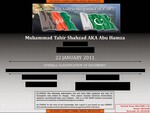
This 2011 target package focuses on Muhammad Tahir Shahzad (alias Abu Hamza), a Pakistan-based bomb builder and Al-Qaeda facilitator. The document was produced by the Counter IED Analysis Integration Cell (CAIC) at the NSA. Notably, the document credits the tracking of Shahzad’s 60+ digital selectors with the eventual capture of high-value targets, including himself and Bali bombing suspect Umar Patek. The accompanying Washington Post investigation uses this specific case to highlight the massive scale of "incidental collection." While Shahzad was a valid foreign target under Section 702 of the FISA Amendments Act (FAA), the investigation revealed that for every legitimate target like him, the NSA intercepted nine "non-targeted" users—many of whom were Americans—capturing deeply personal photos, medical records, and private correspondence.
-
SIGINT Authority decision tree [pdf]
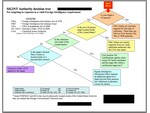
A one-page NSA training chart that walks an analyst from a targeting request to the legal authority that covers it, branching on whether the target is a US person, where the target is, where the collection site is, and whether the target is a Second Party citizen.
-
Special Source Operations - The Cryptologic Provider of Intelligence from Global High-Capacity Telecommunications Systems [pdf]
The document outlines NSA special source operations for accessing global telecommunications data, detailing corporate and foreign cable interception programs. It highlights the MUSCULAR program (DS-200B), a joint NSA–GCHQ operation in the UK that taps into high-capacity fiber-optic links to collect and process large volumes of data from private networks.
-
SSO - MYSTIC [pdf]
This collection of SSO slides details the NSA's MYSTIC program, a massive signals intelligence (SIGINT) operation capable of recording and archiving 100% of a country's mobile phone calls. The slides reveal the program's reach across several nations, using colorful codenames for specific collection sites.
Programs: MYSTIC · SCALAWAG · ACIDWASH · OILYRAG · VENATOR · RANCIDRINSE · LOLLYGAG · EVENINGEASEL · DUSKPALLET · BASECOAT · PERMANENTPRESS · ETCHINGSPIN“NSA surveillance program reaches ‘into the past’ to retrieve, replay phone calls” - The Washington Post ↗ (2014-03-18) · “The NSA Is Recording Every Cell Phone Call in the Bahamas” - The Intercept ↗ (2014-05-19) · Gellman, Barton · Soltani, Ashkan · Devereaux, Ryan · Greenwald, Glenn · Poitras, Laura -
SSO Collection Optimization [pdf]
This is another presentation on problems with the National Security Agency's overcollection of address books and buddy lists and its efforts to weed out useless content. See also EFF_-_20131104-wapo-optimization_google
-
SSO Collection Optimization [pdf]
The documents reveal that the NSA, in collaboration with GCHQ, accessed private internal networks of Google and Yahoo by intercepting data in transit between their data centers, without breaking into user accounts or servers. This involved analyzing proprietary formats and protocols, such as Google’s Gaia authentication system, using specialized tools to extract intelligence while operating primarily under foreign jurisdiction with fewer legal restrictions.
-
SSO Collection Optimization Overview [pdf]
This excerpt is from an article in the NSA's "Intellipedia," a classified system built with the same open-source software used by Wikipedia. Like the other documents, it describes the problem of high-volume, low-value data collection — and the NSA's response — with a focus on Internet contact lists.
-
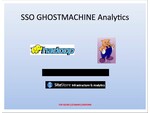
SSO GHOSTMACHINE Analytics [pdf]
This document describes the NSA’s cloud analytics platform GHOSTMACHINE, used by Special Source Operations (SSO) to process and analyze massive volumes of data (e.g., from FASCIA) using Hadoop-based infrastructure. It’s essentially the backbone system for querying, correlating, and enriching surveillance data at scale — not just a single analytic, but the analytic/cloud environment powering many programs.
Programs: GHOSTMACHINE · FASCIA · CERF · POPTOP · DRT · SIGDASYS · JUGGERNAUT · SEADIVER · AST128 · TUSKATTIRE · ASDF · BROKENRECORD · REDHAWK · SSO -
Summary of DNR and DNI Co-Travel Analytics [pdf]
The document outlines the NSA’s development and testing of multiple “co-traveler” analytics—sophisticated tools that analyze bulk mobile location data to identify people who travel together or follow similar patterns, even if they are not known intelligence targets. It details various analytic systems, their data sources (such as FASCIA, VLR, GCID), architectures, scoring methods, and future enhancements, illustrating a large-scale surveillance framework for mapping human movement and relationships.
Programs: CO-TRAVELER · CHALKFUN · TMI · PACT · RT-RG · SORTINGLEAD · FASCIA · Hectic Snare · DRT · Juggernaut · GM-PLACE · Fast Follower · MGSC · ELKPRINTS · VOICESAIL · CULTWEAVE · OCTAVE · OCTSKYWARD · SEDB · JEMA · The Café · UTT · ASDF · GHOSTMACHINE · CLOUDBASE · FASTSCOPE · GOLDMINER · CHET · GEOT · TMAC · SPCMA · MAPREDUCE · ACCUMULO · GAMBIT · ICREACH -
Tasking of SCALAWAG [pdf]
An NSA Special Source Operations memo describing bandwidth and latency problems caused by the SCALAWAG bulk voice collection program, and introducing the RETRO Tool — a capability allowing analysts to reach back up to 30 days into a buffer of recorded phone calls from an entire country to retrieve audio that was never individually targeted.
Programs: SCALAWAG · DOUBLEARROW · UTT · OCTAVE · NUCLEON · RETROSPECTIVE · RETROTOOL · RETRO · FASCIA · SSO