Tag: foreign intelligence 23 documents
Search documents matching “foreign intelligence” →Free-text subjects the curators added. Unlike the other axes these are not necessarily from the documents' own vocabulary, so they are the loosest thing to browse by (and the most forgiving).
Graphs
By Banner
By Classification
Refine (combine with another filter, via search)
Sort: Title
Documents
-
Minimization Procedures Used By The National Security Agency In Connection With Acquisitions Of Foreign Intelligence, Information Pursuant To Section 702 Of The Foreign Intelligence Court Surveillance Act Of 1978 [pdf]
The NSA’s Section 702 minimization rules expose how the agency can collect, keep, and use Americans’ communications without warrants, despite claiming to target only foreigners. While the document sets out procedures for handling U.S. data, it includes broad loopholes—like keeping “inadvertently” collected domestic messages for years, sharing unfiltered data with the FBI, CIA, and even foreign governments, and giving NSA analysts wide discretion over who gets surveilled—all under secret FISA Court approval.
People: Holder, Eric H. Jr. -
Procedures Used By The National Security Agency For Targeting Non-United States Persons Reasonably Believed To Be Located Outside The United States To Acquire Foreign Intelligence Court Information Pursuant To Section 702 Of The Foreign Intelligence Surveillance Act Of 1978 [pdf]
The NSA’s 2009 Section 702 targeting procedures lay out how analysts decide who can be surveilled without a warrant, supposedly limiting spying to foreigners abroad. In reality, the rules give the agency wide latitude to presume people are foreign, rely on vague “totality of the circumstances” tests, and allow broad technical methods like IP filters and metadata checks. Oversight is mostly internal and after-the-fact, creating significant potential for U.S. communications to be swept up with little accountability.
People: Holder, Eric H. Jr. -
AND THEY SAID TO THE TITANS: « WATCH OUT OLYMPIANS IN THE HOUSE! » [pdf]
This Top Secret CSEC “Olympia” document details a Canadian intelligence program that analyzed and tracked the Brazilian Ministry of Mines and Energy’s telecommunications, mapping IPs, servers, proxies, and mobile devices while automating data collection and network analysis to develop actionable intelligence. It outlines tools, workflows, and contacts used for surveillance, though the presentation does not explain the specific purpose of the operation.
Programs: OLYMPIA · QUOVA · PROMETHEUS · PEITHO · SLINGSHOT · LEVITATE · STRATOS · EVILOLIVE · GCHQ Geofusion · ATLAS · HYPERION · ATHENA · DANAUS · TIDALSURGE · BLACKPEARL · MARINA · STARSEARCH · PEPPERBOX · TRITON · PACKAGEDGOODS · ARK · TOYGRIPPE · FRIARTUCK · MASTERSHAKE · COEUS · STALKER · MAINWAY · FASCIA · SEDB · OCTSKYWARD · FASTBAT · TWINSERPENT · EONBLUE · DISHFIRE · GNDB“Read a CSEC document that was first acquired by Edward Snowden” - The Globe and Mail ↗ (2013-11-30) · “Ministério de Minas e Energia está na mira de espiões americanos e canadenses” - O Globo ↗ (2013-10-06) · “No Place to Hide” - Metropolitan Books ↗ (2014-05-13) · Freeze, Colin · Bridi, Sônia · Greenwald, Glenn -
Baltic region [pdf]
This screenshot shows a part of a document which is about the growing relationship with the Swedish FRA, as an “extremely competent” partner. In 2011, the FRA gave the NSA access to “unique” material from its cable collection regarding, among other things, Russia and the Baltic region.
-
CASCADE - Joint Cyber Sensor Architecture [pdf]
This presentation outlines the Communications Security Establishment’s (CSE) plans to unify and expand its cyber sensor networks (ITS and SIGINT) to create a comprehensive, multi-layered national cyber defense system, enabling threat detection, intelligence collection, and defensive operations across Canadian and foreign networks. It emphasizes standardizing sensor deployments, integrating analytic capabilities, and preparing for “Effects” operations to mitigate cyber threats by 2015. The presentation is duplicated from page 33 onwards - three slides of the duplicated slides have internal CSE comments.
Programs: CASCADE · PHOTONICPRISM · EONBLUE · INDUCTION · THIRDEYE · CRUCIBLE · CHOKEPOINT · SUNWHEEL · CASSIOPEIA · SCNET · JAZZFLUTE · GAZEBO · SEEDSPHERE · TEXPRO · SSO -
CNE Analysis in XKEYSCORE [pdf]
This document is an NSA training presentation from October 2009 demonstrating how XKEYSCORE integrates with Computer Network Exploitation (CNE) operations, allowing analysts to search and analyze data extracted from compromised computers including keystrokes, browser history, registry files, documents, emails, and directory structures collected through implants like UNITEDRAKE and OLYMPUS.
Programs: XKEYSCORE · OLYMPUS · UNITEDRAKE · PINWALE · TUNINGFORK · TURBOCHASER · MARINA · JOLLYROGER · TREASUREMAP · TURBINE · PRESSUREWAVE · MAD · TUCKER · EXPANDINGPULLY · UNIX · SEARCHLIGHT · KEYLOGGER · PILBEAM · FOXACID · WAYTIDE · SHADOWQUEST · SEAGULLFARO · DARKHELMET · LUTEUSICARUS · FOGGYBOTTOM · GREENCHAOS · RADIUS · NKB · VALIDATOR -
Discovery SIGINT Targeting Scenarios and Compliance [pdf]
This document is a top-secret NSA guidance manual detailing SIGINT targeting scenarios, compliance procedures, and legal guidance for querying foreign actors, malware, and potentially U.S.-linked systems, including considerations for minimizing incidental collection of U.S. persons’ communications. It outlines specific rules, approvals, and exceptions for using SIGINT tools, foreign intelligence tasks, and cases involving ambiguous or dual-use selectors like WikiLeaks, The Pirate Bay, and foreign actors operating through U.S. infrastructure.
-
DNI, attorney general certify surveillance targets 'reasonably believed' to be outside U.S. [pdf]
In this document, the director of national intelligence and the attorney general certify that there are procedures in place to ensure that surveillance conducted under Section 702 of the FISA Amendments Act will be limited to targeting people "reasonably believed to be located outside the United States." They state that the foreign intelligence to be collected "concerns foreign powers" as defined by statute. The list of foreign powers is in Exhibit F.
-
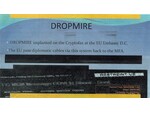
DROPMIRE on the Cryptofax at the EU Embassy D.C. [pdf]
This document reveals that the NSA secretly targeted EU diplomatic communications through a program called DROPMIRE, which involved placing surveillance implants on encrypted fax machines at the EU Embassy in Washington, D.C. This operation was part of a broader effort to spy on 38 foreign embassies and missions—including allies such as France, Italy, and Greece—to gain inside knowledge of policy debates and diplomatic positions.
Programs: DROPMIRE -
FAA702 Glossary - Section 702 of the Fisa Amendments Act (FAA) [pdf]
This document outlines NSA rules under Section 702 of the FISA Amendments Act, which prohibit directly targeting U.S. persons or individuals inside the U.S., but quietly note a 2011 rule change allowing analysts to use U.S. person identifiers to query data already collected under 702—pending internal oversight. This effectively establishes a “backdoor search” capability enabling warrantless searches of Americans’ communications stored in NSA databases. Section 702 also gives the NSA authority to target without warrant the communications of foreign targets.
-
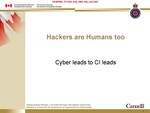
Hackers are Humans too - Cyber leads to CI leads [pdf]
This document from Canada’s Communications Security Establishment (CSE) analyzes the Russian hacking team MAKERSMARK, highlighting how its operators misused technically sophisticated but poorly secured infrastructure, mixing personal and operational activity, which made them traceable despite their advanced tools. It details CSE’s methods for attributing cyber intrusions, monitoring malware-infected systems, and exploiting operational security lapses to gain intelligence on Russian cyber operations.
-
How to tell if a target is 'foreign' [pdf]
The document describes a human intelligence (HUMINT) report indicating that a specific intelligence target, identified by a Foreign Source ID, is located outside the U.S., including details such as email, telephone number, and mobile network type, with checks confirming no U.S. roaming over a 60-day period. It illustrates the use of HUMINT to corroborate foreign location data for surveillance purposes.
-
Intelligently filtering your data: Brazil and Mexico case studies [pdf]
These documents reveal that the NSA conducted targeted surveillance operations against high-profile Brazilian and Mexican figures, including President Dilma Rousseff and presidential candidate Enrique Peña Nieto, using advanced contact-graph filtering and data analysis techniques to extract relevant intelligence from intercepted communications. These documents show how NSA analysts systematically developed intelligence on foreign leaders during election periods and diplomatic activities, framing it as “target development,” but in practice enabling deep political espionage under the guise of analytical innovation.
“Veja os documentos ultrassecretos que comprovam espionagem a Dilma” - O Globo ↗ (2013-09-02) · “No Place to Hide” - Metropolitan Books ↗ (2014-05-13) · Greenwald, Glenn -
Japan official NSA visit, cyber briefing [pdf]
This document outlines cooperation between the NSA and Japan’s Directorate for SIGINT (DFS) to develop Japan’s capabilities for providing signals intelligence (SIGINT) support to cyber defense operations, particularly against Chinese cyber activities. It details meetings, training, and data-sharing efforts from 2012–2013 aimed at enhancing Japan’s cyber intelligence capacity under U.S. guidance.
“Japan Made Secret Deals With the NSA That Expanded Global Surveillance” - The Intercept ↗ (2017-04-24) · “アメリカに監視される日本 ~スノーデン“未公開ファイル”の衝撃” - NHK ↗ (2017-04-24) · Gallagher, Ryan · Ikegami, Akira -
Legal issues UK regarding Sweden and Quantum [pdf]
An internal NSA document from April 2013 that describes the status of the relationship with a number of partners. It takes up a three-party agreement regarding the hacker programme Quantum, between the Swedish FRA, American NSA and British GCHQ, initiated by NSA chief Keith Alexander. The document shows that the project has so far resulted in a “proof of concept” – i.e., the system works, but it has not yet generated any substantial intelligence results. It also shows that the GCHQ are doubtful about continuing in the project because of restrictions in British legislation, but that the NSA’s intention all along has been to carry out the project with the Swedish FRA rather than GCHQ.
Programs: QUANTUM -
List of foreign governments and organizations authorized for surveillance [pdf]
This exhibit lists the 193 foreign governments as well as foreign factions, political organizations and other entities that were part of a 2010 certification approved by the Foreign Intelligence Surveillance Court. These are the entities about which the NSA may conduct surveillance, for the purpose of gathering foreign intelligence. Each year a new certification must be approved by the court to permit such surveillance under Section 702 of the FISA Amendments Act.
-
NSA director's affidavit on foreign surveillance [pdf]
The affidavit was submitted in support of the 2010 certification concerning foreign governments, factions and other entities. In it, Alexander states that pursuant to the certification, NSA seeks to acquire foreign intelligence information concerning foreign powers. The list of foreign powers is in Exhibit F.
People: Alexander, Keith B. -
NSA inspector general report on email and internet data collection under Stellar Wind, 24 March 2009 [Working Draft] [pdf]
This 2009 NSA Inspector General draft report details the origins and legal framework of the President’s Surveillance Program (PSP), launched after 9/11 to bypass FISA limits and authorize bulk interception of internet and telephony content and metadata, including communications with one end inside the U.S. It reveals how NSA, with White House backing, expanded surveillance authority to cover “collection gaps” that existing law didn’t allow, effectively legalizing large-scale warrantless spying under a secret presidential directive.
People: Bush, George W. · Hayden, Michael · Tenet, George · Gonzales, Alberto R. · Addington, David S. · Graham, Robert · Deitz, Robert L. · Shelby, Richard · Pelosi, Nancy · Cheney, Dick · Libby, I. Lewis · Lamberth, Royce · Inouye, Daniel · Levin, Daniel · Stevens, Theodore · Kollar-Kotelly, Colleen · Rockefeller, Jay · Alexander, Keith B. · Potenza, Vito -
NSA's New Information Sharing Policy: How It Affects the Dissemination of SIGINT SIDtoday [pdf]
A new policy allows for more rapid sharing of signals intelligence with other branches of government and allies, as long as agents comply with the appropriate regulations. Open sharing represents a “major cultural shift” for the NSA, and as the agency drafts new policies, analysts must judge whether information they find is both eligible and appropriate for sharing.
The Intercept ↗ (2018-03-01) -
SKIDROWE [pdf]
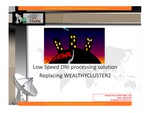
This document reveals the extensive surveillance capabilities of the NSA's SKIDROWE program at TITANPOINTE, specifically designed to intercept and analyze satellite communications and internet data. It highlights how intercepted data is processed and filtered through advanced systems like XKEYSCORE, which enables real-time intelligence gathering by sifting through massive amounts of digital content, including emails, calls, and internet activity.
Programs: SKIDROWE · WEALTHYCLUSTER2 · WEALTHYCLUSTER · TURNWEALTHY · VPCS · XKEYSCORE · GENESIS · CONTROLAND · ATM · FITBOY · DARKTHUNDER · FIP · METTLESOME · SKYFRAME · PVOICE · XXPY0012 · AGITATOR · STARPROC · SPELLBINDER · BLACKPEARL · BLACKALCHEMY · BLACKGOLD · BLACKFIRE · MONKEYMIND · BCD · EVVIPER · QUANTUM · MISTYPEAK · VALIANTSURF · GALLANTWAVE · SWINE · BLUESNORT · TOSSSWUNG · GNOMEVISION · GNOMEGOGGLES · HIDDENSALAMANDER · TURMOIL · PSC