Tag: espionage 31 documents
Search documents matching “espionage” →Free-text subjects the curators added. Unlike the other axes these are not necessarily from the documents' own vocabulary, so they are the loosest thing to browse by (and the most forgiving).
Graphs
By document date (12 years)
By Banner
By Classification
Refine (combine with another filter, via search)
Sort: Title
Documents
-
NSA Espionage During the UN Climate Change Conference (COP15) in Copenhagen [pdf]
The leaked NSA document reveals that during the 2009 Copenhagen Climate Summit (COP15), the agency and its intelligence partners collected signals intelligence on other countries’ climate negotiation strategies, including advance details of China’s coordination with India and Denmark’s confidential “rescue plan,” to provide U.S. policymakers with a strategic advantage. It underscores how espionage was integrated into diplomatic efforts to influence the outcome of global climate talks.
People: Sarkozy, Nicolas -
Seminar on Espionage SIDtoday [pdf]
There will be a guest speaker seminar with a discussion of the book, "The Great Game: The Myth and Reality of Espionage."
The Intercept ↗ (2017-09-13) -
3G: impact and update - SDF Nov 09 [pdf]
This 2009 top-secret presentation from Australia’s Defence Signals Directorate (DSD) detailing 3G mobile network rollouts in Southeast Asia and identifying Indonesian President Susilo Bambang Yudhoyono, his wife, and senior officials as surveillance targets. It includes handset information, call data records, intercepted call attempts, and outlines plans for continued interception of Indonesian leadership communications.
-
'4th Party Collection': Taking Advantage of Non-Partner Computer Network Exploitation Activity SIDtoday [pdf]
This January 2008 SIDtoday article from Menwith Hill Station describes "4th Party Collection"—an NSA technique exploiting non-Five Eyes nations' computer network operations by passively intercepting their stolen data—with the example of NSA monitoring Kurdistan Democratic Party's deployment of Perfect Keylogger commercial spyware against targets in Iran and Iraq, including people with links to the Kurdistan Regional Government and Iraqi Ministry of Foreign Affairs computers, capturing keystrokes, passwords, chat logs, and documents that traditional signals intelligence would never collect. The operation reveals KDP intelligence services systematically compromised internet cafés and Iraqi Ministry of Foreign Affairs computers, with exfiltrated data routing to email addresses in Erbil registered to terminals associated with Kurdish intelligence, which NSA then intercepts and repurposes for its own intelligence production.
-
AFRICAN INBOUND DVB-S2 CARRIER [pdf]
2009 GCHQ report documents the survey and tasking of an African inbound satellite data carrier (DVB-S2) carrying internet traffic from Nigerian, Kenyan, and Zambian ISPs, intercepted via the TERRAIN collection suite. Among the identified targets were Israeli diplomatic and defense-related selectors — including the Israeli Prime Minister, an Israeli UAV/drone entity, and the Israeli embassies in Abuja (Nigeria) and Nairobi (Kenya) — as well as the Palestinian Authority embassy to Belgium.
-
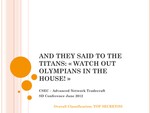
AND THEY SAID TO THE TITANS: « WATCH OUT OLYMPIANS IN THE HOUSE! » [pdf]
This Top Secret CSEC “Olympia” document details a Canadian intelligence program that analyzed and tracked the Brazilian Ministry of Mines and Energy’s telecommunications, mapping IPs, servers, proxies, and mobile devices while automating data collection and network analysis to develop actionable intelligence. It outlines tools, workflows, and contacts used for surveillance, though the presentation does not explain the specific purpose of the operation.
Programs: OLYMPIA · QUOVA · PROMETHEUS · PEITHO · SLINGSHOT · LEVITATE · STRATOS · EVILOLIVE · GCHQ Geofusion · ATLAS · HYPERION · ATHENA · DANAUS · TIDALSURGE · BLACKPEARL · MARINA · STARSEARCH · PEPPERBOX · TRITON · PACKAGEDGOODS · ARK · TOYGRIPPE · FRIARTUCK · MASTERSHAKE · COEUS · STALKER · MAINWAY · FASCIA · SEDB · OCTSKYWARD · FASTBAT · TWINSERPENT · EONBLUE · DISHFIRE · GNDB“Read a CSEC document that was first acquired by Edward Snowden” - The Globe and Mail ↗ (2013-11-30) · “Ministério de Minas e Energia está na mira de espiões americanos e canadenses” - O Globo ↗ (2013-10-06) · “No Place to Hide” - Metropolitan Books ↗ (2014-05-13) · Freeze, Colin · Bridi, Sônia · Greenwald, Glenn -
Class for Grade 14 and Above: Denial and Deception Executive Overview SIDtoday [pdf]
The national intelligence officer for intelligence assurance will discuss with NSA senior leaders and managers the strategy for countering denial and deception.
Marking: SECRETPeople: Gershwin, LarryThe Intercept ↗ (2017-04-24) -
CLASSIFICATION GUIDE FOR ECI PAWLEYS (PAW) [pdf]
This 2006 NSA classification guide outlines the protocols for ECI PAWLEYS (PAW). PAWLEYS is an Exceptionally Compartmented Information (ECI) category designed to protect clandestine operations—both physical (HUMINT) and digital (CNE)—specifically aimed at acquiring foreign cryptographic information and material. The document confirms that the NSA actively seeks to circumvent encryption through clandestine HUMINT and computer network access aimed at cryptographic information and material, rather than relying solely on traditional codebreaking.
Programs: PAWLEYS -
DoD 2011 Strategy for Operating in Cyberspace – Supply Chain Excerpts [pdf]
The classified 2011 Department of Defense strategy warns that U.S. reliance on foreign manufacturing—especially from countries like China—creates major cybersecurity risks, including the potential insertion of malicious hardware or software into critical systems. It outlines a government-wide plan to mitigate these supply chain vulnerabilities through coordinated policies, risk management strategies, and collaboration with industry.
-
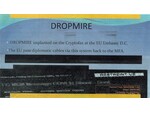
DROPMIRE on the Cryptofax at the EU Embassy D.C. [pdf]
This document reveals that the NSA secretly targeted EU diplomatic communications through a program called DROPMIRE, which involved placing surveillance implants on encrypted fax machines at the EU Embassy in Washington, D.C. This operation was part of a broader effort to spy on 38 foreign embassies and missions—including allies such as France, Italy, and Greece—to gain inside knowledge of policy debates and diplomatic positions.
Programs: DROPMIRE -
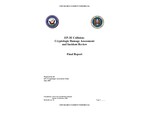
EP-3E Collision: Cryptologic Damage Assessment and Incident Review [pdf]
A joint US Navy and NSA report from July 2001, prepared three months after a US spy plane was forced to land in China, assessing how far surveillance sources and methods were compromised and reviewing the emergency destruction that failed to prevent it. Damage to tactical SIGINT against the PRC is rated medium and overall SIGINT damage low, with the greatest loss the LUNCHBOX PROFORMA processor and MARTES signals analysis tools; COMSEC damage is rated low because keying material was superseded within 15 hours.
Programs: LUNCHBOX · MARTES · NICKELBACK · SENSOR PACER · PROFORMA · HULTEC · STRUM · TEXTA · RASIN · CRITIC · KLIEGLIGHT · XBIT · BLACKMAGIC · NOIWON · ZIRCON · MIDB · EOB-LITE · NIMROD · ARIEL · COBRA BALL · COMBAT SENT · RIVET JOINT · SEABOOT · SETTEE · KAMPUS · DRUID · RORIPA · MARKHAM · FOREJUDGE · SAM HEARTBURN · NOVELETTE · RSBN · BEGGAR HAWK · BEGGAR SHADOW · CAPSULE JACK · DISTANT WIND · DISTANT SENT · CHILING · RIBBED · UNACCENTED · SLIPSTICK · SIERRA ONEPeople: Meals, Charlie -
FY 2013 Congressional Budget Justification, Volume I, National Intelligence Program Summary, February 2012 [pdf]
This document outlines the $52.6 billion “black budget,” detailing the structure, priorities, successes, and shortcomings of the 16 U.S. intelligence agencies. It reveals unprecedented insight into funding allocations, operations, and intelligence gaps—including the CIA’s dominant role, expanding cyber operations, and persistent challenges in areas such as North Korea and counterterrorism—while emphasizing the tension between secrecy and public accountability.
-
Hackers are Humans too - Cyber leads to CI leads [pdf]
This document from Canada’s Communications Security Establishment (CSE) analyzes the Russian hacking team MAKERSMARK, highlighting how its operators misused technically sophisticated but poorly secured infrastructure, mixing personal and operational activity, which made them traceable despite their advanced tools. It details CSE’s methods for attributing cyber intrusions, monitoring malware-infected systems, and exploiting operational security lapses to gain intelligence on Russian cyber operations.
-
How to tell if a target is 'foreign' [pdf]
The document describes a human intelligence (HUMINT) report indicating that a specific intelligence target, identified by a Foreign Source ID, is located outside the U.S., including details such as email, telephone number, and mobile network type, with checks confirming no U.S. roaming over a 60-day period. It illustrates the use of HUMINT to corroborate foreign location data for surveillance purposes.
-
Intelligently filtering your data: Brazil and Mexico case studies [pdf]
These documents reveal that the NSA conducted targeted surveillance operations against high-profile Brazilian and Mexican figures, including President Dilma Rousseff and presidential candidate Enrique Peña Nieto, using advanced contact-graph filtering and data analysis techniques to extract relevant intelligence from intercepted communications. These documents show how NSA analysts systematically developed intelligence on foreign leaders during election periods and diplomatic activities, framing it as “target development,” but in practice enabling deep political espionage under the guise of analytical innovation.
“Veja os documentos ultrassecretos que comprovam espionagem a Dilma” - O Globo ↗ (2013-09-02) · “No Place to Hide” - Metropolitan Books ↗ (2014-05-13) · Greenwald, Glenn -
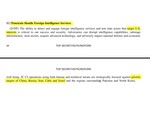
Israel targets the U.S. government for invasive electronic surveillance [pdf]
Israel targets the U.S. government for invasive electronic surveillance, and does so more aggressively and threateningly than almost any other country in the world. Indeed, so concerted and aggressive are Israeli efforts against the U.S. that some key U.S. government documents — including the top secret 2013 intelligence budget — list Israel among the U.S.’s most threatening cyber-adversaries and as a “hostile” foreign intelligence service.
-
Japan official NSA visit, cyber briefing [pdf]
This document outlines cooperation between the NSA and Japan’s Directorate for SIGINT (DFS) to develop Japan’s capabilities for providing signals intelligence (SIGINT) support to cyber defense operations, particularly against Chinese cyber activities. It details meetings, training, and data-sharing efforts from 2012–2013 aimed at enhancing Japan’s cyber intelligence capacity under U.S. guidance.
“Japan Made Secret Deals With the NSA That Expanded Global Surveillance” - The Intercept ↗ (2017-04-24) · “アメリカに監視される日本 ~スノーデン“未公開ファイル”の衝撃” - NHK ↗ (2017-04-24) · Gallagher, Ryan · Ikegami, Akira -
Japan provided with XKEYSCORE [pdf]
This document outlines a request for approval to provide training to the Japanese Directorate for SIGINT (DFS) on using advanced SIGINT systems, including XKEYSCORE, to enhance Japan's cyber network defense capabilities. This training, scheduled for April 2013, aligns with U.S. strategic goals to bolster the cyber defense abilities of allied nations, highlighting ongoing NSA collaboration with Japan on surveillance and cybersecurity.
“Japan Made Secret Deals With the NSA That Expanded Global Surveillance” - The Intercept ↗ (2017-04-24) · “アメリカに監視される日本 ~スノーデン“未公開ファイル”の衝撃” - NHK ↗ (2017-04-24) · Gallagher, Ryan · Ikegami, Akira -
-
Mark Your Calendar: Seminar on Defending the Global Information Grid SIDtoday [pdf]
An upcoming seminar will review how “hackers around the world on a constant basis” threaten the Defense Department’s Global Information Grid computer network.
Marking: CONFIDENTIALThe Intercept ↗ (2018-03-01)