Tag: IMSI 31 documents
Search documents matching “IMSI” →Free-text subjects the curators added. Unlike the other axes these are not necessarily from the documents' own vocabulary, so they are the loosest thing to browse by (and the most forgiving).
Graphs
By Banner
By Classification
Refine (combine with another filter, via search)
Sort: Title
Documents
-
Analyzing Mobile/Cellular DNI in XKEYSCORE, May 2009 [pdf]
The XKEYSCORE document explains how the agency analyzes mobile/cellular device internet usage by collecting and processing both converged DNI/DNR data within cellular networks and traditional internet traffic, using various tools and indicators to identify mobile users even when their device type isn't immediately evident. The document demonstrates how the system can track mobile internet activity across applications like Yahoo Mail and identifies devices through various technical "hints" including MSISDN codes, browser fingerprints, and user agent strings.
-
AURORAGOLD Working Aid [pdf]
This document is a technical reference guide for analysts that categorizes the specific data fields extracted from mobile network documents (IR.21s) and commercial databases. It serves as a manual for translating telecommunications infrastructure data—such as encryption types, network layer protocols, and hardware versions—into actionable intelligence for target development and cyber exploitation.
Programs: AURORAGOLD -
AURORAGOLD Working Group [pdf]
The "AURORAGOLD Working Group" briefing is a highly classified SIGINT development presentation from June 2012 that outlines the NSA's progress in mapping the global mobile landscape (GSM/UMTS/LTE). It focuses on the project's "value proposition": providing an exhaustive database of network identifiers and technical configurations—often obtained by intercepting internal company documents—to support tactical military operations and long-term surveillance forecasting.
Programs: AURORAGOLD · UTT · XKEYSCORE · CADENCE · JUBILEECORONA · RONIN · NKB · GLOBALTIPPER · PINWALE -
Blazing Saddles [pdf]
This document describes BLAZING SADDLES, a GCHQ program designed to massively scale the storage and analysis of bulk internet surveillance data through multiple specialized databases that track website visits, online identities, communications patterns, and geolocation queries across the global internet population.
Programs: BLAZINGSADDLES · BLACKHOLE · SOCIALANTHROPOID · AUTOASSOC · HRMAP · INFINITEMONKEYS · KARMAPOLICE · MARBLEDGECKO · MUTANTBROTH · MEMORYHOLE · SAMUELPEPYS · SOCIALANIMAL · HAUSTORIUM · GOLDENAXE · NGE -
Content-Metadata Matrix [pdf]
GCHQ's internal taxonomy sorts intercepted data into "content" or "metadata" to determine what can be searched without individual warrants—email subject lines, full URLs, and buddy lists fall on opposite sides of the line, enabling analysts to mine massive troves of IP addresses, phone numbers, location data, and browsing history with just a few keystrokes and a brief justification.
-
Converged Analysis of Smartphone Devices [pdf]
This 2010 document outlines NSA methods for identifying, processing, and exploiting data from smartphones by targeting both telephony and digital network intelligence (DNI). It details how analysts use tools like XKEYSCORE and metadata extraction to collect geolocation, app data, call logs, unique identifiers, and user activity from popular mobile apps and services (e.g., Google Maps, Facebook, Flickr), emphasizing the intelligence potential of smartphones as rich surveillance targets.
People: Kuruc, Paula -
CRISSCROSS/PROTON Point Paper [pdf]
Originating as a CIA/DEA joint venture in the 1990s, CRISSCROSS/PROTON is a centralized repository used by five U.S. agencies (CIA, DEA, NSA, DIA, FBI) for massive link analysis and contact chaining. The document details how the NSA provides billions of telephony records to the system to assist in capturing High Value Individuals (HVIs) but recommends transitioning to an NSA-led architecture using the GLOBALREACH federated query service.
-
FASCIA: The NSA's huge trove of location records [pdf]
FASCIA is the National Security Agency's enormous database containing trillions of metadata records, many with device locations, that are collected from a variety of sources. This document shows the volume and types of device-location data collected by the agency.
“NSA tracking cellphone locations worldwide, Snowden documents show” - The Washington Post ↗ (2013-12-04) · “No Place to Hide” - Metropolitan Books ↗ (2014-05-13) · Gellman, Barton · Soltani, Ashkan · Greenwald, Glenn -
GCHQ - PCS Harvesting [pdf]
A TOP SECRET STRAP1 report details how GCHQ industrialized the theft of GSM subscriber authentication keys (Ki) by automating trawls of bulk “C2C” content to extract IMSI/Ki pairs from emails and FTP transfers between SIM personalisation centers and mobile operators. It shows the program scaling key harvesting across networks and countries, complementing computer network exploitation against core mobile infrastructure to suppress billing and lift authentication secrets.
-
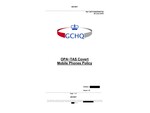
GCHQ Covert Mobile Phones Policy [pdf]
A 2010 GCHQ policy lays out strict, granular rules for covert mobile phone use by traveling operatives, mandating geofenced device discipline around Cheltenham, non-attributable communications, and hard separations from personal devices to minimize traceability and exposure. It’s a clinical OPSEC playbook for the management plane of human mobility—battery pulls, charging only at the airport or destination, out‑of‑area routing—designed to reduce the digital exhaust that links officers to headquarters.
Marking: SECRETPrograms: TRYST -
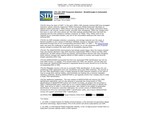
GSM Temporary Selectors - Breakthroughs in Automated Identification SIDtoday [pdf]
It has always frustrated analysts when GSM cellular networks implement Temporary Mobile Subscriber Identities, which obscure a code, known as IMSI, that uniquely and persistently identifies the cellphone. The "ASSOCIATION" program has solved this problem by mapping TMSI to IMSI.
The Intercept ↗ (2018-03-01) -
Guide to Using Contexts in XKS Fingerprints [pdf]
This technical guide explains how NSA analysts use "contexts" within XKEYSCORE fingerprints to create highly targeted surveillance queries by restricting searches to specific scopes (e.g., web searches, document bodies, geographic locations), enabling precision targeting such as finding "all people in Kabul performing web searches on Jihad" while avoiding the overwhelming noise of broader keyword searches.
-
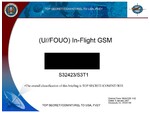
In-Flight GSM [pdf]
This NSA presentation outlines how the agency is reacting to the growth of mobile phone services on board commercial aircraft.
-
Metadata Sharing Memorandum (2005) [pdf]
This 2005 NSA memorandum outlines plans to expand and formalize intelligence community–wide sharing of SIGINT-derived metadata beyond NSA, centering on the CRISSCROSS/PROTON program while balancing legal, operational, and source-protection concerns. It proposes a federated query model to increase access without further duplicating sensitive data outside NSA.
-
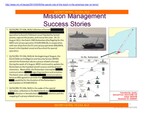
Mission Management Success Stories [pdf]
This document details a joint intelligence operation between the NSA and the Dutch Defense Intelligence and Security Service (MIVD) targeting Somali piracy. This document outlines how the NSA provided the Dutch flagship HMS Rotterdam with specialized intercept capabilities during Operation OCEAN SHIELD in 2012. This collaboration directly facilitated a successful special operation on 13 August 2012, which resulted in the rescue of a hijacked Pakistani vessel's crew and the capture of several pirates.
-
Mobile apps doubleheader: BADASS Angry Birds [pdf]
A joint GCHQ/GTE/CSEC presentation describing BADASS — the BEGAL Automated Deployment and Survey System for rapidly developing and deploying mobile app exploitation rules — illustrated through detailed analysis of Angry Birds' Dataflurry analytics traffic leaking IMEI, IMSI, cell network metadata and device identifiers, alongside AdMob, Mobclix and Mydas ad network traffic leaking UDIDs and IMEIs across iOS, Android, BlackBerry and Windows Phone 7 platforms.
Programs: BADASS · BEGAL · SEM · UNIQUELYCHALLENGED · BLACKHOLE · MOUNTAINVIEW · VOB · BABELFISH · BISHOP · MVR · PPF · AEG · DATAFLURRY -
PHANTOM PARROT [pdf]
This document discusses PHANTOM PARROT, a GTAC tool used for querying mobile phone data collected from individuals stopped at UK ports as part of the ITT Op WILDWAY initiative. The tool allows intelligence analysts to access phonebook, SMS, and call log data from these stops, which can be used for counter-terrorism efforts. Data is obtained under the Terrorism Act 2000, and the tool is part of a broader intelligence-gathering effort, eventually to be integrated into the LUCKY STRIKE project.
Programs: PHANTOM PARROT · WILDWAY · RANNOCH MOOR · LUCKY STRIKE · LOOKING GLASS · DISHFIRE · CORINTH · MOONRAKER · RUSSETT -
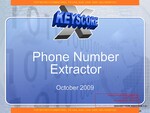
Phone Number Extractor [pdf]
A top secret XKEYSCORE training document from October 2009 describing the Phone Number Extractor capability, which automatically identifies and extracts telephone numbers from intercepted internet traffic including website content, email signature blocks, HTTP GET requests from mobile devices, HTTP POST submissions, and converged DNR/DNI collection — with operational examples targeting Iran, Lebanon, and Pakistan.
-
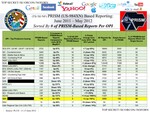
Presentation on the spying program PRISM and ECC's participation [pdf]
This presentation provides statistics on the PRISM surveillance program, detailing intelligence reporting and target tasking across various NSA units and partners from 2011 to 2013. The data reveals that while not the top producer by volume, the European Cryptologic Center (ECC) was the most proportionally reliant on PRISM, which constituted over half of its intelligence output.
-
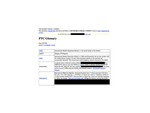
PTC Glossary [pdf]
This GCWiki PTC Glossary excerpt defines SIGINT-related telecom terms—IMEI, IMSI, INMARSAT—and documents internal collection systems (e.g., INCENSER at Bude) and targeting notes (which identifiers are useful for targeting and which are not). It’s a technical reference for signals analysts describing selectors, collection sources, and operational caveats.
“Vodafone – der lange Arm des britischen Geheimdienstes?” - WDR ↗ (2014-11-20) · “Spy cable revealed: how telecoms firm worked with GCHQ” - Channel 4 ↗ (2014-11-20) · “Der lange Arm des Geheimdienstes?” - NDR ↗ (2014-11-21) · “Snowden-Leaks: How Vodafone-Subsidiary Cable & Wireless Aided GCHQ’s Spying Efforts” - Süddeutsche Zeitung ↗ (2014-11-25) · Restle, Georg · White, Geoff · Strozyk, Jan · Moltke, Henrik · Poitras, Laura · Obermaier, Frederik