Tag: DoD 18 documents
Search documents matching “DoD” →Free-text subjects the curators added. Unlike the other axes these are not necessarily from the documents' own vocabulary, so they are the loosest thing to browse by (and the most forgiving).
Graphs
By Banner
By Classification
Refine (combine with another filter, via search)
Sort: Title
Documents
-
DoD 2011 Strategy for Operating in Cyberspace – Supply Chain Excerpts [pdf]
The classified 2011 Department of Defense strategy warns that U.S. reliance on foreign manufacturing—especially from countries like China—creates major cybersecurity risks, including the potential insertion of malicious hardware or software into critical systems. It outlines a government-wide plan to mitigate these supply chain vulnerabilities through coordinated policies, risk management strategies, and collaboration with industry.
-
Intelligence Campaign Planning: The Future of DoD Planning SIDtoday [pdf]
The Defense Department is developing a new process for integrating intelligence operations into planning for combat campaigns. New plans from each of the Combatant Command centers will develop in tandem with advisers from the NSA rather than as separate parallel processes.
Marking: SECRETThe Intercept ↗ (2017-09-13) -
SID Linguists Train DoD Polygraphers SIDtoday [pdf]
Signals Intelligence Directorate linguists with field experience helped train Department of Defense polygraphers before deployment to Afghanistan, where polygraphs are increasingly used to vet local informants and potential employees, with an interpreter as an intermediary.
Marking: SECRETThe Intercept ↗ (2018-08-15) -
2009: A Watershed Year in the Fight Against Terrorism SIDtoday [pdf]
SIDtoday celebrated “a watershed period in the fight against terrorism and radical extremist groups,” noting that the NSA first discovered Najibullah Zazi’s email connections to Al-Qaeda operatives in Pakistan.
Programs: SCQAWKPeople: Zazi, Najibullah -
Announcing the Birth of the JFCC-ISR SIDtoday [pdf]
A new office of U.S. Strategic Command called the Joint Functional Component Command for Intelligence, Surveillance, and Reconnaissance will house representatives of the NSA, National Geospatial Agency, and Defense Intelligence Agency to coordinate intelligence that directly supports global combat missions.
People: Cusick, JimThe Intercept ↗ (2017-09-13) -
Building Our House of Stone SIDtoday [pdf]
DOD acquisition documents are so difficult to understand that SID held a workshop on the meaning of "architectures" within the IT acquisition process.
Programs: DODAFPeople: Barton, Kevan L.The Intercept ↗ (2016-12-07) -
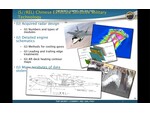
Chinese Exfiltrate Sensitive Military Technology [pdf]
This TOP SECRET NSA SIGINT development briefing describes large-scale Chinese cyber espionage that exfiltrated sensitive U.S. military technologies and inflicted extensive operational, financial, and strategic damage on Department of Defense systems. The document emphasizes both the scale of losses and the role of SIGINT in detecting, understanding, and mitigating adversary malware.
Programs: BYZANTINEHADES -
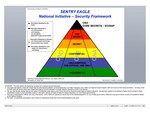
CNO Core Secrets Security Structure [pdf]
A 3-slide NSA presentation outlining the classification architecture of Sentry Eagle, a national cyber operations initiative, showing how its most sensitive components — covering network hacking, encryption sabotage, and covert industry relationships — are locked behind ECI and SAP designations accessible only to a tiny circle of government officials.
Programs: SENTRYEAGLE · SENTRYHAWK · SENTRYFALCON · SENTRYOSPREY · SENTRYRAVEN · SENTRYCONDOR · SENTRYOWL -
E-Space: A Good Name for a Star Trek Movie?!?!? SIDtoday [pdf]
Description of the little-known Electromagnetic-Space program office, which appears to be concerned with jamming: "One of its primary goals is to provide integrated, full-spectrum views of an adversary's electromagnetic space to enable the development of capabilities and operational courses of action to support Information Operations."
Programs: E-SpaceThe Intercept ↗ (2016-12-07) -
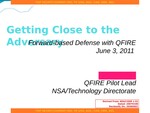
Getting Close to the Adversary – Forward-based Defense with QFIRE (June 3, 2011) [pdf]
This document describes the QFIRE project which is designed to give the NSA a global, low-latency platform for “forward-based defense”, enabling real-time detection and manipulation of Internet traffic close to its source. By co-locating passive sensors (TURMOIL), decision logic (TURBINE), and injection capabilities, QFIRE can rapidly reset connections, redirect targets for exploitation, inject malicious payloads, and even seize control of botnets. It operates as part of the broader QUANTUMTHEORY architecture, leveraging both cooperative and non-cooperative infrastructure worldwide to enable CNE/CND/CNA effects with minimal delay.
Programs: QFIRE · QUANTUMTHEORY · TURBULENCE · TURMOIL · TURBINE · TUTELAGE · QUANTUM · QUANTUMSKY · QUANTUMINSERT · QUANTUMBOT · QUANTUMCOPPER · STRAIGHTBIZARRE · BLINDDATE · TUMULT · ISLANDTRANSPORT · SURPLUSHANGAR · MIDDLEMAN · SCSnet · WEALTHYCLUSTER · SSO -
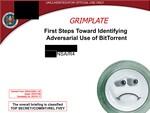
GRIMPLATE - First Steps Toward Identifying Adversarial Use of BitTorrent [pdf]
This document outlines the NSA's GRIMPLATE program, which was developed to monitor and analyze BitTorrent traffic on the Department of Defense's NIPRnet to identify potentially malicious activity. The program focuses on crawling the Distributed Hash Table (DHT) of BitTorrent networks to gather data on file-sharing nodes and peer connections, in order to detect and mitigate threats while building a case for halting unauthorized P2P usage on secure networks.
-
New SID Directive: Providing SIGINT Technology to Non-SIGINT Elements SIDtoday [pdf]
A new Signals Intelligence Directorate directive describes how to use signals intelligence technology for locating targets that are not part of the SIGINT system (such as electronic warfare targets).
The Intercept ↗ (2018-08-15) -
New Staff Supports Network Attack SIDtoday [pdf]
In the summer of 2004, DIRNSA got new responsibilities. In addition to computer network exploitation, which involved hacking networks and extracting information, NSA will be in charge of computer network attack, which are "operations to disrupt, deny, degrade, or destroy information resident in computers and computer networks, or the computers and networks themselves." Lt. Gen. Michael Hayden established the Network Attack Support Staff organization to support these responsibilities.
The Intercept ↗ (2017-04-24) -
NSA inspector general report on email and internet data collection under Stellar Wind, 24 March 2009 [Working Draft] [pdf]
This 2009 NSA Inspector General draft report details the origins and legal framework of the President’s Surveillance Program (PSP), launched after 9/11 to bypass FISA limits and authorize bulk interception of internet and telephony content and metadata, including communications with one end inside the U.S. It reveals how NSA, with White House backing, expanded surveillance authority to cover “collection gaps” that existing law didn’t allow, effectively legalizing large-scale warrantless spying under a secret presidential directive.
People: Bush, George W. · Hayden, Michael · Tenet, George · Gonzales, Alberto R. · Addington, David S. · Graham, Robert · Deitz, Robert L. · Shelby, Richard · Pelosi, Nancy · Cheney, Dick · Libby, I. Lewis · Lamberth, Royce · Inouye, Daniel · Levin, Daniel · Stevens, Theodore · Kollar-Kotelly, Colleen · Rockefeller, Jay · Alexander, Keith B. · Potenza, Vito -
Presidential Policy Directive/PPD-20 [pdf]
Eighteen-page presidential memo reveals how Barack Obama has ordered intelligence officials to draw up a list of potential overseas targets for US cyber attacks.
-
SID Needs Your Help: Take 5 Minutes SIDtoday [pdf]
SID Chief of Staff Charles Berlin personally asks everyone who works for SID to help inventory equipment and find all missing equipment worth $5,000 or more.
People: Berlin, CharlesThe Intercept ↗ (2016-08-10) -
Tailored Access Operations 2007 [pdf]
This NSA document describes the Tailored Access Operations (TAO) division, which conducts sophisticated cyber operations to penetrate and maintain persistent access to target networks globally through both remote exploits and physical interdiction methods. The presentation outlines TAO's organizational structure, mission capabilities across telecommunications and data networks, development of hardware/software implants for devices ranging from servers to SCADA systems, collaboration with HUMINT partners for physical access operations, and specialized divisions focused on exploiting telephony systems, computer networks, and developing tools for computer network attack and exploitation.
-
Voice Biometrics Capability Proven During Recent Technology Demonstration SIDtoday [pdf]
The Coordinate Operational Resources for Voice Exploitation Technology (CORVET) project, managed by the Expeditionary SIGINT Services Office (ESSO), demonstrated a promising capability for voice biometrics that could be used in security operations to identify individuals based on voice characteristics. Similar to the long-established method of fingerprinting, CORVET aims to create a database of voice models that could be used for identification in various contexts, such as detention and force-protection scenarios.