Publisher: The Intercept 489 documents
Search documents matching “The Intercept” →Who published each document. Mostly a news outlet, but sometimes a book. A partner outlet that reported the story without publishing the documents keeps its byline and its article, but is not a publisher here.
Graphs
By document date (14 years)
By Banner
By Classification
Refine (combine with another filter, via search)
Sort: Title
Documents
-
Laws on interception - Oversight - Implications for JCE (JCE UK Legalities Context) [pdf]
This GCHQ training presentation on UK surveillance laws, oversight mechanisms, and implications for Joint Collaborative Environment operations explicitly acknowledges that the UK has "a light oversight regime compared with US," detailing how RIPA, ISA, commissioners, and the Investigatory Powers Tribunal function to provide legal authorization while noting the Tribunal has "always found in our favour."
Programs: JTRIG -
Leaky phone apps [pdf]
These GCHQ slides describe the "WARRIOR PRIDE" mobile intrusion capability being ported to iPhone and Android, with plugins for power management, remote microphone, high‑precision geolocation, kernel stealth, and self‑protection. It claims the ability to retrieve almost any content from infected phones (SMS/MMS, email, call records, photos, calendar, etc.). Part of GCHQ's project "Mobile Applications Project".
Programs: Mobile Applications Project · WARRIORPRIDE · DREAMYSMURF · NOSEYSMURF · TRACKERSMURF · PORUS · PARANOIDSMURF -
Learning to Love English SIDtoday [pdf]
In this SIDtoday article Chief Warrant Officer John Berry reflects on his journey to appreciating the nuances of the English language, from early advice by a mentor in journalism to his experiences as a technical writer.
People: Berry, John F. -
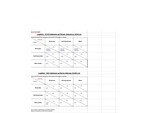
Legalities - GCHQ Databases eg Pilbeam, Salamanca, UDAQ etc [pdf]
This October 2007 GCHQ document outlines the legal authorization requirements for querying surveillance databases, revealing that GCHQ analysts can search their own databases (like PILBEAM, SALAMANCA, UDAQ) for metadata on anyone regardless of nationality without additional authorization, while NSA databases (like MARINA, MAINWAY, DISHFIRE) prohibit searches for Americans and other Five Eyes citizens but permit searches for UK persons.
-
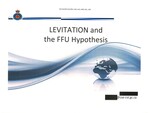
LEVITATION and the FFU Hypothesis [pdf]
This document describes LEVITATION, a top-secret Canadian Communications Security Establishment (CSE) project that monitors millions of daily file uploads and downloads from free file-sharing sites to identify potential extremist activity. It details the program’s data collection methods, analytical workflow, use of partner databases, and examples of successful discoveries related to terrorist materials and hostage videos.
-
Linguistic Resource Sharing in Asia-Pacific Region Takes Step Forward SIDtoday [pdf]
This document highlights a significant development in linguistic resource sharing within the Asia-Pacific region, where NSA Hawaii initiated the first successful voice cut exchange among SIGINT Seniors Pacific (SSPAC) members in June 2007. The use of the CRUSHED ICE data-sharing network to facilitate this exchange marks a key step in enhancing collaborative counterterrorism efforts by expanding the linguistic resources available for terrorist communications analysis.
Programs: CRUSHEDICE -
Lobban NSA Visit Précis [pdf]
This document is a formal briefing for a April 2013 visit by GCHQ Director Sir Iain Lobban to the NSA. The visit aimed to reinforce the Five Eyes partnership by discussing sensitive topics including supervised access to FAA Section 702 data ("Triage 2.0"), coordinated cyber and SIGINT strategies for Syria and Iran, and the implementation of the Global Collaboration Environment (GCE).
-
Longest Shifts: Working Overtime in Pursuit of SIGINT (part 2: conclusion) SIDtoday [pdf]
To mark Labor Day, SIDtoday shared stories from NSA personnel about their longest shifts. The accounts highlighted the dedication, stress, and sacrifice involved in supporting critical SIGINT operations, from intense 48-hour shifts during military operations to working long hours in extreme conditions like snowstorms or following major events like 9/11.
People: Blum, H. Steven -
LOVELY HORSE – GCHQ Wiki Overview [pdf]
This February 2012 GCWiki page describes LOVELY HORSE, a GCHQ initiative to collect, index, and distribute open-source intelligence from cybersecurity blogs and Twitter accounts to analysts on classified networks, utilizing JTRIG's BIRDSTRIKE architecture to scrape content from approximately 60 sources including security researchers, hacktivist groups like Anonymous and LulzSec, and cybersecurity companies, with legal approval from MP-LEG (Mission Policy-Legal).
Programs: LOVELYHORSE · HAPPYTRIGGER · BIRDSEED · JTRIG · BIRDSTRIKE · MERAPEAK · LEXHOUND · JEDI · DISCOVER -
M7600 & M8300 SIGINT guide [pdf]
3 p.This document describes the Mission 7600 and Mission 8300 satellite systems, which are geostationary SIGINT platforms operated by the U.S., U.K., and Australia to collect, process, and forward COMINT, ELINT, FISINT, MASINT, and PROFORMA signals primarily from the Eurasian landmass and Africa. It details orbital characteristics, collection capabilities, geolocation functions, and operational benefits, emphasizing real-time data dissemination to NSA and the integration of multi-mission, cross-site operations for high-priority intelligence targets.
-
Malware Analysis & Reverse Engineering – ACNO Skill Levels [pdf]
A GCHQ competency profile defines the “Malware Analysis & Reverse Engineering” skill (ACNO Skill 12), detailing required knowledge, hands-on abilities, and a graded proficiency ladder from novice to community-recognized expert. It codifies tradecraft spanning exploitation, static/dynamic analysis, anti-analysis countermeasures, and tooling (including IDA Pro), aligning outcomes from detection through mitigation advice.
Marking: SECRET -
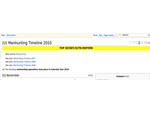
Manhunting Timeline 2008 - Intellipedia [pdf]
This document is an archived Intellipedia entry titled "Manhunting Timeline 2008," a collaborative wiki used by the U.S. Intelligence Community to track high-value targeting operations. It catalogs a global series of assassinations, captures, and military strikes against state officials and militant leaders, ranging from the arrest of the "Merchant of Death" to clandestine naval commando operations.
Programs: LORAINAPeople: Sulayman, Muhammad · al-Masri, Abu Khabab · Mursi, Midhat · Karadžić, Radovan · Ayrow, Aden Hashi · Ayro, Aden Hashi Farah · Nuristani, Mohammad Tamim · Hekmatyar, Gulbuddin · Khan, Kashmir · Bout, Viktor · Bush, George W. · Obama, Barack · Jones, James L. · Nabhan, Saleh Ali Saleh · Musharraf, Pervez · Kayani, Ashfaq Parvez · Kulick, Amir · bin Laden, Osama · Sarkozy, Nicolas -
Manhunting Timeline 2010 [pdf]
The Intellipedia manhunting timeline for 2010, recording the United States urging Australia, the United Kingdom and Germany on 10 August to consider criminal charges against WikiLeaks founder Julian Assange — described as focusing the legal element of national power on Assange and the network supporting WikiLeaks.
-
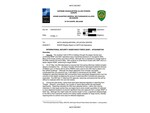
May 2011 Nato Afghanistan Intelligence Report [pdf]
A May 2011 SHAPE weekly report to NATO HQ assessing ISAF operations in Afghanistan — including a major failed Taliban spring offensive in Kandahar, insurgent cache dispersal tactics, and the limited impact of bin Laden's death on Taliban operational capacity — alongside an update on Operation Unified Protector in Libya covering the Misrata siege and Gaddafi regime military activity.
Marking: NATO SECRET -
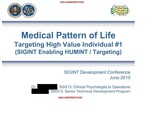
Medical Pattern of Life - Targeting High Value Individual #1 - (SIGINT Enabling HUMINT / Targeting) [pdf]
This presentation dates from June 2010 and outlines a highly specialized intelligence strategy: using a target's medical needs as a "geospatial beacon" to bypass traditional security measures. In this context, High Value Individual #1 (HVI #1) refers to Osama bin Laden (UBL), and the document details a plan to track him via his suspected chronic kidney disease and related medical supplies.
People: bin Laden, Osama -
Menwith collection assets SIDtoday [pdf]
In 2009, Menwith Hill Station (MHS) planned to receive two new satellites to expand its signals intelligence collection capabilities, enabling broader coverage of China, Afghanistan, Pakistan, Latin America, the Middle East, and North Africa. The new assets were intended to enhance mission flexibility, support FORNSAT collection, and provide the intelligence community with opportunities for discovery, analysis, and sustained monitoring from space.
-
Menwith continues successful counterterrorism survey along Af-Pak border [pdf]
Menwith Hill Station (MHS) conducted a counterterrorism surveillance operation along the Afghanistan-Pakistan border using the DARKSIDE collection system, successfully intercepting and processing microwave communications to gather actionable intelligence on terrorist activities. The operation, enhanced by Phase II hardware and coordinated with regional target offices, allowed dynamic capture and analysis of multiple signals to support ongoing counterterrorism efforts.
-
Menwith databases as of Aug 2008 [pdf]
This document outlines database access and SIGINT missions at Menwith Hill Station (MHS) as of August 2008, detailing the specific programs, language branches, and target development teams supported, including repositories like DISHFIRE, MAINWAY, and PINWALE. It also notes that U.S. personnel use the SIGINT Contact Center (SCC) process for access, with certain NOFORN restrictions, and lists additional analytic tools available to MHS analysts.
Marking: CONFIDENTIALPrograms: ASSOCIATION · DISHFIRE · HOMEBASE GEO · MAINWAY · NUCLEON · PINWALE · SPOTBEAM · XKEYSCORE · BANYAN · BROOMSTICK · CULTWEAVE II · MARINA · TRAFFICTHIEF · FASCIA · OCTSKYWARD · ROADBED · TUNNINGFORK · AGILITY · CADENCE · CONTRAOCTAVE · GAMUT · UTT · NKB · OCTAVE · PUZZLECUBE · TKB -
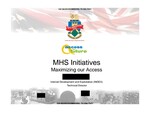
Menwith initiatives maximizing our access [pdf]
11 p.This document details Menwith Hill Station’s initiatives to maximize and optimize SIGINT collection, processing, and exploitation, including large-scale monitoring of internet and communications traffic, metadata analysis, and cross-platform target tracking. It describes programs and techniques for surveying, processing, and exploiting signals, enabling analysts to identify, geolocate, and track targets across multiple networks and devices.
Programs: ASPHALT · BLACKTOP · TARMAC · GTE · INDEX · ROADBED · DARKQUEST · EVIL EYE · Spider · SHAREDVISION · QUEST · NOSEYPARKER · XKEYSCORE · GRANDPIANO · FOGHORN · BASSQUEST · APPARITION · MUTANT BROTH · KARMAPOLICE · SOCIALANIMAL · MEMORY HOLE · TURBULENCE · TELLURIAN · MAILORDER · AUTO ASSOC · SLR · BLACKHOLE · JTRIG · PPF · LECKWITH · SCEPTRE · CLOUDPeople: Alexander, Keith B.“GCHQ taps fibre-optic cables for secret access to world's communications” - The Guardian ↗ (2013-06-21) · “Inside Menwith Hill: The NSA’s British Base at the Heart of U.S. Targeted Killing” - The Intercept ↗ (2016-09-06) · MacAskill, Ewen · Borger, Julian · Hopkins, Nick · Davies, Nick · Ball, James · Gallagher, Ryan -
Menwith satellite classification guide [pdf]
This document outlines Missions 7500 (MERCURY/MC) and 7600 (ORION/RIO) — advanced geosynchronous satellite systems operated from Menwith Hill Station (MHS) UK and Pine Gap (Australia) that provide near-continuous SIGINT coverage across Eurasia and Africa. These systems collect and geolocate a wide range of military, political, and technical communications, supporting NSA intelligence operations while maintaining strict cover protocols for facility and personnel identities.