May 2011 Nato Afghanistan Intelligence Report
Open PDFDocument date: 2011-05-13
Pages: 3
Genre: report
Banner: NATO SECRET
Classification: NATO SECRET
Dissemination: -
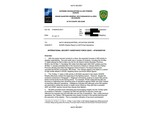
A May 2011 SHAPE weekly report to NATO HQ assessing ISAF operations in Afghanistan — including a major failed Taliban spring offensive in Kandahar, insurgent cache dispersal tactics, and the limited impact of bin Laden's death on Taliban operational capacity — alongside an update on Operation Unified Protector in Libya covering the Misrata siege and Gaddafi regime military activity.
My notes
NATO SECRET
NATO
OTAN
VIGILIA PRETIUM LIBERTATIS
SUPREME HEADQUARTERS ALLIED POWERS
EUROPE
GRAND QUARTIER GÉNÉRAL DES PUISSANCES ALLIÉES
EN EUROPE
B-7010 SHAPE, BELGIUM
Our ref: 1305/SOC/SCT
Date: 13 May 11
Tel: +32-(0)[REDACTED] (Operator)
Tel: +32-(0)[REDACTED] + ext
NCN: [REDACTED] + ext
Fax: +32-(0)[REDACTED] (Registry)
TO: NATO HEADQUARTERS, SITUATION CENTRE
SUBJECT: SHAPE Weekly Report on NATO-led Operations
INTERNATIONAL SECURITY ASSISTANCE FORCE (ISAF) – AFGHANISTAN
Overview
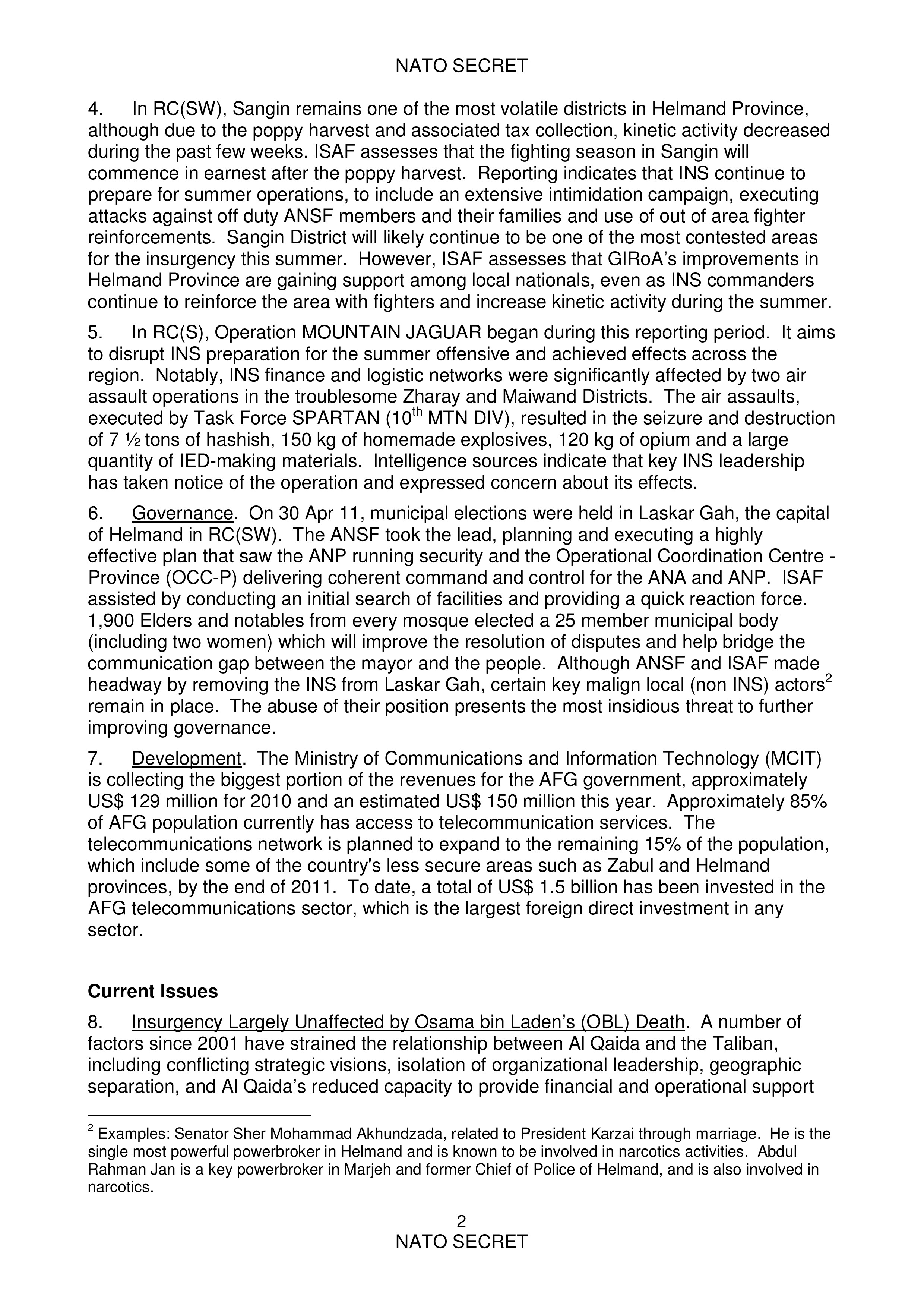
- Security. The southern half of AFG is halfway through the poppy harvest and continuing ANSF and ISAF operations have maintained pressure on insurgents (INS). Most of the kinetic activity occurred in RC(E), although this is expected to change back to RC(SW) towards the end of May. INS continue to avoid direct contact with ISAF and to a lesser degree ANSF, preferring to target GIRoA.
- On 07 May, the INS attempted to execute their first spring offensive-related complex attack in Kandahar City. At least 4 Suicide Vehicle Borne Improvised Explosive Devices (SVBIED) and 14 Person Borne IEDs (PBIED) were used as the INS tried to attack nine key GIRoA buildings¹. Although the attack appeared more complex and better coordinated than any previous one, it still failed to outmanoeuvre the ANSF. ISAF intelligence reporting indicates INS commanders have expressed disappointment over the outcome of the attack considering the amount of planning effort involved and resources expended. The INS had 17 killed and 20 captured, resources and personnel that will be difficult to replicate within the next few weeks.
- During the past winter, cache finds have been featured regularly in reporting from Theatre. However, since March, the number of cache discoveries has decreased significantly. Reporting indicates the INS have adjusted tactics-rather than storing materials in a few large caches they are beginning to store smaller quantities of materials in more dispersed locations to prevent significant loss and captures from a single ANSF or ISAF find. Although this might make the caches harder to find, a significant disadvantage to the INS is that it prevents caches from being readily available for large events, thereby requiring them to control more area for effective dispersion.
¹ The Provincial Governors Palace, NDS HQ, Old Corps HQ and Police District Sub Station 1, among others.
1
NATO SECRET
NATO SECRET
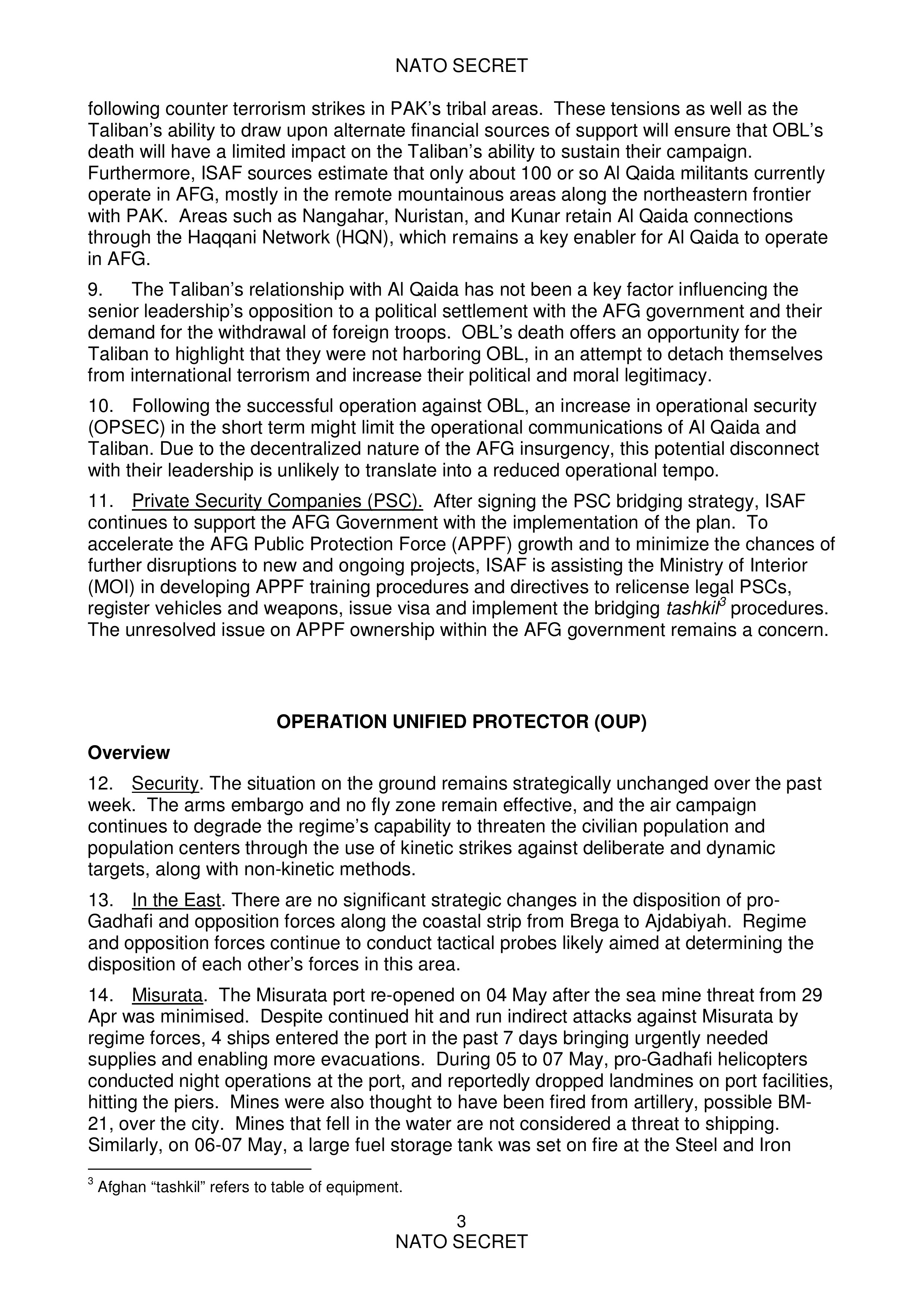
- In RC(SW), Sangin remains one of the most volatile districts in Helmand Province, although due to the poppy harvest and associated tax collection, kinetic activity decreased during the past few weeks. ISAF assesses that the fighting season in Sangin will commence in earnest after the poppy harvest. Reporting indicates that INS continue to prepare for summer operations, to include an extensive intimidation campaign, executing attacks against off duty ANSF members and their families and use of out of area fighter reinforcements. Sangin District will likely continue to be one of the most contested areas for the insurgency this summer. However, ISAF assesses that GIRoA's improvements in Helmand Province are gaining support among local nationals, even as INS commanders continue to reinforce the area with fighters and increase kinetic activity during the summer.
- In RC(S), Operation MOUNTAIN JAGUAR began during this reporting period. It aims to disrupt INS preparation for the summer offensive and achieved effects across the region. Notably, INS finance and logistic networks were significantly affected by two air assault operations in the troublesome Zharay and Maiwand Districts. The air assaults, executed by Task Force SPARTAN (10th MTN DIV), resulted in the seizure and destruction of 7 ½ tons of hashish, 150 kg of homemade explosives, 120 kg of opium and a large quantity of IED-making materials. Intelligence sources indicate that key INS leadership has taken notice of the operation and expressed concern about its effects.
- Governance. On 30 Apr 11, municipal elections were held in Laskar Gah, the capital of Helmand in RC(SW). The ANSF took the lead, planning and executing a highly effective plan that saw the ANP running security and the Operational Coordination Centre - Province (OCC-P) delivering coherent command and control for the ANA and ANP. ISAF assisted by conducting an initial search of facilities and providing a quick reaction force. 1,900 Elders and notables from every mosque elected a 25 member municipal body (including two women) which will improve the resolution of disputes and help bridge the communication gap between the mayor and the people. Although ANSF and ISAF made headway by removing the INS from Laskar Gah, certain key malign local (non INS) actors² remain in place. The abuse of their position presents the most insidious threat to further improving governance.
- Development. The Ministry of Communications and Information Technology (MCIT) is collecting the biggest portion of the revenues for the AFG government, approximately US$ 129 million for 2010 and an estimated US$ 150 million this year. Approximately 85% of AFG population currently has access to telecommunication services. The telecommunications network is planned to expand to the remaining 15% of the population, which include some of the country's less secure areas such as Zabul and Helmand provinces, by the end of 2011. To date, a total of US$ 1.5 billion has been invested in the AFG telecommunications sector, which is the largest foreign direct investment in any sector.
Current Issues
8. Insurgency Largely Unaffected by Osama bin Laden's (OBL) Death. A number of factors since 2001 have strained the relationship between Al Qaida and the Taliban, including conflicting strategic visions, isolation of organizational leadership, geographic separation, and Al Qaida's reduced capacity to provide financial and operational support
² Examples: Senator Sher Mohammad Akhundzada, related to President Karzai through marriage. He is the single most powerful powerbroker in Helmand and is known to be involved in narcotics activities. Abdul Rahman Jan is a key powerbroker in Marjeh and former Chief of Police of Helmand, and is also involved in narcotics.
2
NATO SECRET
NATO SECRET
following counter terrorism strikes in PAK's tribal areas. These tensions as well as the Taliban's ability to draw upon alternate financial sources of support will ensure that OBL's death will have a limited impact on the Taliban's ability to sustain their campaign. Furthermore, ISAF sources estimate that only about 100 or so Al Qaida militants currently operate in AFG, mostly in the remote mountainous areas along the northeastern frontier with PAK. Areas such as Nangahar, Nuristan, and Kunar retain Al Qaida connections through the Haqqani Network (HQN), which remains a key enabler for Al Qaida to operate in AFG.
- The Taliban's relationship with Al Qaida has not been a key factor influencing the senior leadership's opposition to a political settlement with the AFG government and their demand for the withdrawal of foreign troops. OBL's death offers an opportunity for the Taliban to highlight that they were not harboring OBL, in an attempt to detach themselves from international terrorism and increase their political and moral legitimacy.
- Following the successful operation against OBL, an increase in operational security (OPSEC) in the short term might limit the operational communications of Al Qaida and Taliban. Due to the decentralized nature of the AFG insurgency, this potential disconnect with their leadership is unlikely to translate into a reduced operational tempo.
- Private Security Companies (PSC). After signing the PSC bridging strategy, ISAF continues to support the AFG Government with the implementation of the plan. To accelerate the AFG Public Protection Force (APPF) growth and to minimize the chances of further disruptions to new and ongoing projects, ISAF is assisting the Ministry of Interior (MOI) in developing APPF training procedures and directives to relicense legal PSCs, register vehicles and weapons, issue visa and implement the bridging tashkil³ procedures. The unresolved issue on APPF ownership within the AFG government remains a concern.
OPERATION UNIFIED PROTECTOR (OUP)
Overview
12. Security. The situation on the ground remains strategically unchanged over the past week. The arms embargo and no fly zone remain effective, and the air campaign continues to degrade the regime's capability to threaten the civilian population and population centers through the use of kinetic strikes against deliberate and dynamic targets, along with non-kinetic methods.
- In the East. There are no significant strategic changes in the disposition of pro-Gadhafi and opposition forces along the coastal strip from Brega to Ajdabiyah. Regime and opposition forces continue to conduct tactical probes likely aimed at determining the disposition of each other's forces in this area.
- Misurata. The Misurata port re-opened on 04 May after the sea mine threat from 29 Apr was minimised. Despite continued hit and run indirect attacks against Misurata by regime forces, 4 ships entered the port in the past 7 days bringing urgently needed supplies and enabling more evacuations. During 05 to 07 May, pro-Gadhafi helicopters conducted night operations at the port, and reportedly dropped landmines on port facilities, hitting the piers. Mines were also thought to have been fired from artillery, possible BM-21, over the city. Mines that fell in the water are not considered a threat to shipping. Similarly, on 06-07 May, a large fuel storage tank was set on fire at the Steel and Iron
³ Afghan "tashkil” refers to table of equipment.
3
NATO SECRET
Published in the Same Report
(10 documents)
-
SIGINT Obtains Details of Usama bin Laden Message to Top al-Qa'ida Leader in Iraq SIDtoday [pdf]
A 2007 NSA SIDtoday article describing how SIGINT analysts intercepted and decoded a message from Osama bin Laden to al-Qaeda's leader in Iraq, revealing bin Laden's strategic thinking on the Iraq war, his anger toward the UAE, and the communications pathway used by senior al-Qaeda figures between Pakistan, Iran, and Iraq.
Programs: SCQAWK -
What Does the Death of Usama bin Laden Mean? SIDtoday [pdf]
A 2011 NSA SIDtoday interview with SID's Associate Deputy Director for Counterterrorism assessing the significance of Osama bin Laden's death, revealing that NSA played a central role in identifying his compound and providing force-protection support during the SEAL raid, while also disclosing that bin Laden had been invisible to SIGINT since 1998.
Programs: SCQAWK -
SIGINT Year in Review, November 2011 SIDtoday [pdf]
A 2011 year-in-review message from NSA SIGINT Director Teresa Shea summarizing the directorate's major operational and capability accomplishments over the past year, including SIGINT contributions to the killing of Osama bin Laden, operations against Anwar al-Awlaki and other al-Qaeda figures, and support for military campaigns and crises across the Middle East.
Programs: SCQAWK -
FY2013 Congressional Budget Justification Bin Laden Excerpts [pdf]
This document includes excerpts from the 2013 National Intelligence Program budget justification describing the integrated intelligence community efforts that led to locating and raiding Osama bin Laden's compound, detailing contributions from NSA's signal intelligence, CIA's geolocation analysis, NGA's imagery modeling, and post-raid forensic DNA confirmation.
People: bin Laden, Osama -
JTAC Attack Methodology Team [pdf]
This September 2011 GCWiki page describes GCHQ's Joint Terrorism Analysis Centre (JTAC) Attack Methodology Team, a thematic assessment unit staffed by secondees from various government and military departments with access to Five Eyes intelligence, specializing in analyzing Islamist weaponry, tactics, training, IED construction, and terrorist attack methodologies.
Programs: RUSSETT -
NCTC Current Status of Major Terrorism Figures [pdf]
A TOP SECRET joint HUMINT–COMINT status report from June 2008 summarizes the whereabouts and threat posture of senior al‑Qaida leaders, highlighting Usama bin Ladin, Ayman al‑Zawahiri, and a key courier assessed as critical to locating them. The document reflects U.S. intelligence tracking priorities just three years before bin Ladin’s death.
-
Interview with a SID "Hacker" -- Part 2: Hacker Culture and Worker Retention SIDtoday [pdf]
A SIDtoday internal NSA newsletter interview with a redacted TAO employee discussing hacker culture within the agency's offensive cyber unit, worker retention challenges, and the team's role in operations including the raid that killed Osama bin Laden.
Programs: SCQAWKPeople: bin Laden, Osama -
Regional Command Southwest Intelligence Report June 19 2011 [pdf]
A June 2011 intelligence summary from Regional Command Southwest in Afghanistan assessing the destabilizing aftermath of the Osama bin Laden raid on U.S.-Pakistan relations, Pakistani internal security, Taliban activity along the RC(SW) border, and local governance developments in Helmand Province.
-
Regional Command Southwest Intelligence Report June 23 2011 [pdf]
A June 2011 RC Southwest intelligence summary documenting a covert ALP-Taliban collusion arrangement in Nad'Ali district, and a separate intelligence report detailing Taliban internal supply shortages, infighting, and morale deterioration across northern Helmand Province in the aftermath of Osama bin Laden's death.
-
June 2011 Nato Afghanistan Intelligence Report [pdf]
A June 2011 SHAPE weekly report to NATO HQ assessing the state of ISAF operations in Afghanistan, covering Taliban command and control deterioration, insurgent supply shortages, the post-bin Laden strain on NATO's Pakistani logistics routes, and notable attacks across regional commands.
Marking: NATO SECRET
Related Documents
-
June 2011 Nato Afghanistan Intelligence Report [pdf]
A June 2011 SHAPE weekly report to NATO HQ assessing the state of ISAF operations in Afghanistan, covering Taliban command and control deterioration, insurgent supply shortages, the post-bin Laden strain on NATO's Pakistani logistics routes, and notable attacks across regional commands.
Marking: NATO SECRET -
Regional Command Southwest Intelligence Report June 19 2011 [pdf]
A June 2011 intelligence summary from Regional Command Southwest in Afghanistan assessing the destabilizing aftermath of the Osama bin Laden raid on U.S.-Pakistan relations, Pakistani internal security, Taliban activity along the RC(SW) border, and local governance developments in Helmand Province.
-
Regional Command Southwest Intelligence Report June 23 2011 [pdf]
A June 2011 RC Southwest intelligence summary documenting a covert ALP-Taliban collusion arrangement in Nad'Ali district, and a separate intelligence report detailing Taliban internal supply shortages, infighting, and morale deterioration across northern Helmand Province in the aftermath of Osama bin Laden's death.
-
What Does the Death of Usama bin Laden Mean? SIDtoday [pdf]
A 2011 NSA SIDtoday interview with SID's Associate Deputy Director for Counterterrorism assessing the significance of Osama bin Laden's death, revealing that NSA played a central role in identifying his compound and providing force-protection support during the SEAL raid, while also disclosing that bin Laden had been invisible to SIGINT since 1998.
Programs: SCQAWK -
SIGINT Year in Review, November 2011 SIDtoday [pdf]
A 2011 year-in-review message from NSA SIGINT Director Teresa Shea summarizing the directorate's major operational and capability accomplishments over the past year, including SIGINT contributions to the killing of Osama bin Laden, operations against Anwar al-Awlaki and other al-Qaeda figures, and support for military campaigns and crises across the Middle East.
Programs: SCQAWK