Publication year: 2014-12 64 documents
Search documents matching “2014-12” →When a publisher first published each document. If a document is published multiple times, only the oldest one is used here.
Graphs
By document date (6 years)
By published date (2 years)
Sort: Title
Documents
-
GCHQ – Making network sense of the encryption problem (2011) [pdf]
GCHQ’s Network Analysis Centre convened a 2011 roundtable on “making network sense” of encryption, pushing a metadata-first strategy to triage SSL/TLS, IKE, OpenVPN, and SSH flows, pivot from “seed” indicators, and zero in on targets and subnets worth decrypting. The playbook leans on enrichment, AS-level scoping (explicitly citing Belgacom AS6774 GRX VPNs), and “access optimisation” to collect data pre‑encryption—passively or actively.
Programs: SQUEAL · BEARDEDPIGGY · CLOUD · IRASCIBLEHARE · IRASCIBLERABBIT · IRASCIBLEMOOSE · IRASCIBLEEMITT“Operation Socialist: The Inside Story of How British Spies Hacked Belgium’s Largest Telco” - The Intercept ↗ (2014-12-13) · “Lees hier hoe de Britse geheime dienst GCHQ Belgacom aanviel” - NRC ↗ (2014-12-13) · “Britse geheime dienst bespioneerde jarenlang Belgacom-klanten” - De Standaard ↗ (2014-12-13) · Gallagher, Ryan · Modderkolk, Huib · Vanhecke, Nikolas · Eeckhaut, Mark -
India: Support to Terrorist Attacks in Mumbai [pdf]
A top secret NSA intelligence report on GCHQ's surveillance of Lashkar-e-Taiba technology chief Zarrar Shah before and during the November 2008 Mumbai attacks, documenting how analysis of his internet browsing and viewing habits revealed reconnaissance activity and operational planning against Mumbai targets including the Taj Hotel.
People: Shah, Zarrar“In 2008 Mumbai Attacks, Piles of Spy Data, but an Uncompleted Puzzle” - The New York Times ↗ (2014-12-21) · “In 2008 Mumbai Attacks, Piles of Spy Data, But an Uncompleted Puzzle” - ProPublica ↗ (2014-12-21) · “In 2008 Mumbai Attacks, Piles of Spy Data, but an Uncompleted Puzzle” - PBS ↗ (2014-12-21) · Glanz, James · Rotella, Sebastian · Sanger, David E. · Jennings, Tom · Peevey, Anna Belle · Nieling, Michael -
Internet Anonymity 2011 [pdf]
A TOP SECRET NSA presentation from 2011 providing a comprehensive survey of Internet Anonymity Technologies (IAT) — covering HTTP proxies, VPN anonymity providers, multi-hop networks including Tor and JAP, anonymous remailers and circumvention tools — alongside NSA's capabilities and limitations against each, including XKEYSCORE fingerprints for VPN identification, the PARTNERSNIPPET Tor deanonymisation team, GOLDENFORTIN Netflow data, and a candid assessment that Tor offers "no passive exploitation."
Programs: FOXTRAIL · NKB · NACIRONIN · PONTENTPOTABLES · RONIN · XKEYSCORE · PARTNERSNIPPET · GOLDENFORTIN · SNAPEPeople: Heap, Austin -
Intro to the VPN Exploitation Process [pdf]
NSA introduction to the VPN exploitation process from September 2010, presented by the OTP VPN Exploitation Team, covering the full workflow from initial collection through to sustained decryption of IPSec, PPTP, SSL and SSH traffic, with named exploitation successes including airlines, diplomatic missions, banks and intelligence services across Iran, Jordan, Russia, Turkey, Pakistan, Afghanistan, Somalia, Indonesia and Mexico.
Programs: BLEAKINQUIRY · TOYGRIPPE · XKEYSCORE · MAILORDER · CORALREEF · VULCANDEATHGRIP · SCISSORS · TURTLEPOWER · PINWALE · FOURSCORE · CADENCE · UTT · VULCANMINDMELD · CAPRIOS · AGILITY · NKB · FOLLOWTHEMONEY -
IR.21 – A Technology Warning Mechanism [pdf]
This 2010 TOP SECRET NSA briefing defines the IR.21 roaming document as a critical tool for "horizon scanning" and "forecasting" global telecommunications shifts. The document outlines how the NSA uses these technical files to proactively identify emerging 3G and 4G technologies, pinpointing vulnerabilities for exploitation before new systems are even fully deployed.
-
JPEL TARGETS [pdf]
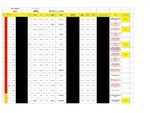
This anonymized Joint Prioritized Effects List (JPEL) roster reveals that NATO/ISAF maintained a large, systematically managed list of prioritized targets in Afghanistan—including mid‑ and low‑level insurgents, alleged drug traffickers, and local figures—used to authorize lethal and capture operations. The table shows priorities, regions, lead agencies, update requirements, and associated bounties, illustrating how targeting became bureaucratized and normalized across the campaign.
-
LONGHAUL [pdf]
An NSA WikiInfo page for LONGHAUL — the centralised end-to-end attack orchestration and key recovery service that sits at the heart of NSA's capability to break encrypted internet traffic, receiving cryptanalytic data from field collection systems, coordinating attacks against VPN and SSL/TLS encryption through child projects POISONNUT and SCARLETFEVER, and returning recovered keys to deployed CA Servers at collection sites worldwide.
Programs: LONGHAUL · MAILORDER · CASPORT · GECC · VIVIDDREAM · TURMOIL · WEALTHYCLUSTER · TUTELAGE · EINSTEIN · ISLANDTRANSPORT · HADOOP · NINJACOVE · JST · CST · VMM · VDG · ORDC · SCB · ISLANDHIDEAWAY · TURBULENCE · POISONNUT · SCARLETFEVER · HEROICSAND · PLATINUMRING · GALLANTWAVE · JEDIMINDTRICK · CHAOTICSTORMTROOPER · CORALREEF · SCUBADIVER2 · TERRACOTTA · HBASE · SCALA · MAPREDUCE · COALCAR · STOCKCAR · BEACHHEAD · MIDRIFT · WOLVERINESTAKE · NSP · PURGE · SURGE · C2DP · DOORS · HUDSON -
Net Defense from Encrypted Communications [pdf]
A NSA Technology Directorate briefing from February 2012 describing BLUESNORT — a capability that repurposes GALLANTWAVE's SSL/TLS decryption pipeline for network defence, re-injecting decrypted traffic into TURMOIL Stage 1 Prime where BLUESNORT detects malware and other malicious activity — representing description of NSA using its own bulk decryption infrastructure for cyber defence as well as intelligence collection.
-
NSA First-Ever Collect of High-Interest 4G Cellular Signal [pdf]
The memorandum documents a technical milestone achieved in January 2010: the first successful interception of Time Division-Long Term Evolution (TD-LTE) 4G communications. This collection was conducted at the RAINFALL site (the unclassified cover term for the Joint Defence Facility Pine Gap in Australia) and marked the transition of intelligence priority from 2G/3G systems to all-Internet Protocol (IP) 4G networks.
Programs: RAINFALL -
NSA/GCHQ/CSEC Network Tradecraft Advancement Team [pdf]
The "NSA/GCHQ/CSEC Network Tradecraft Advancement Team (NTAT) 2010" document describes a collaborative mission between the US, UK, and Canada to synchronize and advance SIGINT techniques. The NTAT focused on "Network Analysis Tradecraft," specifically integrating analysis tools such as IRASCIABLE RABBIT and TOYGRIPPE into CSEC's OLYMPIA and developing standardized "use cases" for tracking mobile networks and virtual private networks (VPNs).
-
OPULENT PUP Encryption Attack [pdf]
"OPULENT PUP encryption attack (GCHQ)" is a 2009 technical planning document from the British intelligence agency GCHQ. It outlines a "proof-of-concept demonstrator" for a new capability to intercept and decrypt GSM communications protected by the A5/3 algorithm, requiring a complete overhaul of the existing processing chain used for the older A5/1 standard.
Programs: OPULENTPUP -
OTR encrypted messages can't be decrypted by the NSA [pdf]
Three intercepted chat sessions from 16 March 2012 collected under PRISM, showing a target switching mid-conversation from unencrypted to OTR-encrypted messaging — with NSA able to collect the session metadata and unencrypted portions but unable to decrypt the OTR messages, each annotated "No decrypt available for this OTR encrypted message."
Programs: PRISM -
PGP encrypted email can't be decrypted by the NSA [pdf]
Two intercepted Yahoo email messages collected under FAA counterterrorism authority through PRISM (SIGAD US-984XN), both containing PGP-encrypted content that NSA was unable to decrypt — published by Der Spiegel as direct evidence that PGP encryption defeated NSA collection at the time of interception in January 2012.
Programs: PRISM -
POISONNUT [pdf]
NSA Wiki page describing POISONNUT — also known as the VPN Attack Orchestrator (VAO) — a LONGHAUL cryptologic exploitation service for IPSec VPN decryption that has existed in various forms since 2003, serving clients including TURMOIL, WEALTHYCLUSTER and the Transform Engine emulator via ISLANDTRANSPORT with ISLANDHIDEAWAY encryption.
Programs: POISONNUT · TURMOIL · WEALTHYCLUSTER · ISLANDTRANSPORT · ISLANDHIDEAWAY · LONGHAUL · OAKLEY · SCARLETFEVER · PICARESQUE · VALIANTSURF -
Report about Operation Doody - The Child of the Neighbor Shot By Accident [pdf]
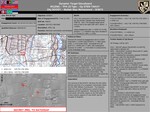
This Dynamic Target Storyboard documents a 7 Feb 2011 UK AH‑64 engagement (Op STEN TAKAY) against “Obj DOODY” (Mullah Niaz Muhammed, IS3673), a JPEL mid‑level Taliban commander, which culminated in an AGM‑114 miss that may have killed a local child and wounded another civilian, and a follow‑on 30mm strafing run that wounded the target.
People: Muhammed, Mullah Niaz -
SCARLETFEVER [pdf]
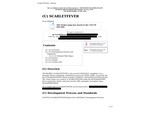
NSA WikiInfo page describing SCARLETFEVER — the second LONGHAUL cryptanalytic capability, a message-driven cryptologic exploitation service for DNSC (Data Network Session Cipher) traffic serving clients including TURMOIL, WEALTHYCLUSTER and the TEe, communicating via ISLANDTRANSPORT with ISLANDHIDEAWAY encryption.
Programs: SCARLETFEVER · LONGHAUL · TURMOIL · WEALTHYCLUSTER · TEE · ISLANDTRANSPORT · ISLANDHIDEAWAY · POISONNUT · PICARESQUE -
Secure Sockets Layer (SSL) / Transport Layer Security (TLS) [pdf]
A classified NSA Network Security Products training presentation providing a comprehensive technical overview of SSL/TLS protocol mechanics and NSA's exploitation approaches, including observed usage statistics from intercepted traffic, RSA key exchange decryption methodology, exploitation of the Debian OpenSSL RNG weakness, and the practical challenges of decrypting millions of SSL sessions per day at scale.
Programs: SCARLETFEVER -
SIGDEV Conference 2012 - Making Things Measureable: Technology Trending Challenges and Approaches [pdf]
An NSA presentation from the 2012 SIGDEV Conference describing NSA's technology trending methodology — a framework for identifying which encryption and communications technologies targets are adopting, measuring the SIGINT risk they pose, and prioritising capabilities development responses — notable for containing the risk matrix that was later cited in Der Spiegel's December 2014 encryption investigation showing NSA's difficulty levels against specific technologies including Tor, TrueCrypt, OTR and ZRTP.
Programs: XKEYSCORE · SEEKER · BIONICTURTLE · JEMA · JOLLYROGER · MARINA · TUNINGFORK · STARPROC · MICROEXPANSE · ECHOBASE · PRISM · GMHALO · UTT · TKB · LAE · FAMT · WPMO · AMOD · FORTREND · GAMBIT · DATAEXPLORER · MYNOC -
SIGINT Helps Hobble the Taleban by Cutting Off Their Livelihood SIDtoday [pdf]
This SIDtoday article (Feb 3, 2009) describes how SIGINT operations—led by NSA Georgia’s Southwest Asia Narcotics Division (FGS2F) with partners like NSAW and GCHQ—shifted counternarcotics efforts in Afghanistan from HUMINT to SIGINT, enabling real‑time targeting of traffickers and major seizures that disrupted Taliban funding. It credits SIGINT-driven support for large drug seizures, increased operational tempo, and the inclusion of traffickers on ISAF targeting lists.
-
SIGINT Strategy Threads 4 and 7 SIDtoday [pdf]
A TOP SECRET SIDToday article from September 2011 describing SIGINT Strategy Threads 4 and 7 — NSA's two classified programmes addressing the challenge of ubiquitous internet encryption — directing cleared analysts to BULLRUN-protected content covering capabilities against commercial webmail encryption used by CT targets and VPN traffic exploitation, with access requiring BULLRUN Community of Interest indoctrination.