Journalist: Greenwald, Glenn 214 documents
Search documents matching “Greenwald, Glenn” →Journalists bylined on the stories that published these documents. Contributors credited without a byline are searchable but not listed here.
Graphs
By document date (11 years)
By Banner
By Classification
Refine (combine with another filter, via search)
Sort: Title
Documents
-
Full-Spectrum Cyber Effects [pdf]
The leaked 2012 GCHQ JTRIG “Full-Spectrum Cyber Effects” presentation outlines the UK’s offensive cyber capabilities, detailing strategies to destroy, deny, degrade, disrupt, deceive, and influence targets across digital and physical domains. It describes a wide range of operations—from network attacks, spoofing, and psychological operations on social media to hotel surveillance (Royal Concierge), mobile tracking, and advanced vulnerability exploitation—demonstrating how GCHQ integrates cyber operations, intelligence, and information warfare on a global scale.
Programs: JTRIG · SALAMANCA · RADIUS · ROYAL CONCIERGE · BLACKHOLE · GUILTY SPARK · MIDDLESEX GREEN · PPF · HOTWIRE -
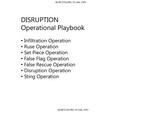
GCHQ - DISRUPTION Operational Playbook [pdf]
A JTRIG “Disruption Operational Playbook” outlines GCHQ’s online covert action toolkit to discredit people and companies, manipulate narratives, and execute false flag, sting, and infiltration operations across targets. It’s a blunt handbook for the four D’s—deny, disrupt, degrade, deceive—translating psychological warfare into clickable tactics on social platforms and forums.
Programs: JTRIG -
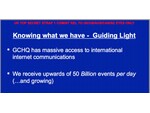
GCHQ access to international internet communications [pdf]
This document describes the scale of the agency's access to international internet communications, stating that GCHQ receives upwards of 50 billion events per day and that this volume is growing.
Programs: GUIDINGLIGHT“The US/UK Campaign to Demonize Social Media Companies as Terrorist Allies” - The Intercept ↗ (2014-11-26) · “No Place to Hide” - Metropolitan Books ↗ (2014-05-13) · Greenwald, Glenn -
GCHQ Application for Renewal of Warrant GPW/1160 [pdf]
GCHQ’s 2008 application to renew warrant GPW/1160 seeks blanket cover under ISA section 5 to reverse engineer and modify commercial software—explicitly breaching copyright and licensing—to enable CNE, vulnerability research, and even police forensics. It catalogues concrete ops against web forums, routers, and antivirus, and asserts a novel legal theory blessed by the Intelligence Services Commissioner to immunize intellectual‑property interference.
-
GCHQ Covert Mobile Phones Policy [pdf]
A 2010 GCHQ policy lays out strict, granular rules for covert mobile phone use by traveling operatives, mandating geofenced device discipline around Cheltenham, non-attributable communications, and hard separations from personal devices to minimize traceability and exposure. It’s a clinical OPSEC playbook for the management plane of human mobility—battery pulls, charging only at the airport or destination, out‑of‑area routing—designed to reduce the digital exhaust that links officers to headquarters.
Marking: SECRETPrograms: TRYST -
GCHQ Cyber Operations Against Anonymous and Hacktivist Groups [pdf]
The leaked 2012 GCHQ presentation reveals that the agency’s JTRIG unit conducted offensive cyber operations against Anonymous and other hacktivist groups, including DDOS attacks (codenamed “Rolling Thunder”), online infiltration, and covert intelligence collection to disrupt their communications and identify key members.
-
GCHQ Ministry Stakeholder Relationships Spreadsheets [pdf]
This document details GCHQ's strategic engagement and intelligence support across various UK government departments (e.g., Bank of England, FCO, MoJ, DECC) for 2008-2009, covering areas from economic stability and national security to social policy and infrastructure protection. Each departmental overview outlines specific GCHQ objectives, current headline issues, areas of impact, and intelligence products provided.
People: King, Mervyn · Gieve, John · Bailey, Andrew · Allen, Stuart · Brown, Gordon · Haywood, Jeremy · Fletcher, Tom · Catsaras, Nick · King, Simon · Cavanagh, Matt · Jacobs, Michael · Forsyth, Justin · Wood, Stuart · Hepburn, Eric · Groves, John · O'Donnell, Gus · Hannigan, Robert · McDonald, Simon · Cunliffe, Jon · Allen, Alex · Dowse, Tim · Wright, Chris · Grey, Sue · Johnson, Chris · Styles, Roger · Aldred, Margaret · Cleveland, Alexis · Taylor, Michael · Blears, Hazel · Housden, Peter · Scholefield, Susan · Williams, David · Freeman, Jonathan · Hasan, Jenan · Greaves, Daniel · Boyle, Louise · Whiting, Ed · Pyott, Ian · Usher, Peter · Balls, Ed · Bell, David · Gough, Hermione · Gibbens, Nigel · Anderson, Rodney · Anderson, Michael · Lebrecht, Andy · Cowan, Richard · Derwent, Henry · Dodwell, Chris · Thompson, Jan · Nixon, Tony · Perfect, Trevor · Miliband, Ed · O'Donnell, Rory · Wallace, Moira · Ruddock, Joan · O'Brien, Mike · White, Graham · Neve, John · Benn, Hilary · Ghosh, Helen · Alexander, Douglas · Shafik, Minouche · Lowcock, Mark · Fish, Dave · Warmington, Beverley · Manuel, Marcus · Wardell, Sue · Drummond, Jim · Conway, Gordon · Hendrie, Barb · Leigh, Andy · Dick, Kenny · Leith, Jennifer · Tilbrook, Richard · Kenningham, Andrew · Crawford, Patrick · Havelock, David · Welsh, Gordon · Gotts, Roger · Faulkner, Anthony · Johnson, Alan · Taylor, Hugh · Donaldson, Liam · Harper, David · Beavan, Penny · Ritchie, Judith · Woodall, Mike · Brain, Leon · Eckles, Graeme · McCarthy, Kraig · Eldon, Stuart · Sawers, John · Gass, Simon · Brinkley, Robert · Jenkins, John · Prentice, Christopher · Pringle, Anne · Ehrman, William · Sedwill, Mark · Phillipson, Antony · Noble, Andrew · Bethlehem, Daniel · Thomson, Adam · Johnston, Paul · Davenport, Michael · Rankin, John · Roberts, Colin · Wightman, Scott · Bronnert, Deborah · Bowman, Vicky · Hitchens, Tim · Wood, Adam · Manley, Simon · Choudhury, Anwar · Cowper-Coles, Sherard · Mather, Tony · Fraser, Simon · Grant, Mark Lyall · Leslie, Mariot · Gould, Matthew · MacFarland, David · Hickey, Stephen · Brooker, Catherine · Merron, Gillian · Flint, Caroline · Malloch-Brown · Rammell, Bill · Ricketts, Peter · Miliband, David · Sants, Hector · Robinson, Philip -
-
Guide to Using Contexts in XKS Fingerprints [pdf]
This technical guide explains how NSA analysts use "contexts" within XKEYSCORE fingerprints to create highly targeted surveillance queries by restricting searches to specific scopes (e.g., web searches, document bodies, geographic locations), enabling precision targeting such as finding "all people in Kabul performing web searches on Jihad" while avoiding the overwhelming noise of broader keyword searches.
-
HAPPY TRIGGER/LOVELY HORSE/Zool/TWO FACE – Open Source for Cyber Defence/Progress [pdf]
A TOP SECRET STRAP1 COMINT GCWiki page cataloguing GCHQ's open source intelligence gathering for cyber defence, listing approved and pending data sources fed into internal databases HAPPY TRIGGER, LOVELY HORSE, ZooL and TWO FACE, covering malware tracking, vulnerability intelligence, infrastructure mapping and domain monitoring.
Programs: HAPPYTRIGGER · LOVELYHORSE · TWOFACE · ZOOL · XKEYSCORE · POSITIVEPONY · NETPLATE · HIDDENSPOTLIGHT · SNORT · FOXTRAIL · REFRIEDCHICKEN · GEOFUSION · GLOBALSURGE · SHORTFALL · JTRIG · BIRDSEED · BIRDSTRIKE · MARBLEPOLLSPeople: Stewart, Joe -
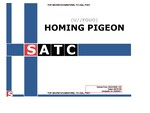
HOMING PIGEON [pdf]
Slides on a query-focused dataset that would correlate GSM handsets seen on two or more aircraft flights with their subscribers.
“US and Britain refine their ability to tap into airline passenger’s mobile phones while they are in the air” - Le Monde ↗ (2016-12-07) · “American and British Spy Agencies Targeted In-Flight Mobile Phone Use” - The Intercept ↗ (2016-12-07) · “No Place to Hide” - Metropolitan Books ↗ (2014-05-13) · Follorou, Jacques · Greenwald, Glenn -
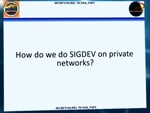
How do we do SIGDEV or private networks? [pdf]
Top Secret SIGINT Development (SIGDEV) briefing explains how analysts conduct reconnaissance on private networks, noting that many targets rely on them and that 30–40% of traffic surveyed in BLACKPEARL has at least one private endpoint. It demonstrates the ROYALNET tool and its analytics for identifying network features, NetStrings, and links likely to carry a target’s traffic, with named targets and feature sets including Google’s infrastructure, the SWIFT banking network, the French Ministry of Foreign Affairs, Brazil’s Petrobras, and Huawei.
People: Higgins, Jean -
How to configure category throttling in XKEYSCORE [pdf]
An NSA technical guide explains how to configure "category throttling" in XKEYSCORE—a feature that automatically stops forwarding intercepted communications once analyst-defined collection targets hit predetermined data volume or session count limits, allowing the surveillance system to continue processing but prevent overflow from high-volume targets.
-
HTTP Activity vs User Activity [pdf]
This NSA training document from June 2009 explains the distinction between HTTP Activity (general web browsing data) and User Activity (communications metadata from specific protocols like webmail and chat) within the XKEYSCORE surveillance system, demonstrating through Iranian examples how analysts combine both search types to develop comprehensive intelligence on targets.
Programs: XKEYSCORE · MARINA · FOXTRAIL · DECODEORDAIN · YACHTSHOP · BRUTUS · WINDCHASER · NKB · UIS · STARPROC -
I hunt sys admins [pdf]
These internal documents outline the NSA’s strategy for identifying and targeting foreign system administrators to gain "keys to the kingdom" access to global network infrastructure. By correlating disparate datasets—such as passive telnet/SSH metadata and personal social media/webmail logins—the agency identifies personal accounts to facilitate QUANTUM-based hacking operations and network "pwnage."
-
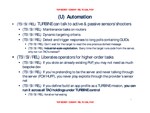
Industrial-Scale Exploitation [pdf]
This top-secret NSA document details the operational philosophy behind the TURBINE system's transition to "industrial-scale exploitation." By integrating with both active and passive sensors, TURBINE automates the delivery of malware and the maintenance of network implants, specifically targeting routers and server-side code execution.
-
Innov8 Experiment Profile Template [pdf]
A TOP SECRET STRAP1 joint NSA/GCHQ experiment profile documenting a 2010-2011 Joint Capability Experiment to test hardware-accelerated bulk decryption of common internet encryption technologies at scale, integrating TURMOIL's passive collection with NSA's LONGHAUL key recovery service via the ISLANDTRANSPORT messaging system, as part of the broader BULLRUN assault on internet encryption.
“Prying Eyes: Inside the NSA's War on Internet Security” - Der Spiegel ↗ (2014-12-28) · “Revealed: how US and UK spy agencies defeat internet privacy and security” - The Guardian ↗ (2013-09-05) · Appelbaum, Jacob · Gibson, Aaron · Grothoff, Christian · Müller-Maguhn, Andy · Poitras, Laura · Sontheimer, Michael · Stöcker, Christian · Ball, James · Borger, Julian · Greenwald, Glenn -
Intelligently filtering your data: Brazil and Mexico case studies [pdf]
These documents reveal that the NSA conducted targeted surveillance operations against high-profile Brazilian and Mexican figures, including President Dilma Rousseff and presidential candidate Enrique Peña Nieto, using advanced contact-graph filtering and data analysis techniques to extract relevant intelligence from intercepted communications. These documents show how NSA analysts systematically developed intelligence on foreign leaders during election periods and diplomatic activities, framing it as “target development,” but in practice enabling deep political espionage under the guise of analytical innovation.
“Veja os documentos ultrassecretos que comprovam espionagem a Dilma” - O Globo ↗ (2013-09-02) · “No Place to Hide” - Metropolitan Books ↗ (2014-05-13) · Greenwald, Glenn -
INTOLERANT – Who Else Is Targeting Your Target? Collecting Data Stolen by Hackers – SIDtoday SIDtoday [pdf]
A TOP SECRET SIDToday article from Menwith Hill Station describing how NSA and CSEC discovered and began exploiting INTOLERANT — a sophisticated email-stealing hacking operation targeting Indian diplomats, Central Asian diplomats, Chinese human rights defenders, Tibetan pro-democracy activists, Uighur activists and European officials — by intercepting the stolen emails as they transited satellite links, a technique internally called "fourth party collection" or "outsourcing SIGINT."
Programs: INTOLERANT -
Introduction to Context Sensitive Scanning with X-KEYSCORE Fingerprints [pdf]
This May 2010 NSA training document introduces XKEYSCORE's context-sensitive scanning capabilities using "fingerprints"—customizable detection rules that allow analysts to surgically target specific types of Internet traffic without needing prior knowledge of email addresses or other strong selectors, using over 70 unique contexts to identify patterns in communications and behaviors.