Journalist: Gallagher, Ryan 212 documents
Search documents matching “Gallagher, Ryan” →Journalists bylined on the stories that published these documents. Contributors credited without a byline are searchable but not listed here.
Graphs
By document date (10 years)
By Banner
By Classification
Refine (combine with another filter, via search)
Sort: Title
Documents
-
Japan official NSA visit, cyber briefing [pdf]
This document outlines cooperation between the NSA and Japan’s Directorate for SIGINT (DFS) to develop Japan’s capabilities for providing signals intelligence (SIGINT) support to cyber defense operations, particularly against Chinese cyber activities. It details meetings, training, and data-sharing efforts from 2012–2013 aimed at enhancing Japan’s cyber intelligence capacity under U.S. guidance.
“Japan Made Secret Deals With the NSA That Expanded Global Surveillance” - The Intercept ↗ (2017-04-24) · “アメリカに監視される日本 ~スノーデン“未公開ファイル”の衝撃” - NHK ↗ (2017-04-24) · Gallagher, Ryan · Ikegami, Akira -
Japan official NSA visit, HF briefing [pdf]
The document describes ongoing NSA efforts to renew high-frequency direction-finding (HFDF) collaboration with Japan’s Directorate for SIGINT (DFS) after Japan withdrew from the CROSSHAIR network in 2009. By 2012–2013, both sides were manually exchanging HFDF data, and the NSA sought to advance toward automated data sharing via its BORESIGHT system while reassuring Japan that it would not replace or override its existing technology.
“Japan Made Secret Deals With the NSA That Expanded Global Surveillance” - The Intercept ↗ (2017-04-24) · “アメリカに監視される日本 ~スノーデン“未公開ファイル”の衝撃” - NHK ↗ (2017-04-24) · Gallagher, Ryan · Ikegami, Akira -
Japan provided with XKEYSCORE [pdf]
This document outlines a request for approval to provide training to the Japanese Directorate for SIGINT (DFS) on using advanced SIGINT systems, including XKEYSCORE, to enhance Japan's cyber network defense capabilities. This training, scheduled for April 2013, aligns with U.S. strategic goals to bolster the cyber defense abilities of allied nations, highlighting ongoing NSA collaboration with Japan on surveillance and cybersecurity.
“Japan Made Secret Deals With the NSA That Expanded Global Surveillance” - The Intercept ↗ (2017-04-24) · “アメリカに監視される日本 ~スノーデン“未公開ファイル”の衝撃” - NHK ↗ (2017-04-24) · Gallagher, Ryan · Ikegami, Akira -
-
Laws on interception - Oversight - Implications for JCE (JCE UK Legalities Context) [pdf]
This GCHQ training presentation on UK surveillance laws, oversight mechanisms, and implications for Joint Collaborative Environment operations explicitly acknowledges that the UK has "a light oversight regime compared with US," detailing how RIPA, ISA, commissioners, and the Investigatory Powers Tribunal function to provide legal authorization while noting the Tribunal has "always found in our favour."
Programs: JTRIG -
Legal issues UK regarding Sweden and Quantum [pdf]
An internal NSA document from April 2013 that describes the status of the relationship with a number of partners. It takes up a three-party agreement regarding the hacker programme Quantum, between the Swedish FRA, American NSA and British GCHQ, initiated by NSA chief Keith Alexander. The document shows that the project has so far resulted in a “proof of concept” – i.e., the system works, but it has not yet generated any substantial intelligence results. It also shows that the GCHQ are doubtful about continuing in the project because of restrictions in British legislation, but that the NSA’s intention all along has been to carry out the project with the Swedish FRA rather than GCHQ.
Programs: QUANTUM -
Legalities - GCHQ Databases eg Pilbeam, Salamanca, UDAQ etc [pdf]
This October 2007 GCHQ document outlines the legal authorization requirements for querying surveillance databases, revealing that GCHQ analysts can search their own databases (like PILBEAM, SALAMANCA, UDAQ) for metadata on anyone regardless of nationality without additional authorization, while NSA databases (like MARINA, MAINWAY, DISHFIRE) prohibit searches for Americans and other Five Eyes citizens but permit searches for UK persons.
-
LEVITATION and the FFU Hypothesis [pdf]
This document describes LEVITATION, a top-secret Canadian Communications Security Establishment (CSE) project that monitors millions of daily file uploads and downloads from free file-sharing sites to identify potential extremist activity. It details the program’s data collection methods, analytical workflow, use of partner databases, and examples of successful discoveries related to terrorist materials and hostage videos.
-
Linguistic Resource Sharing in Asia-Pacific Region Takes Step Forward SIDtoday [pdf]
This document highlights a significant development in linguistic resource sharing within the Asia-Pacific region, where NSA Hawaii initiated the first successful voice cut exchange among SIGINT Seniors Pacific (SSPAC) members in June 2007. The use of the CRUSHED ICE data-sharing network to facilitate this exchange marks a key step in enhancing collaborative counterterrorism efforts by expanding the linguistic resources available for terrorist communications analysis.
Programs: CRUSHEDICE -
Lobban NSA Visit Précis [pdf]
This document is a formal briefing for a April 2013 visit by GCHQ Director Sir Iain Lobban to the NSA. The visit aimed to reinforce the Five Eyes partnership by discussing sensitive topics including supervised access to FAA Section 702 data ("Triage 2.0"), coordinated cyber and SIGINT strategies for Syria and Iran, and the implementation of the Global Collaboration Environment (GCE).
-
M7600 & M8300 SIGINT guide [pdf]
3 p.This document describes the Mission 7600 and Mission 8300 satellite systems, which are geostationary SIGINT platforms operated by the U.S., U.K., and Australia to collect, process, and forward COMINT, ELINT, FISINT, MASINT, and PROFORMA signals primarily from the Eurasian landmass and Africa. It details orbital characteristics, collection capabilities, geolocation functions, and operational benefits, emphasizing real-time data dissemination to NSA and the integration of multi-mission, cross-site operations for high-priority intelligence targets.
-
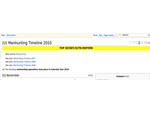
Manhunting Timeline 2010 [pdf]
The Intellipedia manhunting timeline for 2010, recording the United States urging Australia, the United Kingdom and Germany on 10 August to consider criminal charges against WikiLeaks founder Julian Assange — described as focusing the legal element of national power on Assange and the network supporting WikiLeaks.
-
Menwith collection assets SIDtoday [pdf]
In 2009, Menwith Hill Station (MHS) planned to receive two new satellites to expand its signals intelligence collection capabilities, enabling broader coverage of China, Afghanistan, Pakistan, Latin America, the Middle East, and North Africa. The new assets were intended to enhance mission flexibility, support FORNSAT collection, and provide the intelligence community with opportunities for discovery, analysis, and sustained monitoring from space.
-
Menwith continues successful counterterrorism survey along Af-Pak border [pdf]
Menwith Hill Station (MHS) conducted a counterterrorism surveillance operation along the Afghanistan-Pakistan border using the DARKSIDE collection system, successfully intercepting and processing microwave communications to gather actionable intelligence on terrorist activities. The operation, enhanced by Phase II hardware and coordinated with regional target offices, allowed dynamic capture and analysis of multiple signals to support ongoing counterterrorism efforts.
-
Menwith databases as of Aug 2008 [pdf]
This document outlines database access and SIGINT missions at Menwith Hill Station (MHS) as of August 2008, detailing the specific programs, language branches, and target development teams supported, including repositories like DISHFIRE, MAINWAY, and PINWALE. It also notes that U.S. personnel use the SIGINT Contact Center (SCC) process for access, with certain NOFORN restrictions, and lists additional analytic tools available to MHS analysts.
Marking: CONFIDENTIALPrograms: ASSOCIATION · DISHFIRE · HOMEBASE GEO · MAINWAY · NUCLEON · PINWALE · SPOTBEAM · XKEYSCORE · BANYAN · BROOMSTICK · CULTWEAVE II · MARINA · TRAFFICTHIEF · FASCIA · OCTSKYWARD · ROADBED · TUNNINGFORK · AGILITY · CADENCE · CONTRAOCTAVE · GAMUT · UTT · NKB · OCTAVE · PUZZLECUBE · TKB -
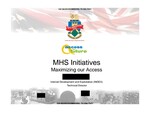
Menwith initiatives maximizing our access [pdf]
11 p.This document details Menwith Hill Station’s initiatives to maximize and optimize SIGINT collection, processing, and exploitation, including large-scale monitoring of internet and communications traffic, metadata analysis, and cross-platform target tracking. It describes programs and techniques for surveying, processing, and exploiting signals, enabling analysts to identify, geolocate, and track targets across multiple networks and devices.
Programs: ASPHALT · BLACKTOP · TARMAC · GTE · INDEX · ROADBED · DARKQUEST · EVIL EYE · Spider · SHAREDVISION · QUEST · NOSEYPARKER · XKEYSCORE · GRANDPIANO · FOGHORN · BASSQUEST · APPARITION · MUTANT BROTH · KARMAPOLICE · SOCIALANIMAL · MEMORY HOLE · TURBULENCE · TELLURIAN · MAILORDER · AUTO ASSOC · SLR · BLACKHOLE · JTRIG · PPF · LECKWITH · SCEPTRE · CLOUDPeople: Alexander, Keith B.“GCHQ taps fibre-optic cables for secret access to world's communications” - The Guardian ↗ (2013-06-21) · “Inside Menwith Hill: The NSA’s British Base at the Heart of U.S. Targeted Killing” - The Intercept ↗ (2016-09-06) · MacAskill, Ewen · Borger, Julian · Hopkins, Nick · Davies, Nick · Ball, James · Gallagher, Ryan -
Menwith satellite classification guide [pdf]
This document outlines Missions 7500 (MERCURY/MC) and 7600 (ORION/RIO) — advanced geosynchronous satellite systems operated from Menwith Hill Station (MHS) UK and Pine Gap (Australia) that provide near-continuous SIGINT coverage across Eurasia and Africa. These systems collect and geolocate a wide range of military, political, and technical communications, supporting NSA intelligence operations while maintaining strict cover protocols for facility and personnel identities.
-
Metadata Policy Conference (2008) [pdf]
This document summarizes the high-level discussions from a 2008 conference focused on the legal, policy, and technical challenges of sharing communications metadata between the NSA, its domestic partners, and the Second Party (Five Eyes) SIGINT agencies. It highlights a strategic shift toward bulk data usage and "pattern of life" analysis, while navigating the complex legal distinctions between metadata and "content" under Executive Order 12333 and FISA.
-
Metadata Sharing Memorandum (2005) [pdf]
This 2005 NSA memorandum outlines plans to expand and formalize intelligence community–wide sharing of SIGINT-derived metadata beyond NSA, centering on the CRISSCROSS/PROTON program while balancing legal, operational, and source-protection concerns. It proposes a federated query model to increase access without further duplicating sensitive data outside NSA.
-
MHS Leverages XKS for QUANTUM Against Yahoo and Hotmail [pdf]
This document describes a technical study conducted at Menwith Hill Station (MHS) in the UK. The study used XKEYSCORE (XKS) to evaluate the feasibility of launching QUANTUMTHEORY "man-on-the-side" attacks against users of Yahoo and Hotmail. Analysts developed a specialized Map/Reduce analytic called DRAGGABLEKITTEN to perform deep packet analysis on bulk internet traffic. The study concluded that 90% of Yahoo sessions and 50% of Hotmail sessions contained the specific technical "keywords" (such as unique cookies or headers) within a single data packet required to trigger a successful automated injection of malware.