Journalist: Gallagher, Ryan 212 documents
Search documents matching “Gallagher, Ryan” →Journalists bylined on the stories that published these documents. Contributors credited without a byline are searchable but not listed here.
Graphs
By document date (10 years)
By Banner
By Classification
Refine (combine with another filter, via search)
Sort: Title
Documents
-
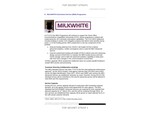
MILKWHITE Enrichment Service (MES) Programme [pdf]
This March 2011 GCHQ document details the MILKWHITE program, which is enhancing domestic interception and data analysis capabilities. It outlines expanded funding for advanced analytics, bulk data storage, and service scaling to meet growing demand from multiple law enforcement and intelligence agencies, including SOCA, HMRC, MI5, and SIS, thereby broadening access to large volumes of internet-derived metadata for operational use.
-
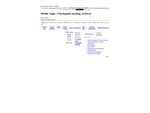
Mobile Apps Checkpoint Meeting Archives [pdf]
This GCHQ document tracks project checkpoints from December 2009 to July 2010, focusing on the rollout and operationalization of mobile apps, TERRAIN system upgrades, GTP/GRX access, and converged event processing. Key themes include coordinating multi-team dependencies, addressing technical gaps in handset and app data characterization, and ensuring timely delivery of milestones like MIP-1.
Programs: TERRAIN · PRESTON · XKEYSCORE · BEGAL · TAMING PASTRIES · MILKWHITE · MVR · SOCIAL ANTHROPOID · INTEGER SPIN · MUTANT BROTH · GEO FUSION · MARBLED GEKO · BLACKHOLE · ACTOR ACTION · TRAFFICMASTER · HARD ASSOC · MIRTF · HEARTBEAT · SILVER LINING · GREENHEART · EREPO · MAGLITE · POKERFACE · BOSTROM · MIDDLESEX GREEN · ENCHANTERSS · HAUSTORIUM · SALAMANCA · BROADOAK · MONKEY PUZZLE · TACHO · EREPO GAMMA · NINJA · PEBBLE BED · GOLDEN EYE · STRAPROC · STARPROC · LOOKING GLASS · SORCERER · SOCIAL ANIMAL · GTE · NGE · PPF · IIB · UDAQ · MES · TERRAINS · CCDF · SINO · GDR · OSDS · LECKWITH -
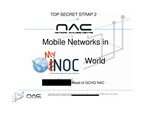
Mobile Networks in My NOC World [pdf]
This TOP SECRET STRAP 2 GCHQ document outlines the “MyNOC” operations, a specialized Network Operations Centre used by the UK’s GCHQ to coordinate cyber exploitation of international mobile and telecom infrastructure, with a particular focus on Belgacom’s GRX network under “Operation Socialist” (OP SOCIALIST). It details operational planning, toolsets, personnel roles, network mapping, QUANTUM INSERT targeting, and successful infiltration strategies that enabled CNE (Computer Network Exploitation) access to key Belgacom systems and staff infrastructure.
Programs: HIGHNOTE · COPPERHEAD · NEXUS · CADDIS · BRENT · RUSSETT PHONE · CERBERUS · E-BEAM · PIA · JEDI · WYLEKEY · INTERACTION · EREPO · QUANTUM · WOODCUTTER · MUTANT BROTH · QUANTUM INSERT · NRTA · MERION ZETA · JTRIG · A-SPACE · GEOFUSION“Operation Socialist: The Inside Story of How British Spies Hacked Belgium’s Largest Telco” - The Intercept ↗ (2014-12-13) · “Lees hier hoe de Britse geheime dienst GCHQ Belgacom aanviel” - NRC ↗ (2014-12-13) · “Britse geheime dienst bespioneerde jarenlang Belgacom-klanten” - De Standaard ↗ (2014-12-13) · “Britain's GCHQ Hacked Belgian Telecoms Firm” - Der Spiegel ↗ (2013-09-20) · Gallagher, Ryan · Modderkolk, Huib · Vanhecke, Nikolas · Eeckhaut, Mark -
New Operations Building at MHS Completed, Fit-Up Begins SIDtoday [pdf]
A 2011 NSA internal report describes the completion of “Project Phoenix” at Menwith Hill Station in the UK — a new operations building featuring a state-of-the-art data center, auditorium, and collaborative office spaces designed to enhance mission resilience, technological capacity, and training infrastructure. The project marks a major modernization effort, expanding Menwith Hill’s operational footprint and preparing it to support new intelligence systems and missions.
-
New Technique Geolocates Targets Active at Yemeni Cafes SIDtoday [pdf]
A 2010 NSA document from Menwith Hill Station details a new geolocation technique used in Yemen that combines HUMINT café surveys with SIGINT data — including RADIUS logs, passive collection tools, and TAO access — to track targets frequenting internet cafés linked to Al Qaeda. The method, integrating systems like MORK, WINDCHASER, MARINA, and SPARKLEPONY, enabled analysts to identify and monitor dozens of cafés and correlate user activity with high-priority targets.
Programs: GHOSTHUNTER · MORK · RADIUS · WINDCHASER · MARINA · XKEYSCORE · SPARKLEPONY · GHOSTWOLF · TELIR -
New Tool Combines Multi-INT, Multi-Agency Databases for Complete Target Snapshot SIDtoday [pdf]
A 2008 NSA SIDtoday document from Menwith Hill Station describes the Consolidated Operations Research Explorer (CORE), a tool that integrates SIGINT, HUMINT, and IMINT from seven intelligence agencies to provide analysts with a geospatially layered, real-time “snapshot” of targets. CORE enhances operational efficiency by quickly correlating communications networks, infrastructure, and personnel, enabling rapid mission successes such as identifying VSAT uplinks and tracking high-priority targets.
-
New Zealand SPEARGUN Phase 1 [pdf]
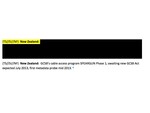
This document snippet provides a concise technical timeline for Project SPEARGUN, the New Zealand Government Communications Security Bureau's (GCSB) mass surveillance initiative. It confirms that the physical tapping of undersea cables (Phase 1) was completed and that the program was strategically synchronized with domestic political and legal developments. Specifically, the document reveals that the deployment of "metadata probes" (real-time automated data extraction) was contingent upon the passage of the GCSB Act in July 2013. This snippet is a critical piece of evidence showing that the legislative changes in New Zealand were tied by the NSA to GCSB's first metadata probe, planned for mid-2013 once the new GCSB Act was passed.
Programs: SPEARGUN -
Next Generation Events [pdf]
A 2009 TOP SECRET briefing outlines the “Next Generation Events” program to scale internet metadata and content analysis across Five Eyes, addressing explosive growth in data volume and the limits of legacy ingest systems. It presents a phased roadmap combining cloud infrastructure, large‑scale event processing, and enhanced profiling to enable bulk analytics and contact chaining.
Programs: NGE · HAUSTORIUM · BLAZINGSADDLES · HARBOURPILOT · MUTANTBROTH · AUTOASSOC · KARMAPOLICE · SOCIALANIMAL · INFINITEMONKEYS · HRMAP · MEMORYHOLE · MARBLEDGECKO · SIMMER · ROCKRIDGE · SAMUELPEPYS · CAFFEINEHIT · LAUGHINGHYENA · SALAMANCA · CLOUD · MONTEVISTA · LOOKINGGLASS · XKEYSCORE · FUMECUPBOARD · IIB · MoaG -
NGE BLACK HOLE ConOp [pdf]
This document outlines the "BLACK HOLE" Concept of Operations (ConOp) for the "Next Generation Events" (NGE) project within "BLAZING SADDLES," detailing a flat file data store designed to house various intelligence feeds. Its primary purpose is to serve as a source for Query Focused Datasets (QFDs) and support research, bulk analysis, and target discovery, with two operational instances at Benhall and Bude handling massively increased data volumes.
Programs: NGE · BLAZINGSADDLES · BLACKHOLE · MUTANTBROTH · KARMAPOLICE · SOCIALANIMAL · TELLURIAN · BUFFER · MAILORDER · MARBLEDGECKO · SALAMANCA · SMOKINGSADDLES · CIRCUIT · BLACKFIND · BLACKCAT · DATAFLOWCAB · CHORDAL · DEBIT CARD · B13B -
NRO SIGINT guide for Pine Gap [pdf]
This classified document outlines the organizational relationships and security classifications related to the Joint Defence Facility Pine Gap (JDFPG) in Australia, identifying it as an Australian Mission Ground Station (AMGS) operated jointly by the U.S. and Australia. It confirms that Pine Gap’s official mission statement serves as a cover story, concealing its secret association with U.S. intelligence agencies like the NRO, NSA, and CIA.
-
NSA First-Ever Collect of High-Interest 4G Cellular Signal [pdf]
The memorandum documents a technical milestone achieved in January 2010: the first successful interception of Time Division-Long Term Evolution (TD-LTE) 4G communications. This collection was conducted at the RAINFALL site (the unclassified cover term for the Joint Defence Facility Pine Gap in Australia) and marked the transition of intelligence priority from 2G/3G systems to all-Internet Protocol (IP) 4G networks.
Programs: RAINFALL -
NSA Intelligence Relationship with Canada's Communications Security Establishment Canada (CSEC) [pdf]
This document describes the close, long-standing SIGINT partnership between the NSA and Canada’s CSEC, emphasizing cooperative efforts in global intelligence collection, cyber operations, information assurance, and critical infrastructure defense. It highlights mutual contributions, including CSEC’s unique geographic access, covert sites, cryptographic capabilities, and R&D collaboration, supporting U.S. and North American security objectives.
“Communication Security Establishment's cyberwarfare toolbox revealed” - CBC News ↗ (2015-03-23) · “Documents Reveal Canada’s Secret Hacking Tactics” - The Intercept ↗ (2015-03-23) · “No Place to Hide” - Metropolitan Books ↗ (2014-05-13) · Seglins, Dave · Hildebrandt, Amber · Pereira, Michael · Greenwald, Glenn · Gallagher, Ryan -
NSA Intelligence Relationship with New Zealand [pdf]
An April 2013 NSA information paper on the SIGINT relationship with New Zealand's GCSB, listing what each side provides: GCSB collection on China, Japanese, North Korean, Vietnamese and South American diplomatic communications, South Pacific Island nations, Pakistan, India, Iran, Antarctica and French police and nuclear testing activities in New Caledonia, and its role since 2004 as the Intelligence Community's lead on the Bangladesh counterterrorism target. It also covers GCSB's operational lead on cyber, the compliance review that followed its assistance to New Zealand law enforcement under Director Ian Fletcher, and its term as chair of SIGINT Seniors Pacific (SSPAC).
People: Fletcher, Ian“Snowden revelations: Nicky Hager and Ryan Gallagher: New Zealand's spy reach stretches across globe” - The New Zealand Herald ↗ (2015-03-11) · “New Zealand Targets Trade Partners, Hacks Computers in Spy Operations” - The Intercept ↗ (2015-03-10) · “Leaked papers reveal NZ plan to spy on China for US” - The New Zealand Herald ↗ (2015-04-19) · “New Zealand Plotted Hack on China With NSA” - The Intercept ↗ (2015-04-18) · “New Zealand Spy Data Shared With Bangladeshi Human Rights Abusers” - The Intercept ↗ (2015-04-15) · “Secret documents shine light on GCSB spying in Bangladesh” - The New Zealand Herald ↗ (2015-04-16) · Hager, Nicky · Gallagher, Ryan · Fisher, David -
NSA Intelligence Relationship with Sweden [pdf]
A 2013 NSA information paper documenting the agency's long-standing intelligence partnership with Sweden's signals intelligence service FRA, covering joint collection on Russian targets, counterterrorism, cryptanalysis, and cyber defense — a relationship kept classified due to Sweden's official political neutrality.
-
NSA liaison in Tokyo opens new office SIDtoday [pdf]
This SIDtoday document describes how the NSA liaison to Japan (SUSLAJ) has moved its office from downtown Tokyo to the US Embassy, aiming to strengthen coordination with the US Ambassador and other intelligence representatives. This relocation follows a long-standing SIGINT partnership between NSA and Japan, dating back to the 1950s, and reflects the growing importance of US-Japan intelligence cooperation.
People: Schieffer, Thomas“Japan Made Secret Deals With the NSA That Expanded Global Surveillance” - The Intercept ↗ (2017-04-24) · “アメリカに監視される日本 ~スノーデン“未公開ファイル”の衝撃” - NHK ↗ (2017-04-24) · Gallagher, Ryan · Ikegami, Akira -
NSA posture on Syria [pdf]
This document outlines the NSA’s intelligence assessment and operational posture regarding the Syrian civil war in 2013, emphasizing ongoing SIGINT cooperation with GCHQ to monitor both the Syrian government and its military and opposition forces. It highlights limited insight into communications, stronger access to opposition networks, and joint U.S.–U.K. efforts—particularly from GCHQ sites like Digby and Mt. Troodos—to track regional instability and chemical weapons security.
-
NSA SIGINT Site Relocated in Japan: The Story Behind the Move SIDtoday [pdf]
This NSA SIDtoday newsletter article describes Project CAMELUS, a decade-long effort to relocate the agency's HANZA HF signals intelligence collection facility on Okinawa to a new site at Camp Hansen, with the Japanese government paying over $500 million for construction and new collection systems under political pressure to return occupied land. The article reveals tense negotiations where NSA leveraged Japanese funding to maintain surveillance capabilities while the Japanese government—notably not NSA's intelligence partners—pursued purely political objectives of land return, with disagreements escalating to cabinet-level discussions between the U.S. Secretary of Defense and Japanese Defense Minister.
People: Rumsfeld, Donald“Japan Made Secret Deals With the NSA That Expanded Global Surveillance” - The Intercept ↗ (2017-04-24) · “アメリカに監視される日本 ~スノーデン“未公開ファイル”の衝撃” - NHK ↗ (2017-04-24) · Gallagher, Ryan · Ikegami, Akira -
NSA Spied On Porn Habits As Part Of Plan To Discredit 'Radicalizers' [pdf]
Top-secret document reveals how NSA has been gathering records of online sexual activity and evidence of visits to pornographic websites as part of a proposed plan to harm the reputations of those whom the agency believes are radicalizing others through incendiary speeches
-
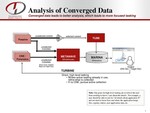
NSA Technology Directorate Analysis of Converged Data [pdf]
This document outlines the strategic integration of passive and active signals intelligence (SIGINT) to create a more efficient surveillance loop. The document centers on TURBINE, an intelligent command-and-control system designed to manage a massive network of malware implants (Computer Network Exploitation or CNE). The primary goal is to automate the extraction of data from targeted machines, effectively "converging" traditional passive collection with active hacking to refine intelligence tasking.
-
NSA's Changing Counterterrorism Relationship with India SIDtoday [pdf]
This document details the evolving counterterrorism relationship between NSA and India, highlighting the strengthening of collaboration, particularly after India's 2008 Mumbai attacks, and the integration of India into the SIGINT Seniors Pacific (SSPAC) forum. While the partnership has led to increased intelligence sharing and the deployment of NSA analysts to India, challenges such as leaks of sensitive information have impeded the full maturation of the relationship, necessitating tighter controls and ongoing diplomatic efforts.