Genre: other 148 documents
Search documents matching “other” →What kind of document it is: slides, report, wiki, manual, guide, newsletter.
Graphs
By document date (11 years)
By Banner
By Classification
Refine (combine with another filter, via search)
Sort: Title
Documents
-
GCSB monitoring candidates for WTO director general via XKEYSCORE fingerprint [pdf]
GCSB used XKEYSCORE to intercept emails mentioning other candidates for WTO job and paid close attention to Indonesian contender.
Programs: XKEYSCOREPeople: Azevêdo, Roberto · Bark, Taeho · Blanco, Herminio · González, Anabel · Groser, Tim · Hindawi, Ahmad Thougan · Kyerematen, Alan · Mohamed, Amina · Pangestu, Mari“How spy agency homed in on Groser's rivals” - The New Zealand Herald ↗ (2015-03-23) · “New Zealand Spied on WTO Director Candidates” - The Intercept ↗ (2015-03-22) · Hager, Nicky · Gallagher, Ryan -
GHOSTHUNTER aerial image (2009) [pdf]
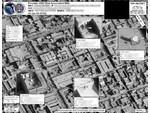
This imagery showcases a real-world application of the GHOSTHUNTER program operated out of Menwith Hill Station in the UK. The document features an aerial satellite photograph used to pinpoint the precise physical location of VSAT (Very Small Aperture Terminal) satellite dishes. By linking a target's digital footprint—specifically their MAC address and IP address—to a specific set of geographic coordinates, the NSA and GCHQ can identify the exact building or compound where a person is using the internet. This capability is a cornerstone of the "find, fix, finish" cycle used to support "covert operations" and targeted killing missions in conflict zones like Yemen, Somalia, and Afghanistan.
Programs: GHOSTHUNTER -
Ghosthunter future capabilities (2008) [pdf]
This document indicates that Menwith Hill Station (MHS) provides approximately 99% of the FORNSAT data used by GHOSTHUNTER for geolocating targets, while additional FORNSAT sites can be tapped as needed to cover other regions. Although GHOSTHUNTER offers near-global geolocation capabilities, certain areas remain blind spots where coverage is limited.
Programs: GHOSTHUNTER -
GSM tower geolocation [pdf]
This TOP SECRET STRAP 1 note describes DYMO, a prototype GSM-tower geolocation system that combines RUFIS-bis (which demodulates co-channel GSM ARFCN streams per cell-ID) with WHAMI Fast Image (WFI) to remodulate and correlate signals to produce high-quality tower geolocation and matching metadata. The remodulated “synthetic geolocation” improves accuracy and is under development in the NMDC/Midas studies.
-
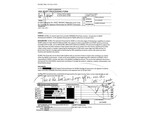
How to tell if a target is 'foreign' [pdf]
The document describes a human intelligence (HUMINT) report indicating that a specific intelligence target, identified by a Foreign Source ID, is located outside the U.S., including details such as email, telephone number, and mobile network type, with checks confirming no U.S. roaming over a 60-day period. It illustrates the use of HUMINT to corroborate foreign location data for surveillance purposes.
-
HR DIETMAR B - Director SIGINT Analysis and Production German Federal Intelligence Service, 30 April - 1 May 2013 [pdf]
This draft agenda outlines scheduled meetings and presentations for a collaboration event between the German Federal Intelligence Service (BND) and the NSA, held from April 30 to May 1, 2013. The agenda details various discussions on SIGINT analysis, data acquisition, and counterterrorism efforts, showcasing the active engagement between the two intelligence communities.
Programs: SSOPeople: Alexander, Keith B. -
ICREACH Black Budget Extracts [pdf]
This document provides fiscal and strategic justifications for the continued expansion of ICREACH, detailing its role as a primary vehicle for disseminating both telephony and Digital Network Intelligence (DNI) metadata across the Intelligence Community. It outlines the platform's transition to the NSA/CSS cloud architecture, a move intended to enhance data enrichment services and ensure the system remains responsive to the evolving requirements of the National Intelligence Priorities Framework (NIPF).
Programs: ICREACH -
Innov8 Experiment Profile Template [pdf]
A TOP SECRET STRAP1 joint NSA/GCHQ experiment profile documenting a 2010-2011 Joint Capability Experiment to test hardware-accelerated bulk decryption of common internet encryption technologies at scale, integrating TURMOIL's passive collection with NSA's LONGHAUL key recovery service via the ISLANDTRANSPORT messaging system, as part of the broader BULLRUN assault on internet encryption.
“Prying Eyes: Inside the NSA's War on Internet Security” - Der Spiegel ↗ (2014-12-28) · “Revealed: how US and UK spy agencies defeat internet privacy and security” - The Guardian ↗ (2013-09-05) · Appelbaum, Jacob · Gibson, Aaron · Grothoff, Christian · Müller-Maguhn, Andy · Poitras, Laura · Sontheimer, Michael · Stöcker, Christian · Ball, James · Borger, Julian · Greenwald, Glenn -
Is It the End of the SIGINT World as We Have Come to Know It? [pdf]
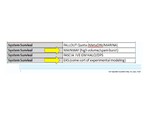
Two excerpts from a 2012 NSA presentation titled "Is It the End of the SIGINT World as We Have Come to Know It?" prepared by a member of the Large-Access Exploitation Group. The table excerpt lists MAINWAY among the systems at highest risk of being overwhelmed by the volume of data the agency was ingesting. The diagram excerpt shows MAINWAY feeding into the Graph-in-Memory (alongside WESTERNSTAR), illustrating how MAINWAY's continuous contact-chaining pushed its precomputed results into the in-memory graph database that analysts actually queried.
Programs: FALLOUT · METADNI · MARINA · MAINWAY · FASCIA · GMHALO · DPS · EKS · WESTERNSTAR · GRAPH-IN-MEMORY -
Is there "fifth party" collection? [pdf]
This NSA internal Q&A forum discussion reveals "fifth party collection"—where the NSA passively intercepts data from one intelligence service (South Korea) that has compromised another service's (North Korea) computer network exploitation operations, creating a three-layer chain where NSA exploits Actor One's access to Actor Two's CNE activities against shared targets. The thread provides concrete examples including NSA leveraging South Korean implants on North Korean officials' computers (who themselves were conducting CNE operations) and stealing zero-day exploits from unidentified foreign intelligence services by passively monitoring their successful attacks.
-
Israel targets the U.S. government for invasive electronic surveillance [pdf]
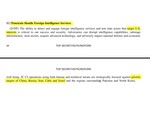
Israel targets the U.S. government for invasive electronic surveillance, and does so more aggressively and threateningly than almost any other country in the world. Indeed, so concerted and aggressive are Israeli efforts against the U.S. that some key U.S. government documents — including the top secret 2013 intelligence budget — list Israel among the U.S.’s most threatening cyber-adversaries and as a “hostile” foreign intelligence service.
-
Israel-US 1999 Agreement [pdf]
This July 1999 top secret agreement between the U.S. Defense Intelligence Agency and Israel's Directorate of Military Intelligence establishes comprehensive intelligence-sharing arrangements covering Middle Eastern threats, terrorism, weapons of mass destruction, and foreign materiel exploitation, superseding previous agreements dating back to 1968 and including specific provisions for conferences, written requests, face-to-face analyst meetings, and security protocols.
-
James Clapper's Classified Blog [pdf]
This document reveals that James Clapper, as Director of National Intelligence, maintained a classified blog called “Intercept” where he publicly responded to a citizen letter supporting expanded domestic surveillance after the Boston Marathon bombings. While Clapper endorsed the premise of sacrificing some civil liberties for security, internal commenters cautioned against eroding constitutional rights, emphasizing that increased surveillance does not guarantee safety.
-
Japan provided with XKEYSCORE [pdf]
This document outlines a request for approval to provide training to the Japanese Directorate for SIGINT (DFS) on using advanced SIGINT systems, including XKEYSCORE, to enhance Japan's cyber network defense capabilities. This training, scheduled for April 2013, aligns with U.S. strategic goals to bolster the cyber defense abilities of allied nations, highlighting ongoing NSA collaboration with Japan on surveillance and cybersecurity.
“Japan Made Secret Deals With the NSA That Expanded Global Surveillance” - The Intercept ↗ (2017-04-24) · “アメリカに監視される日本 ~スノーデン“未公開ファイル”の衝撃” - NHK ↗ (2017-04-24) · Gallagher, Ryan · Ikegami, Akira -
-
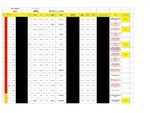
JPEL TARGETS [pdf]
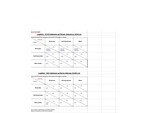
This anonymized Joint Prioritized Effects List (JPEL) roster reveals that NATO/ISAF maintained a large, systematically managed list of prioritized targets in Afghanistan—including mid‑ and low‑level insurgents, alleged drug traffickers, and local figures—used to authorize lethal and capture operations. The table shows priorities, regions, lead agencies, update requirements, and associated bounties, illustrating how targeting became bureaucratized and normalized across the campaign.
-
JTRIG Wiki Highlights – August 2009 [pdf]
This August 2009 JTRIG report outlines the advanced planning phase of Operation QUITO, a pioneering "effects" operation led by GCHQ’s TSI unit. The mission was designed to support the UK Foreign and Commonwealth Office (FCO) in achieving strategic goals regarding Argentina and the Falkland Islands.
-
Legalities - GCHQ Databases eg Pilbeam, Salamanca, UDAQ etc [pdf]
This October 2007 GCHQ document outlines the legal authorization requirements for querying surveillance databases, revealing that GCHQ analysts can search their own databases (like PILBEAM, SALAMANCA, UDAQ) for metadata on anyone regardless of nationality without additional authorization, while NSA databases (like MARINA, MAINWAY, DISHFIRE) prohibit searches for Americans and other Five Eyes citizens but permit searches for UK persons.
-
List of foreign governments and organizations authorized for surveillance [pdf]
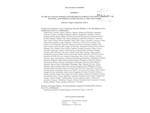
This exhibit lists the 193 foreign governments as well as foreign factions, political organizations and other entities that were part of a 2010 certification approved by the Foreign Intelligence Surveillance Court. These are the entities about which the NSA may conduct surveillance, for the purpose of gathering foreign intelligence. Each year a new certification must be approved by the court to permit such surveillance under Section 702 of the FISA Amendments Act.
-
List of SIGADs in Germany [pdf]
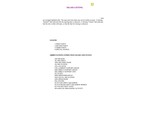
This document provides a comprehensive log of about 155 SIGINT Activity Designators (SIGADs), cataloging NSA surveillance sites and operations situated across Germany from the post-WWII era through the 2000s. It details specific locations, associated military units, and operational timelines, revealing the extensive historical and ongoing footprint of American intelligence gathering on German soil.