Document year: 2013 81 documents
Search documents matching “2013” →When each document was written, from its own dateline. Undated documents don't appear here.
Sort: Title
Documents
-
Final Agenda - HR DIETMAR B - Director SIGINT Analysis and Production German Federal Intelligence Service, 30 April - 1 May 2013 [pdf]
This document presents the final agenda for a visit by Hr. Dietmar B., the Director of SIGINT Analysis and Production from the German Federal Intelligence Service (BND), scheduled for April 30 to May 1, 2013. The agenda details key discussions and meetings with various officials from the NSA, focusing on strategic planning and areas of mutual interest in intelligence collaboration.
-
FINAL Agenda SWEDUSA [pdf]
Detailed list of points and participants in the summit meeting between the top brass of the FRA and the NSA in April 2013.
Programs: TURTLEPOWER · TURMOIL · XKEYSCORE · WINTERLIGHT · QUANTUM · PARTNERMALL · VIVIAN · NAPA-3 · GCE · SSO -
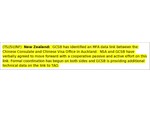
GCSB has identified an MFA data link [pdf]
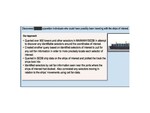
A short extract from an April 2013 NSA document recording that GCSB had identified a Chinese Ministry of Foreign Affairs data link between the Chinese Consulate and the Chinese Visa Office in Auckland, and that NSA and GCSB had verbally agreed to mount a joint passive and active operation against it.
“Leaked papers reveal NZ plan to spy on China for US” - The New Zealand Herald ↗ (2015-04-19) · “New Zealand Plotted Hack on China With NSA” - The Intercept ↗ (2015-04-18) · Fisher, David · Gallagher, Ryan · Hager, Nicky -
GCSB monitoring candidates for WTO director general via XKEYSCORE fingerprint [pdf]
GCSB used XKEYSCORE to intercept emails mentioning other candidates for WTO job and paid close attention to Indonesian contender.
Programs: XKEYSCOREPeople: Azevêdo, Roberto · Bark, Taeho · Blanco, Herminio · González, Anabel · Groser, Tim · Hindawi, Ahmad Thougan · Kyerematen, Alan · Mohamed, Amina · Pangestu, Mari“How spy agency homed in on Groser's rivals” - The New Zealand Herald ↗ (2015-03-23) · “New Zealand Spied on WTO Director Candidates” - The Intercept ↗ (2015-03-22) · Hager, Nicky · Gallagher, Ryan -
Global Collaboration Environment: Director’s talking points [pdf]
This NSA document reveals discussions between the agency and GCHQ about establishing a permanent joint surveillance facility in the UK to host the "SIGINT Seniors Europe" coalition, with both agencies coordinating messaging to overcome "persistent pushback" from some member nations. The memo indicates concerns that some European partners were reluctant due to "uncertainty on what missions the center will support, and associated concerns for European human rights laws," while the NSA preferred UK hosting as "optimal in terms of having the most flexibility in tuning the operation to benefit the Five Eyes."
-
HR DIETMAR B - Director SIGINT Analysis and Production German Federal Intelligence Service, 30 April - 1 May 2013 [pdf]
This draft agenda outlines scheduled meetings and presentations for a collaboration event between the German Federal Intelligence Service (BND) and the NSA, held from April 30 to May 1, 2013. The agenda details various discussions on SIGINT analysis, data acquisition, and counterterrorism efforts, showcasing the active engagement between the two intelligence communities.
Programs: SSOPeople: Alexander, Keith B. -
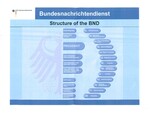
Internal NSA presentation on the BND's organization [pdf]
These six organizational charts and briefing slides detail the structure of Germany's BND foreign intelligence service, specifically its SIGINT Directorate (Abteilung Technische Aufklärung) and new Cyber Intelligence division (T4), along with a cooperation model showing intelligence sharing between BND, domestic intelligence service BfV, and the Federal Office for Information Security (BSI).
-
Iran – Current Topics, Interaction with GCHQ [pdf]
This NOFORN top secret April 2013 NSA document, shows how Iran significantly improved its offensive cyber capabilities by learning from cyberattacks against it, such as the April 2012 attack on its own oil industry, subsequently launching its own destructive attacks against Saudi Aramco and U.S. financial institutions.
-
James Clapper's Classified Blog [pdf]
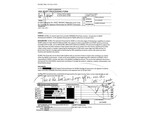
This document reveals that James Clapper, as Director of National Intelligence, maintained a classified blog called “Intercept” where he publicly responded to a citizen letter supporting expanded domestic surveillance after the Boston Marathon bombings. While Clapper endorsed the premise of sacrificing some civil liberties for security, internal commenters cautioned against eroding constitutional rights, emphasizing that increased surveillance does not guarantee safety.
-
Japan official NSA visit, cyber briefing [pdf]
This document outlines cooperation between the NSA and Japan’s Directorate for SIGINT (DFS) to develop Japan’s capabilities for providing signals intelligence (SIGINT) support to cyber defense operations, particularly against Chinese cyber activities. It details meetings, training, and data-sharing efforts from 2012–2013 aimed at enhancing Japan’s cyber intelligence capacity under U.S. guidance.
“Japan Made Secret Deals With the NSA That Expanded Global Surveillance” - The Intercept ↗ (2017-04-24) · “アメリカに監視される日本 ~スノーデン“未公開ファイル”の衝撃” - NHK ↗ (2017-04-24) · Gallagher, Ryan · Ikegami, Akira -
Japan official NSA visit, HF briefing [pdf]
The document describes ongoing NSA efforts to renew high-frequency direction-finding (HFDF) collaboration with Japan’s Directorate for SIGINT (DFS) after Japan withdrew from the CROSSHAIR network in 2009. By 2012–2013, both sides were manually exchanging HFDF data, and the NSA sought to advance toward automated data sharing via its BORESIGHT system while reassuring Japan that it would not replace or override its existing technology.
“Japan Made Secret Deals With the NSA That Expanded Global Surveillance” - The Intercept ↗ (2017-04-24) · “アメリカに監視される日本 ~スノーデン“未公開ファイル”の衝撃” - NHK ↗ (2017-04-24) · Gallagher, Ryan · Ikegami, Akira -
Japan provided with XKEYSCORE [pdf]
This document outlines a request for approval to provide training to the Japanese Directorate for SIGINT (DFS) on using advanced SIGINT systems, including XKEYSCORE, to enhance Japan's cyber network defense capabilities. This training, scheduled for April 2013, aligns with U.S. strategic goals to bolster the cyber defense abilities of allied nations, highlighting ongoing NSA collaboration with Japan on surveillance and cybersecurity.
“Japan Made Secret Deals With the NSA That Expanded Global Surveillance” - The Intercept ↗ (2017-04-24) · “アメリカに監視される日本 ~スノーデン“未公開ファイル”の衝撃” - NHK ↗ (2017-04-24) · Gallagher, Ryan · Ikegami, Akira -
Legal issues UK regarding Sweden and Quantum [pdf]
An internal NSA document from April 2013 that describes the status of the relationship with a number of partners. It takes up a three-party agreement regarding the hacker programme Quantum, between the Swedish FRA, American NSA and British GCHQ, initiated by NSA chief Keith Alexander. The document shows that the project has so far resulted in a “proof of concept” – i.e., the system works, but it has not yet generated any substantial intelligence results. It also shows that the GCHQ are doubtful about continuing in the project because of restrictions in British legislation, but that the NSA’s intention all along has been to carry out the project with the Swedish FRA rather than GCHQ.
Programs: QUANTUM -
Lobban NSA Visit Précis [pdf]
This document is a formal briefing for a April 2013 visit by GCHQ Director Sir Iain Lobban to the NSA. The visit aimed to reinforce the Five Eyes partnership by discussing sensitive topics including supervised access to FAA Section 702 data ("Triage 2.0"), coordinated cyber and SIGINT strategies for Syria and Iran, and the implementation of the Global Collaboration Environment (GCE).
-
Location Cookies [pdf]
These slides contain excerpts from an April 2013 National Security Agency presentation detailing signal surveillance techniques and successes. They reveal that the NSA and its British counterpart, Government Communications Headquarters (GCHQ), use a Google-specific tracking cookie to pinpoint targets for hacking.
-
Mission Management Success Stories [pdf]
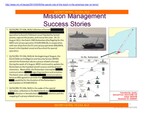
This document details a joint intelligence operation between the NSA and the Dutch Defense Intelligence and Security Service (MIVD) targeting Somali piracy. This document outlines how the NSA provided the Dutch flagship HMS Rotterdam with specialized intercept capabilities during Operation OCEAN SHIELD in 2012. This collaboration directly facilitated a successful special operation on 13 August 2012, which resulted in the rescue of a hijacked Pakistani vessel's crew and the capture of several pirates.
-
New Skype Stored Comms Capability For PRISM [pdf]
An SSO item on PRISM's new Skype stored-communications capability — buddy lists, credit card details, call data records and account information — with roughly 2,000 Skype selectors sent for FBI adjudication on 29 March 2013 and over 2,800 reports issued from PRISM Skype collection since April 2011.
-
Notes for Dutch SIGINT/Cyber Analytic Exchange [pdf]
This document provides top-secret notes between the NSA and the Dutch intelligence services (AIVD and MIVD). This document outlines a significant restructuring of the Dutch intelligence community, including the creation of a unified SIGINT and Cyber Division and a Single Point of Contact (SPOC) at AIVD headquarters in Zoetermeer. The briefing details the operational challenges of the newly formed National Cyber Security Center (NCSC), the development of the National Detection Network (NDN) for cyber sensors, and the shared technical interests between the two nations regarding malware detection, Tor (The Onion Router) exploitation, and the analysis of web forums via Computer Network Exploitation (CNE).
Programs: TUTELAGE -
NSA CSEC Partnership [pdf]
This NSA paper outlines the long-standing intelligence partnership between the U.S. and Canada’s Communications Security Establishment Canada (CSEC), dating back to WWII. It highlights mutual SIGINT cooperation, shared technological resources, and the role of CSEC in cryptography, cyber defense, and intelligence sharing, particularly in high-priority global and transnational targets.
-
NSA Intelligence Relationship with Canada's Communications Security Establishment Canada (CSEC) [pdf]
This document describes the close, long-standing SIGINT partnership between the NSA and Canada’s CSEC, emphasizing cooperative efforts in global intelligence collection, cyber operations, information assurance, and critical infrastructure defense. It highlights mutual contributions, including CSEC’s unique geographic access, covert sites, cryptographic capabilities, and R&D collaboration, supporting U.S. and North American security objectives.
“Communication Security Establishment's cyberwarfare toolbox revealed” - CBC News ↗ (2015-03-23) · “Documents Reveal Canada’s Secret Hacking Tactics” - The Intercept ↗ (2015-03-23) · “No Place to Hide” - Metropolitan Books ↗ (2014-05-13) · Seglins, Dave · Hildebrandt, Amber · Pereira, Michael · Greenwald, Glenn · Gallagher, Ryan