Dissemination control: NOFORN 168 documents
Search documents matching “NOFORN” →Handling controls assessed for each document, as component values. If a document contains multiple disseminations, the most restrictive is used here.
Graphs
By document date (12 years)
By Banner
By Classification
Refine (combine with another filter, via search)
Sort: Title
Documents
-
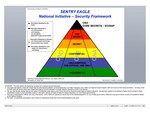
CNO Core Secrets Security Structure [pdf]
A 3-slide NSA presentation outlining the classification architecture of Sentry Eagle, a national cyber operations initiative, showing how its most sensitive components — covering network hacking, encryption sabotage, and covert industry relationships — are locked behind ECI and SAP designations accessible only to a tiny circle of government officials.
Programs: SENTRYEAGLE · SENTRYHAWK · SENTRYFALCON · SENTRYOSPREY · SENTRYRAVEN · SENTRYCONDOR · SENTRYOWL -
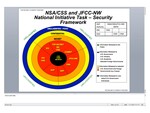
CNO Core Secrets Slide Slices [pdf]
This document outlines the Security Framework for a joint national initiative between the NSA/CSS and JFCC-NW, detailing the highly compartmented structure used to protect cyber and intelligence secrets. It utilizes a concentric security framework diagram to visualize the layers of sensitivity, placing the most critical technical capabilities at the absolute center of the intelligence community's protection.
Programs: SENTRY-EAGLE · SENTRYHAWK · SENTRYFALCON · SENTRYOSPREY · SENTRYRAVEN · SENTRYCONDOR · SENTRYOWL -
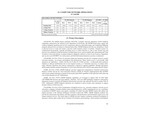
COMPUTER NETWORK OPERATIONS - GENIE [pdf]
A TOP SECRET Congressional Budget Justification entry for the NSA/CSS GENIE project — the Tailored Access Operations programme underpinning all endpoint Computer Network Operations — requesting $651.7 million and 1,870 military and civilian positions for FY2013, with plans to maintain 85,000-96,000 implant points-of-presence worldwide and 9,000-10,000 active accesses, including $25.1 million for covert purchase of software vulnerabilities and a $3.4 million supply chain implant operation targeting al-Qaeda.
-
Content Acquisition Optimization PowerPoint Slides [pdf]
An NSA presentation on content acquisition optimisation — describing how incidental bulk collection from Yahoo Webmessenger, email address books, buddy lists and webmail inboxes was generating massive unintended collection volumes.
-
Cooperation between the NSA and BND [pdf]
Comprehensive internal summary of the history and current state of cooperation between the NSA and BND
Programs: RT-RGPeople: Schindler, Gerhard -
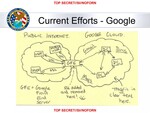
Current Efforts - Google [pdf]
The famous NSA slide from the MUSCULAR program showing where Google's encryption is stripped away — a hand-drawn diagram of Google's cloud architecture annotated with "SSL Added and removed here!" beside a smiley face, marking the exact point where NSA and GCHQ intercepted Google user data flowing unencrypted between Google's data centers.
-
Cyber Paper Japan NSA DFS [pdf]
This January 2013 NSA memo from SUSLAJ (Special U.S. Liaison Activity Japan) details Japan’s effort to rapidly launch a SIGINT-enabled cyber defense initiative and a new 100-person “Cybercom” by April 2013. It describes tensions between reformist elements like CIRO (Cabinet Intelligence and Research Office) and more conservative ones like the DFS (Directorate for SIGINT) and MOD Internal Bureau, with struggles in policy, information sharing, and workforce training. The memo shows Japan seeking NSA’s technical help — including at the MALLARD FORNSAT site — while rushing to deliver malware signatures and sign new information-sharing agreements. The NSA viewed Japan as responsive but too focused on short-term results rather than long-term cyber workforce development.
Programs: MALLARD“The Untold Story of Japan's Secret Spy Agency” - The Intercept ↗ (2018-05-19) · “日本の諜報 スクープ 最高機密ファイル” - NHK ↗ (2018-05-19) · Gallagher, Ryan -
Decision Memorandum for the DNI on ICREACH [pdf]
This 2006 memorandum from the Director of the NSA, Keith B. Alexander, requests that the Director of National Intelligence authorize the NSA to create ICREACH, a new Intelligence Community-wide system for sharing communications metadata. The proposal designates the NSA as the executive agent for this new structure, which would replace the older, less scalable PROTON program and grant unprecedented data access to partner agencies.
People: Alexander, Keith B. -
DFS and NSA partnership [pdf]
DFS the NSA Sister Organization. This document outlines a high-level visit by Japan’s Directorate for Signals Intelligence (DFS), described as NSA’s “sister organization,” to the NSA/CSS headquarters in early 2013. The purpose was to strengthen their decades-long partnership, focusing on SIGINT-enabled cyber capabilities, training, and mutual understanding of each agency’s role in cyber defense.
People: Alexander, Keith B.“The Untold Story of Japan's Secret Spy Agency” - The Intercept ↗ (2018-05-19) · “日本の諜報 スクープ 最高機密ファイル” - NHK ↗ (2018-05-19) · Gallagher, Ryan -
DGSE and ANSSI Delegation to NSA (April 2013), cyberattacks [pdf]
This Top Secret NSA visit précis details the April 12, 2013 meeting between senior French cyber officials Bernard Barbier (DGSE) and Patrick Pailloux (ANSSI) and NSA leadership to discuss and seek U.S. assistance in attributing May 2012 cyberattacks on the French Presidential network. The document outlines the visit agenda, background tensions over French media accusations of U.S. involvement, and NSA’s plan to emphasize cyber defense cooperation while carefully navigating potential diplomatic sensitivities.
-
Differential Power Analysis on the Apple A4 Processor [pdf]
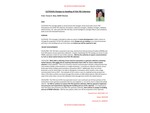
1 p.This presentation abstract details a non-invasive method to extract the global AES cryptographic key (GID) from Apple's A4 processor using Differential Power Analysis (DPA). Success would enable the Intelligence Community to decrypt the boot firmware on devices like the iPhone 4 and iPad, providing a persistent means to find vulnerabilities and develop exploits independent of patchable software flaws.
“The CIA Campaign to Steal Apple's Secrets” - The Intercept ↗ (2015-03-10) · Scahill, Jeremy · Begley, Josh -
DROPMIRE on the Cryptofax at the EU Embassy D.C. [pdf]
This document reveals that the NSA secretly targeted EU diplomatic communications through a program called DROPMIRE, which involved placing surveillance implants on encrypted fax machines at the EU Embassy in Washington, D.C. This operation was part of a broader effort to spy on 38 foreign embassies and missions—including allies such as France, Italy, and Greece—to gain inside knowledge of policy debates and diplomatic positions.
Programs: DROPMIRE -
Entry From SSO News [pdf]
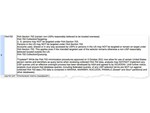
This document discusses the initial operational capability of MONKEYROCKET, a non-Western Internet anonymization service developed as part of the OAKSTAR program, aimed at supporting counter-terrorism efforts. As of July 2012, the system was forwarding metadata to backend repositories, with a significant user base of around 16,000, primarily from countries like Iran and China. The service is expected to grow in usage, generating about 2,000 events per day.
-
Entry From SSODictionary v1.0 [pdf]
This document outlines a pending access point for MONKEYROCKET under the OAKSTAR program, focusing on full-take data collection from selected counter-terrorism (CT) targets using a non-Western anonymous browsing service. The collection will include user data, such as billing information and IP addresses, and support NSA's long-term strategy targeting terrorism and other criminal activities, with data gathered under Executive Order 12333. The system used for collection will be vPCS or XKS, and the operation is codenamed "THUNDERISLAND."
-
EP-3E Collision: Cryptologic Damage Assessment and Incident Review [pdf]
A joint US Navy and NSA report from July 2001, prepared three months after a US spy plane was forced to land in China, assessing how far surveillance sources and methods were compromised and reviewing the emergency destruction that failed to prevent it. Damage to tactical SIGINT against the PRC is rated medium and overall SIGINT damage low, with the greatest loss the LUNCHBOX PROFORMA processor and MARTES signals analysis tools; COMSEC damage is rated low because keying material was superseded within 15 hours.
Programs: LUNCHBOX · MARTES · NICKELBACK · SENSOR PACER · PROFORMA · HULTEC · STRUM · TEXTA · RASIN · CRITIC · KLIEGLIGHT · XBIT · BLACKMAGIC · NOIWON · ZIRCON · MIDB · EOB-LITE · NIMROD · ARIEL · COBRA BALL · COMBAT SENT · RIVET JOINT · SEABOOT · SETTEE · KAMPUS · DRUID · RORIPA · MARKHAM · FOREJUDGE · SAM HEARTBURN · NOVELETTE · RSBN · BEGGAR HAWK · BEGGAR SHADOW · CAPSULE JACK · DISTANT WIND · DISTANT SENT · CHILING · RIBBED · UNACCENTED · SLIPSTICK · SIERRA ONEPeople: Meals, Charlie -
Expanding PRISM Sharing With FBI and CIA [pdf]
An SSO item describing two projects that widened PRISM sharing with the FBI and CIA: PRINTAURA software that compiles the tasked-selector list every two weeks for both agencies, and weekly operational PRISM news and guidance from the mission programme manager.
-
FAA Certification Renewals with Caveats [pdf]
This NSA document shows that after the FISA Court found NSA’s upstream internet collection unconstitutional and illegal, the agency’s response was less about reform and more about finding technical and procedural workarounds to keep surveillance running as usual. While the court ordered changes within 30 days, NSA officials planned to sequester and filter “higher-risk” data to appease the judge—not halt collection—revealing a mindset focused on preserving operations rather than addressing legal violations.
-
FAA702 comms memo [pdf]
This document details NSA's response to concerns raised by the FISA Court over the collection of non-targeted data in FAA-702 upstream collection. To mitigate the risk of continued acquisition, NSA is implementing temporary measures, including cautionary banners and updated processes, to prevent misuse of data that may not be directly related to tasked selectors.
People: Shea, Teresa H. -
FAA702 Glossary - Section 702 of the Fisa Amendments Act (FAA) [pdf]
This document outlines NSA rules under Section 702 of the FISA Amendments Act, which prohibit directly targeting U.S. persons or individuals inside the U.S., but quietly note a 2011 rule change allowing analysts to use U.S. person identifiers to query data already collected under 702—pending internal oversight. This effectively establishes a “backdoor search” capability enabling warrantless searches of Americans’ communications stored in NSA databases. Section 702 also gives the NSA authority to target without warrant the communications of foreign targets.
-
FAD FY 12 CCP Funding of Partners [pdf]
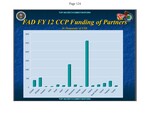
A Foreign Affairs Directorate slide showing Combined Cryptologic Program funding of foreign partners in fiscal year 2012, in thousands of dollars, across fifteen countries including Canada, Israel, Japan, Jordan, Pakistan, Taiwan and Thailand.