Agency: NSA National Security Agency (US) 2699 documents
Search documents matching “NSA” →The agency that WROTE each document.
Graphs
By document date (13 years)
By published date (9 years)
By Banner
By Classification
Refine (combine with another filter, via search)
Sort: Title
Documents
-
Excerpt of May 2008 NSA Afghanistan Dataflow Analysis [pdf]
The document outlines how the NSA’s Real Time Regional Gateway (RT-RG) in Afghanistan progressively expanded from late 2007 through 2008 to ingest massive amounts of GSM, VHF, HF, and telephony metadata from dozens of locations across Afghanistan, supplemented by third-party “dirtbox” collection from allied nations such as the Netherlands, Denmark, Norway, Germany, and Spain. It details the specific collection sites, data types, and timelines (SPIN 9, 10, 11, etc.), illustrating how partner contributions and multiple signals sources fed into the RT-RG system to enable real-time intelligence.
Programs: FOURCORNERS · FORTRESS · WARRIOR · ECHIDNA · CASSIEOPIA · KARUS · SOUNDER · SNICK · TEMPOWOLFE · CALYPSO · TATTERAN · AIRBORNE · LEAVEBEHIND · UDEAUS · NELEUS · CROSSHAIR · SSO · DRT · RIVET JOINT · VOICESAIL“Mission Creep: How the NSA’s Game-Changing Targeting System Built for Iraq and Afghanistan Ended Up on the Mexico Border” - The Intercept ↗ (2019-05-29) · “Norges hemmelige krig i Afghanistan” - NRK ↗ (2019-05-29) · Moltke, Henrik · Skille, Øyvind Bye · Døvik, Olav · Hansen, Ståle Ellingsgard · Fjørtoft, Martin -
Expeditionary Access Operations: NSA’s Close Access Network Exploitation Program [pdf]
The document describes NSA/TAO’s Expeditionary Access Operations (EAO, S3283), a deployable arm that conducts human-enabled Close Access Network Exploitation (CNE) worldwide—using techniques from physical implants and gifted/compromised laptops to wireless injection tools (e.g., BLINDDATE, NITESTAND) and Wi-Fi geolocation—to support tactical customers like SOCOM, DIA, and task forces in Afghanistan, Iraq, and elsewhere. It details organization, tools, operational theaters (Bagram, Kabul, Kandahar, Stuttgart, Texas, etc.), specific operations (IRONPERSISTENCE, CLIMBINGSHIRT), and plans to formalize partnerships with USCYBERCOM and expand expeditionary CANO capabilities.
Programs: NITESTAND · HAPPY HOUR · BADDECISION · MASTERSHAKE · IRONPERSISTENCE · CLIMBINGSHIRT · BLINDDATE -
F6, NSA Texas, and Yakima Research Station Collaborate on Venezuela Survey SIDtoday [pdf]
In the first in a series about SIGINT Development (SIGDEV) collaboration, the authors describe how three different departments worked together to develop new sources of signals intelligence on Venezuela. The Special Collection Service (F6), NSA Texas, and the Yakima Research Center worked on a remote survey that "uncovered dozens of links carrying traffic for Venezuelan targets of interest."
Programs: ESECSThe Intercept ↗ (2019-05-29) -
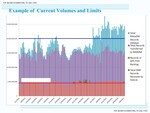
FASCIA: The NSA's huge trove of location records [pdf]
FASCIA is the National Security Agency's enormous database containing trillions of metadata records, many with device locations, that are collected from a variety of sources. This document shows the volume and types of device-location data collected by the agency.
“NSA tracking cellphone locations worldwide, Snowden documents show” - The Washington Post ↗ (2013-12-04) · “No Place to Hide” - Metropolitan Books ↗ (2014-05-13) · Gellman, Barton · Soltani, Ashkan · Greenwald, Glenn -
Ferguson NSA Visit Précis [pdf]
This internal NSA "Visit Précis" from March 2013 details a high-level courtesy call between Ambassador Roy Ferguson of New Zealand and the Director of the NSA. The meeting's primary objective was to discuss proposed legislative changes to New Zealand’s intelligence community, focusing on increased oversight in the wake of public controversies.
Programs: FIRSTLIGHTPeople: Ferguson, Roy · Cusick, James M. · Inglis, Chris · Fleisch, Fran · Kagan, Edgard · Wolfenson, Hugh · Dotcom, Kim · Alexander, Keith B. -
Friedman Presentation: Career Opportunities at NSA's Field Headquarters SIDtoday [pdf]
As part of the agency's Mission Alignment initiative, a recruitment event for opportunities at NSA field headquarters in Georgia, Texas, Colorado, and Hawaii will be held.
The Intercept ↗ (2017-04-24) -
GCCS-I3 Delivers Iraq Intelligence Picture to NSA SIDtoday [pdf]
The primary command-and-control system for commanders in Iraq was expanded so that SIGINT was “fully integrated into the campaign from planning through execution.”
The Intercept ↗ (2016-08-10) -
German, NSA SIGINTers Share DNI Processing Knowledge SIDtoday [pdf]
A delegation from Germany’s Federal Intelligence Service visits Fort Meade, Maryland, to learn about the NSA’s “packet level” selection and filtering of internet-based traffic, which is opposite to the approach used by the Germans.
“The NSA in Germany: Snowden's Documents Available for Download” - Der Spiegel ↗ (2014-06-18) · The Intercept ↗ (2018-08-15) -
Getting Linguistic Help from Outside NSA SIDtoday [pdf]
Since 9/11 there has been a shortage of translators for terrorism and national security related tasks. Other agencies faced the same challenge. As a response, the National Virtual Translation Center - a network of translators and transcribers working from home or sites near their homes - was created.
Programs: NVTCThe Intercept ↗ (2019-05-29) -
GIS Day at NSA SIDtoday [pdf]
Presentations on Geographic Information Systems will focus on transitioning from legacy government mapping systems to modern commercial tools.
The Intercept ↗ (2016-08-10) -
Good Chemistry: NSA Hosts Largest-Ever International CBW Analyst Conference SIDtoday [pdf]
The NSA held a conference for analysts from the U.S., U.K., Canada, and Australia who work on intelligence relating to chemical and biological weapons.
Marking: CONFIDENTIALThe Intercept ↗ (2018-03-01) -
Guidelines for the classification of NSA SIGINT details (1945-1967) [pdf]
This document is an NSA classification guide that defines how and why historical SIGINT material from 1945–1967 remains classified, in many cases for 75 years. It systematically explains which intelligence activities, targets, partnerships, and technical methods must stay protected because they still reveal sensitive sources, methods, and diplomatic equities.
-
Happenings at NSA/CSS Hawaii SIDtoday [pdf]
The Hawaii Signals Intelligence Directorate (formerly known as the Kunia Regional Security Operations Center) has new leadership: Col. Mark Westergren as director and Sally Holcomb as deputy director.
The Intercept ↗ (2018-03-01) -
How Japanese SIGINTers Helped NSA SIDtoday [pdf]
Japan’s Directorate for SIGNIT, or DFS, found the replacement for a signal that benefited “many organizations” in the U.S. intelligence community but disappeared in 2002 or 2003. To honor this discovery, the NSA allowed DFS to name the new signal.
The Intercept ↗ (2018-03-01) -
How NSA Is Prepared for the Winter Olympics (Which Kick Off Tomorrow) SIDtoday [pdf]
NSA is ready for yet another Olympics in the geographically challenging Italian alps. A SCIF has been set up and analyst deployed to Turin and the National Counterterrorism Center in Virginia. Though the Italians are deemed better at providing security than the Greeks were in Athens, NSA will be "monitoring host government communications to verify security planning, performance and sharing of threat information."
Programs: VOICESAILPeople: Bush, LauraThe Intercept ↗ (2018-08-15) -
How NSA Teams Support Tactical Forces in Iraq SIDtoday [pdf]
Members of early Cryptologic Support Teams deployed to Iraq remember difficulties and successes of the combat support missions in Balad and Mosul in 2004.
Programs: GEOCELLThe Intercept ↗ (2018-03-01) -
How the NSA Accesses Smartphone Data [pdf]
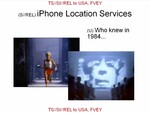
This document reveals how the NSA and its Five Eyes partners developed sophisticated methods to exploit iPhone location services and BlackBerry communications, framing smartphone users as “zombies” willingly sharing data. It includes examples of intercepted geolocation data and decrypted BlackBerry emails, illustrating targeted surveillance capabilities against both consumer and government communications.
-
How the NSA Pinpoints a Mobile Device [pdf]
This document is an internal National Security Agency classification guide outlining the agency's abilities to intercept cellular communications.
Programs: ARCVIEW -
How the NSA verifies a target's location [pdf]
This is an excerpt from a transcript of National Security Agency training videos that describe how to verify the location of a targeted device. It explains how the NSA monitors different types of mobile signaling information known as HLR and VLR registrations in order to locate individuals. It also makes clear that the agency is able to use location tracking to ascertain whether a target is in the United States.
-
Internal NSA presentation on the BND's organization [pdf]
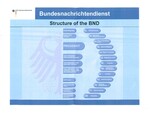
These six organizational charts and briefing slides detail the structure of Germany's BND foreign intelligence service, specifically its SIGINT Directorate (Abteilung Technische Aufklärung) and new Cyber Intelligence division (T4), along with a cooperation model showing intelligence sharing between BND, domestic intelligence service BfV, and the Federal Office for Information Security (BSI).