Tag: intelligence sharing 91 documents
Search documents matching “intelligence sharing” →Free-text subjects the curators added. Unlike the other axes these are not necessarily from the documents' own vocabulary, so they are the loosest thing to browse by (and the most forgiving).
Graphs
By document date (12 years)
By Banner
By Classification
Refine (combine with another filter, via search)
Sort: Title
Documents
-
Improving Dataflow to a Valued Partner SIDtoday [pdf]
A tool used to pass sensitive information to a third party "customer" has been upgraded and now allows for NSA to monitor whether the information has been received and all systems are running smoothly.
The Intercept ↗ (2019-05-29) -
Instability creates opportunity against counter-terrorism targets SIDtoday [pdf]
This document reveals how the NSA’s collaboration with Ethiopia during and after the 2006 Ethiopian invasion of Somalia was leveraged to advance U.S. counterterrorism objectives, using SIGINT tools and shared intelligence to track and eliminate al-Qaida targets across the Horn of Africa.
-
Intelink, Then and Now SIDtoday [pdf]
The NSA has contributed multimedia SIGINT reports to Intelink, the joint intranet system of the Department of Defense and intelligence community, from the service's inception in 1994 in the wake of the Gulf War up through the current global war on terror.
Programs: PLUSThe Intercept ↗ (2017-04-24) -
Intellipedia -- It's for Analysts SIDtoday [pdf]
Only 20 NSA staff members have registered for Intellipedia, the intelligence community's wiki, compared to 200 CIA staffers. Intellipedia represents one of the new resources available through Intelink, which also allows IC employees to create blogs and to instant message with each other.
The Intercept ↗ (2019-05-29) -
International Incident Avoided, Thanks to Intelligence SIDtoday [pdf]
Israel was concerned that a North Korean ship was carrying missile-related cargo for Syria or Iran. The U.S. arranged for Egyptians to inspect the cargo and convinced Israel that the ship wasn’t worth boarding, averting a “politically sensitive incident.”
The Intercept ↗ (2018-08-15) -
Israel-US 1999 Agreement [pdf]
This July 1999 top secret agreement between the U.S. Defense Intelligence Agency and Israel's Directorate of Military Intelligence establishes comprehensive intelligence-sharing arrangements covering Middle Eastern threats, terrorism, weapons of mass destruction, and foreign materiel exploitation, superseding previous agreements dating back to 1968 and including specific provisions for conferences, written requests, face-to-face analyst meetings, and security protocols.
-
Japan official NSA visit, HF briefing [pdf]
The document describes ongoing NSA efforts to renew high-frequency direction-finding (HFDF) collaboration with Japan’s Directorate for SIGINT (DFS) after Japan withdrew from the CROSSHAIR network in 2009. By 2012–2013, both sides were manually exchanging HFDF data, and the NSA sought to advance toward automated data sharing via its BORESIGHT system while reassuring Japan that it would not replace or override its existing technology.
“Japan Made Secret Deals With the NSA That Expanded Global Surveillance” - The Intercept ↗ (2017-04-24) · “アメリカに監視される日本 ~スノーデン“未公開ファイル”の衝撃” - NHK ↗ (2017-04-24) · Gallagher, Ryan · Ikegami, Akira -
Japan provided with XKEYSCORE [pdf]
This document outlines a request for approval to provide training to the Japanese Directorate for SIGINT (DFS) on using advanced SIGINT systems, including XKEYSCORE, to enhance Japan's cyber network defense capabilities. This training, scheduled for April 2013, aligns with U.S. strategic goals to bolster the cyber defense abilities of allied nations, highlighting ongoing NSA collaboration with Japan on surveillance and cybersecurity.
“Japan Made Secret Deals With the NSA That Expanded Global Surveillance” - The Intercept ↗ (2017-04-24) · “アメリカに監視される日本 ~スノーデン“未公開ファイル”の衝撃” - NHK ↗ (2017-04-24) · Gallagher, Ryan · Ikegami, Akira -
Legal issues UK regarding Sweden and Quantum [pdf]
An internal NSA document from April 2013 that describes the status of the relationship with a number of partners. It takes up a three-party agreement regarding the hacker programme Quantum, between the Swedish FRA, American NSA and British GCHQ, initiated by NSA chief Keith Alexander. The document shows that the project has so far resulted in a “proof of concept” – i.e., the system works, but it has not yet generated any substantial intelligence results. It also shows that the GCHQ are doubtful about continuing in the project because of restrictions in British legislation, but that the NSA’s intention all along has been to carry out the project with the Swedish FRA rather than GCHQ.
Programs: QUANTUM -
Legalities - GCHQ Databases eg Pilbeam, Salamanca, UDAQ etc [pdf]
This October 2007 GCHQ document outlines the legal authorization requirements for querying surveillance databases, revealing that GCHQ analysts can search their own databases (like PILBEAM, SALAMANCA, UDAQ) for metadata on anyone regardless of nationality without additional authorization, while NSA databases (like MARINA, MAINWAY, DISHFIRE) prohibit searches for Americans and other Five Eyes citizens but permit searches for UK persons.
-
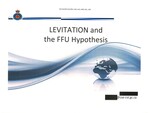
LEVITATION and the FFU Hypothesis [pdf]
This document describes LEVITATION, a top-secret Canadian Communications Security Establishment (CSE) project that monitors millions of daily file uploads and downloads from free file-sharing sites to identify potential extremist activity. It details the program’s data collection methods, analytical workflow, use of partner databases, and examples of successful discoveries related to terrorist materials and hostage videos.
-
List of SIGADs in Germany [pdf]
This document provides a comprehensive log of about 155 SIGINT Activity Designators (SIGADs), cataloging NSA surveillance sites and operations situated across Germany from the post-WWII era through the 2000s. It details specific locations, associated military units, and operational timelines, revealing the extensive historical and ongoing footprint of American intelligence gathering on German soil.
-
Memorandum Of Understanding between the NSA/CSS and the Israeli Sigint National Unit (ISNU) [pdf]
This document is a highly classified Memorandum of Understanding (MOU) between the NSA and the Israeli SIGINT National Unit (ISNU) regarding the sharing of raw, unminimized Signals Intelligence (SIGINT). The agreement establishes formal procedures to protect the privacy rights of U.S. persons contained within the data provided by the U.S. to Israel. While it mandates the "masking" of U.S. identities in Israeli reports, it notably allows Israel to receive and process massive streams of unevaluated data—including metadata and content—before the NSA has reviewed or filtered it.
Programs: CHIPPEWA -
Metadata Sharing Memorandum (2005) [pdf]
This 2005 NSA memorandum outlines plans to expand and formalize intelligence community–wide sharing of SIGINT-derived metadata beyond NSA, centering on the CRISSCROSS/PROTON program while balancing legal, operational, and source-protection concerns. It proposes a federated query model to increase access without further duplicating sensitive data outside NSA.
-
MGQ's Notes from the Field - Part 2 SIDtoday [pdf]
Signals Intelligence Director Richard Quirk describes another day on the ground in Baghdad, including meetings with multinational force commands and with the commander of the South Korean Forces in Iraq.
Programs: CENTER ICEThe Intercept ↗ (2017-09-13) -
MILKWHITE Enrichment Service (MES) Programme [pdf]
This March 2011 GCHQ document details the MILKWHITE program, which is enhancing domestic interception and data analysis capabilities. It outlines expanded funding for advanced analytics, bulk data storage, and service scaling to meet growing demand from multiple law enforcement and intelligence agencies, including SOCA, HMRC, MI5, and SIS, thereby broadening access to large volumes of internet-derived metadata for operational use.
-
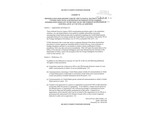
Minimization Procedures Used By The National Security Agency In Connection With Acquisitions Of Foreign Intelligence, Information Pursuant To Section 702 Of The Foreign Intelligence Court Surveillance Act Of 1978 [pdf]
The NSA’s Section 702 minimization rules expose how the agency can collect, keep, and use Americans’ communications without warrants, despite claiming to target only foreigners. While the document sets out procedures for handling U.S. data, it includes broad loopholes—like keeping “inadvertently” collected domestic messages for years, sharing unfiltered data with the FBI, CIA, and even foreign governments, and giving NSA analysts wide discretion over who gets surveilled—all under secret FISA Court approval.
People: Holder, Eric H. Jr. -
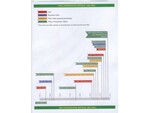
N.S.A. Timeline of Surveillance Law Developments [pdf]
This chart, apparently from an internal N.S.A. presentation, lists milestones in surveillance rules over nearly four decades. The July 2002 “Raw Take” sharing order, whose existence has not previously been disclosed, is just one of three rulings by the Foreign Intelligence Surveillance Court to make the list. The other two were 2004 and 2006 rulings allowing bulk collection of data about emails and phone calls.
-
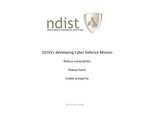
NDIST — GCHQ’s Developing Cyber Defence Mission [pdf]
GCHQ’s NDIST sets out a developing cyber defence mission to reduce vulnerability and harm while enabling prosperity, centered on building a global-level picture of strategic threats and sharing intelligence with allies. The team anchors this work in massive telemetry, claiming roughly 100 million malware events collected per day to drive situational awareness.
-
New CT Intelligence Exchange With Asia-Pacific Partners SIDtoday [pdf]
The NSA has begun signals intelligence-sharing partnerships with seven other countries' intelligence agencies about 12 specific terrorist groups active in the Asia-Pacific region.
People: Meals, CharlieThe Intercept ↗ (2017-09-13)