Tag: encryption breaking 11 documents
Search documents matching “encryption breaking” →Free-text subjects the curators added. Unlike the other axes these are not necessarily from the documents' own vocabulary, so they are the loosest thing to browse by (and the most forgiving).
Graphs
By Banner
By Classification
Refine (combine with another filter, via search)
Sort: Title
Documents
-
Black Budget: Cryptanalysis & Exploitation Services – Analysis of Target Systems [pdf]
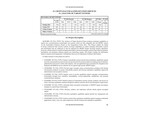
This document is a budget justification for the NSA's Cryptanalysis & Exploitation Services project, which develops capabilities to defeat commercial encryption systems, exploit emerging communications technologies, and conduct vulnerability analysis against both foreign and domestic security products.
“The CIA Campaign to Steal Apple's Secrets” - The Intercept ↗ (2015-03-10) · Scahill, Jeremy · Begley, Josh -
Excerpt from Hpc Overview 1011 [pdf]
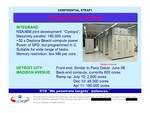
This document outlines the development of a highly advanced, massively parallel computing system, referred to as "Cyclops", a joint project between NSA and IBM. It is designed to perform complex tasks related to signals intelligence and code-breaking, with significant computing power, ramping up to 180,000 cores, and is referenced as a critical tool in penetrating target defenses.
-
GALLANTWAVE [pdf]
NSA presentation describing GALLANTWAVE — a LONGHAUL capability for VPN decryption — specifically its scaling architecture to handle increased collection volumes and a peering mechanism allowing partner agencies to share single-sided VPN key exchange events so that LONGHAUL can complete decryption attempts that would otherwise fail due to one-sided collection.
-
Guidelines for the classification of NSA SIGINT details (1945-1967) [pdf]
This document is an NSA classification guide that defines how and why historical SIGINT material from 1945–1967 remains classified, in many cases for 75 years. It systematically explains which intelligence activities, targets, partnerships, and technical methods must stay protected because they still reveal sensitive sources, methods, and diplomatic equities.
-
How the NSA Pinpoints a Mobile Device [pdf]
This document is an internal National Security Agency classification guide outlining the agency's abilities to intercept cellular communications.
Programs: ARCVIEW -
Intro to the VPN Exploitation Process [pdf]
NSA introduction to the VPN exploitation process from September 2010, presented by the OTP VPN Exploitation Team, covering the full workflow from initial collection through to sustained decryption of IPSec, PPTP, SSL and SSH traffic, with named exploitation successes including airlines, diplomatic missions, banks and intelligence services across Iran, Jordan, Russia, Turkey, Pakistan, Afghanistan, Somalia, Indonesia and Mexico.
Programs: BLEAKINQUIRY · TOYGRIPPE · XKEYSCORE · MAILORDER · CORALREEF · VULCANDEATHGRIP · SCISSORS · TURTLEPOWER · PINWALE · FOURSCORE · CADENCE · UTT · VULCANMINDMELD · CAPRIOS · AGILITY · NKB · FOLLOWTHEMONEY -
OTR encrypted messages can't be decrypted by the NSA [pdf]
Three intercepted chat sessions from 16 March 2012 collected under PRISM, showing a target switching mid-conversation from unencrypted to OTR-encrypted messaging — with NSA able to collect the session metadata and unencrypted portions but unable to decrypt the OTR messages, each annotated "No decrypt available for this OTR encrypted message."
Programs: PRISM -
PROJECT BULLRUN Classification Guide [pdf]
This BULLRUN classification guide outlines the NSA’s highly secretive methods for undermining and exploiting encryption technologies through a combination of cryptanalysis, industry collaboration, covert implants, and network exploitation. It specifies strict classification protocols for capabilities against protocols like TLS/SSL, VPNs, VoIP, and webmail, emphasizing secrecy around sources, methods, and industry partnerships that make commercial encryption systems deliberately vulnerable.
Programs: BULLRUN · APERIODIC · AMBULANT · AUNTIE · PAINTEDEAGLE · PAWLEYS · PITCHFORD · PENDLETON · PICARESQUE · PIEDMONT“Revealed: how US and UK spy agencies defeat internet privacy and security” - The Guardian ↗ (2013-09-05) · “N.S.A. Able to Foil Basic Safeguards of Privacy on Web” - The New York Times ↗ (2013-09-05) · “Revealed: The NSA's Secret Campaign to Crack, Undermine Internet Security” - ProPublica ↗ (2013-09-05) · Ball, James · Borger, Julian · Greenwald, Glenn · Perlroth, Nicole · Larson, Jeff · Shane, Scott -
Research & Technology – Penetrating Hard Targets [pdf]
The NSA’s “Penetrating Hard Targets” program aims at developing a cryptologically useful quantum computer capable of breaking strong encryption systems, including those protecting global financial and government communications. Conducted under the U.S. intelligence “black budget,” the program focuses on quantum physics research, engineering studies, and experimental milestones such as achieving dynamical decoupling and quantum control on semiconductor qubits, which are foundational for scaling to larger systems. A related initiative, “Owning the Net,” explores quantum communication technologies to develop new Quantum Key Distribution (QKD) attacks and assess the security of emerging encryption methods.
-
SCARLETFEVER [pdf]
NSA WikiInfo page describing SCARLETFEVER — the second LONGHAUL cryptanalytic capability, a message-driven cryptologic exploitation service for DNSC (Data Network Session Cipher) traffic serving clients including TURMOIL, WEALTHYCLUSTER and the TEe, communicating via ISLANDTRANSPORT with ISLANDHIDEAWAY encryption.
Programs: SCARLETFEVER · LONGHAUL · TURMOIL · WEALTHYCLUSTER · TEE · ISLANDTRANSPORT · ISLANDHIDEAWAY · POISONNUT · PICARESQUE -
Tracking Targets Through Proxies & Anonymizers [pdf]
This NSA presentation details methods for tracking and de-anonymizing internet users who employ privacy tools like Tor, proxies, and VPN services such as AnchorFree's Hotspot Shield. The document explains how the agency reverse-engineers anonymization tools, creates "fingerprints" to identify their traffic in surveillance systems, and correlates encrypted connections to reveal users' real IP addresses and locations—acknowledging this work "makes for sad analysts" when targets successfully obscure their identities.