Publication year: 2018 53 documents
Search documents matching “2018” →When a publisher first published each document. If a document is published multiple times, only the oldest one is used here.
Graphs
By document date (9 years)
Sort: Title
Documents
-
Alert: Voice Masking Is Discovered in SIGINT SIDtoday [pdf]
This March 2007 post from the internal NSA newsletter SIDToday draws attention to voice-masking technology used by subjects of surveillance to frustrate the agency’s voice-recognition efforts.
-
Alvin, Simon, and... Al Qaeda? Finding Modified Voice in SIGINT Traffic SIDtoday [pdf]
This SIDtoday article discusses the use of voice modification technology by Al-Qaeda and other extremist groups to evade identification in SIGINT traffic. It highlights the development of the HLT Lite software by R64, which can automatically detect modified voices in intercepted communications, enabling the identification of targets even when traditional voice recognition fails.
-
Attention, SIGINT Analysts: E.O. 12333 Transit Communications -- What Are They? SIDtoday [pdf]
This SIDtoday article clarifies the difference between NSA's longstanding authority to collect "transit communications" and FISA Amendment Act (FAA) Section 702 authorizations. The Office of Special Source Operations (SSO) manages these transit communications under various programs like US-990, US-983, and US-3273.
Programs: SSO -
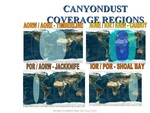
Canyondust coverage regions [pdf]
This document describes NSA's capabilities for exploiting commercial satellite communications (VSAT), including systems from Hughes, ViaSat, iDirect, and others. It details programs such as FALLOWHAUNT and CORRALCLOUD for targeting and analyzing satellite communications technologies, including TDMA and PCMA systems.
Programs: CANYONDUST · TIMBERLINE · CARBOY · JACKKNIFE · SHOAL BAY · FALLOWHAUNT · CORRALCLOUD · DOUBLETALK -
Come to SID's Identity Intelligence (I2) Day Conference and See Your Target in a Whole New Light! SIDtoday [pdf]
This SIDtoday article promotes NSA's Identity Intelligence (I2) Day Conference, highlighting the importance of using SIGINT tools and techniques to track individuals across time and space. It emphasizes the growing role of biometrics, biographic data, and digital footprints in identifying and targeting foreign persons of interest, with insights from key speakers and case studies.
-
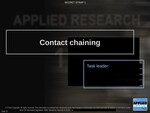
Contact chaining [pdf]
A secret GCHQ Applied Research presentation describing how the agency's analysts use automated tools to map out a surveillance target's social network — starting with a known email address or phone number, then scoring and ranking every person that target communicates with to identify the most "suspicious" or strongly connected contacts, using twelve different relationship types including direct calls, shared locations, timing patterns, equipment sharing and calling profile similarity.
Programs: CARPAT · PRIME TIME · SNAPDRAGON · MoaG · SORTING FRIENDS · CHART BREAKER · MAMBA · CONTACTLENS · FLEXIMART · PSOUP · IMMINGLE -
Counterterrorism Analytic Working Group Meets in Madrid SIDtoday [pdf]
This SIDtoday document details the 11th SIGINT Seniors Counterterrorism (SISECT) Analytic Working Group meeting in Madrid, which focused on enhancing counterterrorism collaboration through topics like terrorist use of the Internet, metadata sharing, and language capabilities. Key outcomes included initiatives for SIGINT exploitation of the Internet, improving language processing and translation via SIGDASYS, and fostering deeper cooperation between nations on counterterrorism efforts.
-
Cyber Paper Japan NSA DFS [pdf]
This January 2013 NSA memo from SUSLAJ (Special U.S. Liaison Activity Japan) details Japan’s effort to rapidly launch a SIGINT-enabled cyber defense initiative and a new 100-person “Cybercom” by April 2013. It describes tensions between reformist elements like CIRO (Cabinet Intelligence and Research Office) and more conservative ones like the DFS (Directorate for SIGINT) and MOD Internal Bureau, with struggles in policy, information sharing, and workforce training. The memo shows Japan seeking NSA’s technical help — including at the MALLARD FORNSAT site — while rushing to deliver malware signatures and sign new information-sharing agreements. The NSA viewed Japan as responsive but too focused on short-term results rather than long-term cyber workforce development.
Programs: MALLARD“The Untold Story of Japan's Secret Spy Agency” - The Intercept ↗ (2018-05-19) · “日本の諜報 スクープ 最高機密ファイル” - NHK ↗ (2018-05-19) · Gallagher, Ryan -
DFS and NSA partnership [pdf]
DFS the NSA Sister Organization. This document outlines a high-level visit by Japan’s Directorate for Signals Intelligence (DFS), described as NSA’s “sister organization,” to the NSA/CSS headquarters in early 2013. The purpose was to strengthen their decades-long partnership, focusing on SIGINT-enabled cyber capabilities, training, and mutual understanding of each agency’s role in cyber defense.
People: Alexander, Keith B.“The Untold Story of Japan's Secret Spy Agency” - The Intercept ↗ (2018-05-19) · “日本の諜報 スクープ 最高機密ファイル” - NHK ↗ (2018-05-19) · Gallagher, Ryan -
DFS SIGINT-enabled Cyber [pdf]
This February 2013 top-secret DFS presentation outlines how Japan’s Directorate for Signals Intelligence (DFS) developed a SIGINT-enabled cyber program with U.S. NSA support, launching operations in late 2012 using the MALLARD system to collect and analyze satellite-based internet sessions. It details the project’s buildup, early challenges with massive data volumes, reliance on U.S. technical assistance, and plans for expanded antennas, infrastructure, and long-term system upgrades.
Marking: TOP SECRETPrograms: MALLARD“The Untold Story of Japan's Secret Spy Agency” - The Intercept ↗ (2018-05-19) · “日本の諜報 スクープ 最高機密ファイル” - NHK ↗ (2018-05-19) · Gallagher, Ryan -
Did You Know that NSA Has an Arctic Presence? SIDtoday [pdf]
This SIDtoday document describes the NSA's Arctic operations, highlighting its Alaska Mission Operations Center (AMOC) at Point Barrow, Alaska, which monitors Russian military activity in the Arctic. The facility supports U.S. and Canadian defense efforts, tracks Russian air movements, and is involved in upgrades and collaborations with Arctic partners to address emerging intelligence challenges in the region.
-
Entries From Sample SSO Accesses [pdf]
This document reveals that OAKSTAR is a covert NSA program involving corporate partnerships to access global internet traffic, while MONKEYROCKET, a sub-program of OAKSTAR, specifically targets foreign internet traffic from the Middle East, Europe, South America, and Asia for surveillance, with data funneled to the NSA’s European Technical Center for further analysis. It also notes that the data collected is stored in the YANKEE partition for processing.
-
Entry From SSO News [pdf]
This document discusses the initial operational capability of MONKEYROCKET, a non-Western Internet anonymization service developed as part of the OAKSTAR program, aimed at supporting counter-terrorism efforts. As of July 2012, the system was forwarding metadata to backend repositories, with a significant user base of around 16,000, primarily from countries like Iran and China. The service is expected to grow in usage, generating about 2,000 events per day.
-
Entry From SSODictionary v1.0 [pdf]
This document outlines a pending access point for MONKEYROCKET under the OAKSTAR program, focusing on full-take data collection from selected counter-terrorism (CT) targets using a non-Western anonymous browsing service. The collection will include user data, such as billing information and IP addresses, and support NSA's long-term strategy targeting terrorism and other criminal activities, with data gathered under Executive Order 12333. The system used for collection will be vPCS or XKS, and the operation is codenamed "THUNDERISLAND."
-
FAA702 comms memo [pdf]
This document details NSA's response to concerns raised by the FISA Court over the collection of non-targeted data in FAA-702 upstream collection. To mitigate the risk of continued acquisition, NSA is implementing temporary measures, including cautionary banners and updated processes, to prevent misuse of data that may not be directly related to tasked selectors.
People: Shea, Teresa H. -
FAIRVIEW brief overview [pdf]
This document outlines the FAIRVIEW program, established in 1985, which leverages a corporate partner to exploit international communications through cables, switches, and routers. It is one of the NSA's top sources for metadata and serialized intelligence, supporting a wide range of targets including counter-terrorism, crime, and international security issues.
Programs: FAIRVIEW -
FORNSAT technologies [pdf]
This document outlines a Foreign Satellite Communication Exploitation Model targeting satellite systems such as Intelsat, Iridium, Hughes, ND SatCom, and Inmarsat, using both fixed and mobile satellite services. It describes specific collection and geolocation systems—SEADIVER, ZODIACARRAY, and CANYONDUST—that capture and process voice, fax, data, and terminal location information across global coverage areas.
Programs: SHAREDVISION · DARKQUEST · EKB · GLOBALVIEW · TRYST · ZODIACARRAY · CANYONDUST · IRIDIUM · SEADIVER -
GCHQ Visit to NSA on Voice Analytics Systems [pdf]
This document is a GCHQ report detailing a late-November (2007?) visit to NSA’s R64 division focused on collaboration in language identification (LID) and speaker identification (SID) systems, including sharing models and research insights. It also describes NSA tools like Hotzone and Voice RT for real-time voice analysis, and mentions an upcoming visit from the CLEAR consortium to address challenges in speech intelligibility and audio recovery for intercepted communications.
-
GCHQ – Computer Network Exploitation [pdf]
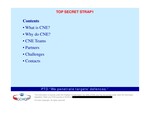
This document outlines GCHQ’s Computer Network Exploitation (CNE) capabilities, detailing how teams remotely access computers and networks without owners’ consent to gather intelligence, support operations, and conduct effects. It also covers operational tools, techniques, infrastructure, joint working with partners, deconfliction, and challenges such as avoiding detection and meeting increasing intelligence demands.
-
Global Collaboration Environment: Director’s talking points [pdf]
This NSA document reveals discussions between the agency and GCHQ about establishing a permanent joint surveillance facility in the UK to host the "SIGINT Seniors Europe" coalition, with both agencies coordinating messaging to overcome "persistent pushback" from some member nations. The memo indicates concerns that some European partners were reluctant due to "uncertainty on what missions the center will support, and associated concerns for European human rights laws," while the NSA preferred UK hosting as "optimal in terms of having the most flexibility in tuning the operation to benefit the Five Eyes."