Publication year: 2018-03 24 documents
Search documents matching “2018-03” →When a publisher first published each document. If a document is published multiple times, only the oldest one is used here.
Graphs
By document date (8 years)
Sort: Title
Documents
-
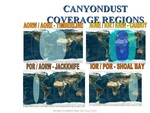
Canyondust coverage regions [pdf]
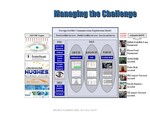
This document describes NSA's capabilities for exploiting commercial satellite communications (VSAT), including systems from Hughes, ViaSat, iDirect, and others. It details programs such as FALLOWHAUNT and CORRALCLOUD for targeting and analyzing satellite communications technologies, including TDMA and PCMA systems.
Programs: CANYONDUST · TIMBERLINE · CARBOY · JACKKNIFE · SHOAL BAY · FALLOWHAUNT · CORRALCLOUD · DOUBLETALK -
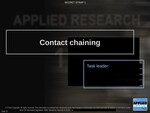
Contact chaining [pdf]
A secret GCHQ Applied Research presentation describing how the agency's analysts use automated tools to map out a surveillance target's social network — starting with a known email address or phone number, then scoring and ranking every person that target communicates with to identify the most "suspicious" or strongly connected contacts, using twelve different relationship types including direct calls, shared locations, timing patterns, equipment sharing and calling profile similarity.
Programs: CARPAT · PRIME TIME · SNAPDRAGON · MoaG · SORTING FRIENDS · CHART BREAKER · MAMBA · CONTACTLENS · FLEXIMART · PSOUP · IMMINGLE -
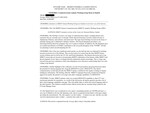
Counterterrorism Analytic Working Group Meets in Madrid SIDtoday [pdf]
This SIDtoday document details the 11th SIGINT Seniors Counterterrorism (SISECT) Analytic Working Group meeting in Madrid, which focused on enhancing counterterrorism collaboration through topics like terrorist use of the Internet, metadata sharing, and language capabilities. Key outcomes included initiatives for SIGINT exploitation of the Internet, improving language processing and translation via SIGDASYS, and fostering deeper cooperation between nations on counterterrorism efforts.
-
Entries From Sample SSO Accesses [pdf]
This document reveals that OAKSTAR is a covert NSA program involving corporate partnerships to access global internet traffic, while MONKEYROCKET, a sub-program of OAKSTAR, specifically targets foreign internet traffic from the Middle East, Europe, South America, and Asia for surveillance, with data funneled to the NSA’s European Technical Center for further analysis. It also notes that the data collected is stored in the YANKEE partition for processing.
-
Entry From SSO News [pdf]
This document discusses the initial operational capability of MONKEYROCKET, a non-Western Internet anonymization service developed as part of the OAKSTAR program, aimed at supporting counter-terrorism efforts. As of July 2012, the system was forwarding metadata to backend repositories, with a significant user base of around 16,000, primarily from countries like Iran and China. The service is expected to grow in usage, generating about 2,000 events per day.
-
Entry From SSODictionary v1.0 [pdf]
This document outlines a pending access point for MONKEYROCKET under the OAKSTAR program, focusing on full-take data collection from selected counter-terrorism (CT) targets using a non-Western anonymous browsing service. The collection will include user data, such as billing information and IP addresses, and support NSA's long-term strategy targeting terrorism and other criminal activities, with data gathered under Executive Order 12333. The system used for collection will be vPCS or XKS, and the operation is codenamed "THUNDERISLAND."
-
FORNSAT technologies [pdf]
This document outlines a Foreign Satellite Communication Exploitation Model targeting satellite systems such as Intelsat, Iridium, Hughes, ND SatCom, and Inmarsat, using both fixed and mobile satellite services. It describes specific collection and geolocation systems—SEADIVER, ZODIACARRAY, and CANYONDUST—that capture and process voice, fax, data, and terminal location information across global coverage areas.
Programs: SHAREDVISION · DARKQUEST · EKB · GLOBALVIEW · TRYST · ZODIACARRAY · CANYONDUST · IRIDIUM · SEADIVER -
Global Collaboration Environment: Director’s talking points [pdf]
This NSA document reveals discussions between the agency and GCHQ about establishing a permanent joint surveillance facility in the UK to host the "SIGINT Seniors Europe" coalition, with both agencies coordinating messaging to overcome "persistent pushback" from some member nations. The memo indicates concerns that some European partners were reluctant due to "uncertainty on what missions the center will support, and associated concerns for European human rights laws," while the NSA preferred UK hosting as "optimal in terms of having the most flexibility in tuning the operation to benefit the Five Eyes."
-
Graph theory in the operational environment – GCHQ [pdf]
This document details GCHQ’s research on identifying “closed loops” of communication, where targets use a small set of phones to communicate exclusively among themselves, often with cheap, disposable handsets like the Nokia 1100. It explains the methodology for analyzing anonymized metadata, constructing contact graphs, and extracting non-giant, non-tree components to discover operationally relevant closed loops for intelligence and counterterrorism purposes.
Programs: VOICESAILPeople: Rumsfeld, Donald -
Linguistic Resource Sharing in Asia-Pacific Region Takes Step Forward SIDtoday [pdf]
This document highlights a significant development in linguistic resource sharing within the Asia-Pacific region, where NSA Hawaii initiated the first successful voice cut exchange among SIGINT Seniors Pacific (SSPAC) members in June 2007. The use of the CRUSHED ICE data-sharing network to facilitate this exchange marks a key step in enhancing collaborative counterterrorism efforts by expanding the linguistic resources available for terrorist communications analysis.
Programs: CRUSHEDICE -
NSA's Changing Counterterrorism Relationship with India SIDtoday [pdf]
This document details the evolving counterterrorism relationship between NSA and India, highlighting the strengthening of collaboration, particularly after India's 2008 Mumbai attacks, and the integration of India into the SIGINT Seniors Pacific (SSPAC) forum. While the partnership has led to increased intelligence sharing and the deployment of NSA analysts to India, challenges such as leaks of sensitive information have impeded the full maturation of the relationship, necessitating tighter controls and ongoing diplomatic efforts.
-
OAKSTAR Travel Hanbook: A Guide for Traveling [pdf]
This document is a NSA OAKSTAR Travel Handbook, providing detailed guidance for personnel traveling on OAKSTAR-related missions, including MONKEYROCKET. It covers travel preparation, clearance requirements, coordination with partner organizations, operational security measures, conduct during visits, reporting obligations, and expense documentation to ensure sensitive intelligence operations are protected while engaging with private-sector partners.
Programs: OAKSTAR · STEELKNIGHT · SILVERZEPHYR · YACHTSTOP · SHIFTINGSHADOW · MONKEYROCKET · COBALTFALCON · BLUEZEPHYR · ORANGECRUSH · ORANGEBLOSSOM · PRIMECANE · TRANSPORTORO · THUNDERLISLAND · WHIPGENIE · SSO · THUNDERISLAND · YACHTSHOP -
OAKSTAR Weekly Update - Program Highlights Week of: March 16-22, 2013 [pdf]
The document is a NSA weekly operations update from March 16-22, 2013, detailing technical issues, maintenance, and intelligence activities within the OAKSTAR and MONKEYROCKET programs—surveillance systems used for data collection. It notes collection outages, system adjustments, and that analysts were using MONKEYROCKET access to track Bitcoin transactions and investigate organized crime and cyber targets using e-currency for money laundering.
Programs: OAKSTAR · PRIMECANE · MONKEYROCKET · NIAGARAFILES · TRANSPORTORO · XKEYSCORE · REMEDY · MARINA · CLOUDRUNNER -
OAKSTAR Weekly Update - Program Highlights Week of: March 2-8, 2013 [pdf]
The document is a NSA weekly operations update from March 2-8, 2013, detailing technical issues, maintenance, and intelligence activities within the OAKSTAR and MONKEYROCKET programs—surveillance systems used for data collection. It notes collection outages, system adjustments, and that analysts were using MONKEYROCKET access to track Bitcoin transactions and investigate organized crime and cyber targets using e-currency for money laundering.
-
OAKSTAR Weekly Update - Program Highlights Week of: March 23-29, 2013 [pdf]
The document is a NSA weekly operations update from March 23-29, 2013, it details equipment handoffs, script tweaks to improve data flow, metadata collection metrics, and ongoing MONKEYROCKET use for tracking Bitcoin-related targets, including sharing detailed user and session data with analysts for intelligence purposes.
-
OAKSTAR Weekly Update - Program Highlights Week of: March 30 - April 5, 2013 [pdf]
The document is a NSA weekly operations update from March 30 - April 5, 2013, reporting hardware failures and server issues with XKeyscore, efforts to reroute data and replace components, ongoing metadata collection metrics, and continued intelligence production, with OAKSTAR's 2013 serialized product totals at 430 reports and 2,641 GISTs (MONKEYROCKET: 1 report).
-
OAKSTAR Weekly Update - Program Highlights Week of: March 9-15, 2013 [pdf]
The document is a NSA weekly operations update from March 9-15, 2013, detailing technical issues, maintenance, and intelligence activities within the OAKSTAR and MONKEYROCKET programs—surveillance systems used for data collection. It notes collection outages, system adjustments, and that analysts were using MONKEYROCKET access to track Bitcoin transactions and investigate organized crime and cyber targets using e-currency for money laundering.
-
Sensitive Metadata Analytic Collaboration (SMAC) - Concept of Operations, October 2006 [pdf]
This document outlines the Sensitive Metadata Analytic Collaboration (SMAC) initiative, a system developed by the Five Eyes intelligence agencies to facilitate the sharing and analysis of sensitive metadata to support SIGINT (signals intelligence) missions. While the concept aims to improve collaboration and data sharing, its success is hindered by ongoing policy, legal, and technical barriers, as well as concerns about trust and participation among the agencies involved. The document suggests a complex, somewhat opaque process of metadata sharing that risks undermining privacy protections.
Programs: SMAC -
SIGINT Partnership Agrees to Greater Sharing on Afghanistan, CT, Piracy, and CND SIDtoday [pdf]
This SIDtoday document, covering the 2010 SIGINT Seniors Europe (SSEUR) Principals Conference in Berlin, outlines an agreement to enhance intelligence sharing on Afghanistan, counterterrorism, piracy, and computer-network defense. The conference focused on improving SIGINT support for military operations, counter-IED efforts, and expanding collaboration on global piracy issues, while emphasizing the sharing of critical intelligence such as Terrorist Identities Intelligence (T12) and supporting key leader engagement (KLE) and governance operations in Afghanistan.
People: Uhrlau, Ernst -
SIGINT Seniors Pacific: Successes and Future CT Goals Highlighted at Conference SIDtoday [pdf]
This SIDtoday document details the second annual SIGINT Seniors Pacific (SSPAC) conference held in November 2006, where counterterrorism (CT) officials from eight nations reviewed the progress of their intelligence-sharing and collaboration efforts, set strategic goals for 2007, and discussed the establishment of the CRUSHED ICE communication network. The conference underscored the alliance's successes in producing CT reports, sharing language capabilities, and fostering joint analysis, while also setting ambitious goals for expanding operational collaboration and enhancing the global response to terrorist threats in the Pacific region.
People: Solaiman, Abu