Classification: TK 57 documents
Search documents matching “TK” →Each document's classification level, as component values. If a document contains multiple classifications, the highest is used here.
Graphs
By Banner
Refine (combine with another filter, via search)
Sort: Title
Documents
-
A Behind-the-Scenes Look at the NSA-Ethiopian Relationship SIDtoday [pdf]
This SIDtoday article details the NSA's growing collaboration with Ethiopian security agencies, particularly through the Operation Lion's Pride SIGINT program. It highlights a successful training session where Ethiopian soldiers and civilians learned traffic analysis, strengthening the relationship between the NSA, Ethiopian National Defense Forces (ENDF), and the Information Network Security Agency (INSA).
Programs: LIONSPRIDE -
"Anarchist" Image Index [pdf]
Images collected through ANARCHIST, the GCHQ covername for a joint GCHQ/NSA SIGINT collection site on Mt. Troodos, Cyprus, drawn from imagery and pages in GCHQ's internal GCWiki.
Programs: ANARCHIST -
APPARITION Becomes a Reality: New Corporate VSAT-Geolocation Capability Sees Its First Deployment SIDtoday [pdf]
This document provides an update to the APPARITION system, which is designed to provide precision geolocation information for VSAT terminals. APPARITION, as contrasted with GHOSTHUNTER, is designed to proactively target and geolocate VSATs and for that information to be populated in MASTERSHAKE. The result is that any location will be able to combine VSAT information with FORNSAT information to geolocate targets.
-
Black Budget: Cryptanalysis & Exploitation Services – Analysis of Target Systems [pdf]
This document is a budget justification for the NSA's Cryptanalysis & Exploitation Services project, which develops capabilities to defeat commercial encryption systems, exploit emerging communications technologies, and conduct vulnerability analysis against both foreign and domestic security products.
“The CIA Campaign to Steal Apple's Secrets” - The Intercept ↗ (2015-03-10) · Scahill, Jeremy · Begley, Josh -
Black Budget: Special Source Access - Foreign Partner Access [pdf]
This document provides a detailed financial and operational breakdown from the NSA’s FY 2013 Congressional Budget Justification for the SSO's Foreign Partner Access project. It outlines the strategic funding for the RAMPART-A and WINDSTOP programs, which leverage international partnerships to intercept massive volumes of global communications traffic from long-haul fiber-optic cables and integrated 2nd Party architectures.
“How Secret Partners Expand NSA’s Surveillance Dragnet” - The Intercept ↗ (2014-06-18) · “NSA ‘third party’ partners tap the Internet backbone in global surveillance program” - Dagbladet Information ↗ (2014-06-19) · Gallagher, Ryan · Geist, Anton · Gjerding, Sebastian · Moltke, Henrik · Poitras, Laura · Jensen, Kristian -
“Black Budget” — FY 2013 Congressional Budget Justification/National Intelligence Program, p. 262 (February 2012) [pdf]
This excerpt from the Fiscal Year 2013 Congressional Budget Justification (the "Black Budget") details the NSA's financial and performance metrics for "Analytics Modernization," specifically focusing on the transition to high-volume, automated speech-to-text systems. It records the decommissioning of legacy voice processing systems (VoiceRT) in favor of more robust, scalable capabilities aimed at rendering millions of intercepted voice files searchable via text queries and paired dialogue transcription.
Programs: VoiceRT -
“Black Budget” — FY 2013 Congressional Budget Justification/National Intelligence Program, pp. 360-364 (February 2012) [pdf]
The "Human Language Technology (HLT) Research" section of the FY 2013 "Black Budget" details a specialized research project focused on creating "force multipliers" for the NSA workforce through automated speech-to-text, machine translation, and content extraction. With a requested budget of $29.4 million, the project aims to bridge the gap between foundational academic research (via Johns Hopkins University) and the practical exploitation of the volume and velocity of global SIGINT.
Programs: HLT -
BOUNDLESSINFORMANT Chart on United States [pdf]
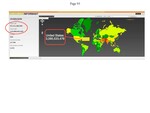
The BOUNDLESSINFORMANT global overview screen with the United States selected: 97,111,188,358 DNI and 124,808,692,959 DNR records over the last 30 days across 504 SIGADs, of which 3,095,533,478 are attributed to the United States.
Programs: BOUNDLESSINFORMANT -
BOUNDLESSINFORMANT Overview [pdf]
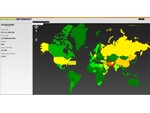
World map view from the Boundless Informant program, with "CNE" (Computer Network Exploitation) selected from the dropdown.
Programs: BOUNDLESSINFORMANT -
COMPUTER NETWORK OPERATIONS - GENIE [pdf]
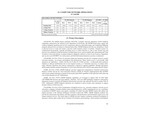
A TOP SECRET Congressional Budget Justification entry for the NSA/CSS GENIE project — the Tailored Access Operations programme underpinning all endpoint Computer Network Operations — requesting $651.7 million and 1,870 military and civilian positions for FY2013, with plans to maintain 85,000-96,000 implant points-of-presence worldwide and 9,000-10,000 active accesses, including $25.1 million for covert purchase of software vulnerabilities and a $3.4 million supply chain implant operation targeting al-Qaeda.
-
Counterterrorism Analytic Working Group Meets in Madrid SIDtoday [pdf]
This SIDtoday document details the 11th SIGINT Seniors Counterterrorism (SISECT) Analytic Working Group meeting in Madrid, which focused on enhancing counterterrorism collaboration through topics like terrorist use of the Internet, metadata sharing, and language capabilities. Key outcomes included initiatives for SIGINT exploitation of the Internet, improving language processing and translation via SIGDASYS, and fostering deeper cooperation between nations on counterterrorism efforts.
-
Did You Know that NSA Has an Arctic Presence? SIDtoday [pdf]
This SIDtoday document describes the NSA's Arctic operations, highlighting its Alaska Mission Operations Center (AMOC) at Point Barrow, Alaska, which monitors Russian military activity in the Arctic. The facility supports U.S. and Canadian defense efforts, tracks Russian air movements, and is involved in upgrades and collaborations with Arctic partners to address emerging intelligence challenges in the region.
-
FY 2013 Congressional Budget Justification, Volume I, National Intelligence Program Summary, February 2012 [pdf]
This document outlines the $52.6 billion “black budget,” detailing the structure, priorities, successes, and shortcomings of the 16 U.S. intelligence agencies. It reveals unprecedented insight into funding allocations, operations, and intelligence gaps—including the CIA’s dominant role, expanding cyber operations, and persistent challenges in areas such as North Korea and counterterrorism—while emphasizing the tension between secrecy and public accountability.
-
-
-
FY2013 Congressional Budget Justification Bin Laden Excerpts [pdf]
This document includes excerpts from the 2013 National Intelligence Program budget justification describing the integrated intelligence community efforts that led to locating and raiding Osama bin Laden's compound, detailing contributions from NSA's signal intelligence, CIA's geolocation analysis, NGA's imagery modeling, and post-raid forensic DNA confirmation.
People: bin Laden, Osama -
Ghosthunter future capabilities (2008) [pdf]
This document indicates that Menwith Hill Station (MHS) provides approximately 99% of the FORNSAT data used by GHOSTHUNTER for geolocating targets, while additional FORNSAT sites can be tapped as needed to cover other regions. Although GHOSTHUNTER offers near-global geolocation capabilities, certain areas remain blind spots where coverage is limited.
Programs: GHOSTHUNTER -
GSM tower mapping made easier and more accurate with new tool SIDtoday [pdf]
This document details DYMO, a prototype developed at the NSA’s Menwith Hill Station—the agency’s large British base operated in close cooperation with GCHQ—for highly accurate GSM tower geolocation. It highlights DYMO’s superior performance in mapping accuracy and metadata integrity, its extensive operational use across regions such as Iraq, Iran, and Somalia, and its integration with tools like GOLDENEYE and the Integrated COMINT System (ICS) to streamline analysis and intelligence fusion.
-
Guidelines for the classification of NSA SIGINT details (1945-1967) [pdf]
This document is an NSA classification guide that defines how and why historical SIGINT material from 1945–1967 remains classified, in many cases for 75 years. It systematically explains which intelligence activities, targets, partnerships, and technical methods must stay protected because they still reveal sensitive sources, methods, and diplomatic equities.
-
Instability creates opportunity against counter-terrorism targets SIDtoday [pdf]
This document reveals how the NSA’s collaboration with Ethiopia during and after the 2006 Ethiopian invasion of Somalia was leveraged to advance U.S. counterterrorism objectives, using SIGINT tools and shared intelligence to track and eliminate al-Qaida targets across the Horn of Africa.