“Black Budget” — FY 2013 Congressional Budget Justification/National Intelligence Program, p. 262 (February 2012)
Open PDFDocument date: 2012-02-01
Pages: 1
Genre: other
Banner: TOP SECRET//SI/TK//NOFORN
Classification: TOP SECRET SI TK
Dissemination: NOFORN
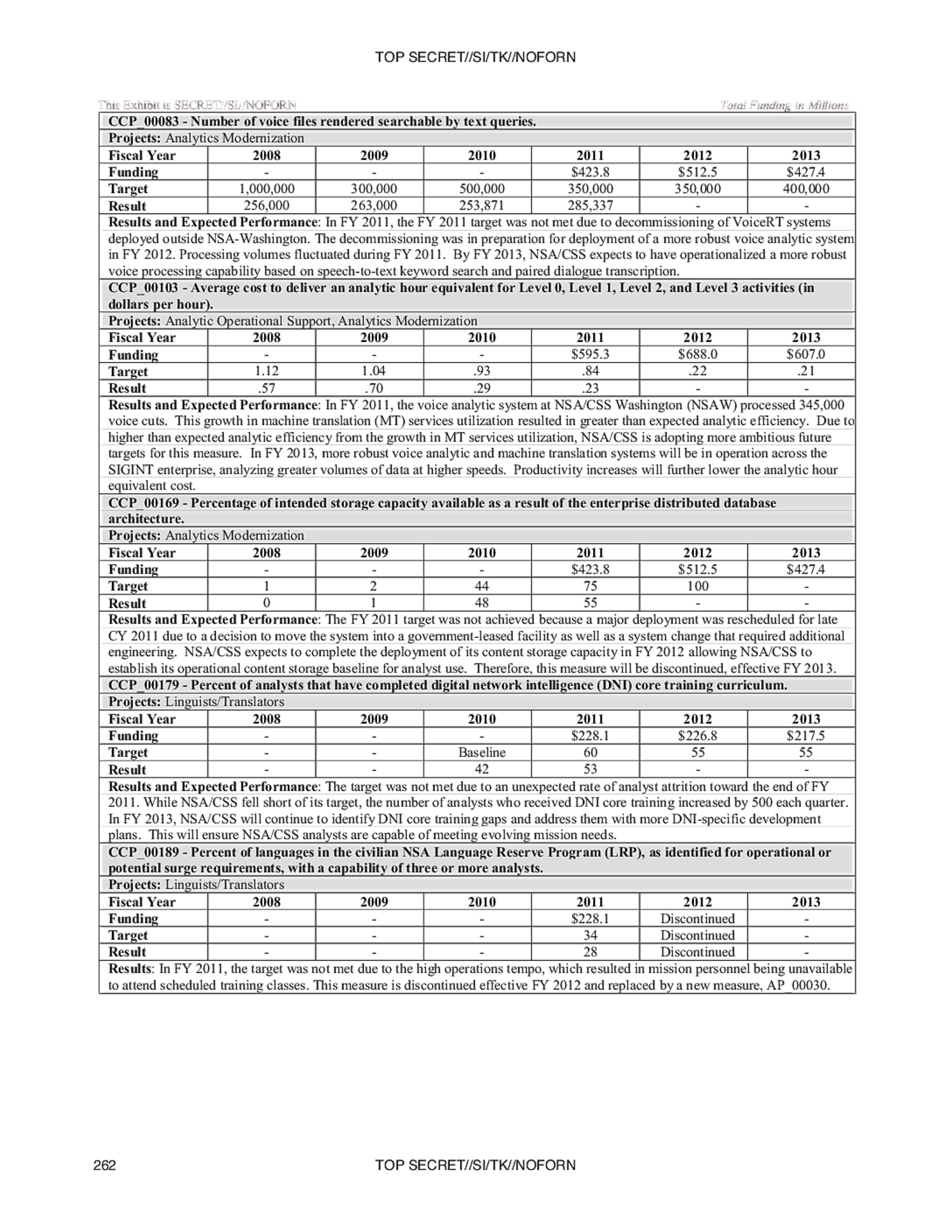
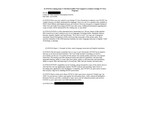
This excerpt from the Fiscal Year 2013 Congressional Budget Justification (the "Black Budget") details the NSA's financial and performance metrics for "Analytics Modernization," specifically focusing on the transition to high-volume, automated speech-to-text systems. It records the decommissioning of legacy voice processing systems (VoiceRT) in favor of more robust, scalable capabilities aimed at rendering millions of intercepted voice files searchable via text queries and paired dialogue transcription.
My notes
TOP SECRET//SI/TK//NOFORN
This Exhibit is SECRET//SI//NOFORN
Total Funding in Millions
CCP_00083 - Number of voice files rendered searchable by text queries.
Projects: Analytics Modernization
| Fiscal Year | 2008 | 2009 | 2010 | 2011 | 2012 | 2013 |
|---|---|---|---|---|---|---|
| Funding | - | - | - | $423.8 | $512.5 | $427.4 |
| Target | 1,000,000 | 300,000 | 500,000 | 350,000 | 350,000 | 400,000 |
| Result | 256,000 | 263,000 | 253,871 | 285,337 | - | - |
Results and Expected Performance: In FY 2011, the FY 2011 target was not met due to decommissioning of VoiceRT systems deployed outside NSA-Washington. The decommissioning was in preparation for deployment of a more robust voice analytic system in FY 2012. Processing volumes fluctuated during FY 2011. By FY 2013, NSA/CSS expects to have operationalized a more robust voice processing capability based on speech-to-text keyword search and paired dialogue transcription.
CCP_00103 - Average cost to deliver an analytic hour equivalent for Level 0, Level 1, Level 2, and Level 3 activities (in dollars per hour).
Projects: Analytic Operational Support, Analytics Modernization
| Fiscal Year | 2008 | 2009 | 2010 | 2011 | 2012 | 2013 |
|---|---|---|---|---|---|---|
| Funding | - | - | - | $595.3 | $688.0 | $607.0 |
| Target | 1.12 | 1.04 | .93 | .84 | .22 | .21 |
| Result | .57 | .70 | .29 | .23 | - | - |
Results and Expected Performance: In FY 2011, the voice analytic system at NSA/CSS Washington (NSAW) processed 345,000 voice cuts. This growth in machine translation (MT) services utilization resulted in greater than expected analytic efficiency. Due to higher than expected analytic efficiency from the growth in MT services utilization, NSA/CSS is adopting more ambitious future targets for this measure. In FY 2013, more robust voice analytic and machine translation systems will be in operation across the SIGINT enterprise, analyzing greater volumes of data at higher speeds. Productivity increases will further lower the analytic hour equivalent cost.
CCP_00169 - Percentage of intended storage capacity available as a result of the enterprise distributed database architecture.
Projects: Analytics Modernization
| Fiscal Year | 2008 | 2009 | 2010 | 2011 | 2012 | 2013 |
|---|---|---|---|---|---|---|
| :---------- | :--- | :--- | :--- | :----- | :----- | :--..- |
| Funding | - | - | - | $423.8 | $512.5 | $427.4 |
| Target | 1 | 2 | 44 | 75 | 100 | - |
| Result | 0 | 1 | 48 | 55 | - | - |
Results and Expected Performance: The FY 2011 target was not achieved because a major deployment was rescheduled for late CY 2011 due to a decision to move the system into a government-leased facility as well as a system change that required additional engineering. NSA/CSS expects to complete the deployment of its content storage capacity in FY 2012 allowing NSA/CSS to establish its operational content storage baseline for analyst use. Therefore, this measure will be discontinued, effective FY 2013.
CCP_00179 - Percent of analysts that have completed digital network intelligence (DNI) core training curriculum.
Projects: Linguists/Translators
| Fiscal Year | 2008 | 2009 | 2010 | 2011 | 2012 | 2013 |
|---|---|---|---|---|---|---|
| Funding | $228.1 | $226.8 | $217.5 | |||
| Target | Baseline | 60 | 55 | 55 | ||
| Result | 42 | 55 | 53 |
Results and Expected Performance: The target was not met due to an unexpected rate of analyst attrition toward the end of FY 2011. While NSA/CSS fell short of its target, the number of analysts who received DNI core training increased by 500 each quarter. In FY 2013, NSA/CSS will continue to identify DNI core training gaps and address them with more DNI-specific development plans. This will ensure NSA/CSS analysts are capable of meeting evolving mission needs.
CCP_00189-Percent of languages in the civilian NSA Language Reserve Program (LRP), as identified for operational or potential surge requirements, with a capability of three or more analysts.
Projects: Linguists/Translators
| Fiscal Year | 2008 | 2009 | 2010 | 2011 | 2012 | 2013 |
|---|---|---|---|---|---|---|
| Funding | $228.1 | Discontinued | ||||
| Target | 34 | Discontinued | ||||
| Result | 28 | Discontinued |
Results: In FY 2011, the target was not met due to the high operations tempo, which resulted in mission personnel being unavailable to attend scheduled training classes. This measure is discontinued effective FY 2012 and replaced by a new measure, AP 00030.
262
TOP SECRET//SI/TK//NOFORN
Published in the Same Report
(9 documents)
-
For Media Mining, the Future Is Now! SIDtoday [pdf]
A number of new "media mining" tools allow analysts to search intercepted content in near-real time, no matter if text, audio or visual. This includes retroactive word-search in intercepted communications.
People: Picone, Joseph -
For Media Mining, the Future Is Now! (conclusion) SIDtoday [pdf]
In the future, thanks to Human Language Technology (HLT), an analyst will be able to sort through millions on intercepted phone calls each day "and focus on only the small percentage that is relevant". He or she will also be able to get precise answers to queries such as "Where is the mayor of Baghdad?"
People: Picone, Joseph“How the NSA Converts Spoken Words Into Searchable Text” - The Intercept ↗ (2015-05-05) · The Intercept ↗ (2019-05-29) · Froomkin, Dan -
“Black Budget” — FY 2013 Congressional Budget Justification/National Intelligence Program, pp. 360-364 (February 2012) [pdf]
The "Human Language Technology (HLT) Research" section of the FY 2013 "Black Budget" details a specialized research project focused on creating "force multipliers" for the NSA workforce through automated speech-to-text, machine translation, and content extraction. With a requested budget of $29.4 million, the project aims to bridge the gap between foundational academic research (via Johns Hopkins University) and the practical exploitation of the volume and velocity of global SIGINT.
Programs: HLT -
Classification Guide for Human Language Technology (HLT) Models (May 18, 2011) [pdf]
This document is an NSA administrative policy document that establishes the rules for what information regarding speech analytics remains public versus what must be kept secret. It explicitly confirms that the NSA possesses automated tools for gender, language, dialect, and speaker recognition, as well as speech-to-text and phonetic tokenization. While the existence of these capabilities is unclassified, the specific data used to "train" the models and the actual identity of targeted speakers are protected at the SECRET level.
Programs: HLT -
RT10 Overview [pdf]
This RT10 overview document is a high-level briefing on the implementation of a real-time SIGINT architecture designed to modernize intelligence operations in the Iraq theater, specifically Baghdad. The project aims to replace legacy, "manual-intensive" processes with a "SIGINT Brain"—a distributed database and automated analytic framework capable of processing over 50 million GSM metadata events per day.
Programs: RT10 · OBELISK · WISPYKNIT · VICTORYUNIFORM · JUGGERNAUT · COBRAFOCUS · MATTERHORN · EXPIATION · VoiceRT · GREENDRAGON · TAREX · KEYCARD -
Finding Nuggets -- Quickly -- in a Heap of Voice Collection, From Mexico to Afghanistan SIDtoday [pdf]
A 2011 article by an NSA Texas analyst describing the deployment of Human Language Technology analytics — including speech-to-text, speaker identification, gender recognition and language identification — to Special Collection Service sites in the Americas and to the Afghanistan Remote Operations Cryptologic Center, with operational examples ranging from tunnel detection in Tijuana to intelligence support in Kandahar.
Programs: HLT -
How Is Human Language Technology (HLT) Progressing? SIDtoday [pdf]
This document provides an operational update on the deployment of "HLT Labs"—a specialized suite of voice analytics designed to automate the discovery of intelligence "nuggets" within massive volumes of audio collection. The document highlights successful field applications in Afghanistan, Georgia, Texas, and Latin America, noting that these tools are becoming "force multipliers" that allow linguists to bypass manual listening in favor of automated keyword searching and speaker recognition.
-
Coming Soon! A Tool that Enables Non-Linguists to Analyze Foreign-TV News Programs SIDtoday [pdf]
This document introduces eViTAP (Enhanced Video Text and Audio Processing), a fully automated system designed to monitor and translate international television broadcasts. Primarily aimed at analysts who do not possess specific foreign language skills, the tool leverages automated processing to transform open-source media into actionable intelligence.
-
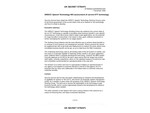
SIRDCC Speech Technology WG assessment of current STT technology [pdf]
This secret document from the SIRDCC Speech Technology Working Group provides a technical assessment of Speech-to-Text (STT) capabilities for the Security Service (MI5) and GCHQ. The report acknowledges that while automated transcription of intercepted speech remains highly challenging, the technology offers immediate "force multiplier" benefits for specific tasks like identifying spoken telephone numbers or keywords. The Working Group recommends continued investment in bespoke training and a transition toward a common system—specifically the BBN Byblos engine—to facilitate the sharing of classified linguistic models between UK and US agencies.
Programs: BYBLOS


Related Documents
-
“Black Budget” — FY 2013 Congressional Budget Justification/National Intelligence Program, pp. 360-364 (February 2012) [pdf]
The "Human Language Technology (HLT) Research" section of the FY 2013 "Black Budget" details a specialized research project focused on creating "force multipliers" for the NSA workforce through automated speech-to-text, machine translation, and content extraction. With a requested budget of $29.4 million, the project aims to bridge the gap between foundational academic research (via Johns Hopkins University) and the practical exploitation of the volume and velocity of global SIGINT.
Programs: HLT -
FY 2013 Congressional Budget Justification, Volume I, National Intelligence Program Summary, February 2012 [pdf]
This document outlines the $52.6 billion “black budget,” detailing the structure, priorities, successes, and shortcomings of the 16 U.S. intelligence agencies. It reveals unprecedented insight into funding allocations, operations, and intelligence gaps—including the CIA’s dominant role, expanding cyber operations, and persistent challenges in areas such as North Korea and counterterrorism—while emphasizing the tension between secrecy and public accountability.
-
-
-
Finding Nuggets -- Quickly -- in a Heap of Voice Collection, From Mexico to Afghanistan SIDtoday [pdf]
A 2011 article by an NSA Texas analyst describing the deployment of Human Language Technology analytics — including speech-to-text, speaker identification, gender recognition and language identification — to Special Collection Service sites in the Americas and to the Afghanistan Remote Operations Cryptologic Center, with operational examples ranging from tunnel detection in Tijuana to intelligence support in Kandahar.
Programs: HLT