Classification: SECRET 154 documents
Search documents matching “SECRET” →Each document's classification level, as component values. If a document contains multiple classifications, the highest is used here.
Graphs
By Banner
Refine (combine with another filter, via search)
Sort: Title
Documents
-
Perseverance Pays Off: Eight-Year SIGINT Effort Culminates in Arrest of Elusive Colombian Terrorist SIDtoday [pdf]
In 2008, SIGINT from NSA Texas led to the arrest of Doris Adriana, a key FARC member, after eight years of surveillance. NSA's actionable intelligence provided Colombian authorities with crucial details about her border crossing from Venezuela, resulting in her capture and subsequent prosecution for cocaine trafficking and kidnapping U.S. citizens.
-
Pine Gap classification guide [pdf]
This document is a classification guide for NSA/CSS activities at the Joint Defense Facility Pine Gap (JDFPG) in Australia, outlining which information about the site, its SIGINT missions, organizational structure, and training is classified and at what level. It specifies that sensitive details, including the site’s SIGINT mission, Producer Designator Digraph, SIGAD, and support to military operations, are protected to safeguard national security and allied interests.
-
PRESTON Architecture [pdf]
The PRESTON architecture, centered on GCHQ’s PRESTON Processing system, is detailed across multiple views showing how the agency intercepts, processes, and stores communications. It outlines a sophisticated surveillance framework that integrates lawful interception, data processing, and analyst access, emphasizing covert monitoring and management of intercepted data.
Programs: PRESTON · FAST GROK · BOXSTER · MARMION · GENTIAN · TERRAIN · BLACKNIGHT · CORINTH · FARNDALE · SAMDYCE · B3M · VSLT · SAMBOK · HAUSTORIUM · FUNFAIR · Cheltenham · SALAMANCA · IIB · LOCHNVAR · MONACO · HOTLINE · Benhall · GDR · CE · BRIGHTON · ARSENIDE · SPQR · TACHO · TRAFFIC MASTER · KEYCARD · XKEYSCORE · COURIERSKILL · MONKEYPUZZLE · PILBEAM · GREENHEART · CCDF · GTE · CADENCE · TERRAINS · GCNET · HENCE -
PRESTON Business Processes [pdf]
The PRESTON Business Processes document outlines GCHQ’s internal workflows for authorizing, enabling, managing, and terminating communications interception, as well as producing intelligence from intercepted data. It defines the roles, responsibilities, and technical processes that support lawful interception operations within the PRESTON system.
-
Quadrennial Intelligence Review Final Report, 2009 [pdf]
This 2009 strategic review from the Director of National Intelligence outlines potential future operating concepts for the US Intelligence Community, including "safe bets" like mass data analysis (Sentient Enterprise) and controversial "strategic hedges" such as using clandestine cyber operations to acquire proprietary technology from foreign corporations to benefit US industry (Technology Acquisition by All Means).
People: Shedd, David R. -
Regional Command Southwest Intelligence Report June 19 2011 [pdf]
A June 2011 intelligence summary from Regional Command Southwest in Afghanistan assessing the destabilizing aftermath of the Osama bin Laden raid on U.S.-Pakistan relations, Pakistani internal security, Taliban activity along the RC(SW) border, and local governance developments in Helmand Province.
-
Regional Command Southwest Intelligence Report June 23 2011 [pdf]
A June 2011 RC Southwest intelligence summary documenting a covert ALP-Taliban collusion arrangement in Nad'Ali district, and a separate intelligence report detailing Taliban internal supply shortages, infighting, and morale deterioration across northern Helmand Province in the aftermath of Osama bin Laden's death.
-
Report on the changing of the ESOC's name to European Cryptologic Center (ECC) including details on missions launched from there [pdf]
This 2011 document announces the renaming of the European Security Operations Center (ESOC) to the European Cryptologic Center (ECC) to reflect its significant growth and expanded mission. The change signifies NSA's long-term commitment to the center in Germany, which has become a critical partner for counter-terrorism, Africa, and Middle East intelligence.
-
Responsibility 3B: Implications of Technology & Geopolitical Trends [pdf]
This document outlines a classified NSA report on geopolitical trends from 2011 to 2016, highlighting key issues like global energy security, military modernization in China and Russia, cyber threats, and the rise of extremism. Notably, climate change is ranked 31st out of 34 priorities, reflecting its relatively low importance compared to issues.
-
RWC Updater Readme [pdf]
A technical NSA manual describing the Royale with Cheese (RwC) Updater — the distribution system used to push XKEYSCORE dictionary updates, fingerprints, VoIP rules, IP geolocation tables and other configuration packages across the global hierarchical network of XKEYSCORE nodes on an hourly basis.
-
SDSG Integrated Analytics Workshop (14 Oct 2011) [pdf]
This document is a summary of a workshop held by the SIGINT Development Steering Group (SDSG) on October 14, 2011, evaluating and comparing the strengths, weaknesses, and potential use of advanced analytics tools, specifically Palantir and Mamba, for intelligence analysis. It discusses the tools' capabilities in data integration, collaboration, and visualization, along with concerns about security, usability, and the risks of relying on commercial software.
Marking: SECRET -
SEBACIUM - GCWiki [pdf]
This GCWiki document outlines SEBACIUM, a suite of tools developed for monitoring and exploiting peer-to-peer (P2P) networks, particularly eMule and BitTorrent, to track and target users sharing or downloading specific content, such as extremist material, for intelligence and operational purposes. It also details various tools within the system, including DIRTY RAT for tracking file-sharing activities and PLAGUE RAT for altering search results in P2P networks.
-
Second Party National Identity Rules [pdf]
5 p.This document outlines GCSB's formalized rules, established by Signals Intelligence Directive 7 (NZSID 7), for the collection, processing, and dissemination of intelligence concerning New Zealand entities and its Five Eyes partners. It strictly defines a "New Zealand Person" (including Cook Islanders and Niueans), a "New Zealand Organisation," and details how and when government officials or other entities may be generically identified in reporting, with explicit exceptions allowing full identification under exigent circumstances or with Director approval.
-
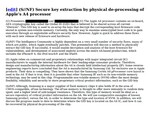
Secure key extraction by physical de-processing of Apple's A4 processor [pdf]
An abstract from the CIA Trusted Computing Base Jamboree describing a physical chip decapping and de-processing attack on Apple's A4 processor to extract the embedded Global ID cryptographic key, which if successful would enable decryption of boot firmware across all A4-based Apple devices including the iPhone 4, iPod Touch and iPad.
“The CIA Campaign to Steal Apple's Secrets” - The Intercept ↗ (2015-03-10) · Scahill, Jeremy · Begley, Josh -
Sensitive Metadata Analytic Collaboration (SMAC) - Concept of Operations, October 2006 [pdf]
This document outlines the Sensitive Metadata Analytic Collaboration (SMAC) initiative, a system developed by the Five Eyes intelligence agencies to facilitate the sharing and analysis of sensitive metadata to support SIGINT (signals intelligence) missions. While the concept aims to improve collaboration and data sharing, its success is hindered by ongoing policy, legal, and technical barriers, as well as concerns about trust and participation among the agencies involved. The document suggests a complex, somewhat opaque process of metadata sharing that risks undermining privacy protections.
Programs: SMAC -
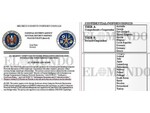
Sharing Computer Network Operations Cryptologic Information with Foreign Partners [pdf]
The document is a secret NSA/CSS policy outlining guidelines for sharing Computer Network Operations (CNO) cryptologic information with foreign partners, including rules for cooperation in CNE and CND within existing intelligence relationships. The “Purpose and Scope” section on the first page appears to be unpublished elsewhere, while the Tier A and Tier B country lists match those publicly revealed in sources like Glenn Greenwald’s No Place to Hide.
“El CNI facilitó el espionaje masivo de EEUU a España” - El Mundo ↗ (2013-10-30) · “No Place to Hide” - Metropolitan Books ↗ (2014-05-13) · Greenwald, Glenn · Aranda, Germán -
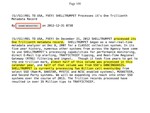
SHELLTRUMPET Processes its One Trillionth Metadata Record [pdf]
An SSO news item announcing that SHELLTRUMPET processed its one-trillionth metadata record on 21 December 2012 — almost half of that volume in 2012 alone — feeding TRAFFICTHIEF tipping and Real-Time Regional Gateway filtering from CLASSIC, DANCINGOASIS, RAMPART-M, OAKSTAR, MYSTIC, NCSC, MUSKETEER and Second Party systems.
Programs: SHELLTRUMPET · CLASSIC · TRAFFICTHIEF · RTRG · SSO · DANCINGOASIS · RAMPART-M · OAKSTAR · MYSTIC · NCSC · MUSKETEER -
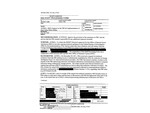
SID concur: SSO's Support to the FBI for Implementation of their Cyber FISA Orders (CATS 2012-704) [pdf]
A 2012 NSA staff processing form (CATS 2012-704) with a four-page SSO memo, concurred by the SIGINT Director on 27 March 2012. SSO would give the FBI technical help implementing FISC cyber orders (docket 11-91, which the FBI calls STYGIAN FLOW), using NSA collection and processing infrastructure (LITHIUM, ARTIFICE, TURMOIL), with the FBI responsible for the costs and for legal compliance.
People: Shea, Teresa H. -
SIERRA LEONE - BELGIUM [pdf]
May 2009 GCHQ report documents the interception of two satellite carriers linking Sierra Leone and Belgium (via INTELSAT 9F3), surveyed using the TERRAIN collection suite, which identified numerous email selectors of interest carried over the link. Among the hits was the email address of “Oles” — Octave Klaba, founder and CEO of OVH, Europe’s largest internet hosting company — flagged as a target alongside diplomatic and political addresses, though his presence on the list reflects metadata collection rather than proof his message contents were intercepted.
Programs: TERRAINPeople: Klaba, Octave -
SIGINT Helps Hobble the Taleban by Cutting Off Their Livelihood SIDtoday [pdf]
This SIDtoday article (Feb 3, 2009) describes how SIGINT operations—led by NSA Georgia’s Southwest Asia Narcotics Division (FGS2F) with partners like NSAW and GCHQ—shifted counternarcotics efforts in Afghanistan from HUMINT to SIGINT, enabling real‑time targeting of traffickers and major seizures that disrupted Taliban funding. It credits SIGINT-driven support for large drug seizures, increased operational tempo, and the inclusion of traffickers on ISAF targeting lists.