Agency: GCHQ Government Communications Headquarters (UK) 174 documents
Search documents matching “GCHQ” →The agency that WROTE each document.
Graphs
By Banner
By Classification
Refine (combine with another filter, via search)
Sort: Title
Documents
-
UK AIRHANDLER trainees [pdf]
This GCHQ document from 2008 describes British AIRHANDLER trainees at NSA Georgia receiving recognition for their operational performance supporting drone surveillance missions, with personnel from UK's Joint Service Signal Unit Digby being trained to operate SIGINT collection packages on Predator unmanned aerial vehicles. The document reveals that Digby was being established as only the second site worldwide (after NSA Georgia) capable of handling the "back end" processing of Predator drone intelligence collection after the UK purchased three Predator drones.
Marking: SECRETPrograms: AIRHANDLER -
Voice Fax User Group Minutes December 2010 [pdf]
This GCHQ document is a NSA/GCHQ meeting record from December 2010 detailing the deployment of voice analytics, including speech activity detection, speaker identification, and language identification, integrated with tools like Google Earth to map locations of target communications. It outlines ongoing and planned speaker ID operations against specific targets, including militant leaders and foreign officials, demonstrating the operational use of voice recognition for intelligence collection and geolocation.
-
Voice Fax User Group Minutes March 2009 [pdf]
The document is a TOP SECRET GCHQ meeting record from March 2009 detailing updates to B14/MCS voice analytics systems, including new language identification (LID) models for Pashto, Dari, Brahui, and Baluchi languages and a first-pass speaker ID (SID) system for General Kiyani of Pakistan. It also highlights operational successes, such as improved reporting on Iraq's Vice President Adil ’Abd-al-Mahdi, which enhanced GCHQ’s reputation with NSA and reduced unnecessary workload for linguists.
-
Voice Fax Users Group Minutes October 2008 [pdf]
The document is a TOP SECRET GCHQ report on the deployment of a 5-way speaker identification (SID) system targeting high-level individuals in the Afghan narcotics trade. It highlights operational success, including the identification of new phone numbers for a principal target leading to his arrest in Jakarta, and outlines plans to rebuild the system to target the remaining four narcotics barons.
-
Voice/Fax User Group Minutes of September 2008 meeting [pdf]
Page 3 of 7 of the minutes of GCHQ's Voice/Fax User Group (VFUG), September 2008: plans for data-quality testing, a request that linguists flag "Pick Your Own Number" calls in the B3M voice database, and the B14/MCS team's update on the Diariser and on speaker and language identification. The Intercept's PDF shows only the speaker ID section; the rest of the page is in the file (see the archive comment).
-
VoIP NSA alias [pdf]
A GCHQ GCWiki record of SAMESHEET — the joint NSA/GCHQ working group on media over packet and VoIP interception — containing meeting notes and IETF trip reports documenting NSA's monitoring of internet standards development, including the passage cited in Der Spiegel's December 2014 encryption article showing an NSA attendee at the IETF San Diego meeting reporting that "new session policy extensions may improve our ability to passively target two sided communications."
Marking: UK TOP SECRET -
What’s the worst that could happen? [pdf]
This GCHQ document from March 2010 presents a checklist of factors analysts should consider before going ahead with an operation to infiltrate a communications network, by physical or other means.
-
Where we are [pdf]
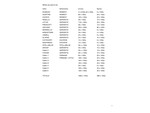
This GCHQ document is a table tracking the agency's access to undersea fiber-optic cables as of an unspecified date, listing 13 cables with their codenames, telecommunications company partners (primarily "GERONTIC"/Cable & Wireless and "REMEDY"), and the capacity of data access and egress points measured in 10 gigabit connections. The table shows GCHQ had access to 592 10-gigabit connections across these cables with 69 egress points, with an unlabelled column totalling 2,960, with GERONTIC (Cable & Wireless) providing access to 9 of the 13 cables including FEA (NIGELLA), APOLLO North and South, and TAT-14S.
Programs: NUMDAH · SCEPTRE · NIGELLA · LATUS · ARCANO · MONDELLO · GIBUS · KIRKISTOWN · LINNELL · ELAPSE · GRASP · CATEGORY · KNAPWEED · DACRON · GERONTIC · REMEDY · SOLAS · APOLLO · FEA · SMW3“Vodafone – der lange Arm des britischen Geheimdienstes?” - WDR ↗ (2014-11-20) · “Spy cable revealed: how telecoms firm worked with GCHQ” - Channel 4 ↗ (2014-11-20) · “Der lange Arm des Geheimdienstes?” - NDR ↗ (2014-11-21) · “Snowden-Leaks: How Vodafone-Subsidiary Cable & Wireless Aided GCHQ’s Spying Efforts” - Süddeutsche Zeitung ↗ (2014-11-25) · Restle, Georg · White, Geoff · Strozyk, Jan · Moltke, Henrik · Poitras, Laura · Obermaier, Frederik -
Where we want to be [pdf]
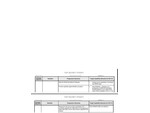
This GCHQ document outlines the agency's aspirational expansion plans for undersea cable surveillance, showing desired access to 24 cables (compared to 13 in the "Where we are" document) with a dramatic increase in surveillance capacity to 1,693 10-gigabit connections and 390 egress points—nearly triple the existing infrastructure. The document includes eight cables with generic names (Cable X, Y, Z and A to E), five of them with blank relationship fields, suggesting GCHQ was actively pursuing partnerships with additional telecommunications companies beyond GERONTIC (Cable & Wireless), REMEDY, DACRON, and newly mentioned partners STELLABLUE, PINNAGE, and LITTLE to achieve comprehensive global communications interception.
Programs: NUMDAH · SCEPTRE · HIASCO · NIGELLA · LATUS · PRESCOTT · ARCANO · MONDELLO · KIRKISTOWN · LINNELL · ELAPSE · CATEGORY · KNAPWEED · STELLABLUE · GRASP · VISAGE · REMEDY · GERONTIC · DACRON · PINNAGE · LITTLE“Vodafone – der lange Arm des britischen Geheimdienstes?” - WDR ↗ (2014-11-20) · “Spy cable revealed: how telecoms firm worked with GCHQ” - Channel 4 ↗ (2014-11-20) · “Der lange Arm des Geheimdienstes?” - NDR ↗ (2014-11-21) · “Snowden-Leaks: How Vodafone-Subsidiary Cable & Wireless Aided GCHQ’s Spying Efforts” - Süddeutsche Zeitung ↗ (2014-11-25) · Restle, Georg · White, Geoff · Strozyk, Jan · Moltke, Henrik · Poitras, Laura · Obermaier, Frederik -
WOLFRAMITE Encryption Attack [pdf]
The "WOLFRAMITE Encryption Attack" is a GCHQ strategic annex from March 2011 detailing a joint effort with the NSA to compromise the A5/3 encryption standard. The document outlines a specialized research and development program aimed at scaling up handset exploitation and securing funding—estimated at approximately £4 million—to prototype a functional decryption attack against modern mobile broadband security.
-
XKEYSCORE Helper Notes [pdf]
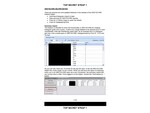
This GCHQ document describes new features in the XKEYSCORE Palantir helper tool, including summary/histogram import capabilities that reduce large datasets by aggregating connection data rather than creating individual events for each entry, and data sourcing features that track which XKEYSCORE queries imported specific data into Palantir. The document provides step-by-step screenshots showing how analysts can histogram network traffic by source IP, destination IP, and ports, then import aggregated results showing metadata like total session sizes and connection counts.
Programs: XKEYSCORE -
XKeyscoreTabs XKS Development [pdf]
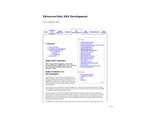
The document outlines the development and operational procedures for XKeyscore (XKS), detailing its types, upgrades, and the role of microplugins in enhancing data collection capabilities. It describes how different configurations manage data ingestion and the criteria used to filter and store communications for intelligence purposes.
-
Yemen backhaul comms collected (Jan 2011) [pdf]
This brief GCHQ document from January 2011 describes intelligence collection operations against Yemen's microwave telecommunications infrastructure, where overhead (OH) tasking confirmed tower activity and analyzed GSM and CDMA backhaul communications using the ICS2 tool, yielding voice intercepts, SMS messages, and at least one dial number recognition (DNR) hit that significantly contributed to counterterrorism work.
-
ZAIN INTRANET NETWORK ENGINEERING [pdf]
2009 GCHQ report documents the sampling and tasking of a satellite data carrier linking Gabon and Belgium that carried the internal corporate intranet of telecom operator Zain (formerly MTC Vodafone), through which engineers exchanged technical data via SMTP email. The intercept surfaced email selectors belonging to staff across multiple telecom operators — including Zain subsidiaries, Orange Mali, Saudi Telecom, MTC Touch (Lebanon), Tunisie Telecom, and Celtel entities in Niger and Nigeria — reflecting the agency’s systematic targeting of telecom employees as a potential entry point into operators’ internal networks.