Tag: Black Budget 6 documents
Search documents matching “Black Budget” →Free-text subjects the curators added. Unlike the other axes these are not necessarily from the documents' own vocabulary, so they are the loosest thing to browse by (and the most forgiving).
Graphs
By Banner
By Classification
Refine (combine with another filter, via search)
Sort: Title
Documents
-
Black Budget: Special Source Access - Foreign Partner Access [pdf]
This document provides a detailed financial and operational breakdown from the NSA’s FY 2013 Congressional Budget Justification for the SSO's Foreign Partner Access project. It outlines the strategic funding for the RAMPART-A and WINDSTOP programs, which leverage international partnerships to intercept massive volumes of global communications traffic from long-haul fiber-optic cables and integrated 2nd Party architectures.
“How Secret Partners Expand NSA’s Surveillance Dragnet” - The Intercept ↗ (2014-06-18) · “NSA ‘third party’ partners tap the Internet backbone in global surveillance program” - Dagbladet Information ↗ (2014-06-19) · Gallagher, Ryan · Geist, Anton · Gjerding, Sebastian · Moltke, Henrik · Poitras, Laura · Jensen, Kristian -
“Black Budget” — FY 2013 Congressional Budget Justification/National Intelligence Program, p. 262 (February 2012) [pdf]
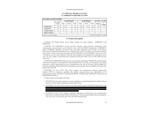
This excerpt from the Fiscal Year 2013 Congressional Budget Justification (the "Black Budget") details the NSA's financial and performance metrics for "Analytics Modernization," specifically focusing on the transition to high-volume, automated speech-to-text systems. It records the decommissioning of legacy voice processing systems (VoiceRT) in favor of more robust, scalable capabilities aimed at rendering millions of intercepted voice files searchable via text queries and paired dialogue transcription.
Programs: VoiceRT -
“Black Budget” — FY 2013 Congressional Budget Justification/National Intelligence Program, pp. 360-364 (February 2012) [pdf]
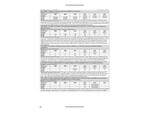
The "Human Language Technology (HLT) Research" section of the FY 2013 "Black Budget" details a specialized research project focused on creating "force multipliers" for the NSA workforce through automated speech-to-text, machine translation, and content extraction. With a requested budget of $29.4 million, the project aims to bridge the gap between foundational academic research (via Johns Hopkins University) and the practical exploitation of the volume and velocity of global SIGINT.
Programs: HLT -
ICREACH Black Budget Extracts [pdf]
This document provides fiscal and strategic justifications for the continued expansion of ICREACH, detailing its role as a primary vehicle for disseminating both telephony and Digital Network Intelligence (DNI) metadata across the Intelligence Community. It outlines the platform's transition to the NSA/CSS cloud architecture, a move intended to enhance data enrichment services and ensure the system remains responsive to the evolving requirements of the National Intelligence Priorities Framework (NIPF).
Programs: ICREACH -
COMPUTER NETWORK OPERATIONS - GENIE [pdf]
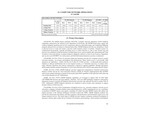
A TOP SECRET Congressional Budget Justification entry for the NSA/CSS GENIE project — the Tailored Access Operations programme underpinning all endpoint Computer Network Operations — requesting $651.7 million and 1,870 military and civilian positions for FY2013, with plans to maintain 85,000-96,000 implant points-of-presence worldwide and 9,000-10,000 active accesses, including $25.1 million for covert purchase of software vulnerabilities and a $3.4 million supply chain implant operation targeting al-Qaeda.
-
FY 2013 Congressional Budget Justification, Volume I, National Intelligence Program Summary, February 2012 [pdf]
This document outlines the $52.6 billion “black budget,” detailing the structure, priorities, successes, and shortcomings of the 16 U.S. intelligence agencies. It reveals unprecedented insight into funding allocations, operations, and intelligence gaps—including the CIA’s dominant role, expanding cyber operations, and persistent challenges in areas such as North Korea and counterterrorism—while emphasizing the tension between secrecy and public accountability.