Tag: Foreign Intelligence Surveillance Court 13 documents
Search documents matching “Foreign Intelligence Surveillance Court” →Free-text subjects the curators added. Unlike the other axes these are not necessarily from the documents' own vocabulary, so they are the loosest thing to browse by (and the most forgiving).
Graphs
By Banner
By Classification
Refine (combine with another filter, via search)
Sort: Title
Documents
-
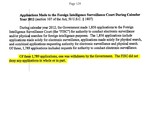
Applications Made to the Foreign Intelligence Surveillance Court During Calendar Year 2012 [pdf]
The statutory report on applications to the Foreign Intelligence Surveillance Court in calendar year 2012: 1,856 applications, 1,789 of them seeking electronic surveillance, one withdrawn by the government and none denied in whole or in part.
-
DNI, attorney general certify surveillance targets 'reasonably believed' to be outside U.S. [pdf]
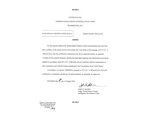
In this document, the director of national intelligence and the attorney general certify that there are procedures in place to ensure that surveillance conducted under Section 702 of the FISA Amendments Act will be limited to targeting people "reasonably believed to be located outside the United States." They state that the foreign intelligence to be collected "concerns foreign powers" as defined by statute. The list of foreign powers is in Exhibit F.
-
FAA Certification Renewals with Caveats [pdf]
This NSA document shows that after the FISA Court found NSA’s upstream internet collection unconstitutional and illegal, the agency’s response was less about reform and more about finding technical and procedural workarounds to keep surveillance running as usual. While the court ordered changes within 30 days, NSA officials planned to sequester and filter “higher-risk” data to appease the judge—not halt collection—revealing a mindset focused on preserving operations rather than addressing legal violations.
-
FISA Amendments Act of 2008 Section 702 summary document [pdf]
This document summarizes the way the law works and describes the three types of certifications used to permit the surveillance, as well as targeting and minimization procedures. The three certification are for foreign governments, counterterrorism and WMD/proliferation.
-
Fisa court warrant authorising NSA surveillance procedures [pdf]
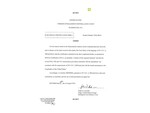
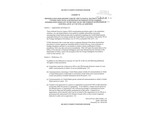
One-paragraph order, signed by a Fisa court judge, declares procedures submitted by the attorney general on behalf of the NSA are consistent with US law and fourth amendment
Marking: SECRET -
FISA judge's order authorizing surveillance of foreign governments and organizations [pdf]
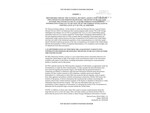
With this order dated Aug. 19, 2010, John D. Bates, then-Chief Judge of the Foreign Intelligence Surveillance Court, approved an annual certification permitting the National Security Agency to conduct surveillance about 193 foreign governments, foreign factions, foreign-based political organizations and foreign entities such as the World Bank. Each year, a new certification must be approved by the court to permit such surveillance under Section 702 of the FISA Amendments Act.
Marking: SECRETPeople: Bates, John D. -
FISA recap [pdf]
This document is a Top Secret NSA "FISA Recap" spreadsheet detailing electronic surveillance conducted between 2005 and 2008. It tracks specific email accounts targeted under the Foreign Intelligence Surveillance Act, listing the responsible agencies (NSA, FBI, and CIA), their legal "Case Notation," and the duration of collection. Notably, the log includes prominent U.S. Persons and organizations, such as the Council on American-Islamic Relations (CAIR), and features a 2005 formatting guide that uses a racial slur as a placeholder for a target's identity.
Programs: SQF -
List of foreign governments and organizations authorized for surveillance [pdf]
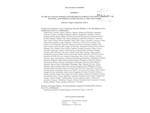
This exhibit lists the 193 foreign governments as well as foreign factions, political organizations and other entities that were part of a 2010 certification approved by the Foreign Intelligence Surveillance Court. These are the entities about which the NSA may conduct surveillance, for the purpose of gathering foreign intelligence. Each year a new certification must be approved by the court to permit such surveillance under Section 702 of the FISA Amendments Act.
-
Minimization Procedures Used By The National Security Agency In Connection With Acquisitions Of Foreign Intelligence, Information Pursuant To Section 702 Of The Foreign Intelligence Court Surveillance Act Of 1978 [pdf]
The NSA’s Section 702 minimization rules expose how the agency can collect, keep, and use Americans’ communications without warrants, despite claiming to target only foreigners. While the document sets out procedures for handling U.S. data, it includes broad loopholes—like keeping “inadvertently” collected domestic messages for years, sharing unfiltered data with the FBI, CIA, and even foreign governments, and giving NSA analysts wide discretion over who gets surveilled—all under secret FISA Court approval.
People: Holder, Eric H. Jr. -
N.S.A. Timeline of Surveillance Law Developments [pdf]
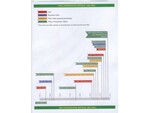
This chart, apparently from an internal N.S.A. presentation, lists milestones in surveillance rules over nearly four decades. The July 2002 “Raw Take” sharing order, whose existence has not previously been disclosed, is just one of three rulings by the Foreign Intelligence Surveillance Court to make the list. The other two were 2004 and 2006 rulings allowing bulk collection of data about emails and phone calls.
-
Procedures Used By The National Security Agency For Targeting Non-United States Persons Reasonably Believed To Be Located Outside The United States To Acquire Foreign Intelligence Court Information Pursuant To Section 702 Of The Foreign Intelligence Surveillance Act Of 1978 [pdf]
The NSA’s 2009 Section 702 targeting procedures lay out how analysts decide who can be surveilled without a warrant, supposedly limiting spying to foreigners abroad. In reality, the rules give the agency wide latitude to presume people are foreign, rely on vague “totality of the circumstances” tests, and allow broad technical methods like IP filters and metadata checks. Oversight is mostly internal and after-the-fact, creating significant potential for U.S. communications to be swept up with little accountability.
People: Holder, Eric H. Jr. -
SID concur: SSO's Support to the FBI for Implementation of their Cyber FISA Orders (CATS 2012-704) [pdf]
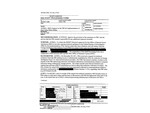
A 2012 NSA staff processing form (CATS 2012-704) with a four-page SSO memo, concurred by the SIGINT Director on 27 March 2012. SSO would give the FBI technical help implementing FISC cyber orders (docket 11-91, which the FBI calls STYGIAN FLOW), using NSA collection and processing infrastructure (LITHIUM, ARTIFICE, TURMOIL), with the FBI responsible for the costs and for legal compliance.
People: Shea, Teresa H. -
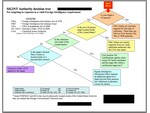
SIGINT Authority decision tree [pdf]
A one-page NSA training chart that walks an analyst from a targeting request to the legal authority that covers it, branching on whether the target is a US person, where the target is, where the collection site is, and whether the target is a Second Party citizen.