Tag: targeting procedures 14 documents
Search documents matching “targeting procedures” →Free-text subjects the curators added. Unlike the other axes these are not necessarily from the documents' own vocabulary, so they are the loosest thing to browse by (and the most forgiving).
Graphs
By Banner
By Classification
Refine (combine with another filter, via search)
Sort: Title
Documents
-
Cyber Defence Operations Legal Policy [pdf]
GCHQ's internal wiki laying out the legal plumbing for its Cyber Defence Operations (formerly NDIST)—detailing warrant types (RIPA, ISA, CNE), data retention schedules, targeting rules for UK/Five Eyes infrastructure, XKEYSCORE query protocols, and the bureaucratic hoops analysts must jump through to search attacker IPs, fingerprint UK networks, and share malware intelligence without tripping over location/nationality safeguards or commercial sensitivities.
Programs: JTRIG · SPAY · GORDIANKNOT · CHORDAL · DISCOVER · EVENTS · CASPORT · XKEYSCORE · CONTENT CLOUD · SQUEAL · MIRAGE · MUTANTBROTH · ANXIOUS · HALTERHITCH · BROADOAK · DONKEYKONG · ZOOL · PALANTIR · OVERLINK · RT · GATEKEEPER · IRONHAND · HARUSPEX · B3M · LOOKINGGLASS · GOLDENEYE · BLAZINGSADDLES · MOONRAKER · TRITON -
DNI, attorney general certify surveillance targets 'reasonably believed' to be outside U.S. [pdf]
In this document, the director of national intelligence and the attorney general certify that there are procedures in place to ensure that surveillance conducted under Section 702 of the FISA Amendments Act will be limited to targeting people "reasonably believed to be located outside the United States." They state that the foreign intelligence to be collected "concerns foreign powers" as defined by statute. The list of foreign powers is in Exhibit F.
-
FAA Certification Renewals with Caveats [pdf]
This NSA document shows that after the FISA Court found NSA’s upstream internet collection unconstitutional and illegal, the agency’s response was less about reform and more about finding technical and procedural workarounds to keep surveillance running as usual. While the court ordered changes within 30 days, NSA officials planned to sequester and filter “higher-risk” data to appease the judge—not halt collection—revealing a mindset focused on preserving operations rather than addressing legal violations.
-
FISA Amendments Act of 2008 Section 702 summary document [pdf]
This document summarizes the way the law works and describes the three types of certifications used to permit the surveillance, as well as targeting and minimization procedures. The three certification are for foreign governments, counterterrorism and WMD/proliferation.
-
FISA judge's order authorizing surveillance of foreign governments and organizations [pdf]
With this order dated Aug. 19, 2010, John D. Bates, then-Chief Judge of the Foreign Intelligence Surveillance Court, approved an annual certification permitting the National Security Agency to conduct surveillance about 193 foreign governments, foreign factions, foreign-based political organizations and foreign entities such as the World Bank. Each year, a new certification must be approved by the court to permit such surveillance under Section 702 of the FISA Amendments Act.
Marking: SECRETPeople: Bates, John D. -
How the NSA verifies a target's location [pdf]
This is an excerpt from a transcript of National Security Agency training videos that describe how to verify the location of a targeted device. It explains how the NSA monitors different types of mobile signaling information known as HLR and VLR registrations in order to locate individuals. It also makes clear that the agency is able to use location tracking to ascertain whether a target is in the United States.
-
Intelligently filtering your data: Brazil and Mexico case studies [pdf]
These documents reveal that the NSA conducted targeted surveillance operations against high-profile Brazilian and Mexican figures, including President Dilma Rousseff and presidential candidate Enrique Peña Nieto, using advanced contact-graph filtering and data analysis techniques to extract relevant intelligence from intercepted communications. These documents show how NSA analysts systematically developed intelligence on foreign leaders during election periods and diplomatic activities, framing it as “target development,” but in practice enabling deep political espionage under the guise of analytical innovation.
“Veja os documentos ultrassecretos que comprovam espionagem a Dilma” - O Globo ↗ (2013-09-02) · “No Place to Hide” - Metropolitan Books ↗ (2014-05-13) · Greenwald, Glenn -
Legalities - GCHQ Databases eg Pilbeam, Salamanca, UDAQ etc [pdf]
This October 2007 GCHQ document outlines the legal authorization requirements for querying surveillance databases, revealing that GCHQ analysts can search their own databases (like PILBEAM, SALAMANCA, UDAQ) for metadata on anyone regardless of nationality without additional authorization, while NSA databases (like MARINA, MAINWAY, DISHFIRE) prohibit searches for Americans and other Five Eyes citizens but permit searches for UK persons.
-
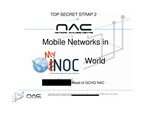
Mobile Networks in My NOC World [pdf]
This TOP SECRET STRAP 2 GCHQ document outlines the “MyNOC” operations, a specialized Network Operations Centre used by the UK’s GCHQ to coordinate cyber exploitation of international mobile and telecom infrastructure, with a particular focus on Belgacom’s GRX network under “Operation Socialist” (OP SOCIALIST). It details operational planning, toolsets, personnel roles, network mapping, QUANTUM INSERT targeting, and successful infiltration strategies that enabled CNE (Computer Network Exploitation) access to key Belgacom systems and staff infrastructure.
Programs: HIGHNOTE · COPPERHEAD · NEXUS · CADDIS · BRENT · RUSSETT PHONE · CERBERUS · E-BEAM · PIA · JEDI · WYLEKEY · INTERACTION · EREPO · QUANTUM · WOODCUTTER · MUTANT BROTH · QUANTUM INSERT · NRTA · MERION ZETA · JTRIG · A-SPACE · GEOFUSION“Operation Socialist: The Inside Story of How British Spies Hacked Belgium’s Largest Telco” - The Intercept ↗ (2014-12-13) · “Lees hier hoe de Britse geheime dienst GCHQ Belgacom aanviel” - NRC ↗ (2014-12-13) · “Britse geheime dienst bespioneerde jarenlang Belgacom-klanten” - De Standaard ↗ (2014-12-13) · “Britain's GCHQ Hacked Belgian Telecoms Firm” - Der Spiegel ↗ (2013-09-20) · Gallagher, Ryan · Modderkolk, Huib · Vanhecke, Nikolas · Eeckhaut, Mark -
NSA director's affidavit on foreign surveillance [pdf]
The affidavit was submitted in support of the 2010 certification concerning foreign governments, factions and other entities. In it, Alexander states that pursuant to the certification, NSA seeks to acquire foreign intelligence information concerning foreign powers. The list of foreign powers is in Exhibit F.
People: Alexander, Keith B. -
NSA document on targeting Five Eyes countries and territories [pdf]
This document states that the National Security Agency is prohibited from conducting foreign surveillance on the "Five Eyes" countries, which include U.S. allies Australia, Canada, New Zealand and the United Kingdom, or their territories.
-
Procedures Used By The National Security Agency For Targeting Non-United States Persons Reasonably Believed To Be Located Outside The United States To Acquire Foreign Intelligence Court Information Pursuant To Section 702 Of The Foreign Intelligence Surveillance Act Of 1978 [pdf]
The NSA’s 2009 Section 702 targeting procedures lay out how analysts decide who can be surveilled without a warrant, supposedly limiting spying to foreigners abroad. In reality, the rules give the agency wide latitude to presume people are foreign, rely on vague “totality of the circumstances” tests, and allow broad technical methods like IP filters and metadata checks. Oversight is mostly internal and after-the-fact, creating significant potential for U.S. communications to be swept up with little accountability.
People: Holder, Eric H. Jr. -
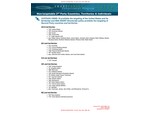
Sensitive Targeting Authorisation [pdf]
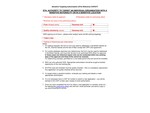
A GCHQ internal form template for Sensitive Targeting Authorisation (STA), used to obtain approval for surveillance targeting of individuals or organisations with sensitive nationalities or in sensitive locations, covering both real-time tasking and historical database datamining, with separate authorisation tracks for overseas targets and UK-based targets.
-
SIGINT Authority decision tree [pdf]
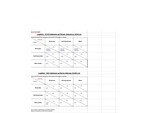
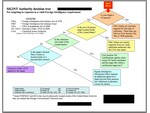
A one-page NSA training chart that walks an analyst from a targeting request to the legal authority that covers it, branching on whether the target is a US person, where the target is, where the collection site is, and whether the target is a Second Party citizen.