Tag: malware 45 documents
Search documents matching “malware” →Free-text subjects the curators added. Unlike the other axes these are not necessarily from the documents' own vocabulary, so they are the loosest thing to browse by (and the most forgiving).
Graphs
By Banner
By Classification
Refine (combine with another filter, via search)
Sort: Title
Documents
-
'4th Party Collection': Taking Advantage of Non-Partner Computer Network Exploitation Activity SIDtoday [pdf]
This January 2008 SIDtoday article from Menwith Hill Station describes "4th Party Collection"—an NSA technique exploiting non-Five Eyes nations' computer network operations by passively intercepting their stolen data—with the example of NSA monitoring Kurdistan Democratic Party's deployment of Perfect Keylogger commercial spyware against targets in Iran and Iraq, including people with links to the Kurdistan Regional Government and Iraqi Ministry of Foreign Affairs computers, capturing keystrokes, passwords, chat logs, and documents that traditional signals intelligence would never collect. The operation reveals KDP intelligence services systematically compromised internet cafés and Iraqi Ministry of Foreign Affairs computers, with exfiltrated data routing to email addresses in Erbil registered to terminals associated with Kurdish intelligence, which NSA then intercepts and repurposes for its own intelligence production.
-
Analytic Challenges from Active-Passive Integration [pdf]
This NSA presentation examines metadata attribution challenges arising when active TAO implants exfiltrate traffic through passive TURMOIL collection infrastructure, creating conflicts where intercepted data carries dual classification markings, case notations, and legal authorities from both collection systems. The briefing highlights how existing databases and analytic tools were not designed to handle traffic with two simultaneous sets of metadata parameters, requiring enterprise-wide solutions to consistently attribute and track actively-shaped intelligence collection.
Programs: BRAVENICKEL · HAMMERMILL · APEX · MARINA · TURMOIL · PRESSUREWAVE · METROTUBE · TOYGRIPPE · HAMMERSTEIN · HAMMERSTONE · METAWAVE · TURBULENCE · SSO -
Analytic Challenges from Active-Passive Integration [pdf]
This NSA briefing addresses the technical and administrative friction caused by "shaping" operations. Shaping occurs when an active malware implant, typically situated on network infrastructure like a router, copies specific data streams and redirects them past a passive surveillance sensor such as TURMOIL. While this ensures the capture of data that might otherwise be missed, it creates a "double metadata" conflict where a single piece of intelligence carries two competing sets of identifiers: one from the active Tailored Access Operations (TAO) implant and another from the passive collection site. The document tasks analysts with finding a way to reconcile these source notations to ensure the data remains searchable and legally compliant within legacy databases.
Programs: BRAVENICKEL · HAMMERMILL · APEX · TURMOIL · HAMMERSTONE · PRESSUREWAVE · METROTUBE · TOYGRIPPE · TURBULENCE · METAWAVE · MARINA · SSO · CONVEYANCE · NUCLEON · FASCIA · HAMMERCHANT -
Anna Politkovskaya (Intellipedia) [pdf]
This document, retrieved from the internal U.S. Intelligence Community wiki Intellipedia, provides a comprehensive intelligence profile on the life, work, and assassination of Russian journalist Anna Politkovskaya. This document details her biography as a dual U.S.-Russian citizen, her career as a vocal critic of the Kremlin and the war in Chechnya, and the high-level signals intelligence (SIGINT) confirming that Russian Federal Intelligence Services (RFIS) targeted her digital communications prior to her death. This document also examines the subsequent murder investigation, the potential links to the poisoning of Alexander Litvinenko, and the geopolitical fallout following her October 2006 assassination in Moscow.
-
AZTECTOMB32 DMW Install and ESH Package [pdf]
This document is a top-secret NSA internal project log detailing restrictions on installing new implants on machines running Kaspersky 2010+ due to the software’s cloud functionality, which prevents safe deployment of NSA malware. It records the suspension and eventual closure of a project (AZTECTOMB32/DEMENTIAWHEEL) that would have targeted such systems.
-
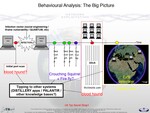
Behavioural Analysis: The Big Picture (Palantir could be used as part of a CNE) [pdf]
This diagram from GCHQ outlines the lifecycle of a CNE and identifies where Palantir fits into the intelligence workflow. The slide, titled "Behavioural Analysis: The Big Picture," illustrates a timeline of network exploitation from the initial infection of a target host to the eventual exfiltration of data. Crucially, it positions Palantir as a key "knowledge base" used for "Tipping to other systems." This indicates that Palantir’s software was used to aggregate data from successful hacks, allowing analysts to visualize connections and pivot (or "tip") that information toward further surveillance or offensive operations.
-
Behavioural Science Support for JTRIG’S Effects and Online HUMINT Operations [pdf]
A top‑secret 2011 paper by psychologist Mandeep K. Dhami operationalizes behavioral science for GCHQ’s JTRIG, turning social‑psychology playbooks into a menu of cyber “effects” and online HUMINT to discredit, deceive, disrupt, and deter targets. It recommends training, profiling, measurement, and a bespoke ethics code to systematize influence operations across social platforms and covert personas.
Marking: TOP SECRETPrograms: JTRIGPeople: Dhami, Mandeep K. · Wortley, Richard · Mazerolle, Lorraine · Hall, Gordon C. Nagayama · Barongan, Christy · Mann, Ian · Maio, Gregory R. · Haddock, Geoffrey · Lewicki, Roy J. · McAllister, Daniel J. · Bies, Robert J. · Kahle, Lynn R. · Kim, Chung-Hyun · Horowitz, Leonard M. · Strack, Stephen · Hogg, Michael A. · Vaughan, Graham M. · Garcia-Retamero, Rocio · Forgas, Joseph P. · Cooper, Joel · Crano, William D. · Fiske, Susan T. · Gilbert, Daniel T. · Lindzey, Gardner · Mandel, David R. · Clow, Kenneth E. · Baack, Donald E. · Cialdini, Robert B. · Bachmann, Reinhard · Zaheer, Akbar · Adams, Barbara D. · Sartori, Jessica A. · Yun, Minwoo · Hirsch, Andrew Von · Bottoms, Anthony E. · Burney, Elizabeth · Wikstrom, P-O · Tunnell, Kenneth D. · Piquero, Alex R. · Tibbets, Stephen G. · Snook, Brent · Eastwood, Joseph · Gendreau, Paul · Goggin, Claire · Cullen, R. M. · Kavanagh, Jennifer M. · Smith, Peter B. · Bond, Michael Harris · Slovic, Paul · Knol, Anne B. · Slottje, Pauline · Sluijs, Jeroen P. van der · Savage, Leonard J. · Postmes, Tom · Spears, Russell · Sakhel, Khaled · Groot, Daphne de · Pettigrew, Thomas Fraser · Tropp, Linda R. · Newman, Graeme R. · Mischel, Walter · Miller, Michael D. · Brunner, C. Cryss · McDaniels, Timothy L. · Marcus, Aaron · Perez, Angel · Lee, Eun-Ju · Knight, Frank H. · King, Sara B. · Payne, John W. · Johnson, Eric · Hui, Pan · Buchegger, Sonja · Huffaker, David A. · Furby, Lita · Beyth-Marom, Ruth · Freilich, Joshua D. · Chermak, Steven M. · Fischhoff, Baruch · Lichtenstein, Sarah · Derby, Steven L. · Keeney, Ralph · Felson, Marcus · Clarke, Ronald V. · Wallsten, Thomas S. · Crandall, David · Cosley, Dan · Huttenlocher, Daniel · Kleinberg, Jon · Suri, Siddharth · Carroll, John · Weaver, Frances · Becker, Gary S.“Britain Used Spy Team to Shape Latin American Public Opinion on Falklands” - The Intercept ↗ (2015-04-02) · “Controversial GCHQ Unit Engaged in Domestic Law Enforcement, Online Propaganda, Psychology Research” - The Intercept ↗ (2015-06-22) · “#EspiadosPorLosIngleses: los nuevos documentos de Snowden revelan un plan de espionaje de Gran Bretaña en Argentina por Malvinas” - Todo Noticias ↗ (2015-04-02) · Fishman, Andrew · Greenwald, Glenn -
BYZANTINE HADES: An Evolution of Collection [pdf]
A classified NSA SIGINT briefing from 2010 describes “BYZANTINE HADES,” a collection of Chinese computer network exploitation activities, with a focus on the BYZANTINE CANDOR actor set and U.S. efforts to analyze, attribute, and counter those intrusions. The document details targeting patterns, technical tradecraft, and a TAO-led counterintelligence operation that successfully penetrated the attackers’ infrastructure and personal systems.
Programs: BYZANTINEHADES · BYZANTINECANDOR · BYZANTINERAPTOR · BYZANTINEANCHOR · BISHOPKNIGHT · BYZANTINEVIKING · MAVERICKCHURCH · BISHOP · BYZANTINETRACE · DIESELRATTLE · BYZANTINEFOOTHOLD · BYZANTINEPRAIRIE · SEEDSPHERE · CARBONPEPTIDE · TITANRAIN · PINWALE · XKEYSCORE · CROSSBONES · TUNINGFORK · ARROWECLIPSE · CUTEBOY · POPROCKS · BYZANTINE -
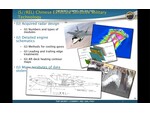
Chinese Exfiltrate Sensitive Military Technology [pdf]
This TOP SECRET NSA SIGINT development briefing describes large-scale Chinese cyber espionage that exfiltrated sensitive U.S. military technologies and inflicted extensive operational, financial, and strategic damage on Department of Defense systems. The document emphasizes both the scale of losses and the role of SIGINT in detecting, understanding, and mitigating adversary malware.
Programs: BYZANTINEHADES -
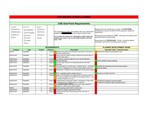
CNE End Point Requirements [pdf]
This NSA/GCHQ document outlines comprehensive requirements for an endpoint surveillance systems that enables analysts to systematically identify intelligence collection needs and discover appropriate tools for data extraction from compromised computers. The framework covers capabilities for remote data collection, cross-platform intelligence integration, query functions, tasking procedures, and visualization tools across implanted networks.
Programs: STARGATE · LOOKING GLASS · QUANTUM · GOLDENEYE · XKEYSCORE · MARINA · JTRIG · BROADOAK · UTT · GLOBALREACH · GLOBALSURGE · THUGGEE · EREPO · DANCINGBEAR · HAUSTORIUM · SHAREOWN · MUTANTBROTH · MOONRAKER · CARBONROD · RUFFLE · ROCKOPERA · QUINCEY · ECLIPSE · MUGSHOT · HIGHNOTE · UDAQ2 · EKB · TURBINE · ACNO · FLAMECARPET · FUMECUPBOARD · JACKPOT · SLIPSTREAM · B13B · PSC · QUINCY · DAREDEVIL · ROADBED -
CSEC ITS/N2E Cyber Threat Discovery [pdf]
A CSEC IT Security presentation to the DISCOCON 2010 conference, given with speakers' notes, on how the agency's cyber threat discovery team hunts for intrusions in the traffic it collects from Government of Canada networks. It describes the PonyExpress email processing system, which the notes record as handling 400,000 emails a day, the 8Ball attachment scanner and the Stripsearch binary analyser, and reports experiments in reducing the volume of metadata analysts see — including a machine learning model that discards 85% of email before deep scanning.
Marking: TOP SECRETPrograms: PONYEXPRESS · 8BALL · STRIPSEARCH · POPQUIZ · SLIPSTREAM · FINDMASK · SAWUNEH · TROPPUSNU · N2E · DISCOCON -
CSEC SIGINT Cyber Discovery: Summary of the current effort [pdf]
This document provides a overview of the Communications Security Establishment Canada (CSEC) cyber operations, detailing its SIGINT, CNE (Computer Network Exploitation), and cyber counterintelligence programs, including tools like WARRIORPRIDE, REPLICANTFARM, and EONBLUE for threat detection, anomaly discovery, and metadata production. It outlines operational procedures, analytic methodologies, and collaborative frameworks with domestic and Five Eyes partners for sharing intelligence, tipping/cueing, and integrating cyber and traditional counterintelligence efforts.
Programs: REPLICANTFARM · SLIPSTREAM · WARRIORPRIDE · DAREDEVIL · CHORDFLIER · NAMEDROPPER · WORMWOOD · OBELIX · SHEPHERD · CARBON · REGBACKUP · DOGHOUSE · WALKER · ALOOFNESS · BLAZINGANGEL · TINYWEB · QUIVERINGSQUAB · WINDO · DIESELRATTLE · WIDOWKEY · CIVETCAT · WINBEE · SSLINST · PULLEDPORK · EONBLUE · SNIFFLE · QUANTUM · XKEYSCORE · HALTERHITCH · FASTFLUX · DEADSEA · NSPACES · PPF · SSO · TKB“The Digital Arms Race: NSA Preps America for Future Battle” - Der Spiegel ↗ (2015-01-17) · “Communication Security Establishment's cyberwarfare toolbox revealed” - CBC News ↗ (2015-03-23) · “Documents Reveal Canada’s Secret Hacking Tactics” - The Intercept ↗ (2015-03-23) · Appelbaum, Jacob · Gibson, Aaron · Guarnieri, Claudio · Müller-Maguhn, Andy · Poitras, Laura · Rosenbach, Marcel · Ryge, Leif · Schmundt, Hilmar · Sontheimer, Michael · Seglins, Dave · Hildebrandt, Amber · Pereira, Michael · Greenwald, Glenn · Gallagher, Ryan -
Cyber Network Defence R&D Activities [pdf]
A September 2010 CSEC briefing to the Five Eyes 5IARC conference on cyber defence R&D, giving the full PONY EXPRESS email attachment scanning architecture and the PHOTONIC PRISM sensor, with speaker notes in which the presenter concedes CSEC does little research of its own.
Marking: SECRETPrograms: PHOTONICPRISM · PONYEXPRESS · SLIPSTREAM · POPQUIZ · 8BALL · SNORT · POPEYESEAR · FLOWPONY · SMTPPONY · MAILPONY · METAPONY · SCANPONY · AGGPONY · SYNCPONY · POOLTABLE · POOLCUE · CORNERPOCKET · TONTO · MULASSES · MULVAL · ASSETRANK · JNDMS · ARMOUR · SWAD · MINISSL · SSLFUZZER · N3C · N3 · CTEC · DCITS · 5IARC -
DEFIANTWARRIOR and the NSA's Use of Bots [pdf]
This TOP SECRET NSA presentation from 2010 documents the DEFIANTWARRIOR effort to identify, seize, and operate botnets using SIGINT-enabled infrastructure, detailing both early failures and subsequent operational successes. The document reveals how bot herding was integrated into broader offensive cyber and intelligence collection strategies across the Five Eyes.
Programs: DEFIANTWARRIOR · OLYMPUS · UNITEDRAKE · TURBULENCE · QUANTUMBOT · TURMOIL · TURBINE · SNIPERS · XKEYSCORE · INCENSER · STELLABLUE · SMOKYSINK · STOVEPIPES · ISLANDTRANSPORT · FESTIVEWRAPPER · FREEFLOW · PRESSUREWAVE · HANGARSURPLUS · SURPLUSHANGER · WAITAUTO · DEEPFRIEDPIG · SEAGULLFARO · COLOSSUS · STORMPIG · YELLPIG · PASTEPIG · SHOUTPIG · ZORPIG · MAILORDER · TREASUREMAP · MARINA · WARNVOLCANO · STRAITBIZARRE · BOTINSTANCES · PUZZLECUBE · SEEKER · SURPLUSHANGAR -
Discovery SIGINT Targeting Scenarios and Compliance [pdf]
This document is a top-secret NSA guidance manual detailing SIGINT targeting scenarios, compliance procedures, and legal guidance for querying foreign actors, malware, and potentially U.S.-linked systems, including considerations for minimizing incidental collection of U.S. persons’ communications. It outlines specific rules, approvals, and exceptions for using SIGINT tools, foreign intelligence tasks, and cases involving ambiguous or dual-use selectors like WikiLeaks, The Pirate Bay, and foreign actors operating through U.S. infrastructure.
-
Driver 1: Worldwide SIGINT/Defense Cryptologic Platform [pdf]
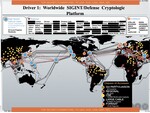
A 2012 NSA management presentation slide revealing the agency's global surveillance architecture across five categories of access — covert cable taps, regional collection sites, computer network exploitation implants, foreign satellite collection, and third-party liaison relationships — including a list of cities hosting clandestine collection operations and confirmation of over 50,000 worldwide malware implants.
Programs: STELLAR · SOUNDER · SNICK · MOONPENNY · LADYLOVE · INDRA · IRONSAND · JACKKNIFE · CARBOY · TIMBERLINE“NSA infected 50,000 computer networks with malicious software” - NRC ↗ (2013-11-23) · “No Place to Hide” - Metropolitan Books ↗ (2014-05-13) · Boon, Floor · Derix, Steven · Modderkolk, Huib · Greenwald, Glenn -
FASHIONCLEFT - Interface Control Document (15 June 2009) [pdf]
This 2009 NSA Interface Control Document provides comprehensive technical specifications for FASHIONCLEFT, the protocol that acts as a covert shipping system enabling TAO malware implants to send stolen network data back to NSA collection servers with minimal computer processing requirements—using multiple encryption layers (RSA-1024 and RC6-128) to disguise the traffic as it travels across the internet while allowing NSA's Common Data Receptor to reassemble and authenticate the original intercepted packets. The document details how implants make modified copies of captured network traffic (changing destination addresses to point toward NSA instead of legitimate recipients), apply various levels of encryption or scrambling ("munging") depending on how powerful the infected computer is, attach metadata instructions explaining how to reconstruct the original packets, and use pattern-matching algorithms to ensure NSA systems can identify which stolen packets belong to which collection operation.
Programs: FASHIONCLEFT · FLAXENPRECEPT · SHELLGREY · SURPASSPIN · SEAGULLFARO · ROOTKNOT · FIGBUILD · OPTICPINCH · VINYLSEAT · OLYMPUS · UNITEDRAKE · HOGTECH · SWEEPFORWARD · CONVEY · PINWALE · TREBLECLEF · FOGYNULL · FUNNELAPS · FLASHHANDLE -
Fourth Party Opportunities [pdf]
This presentation document explains how NSA identifies, prioritizes, and exploits “fourth party” opportunities by passively or actively leveraging foreign computer network exploitation operations, including victim stealing and tool repurposing, to collect intelligence without initiating original intrusions.
Programs: VOYEUR · UIS · PINWALE · YNKE · TUNINGFORK · DIRTSHED · SEEKER · CLOUD · ABR · SILVERBOLT · DEADSEA · XKEYSCORE · BYZANTINERAPTOR · HAWALA · ZEBEDEE · DATAFLURRY · ECLECTICPLOT · HAPPYFOOT · BLUESMOKE · CROSSBONES2 · CYBERQUEST · VICDB · PLAIDDIANA · TRANSGRESSION -
FOXACID SOP for Operational Management of FOXACID Infrastructure (Draft) [pdf]
This document is an NSA standard operating procedure (SOP) manual detailing how to manage and operate the FOXACID system, which delivers malware to targets through tools like SECONDDATE and BADDECISION. It provides technical instructions for tracking, deploying, and maintaining covert web-based infections used in global cyber operations.
Programs: FOXACID · FOXSEARCH · WAITAUTO · RAISEBED · FORRESTPLACE · FOXHelp · PUZZLECUBE · YACHTSHOP · SECONDDATE · MAGIC SQUIRREL · MAGICBEAN · FINKCOAT · FRUGALSHOT · QUANTUM · FERRETCANNON · BEACHHEAD · OLYMPUS · UNITERAKE · DIRESCALLOP · DEEPFREEZE · FINKDIFFERENT · DISABLEVALOR · VALIDATOR · MISTYVEAL · UNITEDRAKE · PEDDLE CHEAP · PKTWENCH · FORESTPLACE · FOXCONTACT · EASYHOOKUP · DEMENTIAWHEEL · CASTLECREEK · ROCHELP · QUANTUMINSERT · FABULOUSFABLE · WATCHER · FROZENGAZE · FABFAB · DARKFIRE · CRYPTICSENTINEL · DARKHELMET · PSP · WILLOWVIXEN -
Hackers are Humans too - Cyber leads to CI leads [pdf]
This document from Canada’s Communications Security Establishment (CSE) analyzes the Russian hacking team MAKERSMARK, highlighting how its operators misused technically sophisticated but poorly secured infrastructure, mixing personal and operational activity, which made them traceable despite their advanced tools. It details CSE’s methods for attributing cyber intrusions, monitoring malware-infected systems, and exploiting operational security lapses to gain intelligence on Russian cyber operations.