Tag: FISA 55 documents
Search documents matching “FISA” →Free-text subjects the curators added. Unlike the other axes these are not necessarily from the documents' own vocabulary, so they are the loosest thing to browse by (and the most forgiving).
Graphs
By Banner
By Classification
Refine (combine with another filter, via search)
Sort: Title
Documents
-
DNI, attorney general certify surveillance targets 'reasonably believed' to be outside U.S. [pdf]
In this document, the director of national intelligence and the attorney general certify that there are procedures in place to ensure that surveillance conducted under Section 702 of the FISA Amendments Act will be limited to targeting people "reasonably believed to be located outside the United States." They state that the foreign intelligence to be collected "concerns foreign powers" as defined by statute. The list of foreign powers is in Exhibit F.
-
FAA Certification Renewals with Caveats [pdf]
This NSA document shows that after the FISA Court found NSA’s upstream internet collection unconstitutional and illegal, the agency’s response was less about reform and more about finding technical and procedural workarounds to keep surveillance running as usual. While the court ordered changes within 30 days, NSA officials planned to sequester and filter “higher-risk” data to appease the judge—not halt collection—revealing a mindset focused on preserving operations rather than addressing legal violations.
-
FAA702 comms memo [pdf]
This document details NSA's response to concerns raised by the FISA Court over the collection of non-targeted data in FAA-702 upstream collection. To mitigate the risk of continued acquisition, NSA is implementing temporary measures, including cautionary banners and updated processes, to prevent misuse of data that may not be directly related to tasked selectors.
People: Shea, Teresa H. -
How the NSA verifies a target's location [pdf]
This is an excerpt from a transcript of National Security Agency training videos that describe how to verify the location of a targeted device. It explains how the NSA monitors different types of mobile signaling information known as HLR and VLR registrations in order to locate individuals. It also makes clear that the agency is able to use location tracking to ascertain whether a target is in the United States.
-
List of foreign governments and organizations authorized for surveillance [pdf]
This exhibit lists the 193 foreign governments as well as foreign factions, political organizations and other entities that were part of a 2010 certification approved by the Foreign Intelligence Surveillance Court. These are the entities about which the NSA may conduct surveillance, for the purpose of gathering foreign intelligence. Each year a new certification must be approved by the court to permit such surveillance under Section 702 of the FISA Amendments Act.
-
Minimization Procedures Used By The National Security Agency In Connection With Acquisitions Of Foreign Intelligence, Information Pursuant To Section 702 Of The Foreign Intelligence Court Surveillance Act Of 1978 [pdf]
The NSA’s Section 702 minimization rules expose how the agency can collect, keep, and use Americans’ communications without warrants, despite claiming to target only foreigners. While the document sets out procedures for handling U.S. data, it includes broad loopholes—like keeping “inadvertently” collected domestic messages for years, sharing unfiltered data with the FBI, CIA, and even foreign governments, and giving NSA analysts wide discretion over who gets surveilled—all under secret FISA Court approval.
People: Holder, Eric H. Jr. -
N.S.A. Timeline of Surveillance Law Developments [pdf]
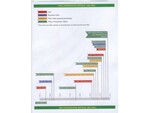
This chart, apparently from an internal N.S.A. presentation, lists milestones in surveillance rules over nearly four decades. The July 2002 “Raw Take” sharing order, whose existence has not previously been disclosed, is just one of three rulings by the Foreign Intelligence Surveillance Court to make the list. The other two were 2004 and 2006 rulings allowing bulk collection of data about emails and phone calls.
-
New FAA702 Certification in the Works - Cyber Threat [pdf]
A 23 March 2012 SSO article on a draft FAA 702 certification for cyber threats. It would let analysts task selectors tied to malicious cyber activity without attributing them to a foreign government or terrorist group, and would codify tasking of IP addresses and code strings through PRISM and the upstream accesses.
-
NSA and Department of Justice -- True Partners in Crime (well, against crime) SIDtoday [pdf]
The NSA’s representative to the Justice Department describes collaboration on Foreign Intelligence Surveillance Act warrants, international organized crime, counterespionage, money laundering, alien smuggling, and violent crime. The NSA also provides a “travel guide” to the attorney general’s protective staff for his foreign travels.
The Intercept ↗ (2018-08-15) -
NSA Cyber Timeline (Some Key SSO Cyber Milestone Dates Since Fall 2005) [pdf]
A one-page NSA SSO timeline of cyber-related milestones from fall 2005 to late 2012: CNCI implementation, the Protect America Act and FISA Amendments Act certifications, TURMOIL and XKEYSCORE deployments, and the August 2012 Iranian DDoS attack on Saudi Aramco.
Programs: TURMOIL · SSO · BLUESNORT · DANCINGOASIS · MADCAPOCELOT · TURBULENCE · XKEYSCORE · WEALTHYCLUSTER -
NSA director's affidavit on foreign surveillance [pdf]
The affidavit was submitted in support of the 2010 certification concerning foreign governments, factions and other entities. In it, Alexander states that pursuant to the certification, NSA seeks to acquire foreign intelligence information concerning foreign powers. The list of foreign powers is in Exhibit F.
People: Alexander, Keith B. -
NSA inspector general report on email and internet data collection under Stellar Wind, 24 March 2009 [Working Draft] [pdf]
This 2009 NSA Inspector General draft report details the origins and legal framework of the President’s Surveillance Program (PSP), launched after 9/11 to bypass FISA limits and authorize bulk interception of internet and telephony content and metadata, including communications with one end inside the U.S. It reveals how NSA, with White House backing, expanded surveillance authority to cover “collection gaps” that existing law didn’t allow, effectively legalizing large-scale warrantless spying under a secret presidential directive.
People: Bush, George W. · Hayden, Michael · Tenet, George · Gonzales, Alberto R. · Addington, David S. · Graham, Robert · Deitz, Robert L. · Shelby, Richard · Pelosi, Nancy · Cheney, Dick · Libby, I. Lewis · Lamberth, Royce · Inouye, Daniel · Levin, Daniel · Stevens, Theodore · Kollar-Kotelly, Colleen · Rockefeller, Jay · Alexander, Keith B. · Potenza, Vito -
NSA's damage assessment on NYTimes 2005 article [pdf]
This internal NSA memorandum from December 2005 documents the agency's immediate response to the New York Times exposé "Bush Lets U.S. Spy on Callers Without Courts." It confirms that the article revealed classified National Security Information regarding warrantless domestic surveillance and recommends a Department of Justice investigation into the unauthorized disclosure.
Programs: STELLARWINDPeople: Cerlenko, Ariane E. · Rice, Condoleezza · Hayden, Michael · bin Laden, Osama · Bush, George W. · Faris, Iyman · Risen, James · Lichtblau, Eric · Rockefeller, Jay · Zubaydah, Abu · Cheney, Dick · Tenet, George J. · Kerry, John · Kollar-Kotelly, Colleen · Yoo, John · Mikulski, Barbara A. · Gonzales, Alberto R. · Mueller, Robert S. · Walsh, Barclay -
NSA's New Information Sharing Policy: How It Affects the Dissemination of SIGINT SIDtoday [pdf]
A new policy allows for more rapid sharing of signals intelligence with other branches of government and allies, as long as agents comply with the appropriate regulations. Open sharing represents a “major cultural shift” for the NSA, and as the agency drafts new policies, analysts must judge whether information they find is both eligible and appropriate for sharing.
The Intercept ↗ (2018-03-01) -
PINWALE: Transnational DNI Training [pdf]
This presentation is a classified NSA training guide on PINWALE, a SIGINT database used for the storage, retrieval, and analysis of intercepted digital network intelligence (DNI) communications. It outlines system capabilities, query creation, search tools, and interfaces such as NEXUS, UIS, and AGILITY, explaining how analysts search, retrieve, and analyze both content and metadata — including FISA-partitioned data — within the Five Eyes intelligence framework.
-
Pre-Pub Sharing of SIGINT: An Everyday Event SIDtoday [pdf]
Signals intelligence analysts do not have to write a formal report to share data within the NSA or with other intelligence agencies, as long as it is properly minimized and follows Foreign Intelligence Surveillance Act guidelines. Collaborating can lead to a fuller, better-contextualized report.
The Intercept ↗ (2018-03-01) -
PRISM/US-984XN Overview [pdf]
A 2013 NSA training presentation revealing that major U.S. tech companies — including Google, Facebook, Apple, Microsoft, and Skype — secretly gave the NSA direct access to their servers, allowing the agency to collect users' emails, chats, photos, and files in real time, with the FBI acting as intermediary.
Programs: PRISM · FAIRVIEW · STORMBREW · BLARNEY · OAKSTAR · UTT · PRINTAURA · PINWALE · NUCLEON · TRAFFICTHIEF · SCISSORS · MARINA · MAINWAY · FALLOUT · CONVEYANCE · REPRISMFISA · SSO“U.S., British intelligence mining data from nine U.S. Internet companies in broad secret program” - The Washington Post ↗ (2013-06-06) · “NSA Prism program taps in to user data of Apple, Google and others” - The Guardian ↗ (2013-06-07) · “L'ampleur de l'espionnage mondial par la NSA” - Le Monde ↗ (2013-10-21) · “NSA files decoded: Edward Snowden's surveillance revelations explained” - The Guardian ↗ (2013-11-01) · “No Place to Hide” - Metropolitan Books ↗ (2014-05-13) · “Dark Mirror: Edward Snowden and the American Surveillance State” - Penguin Press ↗ (2020-05-19) · Gellman, Barton · Poitras, Laura · Greenwald, Glenn · MacAskill, Ewen · Untersinger, Martin · Dance, Gabriel -
Procedures Used By The National Security Agency For Targeting Non-United States Persons Reasonably Believed To Be Located Outside The United States To Acquire Foreign Intelligence Court Information Pursuant To Section 702 Of The Foreign Intelligence Surveillance Act Of 1978 [pdf]
The NSA’s 2009 Section 702 targeting procedures lay out how analysts decide who can be surveilled without a warrant, supposedly limiting spying to foreigners abroad. In reality, the rules give the agency wide latitude to presume people are foreign, rely on vague “totality of the circumstances” tests, and allow broad technical methods like IP filters and metadata checks. Oversight is mostly internal and after-the-fact, creating significant potential for U.S. communications to be swept up with little accountability.
People: Holder, Eric H. Jr. -
Sentry Eagle Brief Sheet [pdf]
A classified NSA/JFCC-NW briefing document formally inducting cleared personnel into Sentry Eagle — the agency's most sensitive umbrella program protecting core secrets about its cyber operations — and enumerating, tier by tier, what the NSA conceals about its covert industry partnerships, encryption sabotage, network hacking, computer network defense, and human intelligence relationships.
Programs: SENTRYEAGLE · SPARECHANGE · WHIPGENIE · AUNTIE · AMBULANT · OPALESCE · REVELRY · REFRACTOR · SENTRYHAWK · SENTRYFALCON · SENTRYOSPREY · SENTRYRAVEN · SENTRYCONDOR · SENTRYOWL · BLUESASH · TAREX -
SIGINT Authority decision tree [pdf]
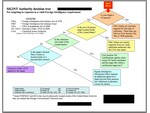
A one-page NSA training chart that walks an analyst from a targeting request to the legal authority that covers it, branching on whether the target is a US person, where the target is, where the collection site is, and whether the target is a Second Party citizen.