Agency: NSA National Security Agency (US) 557 documents
Search documents matching “NSA” →The agency that WROTE each document.
Graphs
By document date (13 years)
By Banner
By Classification
Refine (combine with another filter, via search)
Sort: Title
Documents
-
Exploiting Foreign Lawful Intercept (LI) Roundtable [pdf]
Top-secret PowerPoint presentation, "Exploiting Foreign Lawful Intercept Roundtable," highlights the agency’s strategy to exploit vulnerabilities in lawful intercept systems from telecom companies, such as Ericsson, Motorola, and Nokia, in countries like Mexico, Indonesia, and Egypt. The presentation also discusses NSA's use of various "Fingerprints" for identifying data and its collaboration with industry players and foreign lawful intercept systems.
“A Death in Athens” - The Intercept ↗ (2015-09-28) · “Americans and Greeks started the 2004 wiretaps together” - Kathimerini ↗ (2015-09-29) · Bamford, James · Petropoulos, Aggelos -
FAA Certification Renewals with Caveats [pdf]
This NSA document shows that after the FISA Court found NSA’s upstream internet collection unconstitutional and illegal, the agency’s response was less about reform and more about finding technical and procedural workarounds to keep surveillance running as usual. While the court ordered changes within 30 days, NSA officials planned to sequester and filter “higher-risk” data to appease the judge—not halt collection—revealing a mindset focused on preserving operations rather than addressing legal violations.
-
FAA702 comms memo [pdf]
This document details NSA's response to concerns raised by the FISA Court over the collection of non-targeted data in FAA-702 upstream collection. To mitigate the risk of continued acquisition, NSA is implementing temporary measures, including cautionary banners and updated processes, to prevent misuse of data that may not be directly related to tasked selectors.
People: Shea, Teresa H. -
FAA702 Glossary - Section 702 of the Fisa Amendments Act (FAA) [pdf]
This document outlines NSA rules under Section 702 of the FISA Amendments Act, which prohibit directly targeting U.S. persons or individuals inside the U.S., but quietly note a 2011 rule change allowing analysts to use U.S. person identifiers to query data already collected under 702—pending internal oversight. This effectively establishes a “backdoor search” capability enabling warrantless searches of Americans’ communications stored in NSA databases. Section 702 also gives the NSA authority to target without warrant the communications of foreign targets.
-
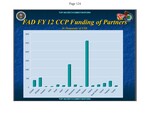
FAD FY 12 CCP Funding of Partners [pdf]
A Foreign Affairs Directorate slide showing Combined Cryptologic Program funding of foreign partners in fiscal year 2012, in thousands of dollars, across fifteen countries including Canada, Israel, Japan, Jordan, Pakistan, Taiwan and Thailand.
-
FAIRVIEW brief overview [pdf]
This document outlines the FAIRVIEW program, established in 1985, which leverages a corporate partner to exploit international communications through cables, switches, and routers. It is one of the NSA's top sources for metadata and serialized intelligence, supporting a wide range of targets including counter-terrorism, crime, and international security issues.
Programs: FAIRVIEW -
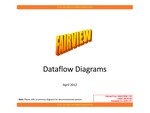
FAIRVIEW dataflow charts April 2012 [pdf]
This document outlines data flow diagrams that show how various types of sensitive communication, including voice, fax, and modem traffic, are handled through systems operated by the NSA and its partners. These partners include corporations, telecommunications companies, ISPs, and other entities involved in processing and managing the data through secure and classified channels. The document covers processing flows for various data types, metadata, and communications systems under NSA's control, detailing how data is routed, stored, and analyzed across different platforms and sites.
Programs: FAIRVIEW · SAGUARO · TURNSTILE · MESA · TITANPOINT · RIMROCK · MAILORDER · PINECONE · BLARNEY · STONEGATE · TINSEL · CONVEYANCE · FISHWAY · NUCLEON · PINWALE · SCISSORS · COURIERSKILL · DRIFTWOOD · ASDF · FALLOUT · MARINA · LOPERS · WEALTHYCLUSTER · PUPR · CLEARSIGHT · MIDFIELD · CADENCE · BUGCATCHER · WAYLAND · DESOTO · GATEKEEP · HIGHDECIBEL · XKEYSCORE · YANKEE · TOPROCK · FASCIA · DISHFIRE · SEAGULL · BIGDIPPER · CORPORATE · LILDIPPER · HAVASU · WEALTHYCLUSTER2 · RAGTIME · TUMULT · TATTOO · DARKTHUNDER · ICYTWINS · TML-STATUS · WATERFRONT · VULCANDEATHGRIP · STEELFLAUTA · UNITY · KEYCARD · UTT · BTUBE · ISLANDTRANSPORT · SSO · MAINWAY · SSDM · TUBE · TITANPOINTE · TURMOIL · VPCS“NSA Spying Relies on AT&T’s ‘Extreme Willingness to Help’” - ProPublica ↗ (2015-08-15) · “AT&T Helped U.S. Spy on Internet on a Vast Scale” - The New York Times ↗ (2015-08-15) · “Titanpointe: The NSA’s Spy Hub in New York, Hidden in Plain Sight” - The Intercept ↗ (2016-11-16) · Angwin, Julia · Larson, Jeff · Savage, Charlie · Moltke, Henrik · Poitras, Laura · Risen, James · Gallagher, Ryan -
FAIRVIEW site book [pdf]
The Fairview TDY Handbook provides essential guidelines for NSA employees travelling in support of the FAIRVIEW Program, detailing required training, security protocols, and travel procedures for both CONUS and OCONUS missions. It covers travel authorization, necessary courses, cover travel considerations, vehicle usage, and operational security (OPSEC) instructions for visits to partner and collection sites. The handbook emphasizes security, confidentiality, and appropriate conduct while interacting with partner organizations and traveling to sensitive locations.
Programs: FAIRVIEW · EAGLE · EDEN · TITANPOINT · PINECONE · TITANPOINTE · BLARNEY · STORMBREW · OAKSTAR · SILVER COLLAM · SSO · LITHIUM -
FASHIONCLEFT - Interface Control Document (15 June 2009) [pdf]
This 2009 NSA Interface Control Document provides comprehensive technical specifications for FASHIONCLEFT, the protocol that acts as a covert shipping system enabling TAO malware implants to send stolen network data back to NSA collection servers with minimal computer processing requirements—using multiple encryption layers (RSA-1024 and RC6-128) to disguise the traffic as it travels across the internet while allowing NSA's Common Data Receptor to reassemble and authenticate the original intercepted packets. The document details how implants make modified copies of captured network traffic (changing destination addresses to point toward NSA instead of legitimate recipients), apply various levels of encryption or scrambling ("munging") depending on how powerful the infected computer is, attach metadata instructions explaining how to reconstruct the original packets, and use pattern-matching algorithms to ensure NSA systems can identify which stolen packets belong to which collection operation.
Programs: FASHIONCLEFT · FLAXENPRECEPT · SHELLGREY · SURPASSPIN · SEAGULLFARO · ROOTKNOT · FIGBUILD · OPTICPINCH · VINYLSEAT · OLYMPUS · UNITEDRAKE · HOGTECH · SWEEPFORWARD · CONVEY · PINWALE · TREBLECLEF · FOGYNULL · FUNNELAPS · FLASHHANDLE -
Final Agenda - HR DIETMAR B - Director SIGINT Analysis and Production German Federal Intelligence Service, 30 April - 1 May 2013 [pdf]
This document presents the final agenda for a visit by Hr. Dietmar B., the Director of SIGINT Analysis and Production from the German Federal Intelligence Service (BND), scheduled for April 30 to May 1, 2013. The agenda details key discussions and meetings with various officials from the NSA, focusing on strategic planning and areas of mutual interest in intelligence collaboration.
-
FINAL Agenda SWEDUSA [pdf]
Detailed list of points and participants in the summit meeting between the top brass of the FRA and the NSA in April 2013.
Programs: TURTLEPOWER · TURMOIL · XKEYSCORE · WINTERLIGHT · QUANTUM · PARTNERMALL · VIVIAN · NAPA-3 · GCE · SSO -
Final Cyberspace Policy Review: Appendices D and E [pdf]
Appendices D and E of a secret, REL FVEY Cyberspace Policy Review. Appendix D evaluates the Comprehensive National Cybersecurity Initiative initiatives and enablers and the status of each. Appendix E argues for an international cybersecurity policy framework, covering internet governance bodies, free speech, supply chains and deterrence.
Programs: EINSTEIN -
Finding and Querying Document Metadata [pdf]
This 2009 NSA training guide, created by Booz Allen Hamilton, explains how analysts can use the XKEYSCORE system to track targets by searching for "non-traditional selectors" embedded within documents, such as author names, company information, or even the hash values of company logos.
Programs: XKEYSCORE · TUNINGFORK · PINWALE · FOXACID · FOXBASE · CARBOY · CARDAMON · UNITEDRAKE · CADENCE -
Finding Nuggets -- Quickly -- in a Heap of Voice Collection, From Mexico to Afghanistan SIDtoday [pdf]
A 2011 article by an NSA Texas analyst describing the deployment of Human Language Technology analytics — including speech-to-text, speaker identification, gender recognition and language identification — to Special Collection Service sites in the Americas and to the Afghanistan Remote Operations Cryptologic Center, with operational examples ranging from tunnel detection in Tijuana to intelligence support in Kandahar.
Programs: HLT -
First-Ever Formal SIGINT Development (SIGDEV) Training Is Provided to SIGINT Seniors Europe (SSEUR) Partners [pdf]
This internal NSA report details the first formal training course on "SIGINT Development" (SIGDEV) offered to the "SIGINT Seniors Europe" (SSEUR) coalition, a group comprising the Five Eyes nations and nine European third-party partners. The document highlights the strategic goal of standardizing analytic tradecraft among these allies to improve collaboration on priority missions like counter-terrorism and the war in Afghanistan.
“New NSA Revelations: Inside Snowden's Germany File” - Der Spiegel ↗ (2014-06-18) · “Read the Snowden Documents From the NSA” - SVT Nyheter ↗ (2013-12-11) · Becker, Sven · Gude, Hubert · Horchert, Judith · Müller-Maguhn, Andy · Poitras, Laura · Reißmann, Ole · Rosenbach, Marcel · Schindler, Jörg · Schmid, Fidelius · Sontheimer, Michael · Stark, Holger · Björklund, Axel -
FISA Amendments Act Certifications and Operations [pdf]
This document exposes how, after the FISA Court found flaws in NSA’s upstream surveillance in 2011, the agency pushed through new certifications on schedule the following year and quietly used taxpayer money to cover millions in compliance costs for PRISM companies like Google and Yahoo. Rather than scaling back unconstitutional collection, the NSA treated the ruling as a logistical hurdle to manage with corporate partners, underscoring its deep financial and operational entanglement with major tech firms. Check also the document "FAA Certification Renewals with Caveats"
Programs: PRISM -
FISA Amendments Act of 2008 Section 702 summary document [pdf]
This document summarizes the way the law works and describes the three types of certifications used to permit the surveillance, as well as targeting and minimization procedures. The three certification are for foreign governments, counterterrorism and WMD/proliferation.
-
FISA dataflow [pdf]
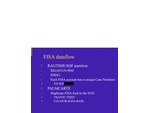
This document describes the technical SIGINT architecture for FISA data processing, specifically detailing how the RAGTIME/SQF partition and PALMCARTE system utilize unique case notations and metadata tools to route and track intercepted communications.
-
FISA recap [pdf]
This document is a Top Secret NSA "FISA Recap" spreadsheet detailing electronic surveillance conducted between 2005 and 2008. It tracks specific email accounts targeted under the Foreign Intelligence Surveillance Act, listing the responsible agencies (NSA, FBI, and CIA), their legal "Case Notation," and the duration of collection. Notably, the log includes prominent U.S. Persons and organizations, such as the Council on American-Islamic Relations (CAIR), and features a 2005 formatting guide that uses a racial slur as a placeholder for a target's identity.
Programs: SQF -
FORNSAT technologies [pdf]
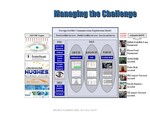
This document outlines a Foreign Satellite Communication Exploitation Model targeting satellite systems such as Intelsat, Iridium, Hughes, ND SatCom, and Inmarsat, using both fixed and mobile satellite services. It describes specific collection and geolocation systems—SEADIVER, ZODIACARRAY, and CANYONDUST—that capture and process voice, fax, data, and terminal location information across global coverage areas.
Programs: SHAREDVISION · DARKQUEST · EKB · GLOBALVIEW · TRYST · ZODIACARRAY · CANYONDUST · IRIDIUM · SEADIVER